HUNTSVILLE, Texas — The state of Texas executed Christopher Anthony Young on Tuesday evening, ending the life of a man who spent more than a decade on death row transforming himself from a violent gang member into a mentor and source of peace — a change so profound that the son of the man he murdered spent his final weeks begging the state to spare him.
Young, 34, was pronounced dead at 6:39 p. m. CDT inside the execution chamber at the Huntsville Unit.
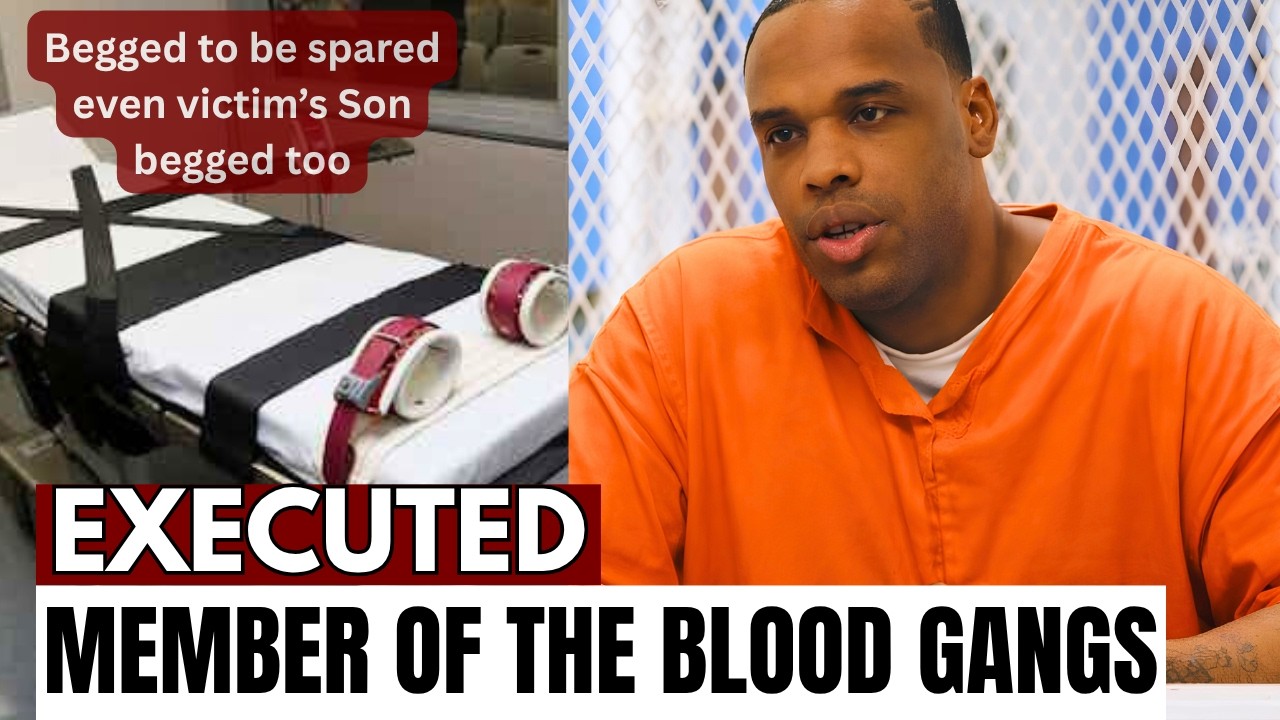 His final statement, delivered through a microphone as witnesses watched through glass, was not a plea for sympathy but a message aimed at the young people he had spent years mentoring from his cell.
He said he wanted the children who looked up to him to know what was happening to him. He asked them to keep the fight going. He also addressed the family of Hasmuk Patel, the convenience store owner he killed in 2004, telling them he loved them.
The execution proceeded despite an extraordinary campaign to stop it, one that included sworn testimony from a dozen fellow inmates, support from corrections officers, and the public forgiveness of Patel’s own son, Mitesh, who argued that killing his father’s murderer would only compound the tragedy.
Mitesh Patel was not in the witness room when the drugs began flowing. He had said everything he could say, and it was not enough.
Young’s legal team filed a last-minute federal civil rights lawsuit arguing that race was the driving factor in his case, pointing to the case of Thomas Whitaker, a white man who planned the murder of his own family and was granted clemency just five months earlier after his surviving father asked for mercy.
The U. S. Supreme Court declined to intervene.
The Texas Board of Pardons and Paroles voted unanimously against commutation. Governor Greg Abbott did not act.
The execution came 14 years after Young walked into the Mini Food Mart on the east side of San Antonio on a Sunday morning in November 2004, high on cocaine and alcohol, and shot Patel dead during a robbery that netted nothing.
But the story of what led to that moment, and what happened after it, is one that resists easy categorization.
Young was born in San Antonio, the second child of a young mother who moved the family between Texas and Wisconsin, cycling through relationships that brought instability and, according to court records and family testimony, abuse into the home.
His father, Willard Young, was the one steady presence in his life. When Christopher was eight years old, Willard was shot and killed on the street, allegedly during a drug deal connected to his own gang ties.
There was no counselor. No one caught the falling child. By age 12, Young had joined the Bloods, finding in the gang the belonging that had been ripped away from him with a single gunshot.
Teachers remembered a different boy. One of the sharpest minds they had ever taught, they said. He could hear a piece of music once and play it back on the violin.
He picked up the cello and the bass. He played chess with a quiet confidence that made grown men stop and pay attention.
That version of Christopher Young never got the chance to grow up.
He dropped out after ninth grade. His criminal record began to accumulate: marijuana possession, evading arrest, three separate convictions for assault causing bodily injury. Two of those assaults were against his own mother.
By 2004, he was 21 years old, living inside a gang identity, drinking heavily, using cocaine, and carrying unprocessed grief and rage that had nowhere to go.
On the night of November 20, 2004, his girlfriend, Chala Riley, who was eight months pregnant with his child, told him it was over. He beat her.
The next morning, he woke up with 15 to 20 beers and cocaine still moving through his system. He hadn’t slept. He hadn’t eaten.
He was armed.
What happened that morning unfolded in three parts, each with its own victim.
The first was Daphne Edwards, a mother of three who stepped out of her small efficiency apartment for less than five minutes to buy cigarettes, leaving her daughters at the breakfast table.
When she came home, there was a knock. She thought it was her sister. She opened the door to find Christopher Young pointing a silver revolver at her head.
He pushed his way inside. He demanded money. She handed over $28.
He told her it wasn’t enough.
Her three daughters were sitting right there. There was nowhere to send them. It was a single room.
Young sexually assaulted Daphne Edwards at gunpoint while her children watched. At one point, he fired a shot into the floor near her feet. DNA evidence later confirmed everything she reported.
When it was over, he told her they were leaving together. She said she wasn’t leaving her children. He walked over to each of her three daughters, one at a time, knelt down, and kissed them on the cheek.
He told them their mommy would be back soon.
He forced Daphne out the door and made her drive. When he got out to switch places, she ran. She did not stop running until she reached her cousin’s apartment.
Young drove her stolen red Mazda Protege exactly one block and pulled into the Mini Food Mart.
The store belonged to Hasmuk Patel, 53, known to his regulars as Hash. He had come to America and built something real out of nothing but years of honest labor. He knew his customers by name.
He was behind that counter before the rest of the city had fully woken up.
Surveillance footage captured what happened next. Young walked up to the counter and demanded money. Patel moved toward the register.
The gun went off once, then again. Patel managed to hit the panic button before he went down.
Young moved toward the register, then changed his mind, turned, and walked out the door, tucking the weapon under his shirt. He climbed into the stolen Mazda and drove away.
He took nothing. Not one dollar.
Hasmuk Patel died from a gunshot wound to the chest. He left behind a wife, Mina, and two children, Mitesh and Rena.
Young was arrested later that morning. His hands tested positive for gunshot residue. Patel’s blood was found on one of his socks.
Two witnesses identified him without hesitation.
 In February 2006, a jury deliberated for two hours and returned a verdict of capital murder. Young was sentenced to death. He was 23 years old.
He expected death row to be a war zone. His entire life had been organized around violence, gang politics, turf, the constant threat of somebody coming for you.
What he found instead was silence. Twenty-three hours a day in a 60-square-foot cell. A steel door that opened once daily for an hour of solitary recreation.
A food tray sliding under the door three times a day.
For a man who had spent his entire life running from stillness, it broke something open in him.
At first, he fought it. Rage. Push-ups until his arms gave out.
Fists against concrete walls. But nobody on death row cares what set you ran with on the outside. In here, the only thing that can actually kill you is your own mind.
Left alone with everything he had done, the reckoning found him.
It started with a man named Reginald Blandon. Reg was from San Antonio too, same kind of neighborhood, same kind of upbringing. He had run with a rival set.
On the outside, they would have been enemies by default. In here, none of that meant anything anymore.
Reg carried himself like a man who had made a decision somewhere deep down and wasn’t walking it back. He wasn’t performing anger anymore. He was just present, calm, reading, talking slow and deliberate.
One day, Christopher asked him for a book. Reg handed him a thin old paperback called “As a Man Thinketh” by James Allen. Christopher almost set it down after the first page.
Something made him keep reading.
Your thoughts shape your life.
For a man who had never once in 20-plus years been asked to actually examine his own thinking, that idea landed like a detonation.
He started reading everything Reg handed him. They passed books back and forth under the gap at the bottom of their cell doors. They wrote each other notes.
They argued about what they had read.
Reg taught him how to breathe through anger instead of becoming it. How to respond instead of react. He showed Christopher that what happened to him as a child was not his fault.
But what he did with it from this point forward was entirely his responsibility.
In 2009, Reginald Blandon was executed by the state of Texas.
Christopher had lost his father at eight. Now he lost the man who broke him open and showed him what was underneath. It would have been the easiest thing in the world to let that grief curdle back into rage.
He didn’t do that. Instead, he became what Reg had been for him.
He started mentoring the younger men who arrived on death row the same way he had: angry, lost, wearing an identity that meant nothing in here. He talked men down through the vents before confrontations turned violent. He stepped in once when a fellow inmate was about to assault a guard.
He talked another man back from the edge when that man was preparing to take his own life.
Twelve inmates eventually signed sworn statements confirming that Christopher Young became a genuine force for peace on death row. Not a performance for a parole hearing. A documented pattern over years.
He wrote to youth programs on the outside. He developed a curriculum from inside his cell called “Reaching Our Young from the Inside Out,” an attempt to have the exact conversation with at-risk kids that nobody ever had with him back when he was 12 and standing at the same crossroads.
And then something happened that almost nobody could have predicted.
Mitesh Patel, the son of the man Christopher murdered, decided he didn’t want Christopher to die.
Mitesh had carried his father’s murder for over a decade. He had grown up without Hash Patel at every milestone that mattered. That kind of loss doesn’t resolve.
It lives in a person and shapes the direction they grow in.
It shaped Mitesh toward something almost nobody around him expected.
He started showing up to rallies organized by Christopher’s legal team. He talked to reporters about why he was asking Texas to spare the life of the man who took his father. He submitted testimony to the clemency petition.
He tried to arrange a face-to-face meeting through the prison’s victim services division and was told it wasn’t possible.
So he wrote a letter instead.
Christopher’s response came back through staff.
“Chris killed my dad. Texas killing him doesn’t undo that. Two wrongs don’t make a right.
My dad was doing something positive with his life and Chris is doing something positive with his now. If the state takes that away from him too, they’re not any different than what Chris did.”
Mitesh said it plainly over and over to anyone who would listen: The man on death row today is not the man who walked into my father’s store 14 years ago.
With that support behind them, Young’s legal team filed their clemency petition. They laid out the transformation, the mentorship, the youth curriculum, the 12 sworn inmate statements, testimony from prison staff. And at the center of it, Mitesh Patel’s voice, asking the board to hear what his own father might have wanted.
 On July 16, 2018, Christopher Young sat across a table from the Texas Board of Pardons and Paroles. His hands were flat on the table. His voice didn’t shake.
He talked about the boy he was before any of this. The murdered father. The gang that filled the silence afterward.
The violence he absorbed for years and eventually unleashed on people who did not deserve one second of it.
He did not minimize Daphne Edwards. He did not minimize Chala Riley. He did not minimize what he did to Hasmuk Patel, to Patel’s family, to his own daughters, to everyone his choices had touched.
And then he raised the name at the center of his legal argument: Thomas Bart Whitaker.
Whitaker is a white man from Sugarland, Texas. In 2003, he sat down and methodically planned the murder of his entire family — his mother, his father, his brother — in order to collect the inheritance. He hired someone to pull the trigger.
His mother and brother were shot dead inside their own home. His father was shot too, and survived.
Whitaker was convicted of capital murder and sentenced to death. In February 2018, five months before Christopher Young’s scheduled execution, the Texas Board of Pardons and Paroles voted to recommend commuting Whitaker’s death sentence to life in prison.
The recommendation was built almost entirely around an appeal for mercy from Whitaker’s own father — the same man Whitaker had hired someone to kill.
Governor Greg Abbott accepted it. Whitaker came off death row. He will never walk free again, but he will live out his life.
Now hold those two cases side by side.
Thomas Whitaker sat in a room and planned the murder of three members of his own family. He paid someone else to pull the trigger. His mother and brother died.
His own father, the man whose forgiveness saved Whitaker’s life, took a bullet from someone his son hired.
That is cold. That is calculated in a way Christopher Young’s crime — born out of addiction and an unbroken cycle of trauma and a morning soaked in alcohol and cocaine — simply was not.
Christopher killed once in chaos. He never denied what he did. He spent 12 years doing the kind of internal work most free people never do in a lifetime.
Thomas Whitaker planned three murders and is alive today. Christopher Young committed one and was about to die.
One man is white. One man is black.
Young’s attorney, David Dao, filed a federal civil rights lawsuit in the final days before the execution and said it outright: “Race appears to be the driving force in this case.”
The state pushed back, arguing the cases weren’t comparable, that Young’s petition was weaker, that his prior record and the rape of Daphne Edwards made him a far less sympathetic candidate for mercy.
That part is true. It’s also true that Daphne Edwards was never a secret buried in his clemency petition. It was in the court record from the start.
The board weighed all of it and still chose to spare Thomas Whitaker, a man whose crime was more calculated, more premeditated, and touched more victims.
The board looked at Christopher Young across that table, and the chairwoman delivered the decision without visible hesitation.
Unanimous. No commutation.
He was going to die the next day.
Back at the Polunsky Unit that afternoon, his three daughters came to see him. The oldest was 17. The younger two were 13.
The visiting room was bright, almost cruelly so for what was happening inside it. There was no glass this time. He could hold their hands.
He could feel how much they had grown into themselves.
He kept his voice steady. He needed them to walk out of that room carrying something they could actually use, not just grief.
“Be better than me. Stay off the streets. Use every gift you were given.
Don’t let this world decide who you are before you get the chance to figure it out for yourself.”
They didn’t fall apart. They held on to his hands and memorized him in that light.
That evening, he was offered his final meal. He didn’t ask for anything special. The standard prison tray: meatloaf, mashed potatoes, corn, a slice of bread.
He ate slowly, the way a person eats when every bite is one fewer remaining.
He spent the night writing letters to his daughters, to Mitesh Patel, to the young people he had been mentoring, who he would never get to see again.
On the morning of July 17, 2018, he was transferred to the Walls Unit in Huntsville, where Texas has been carrying out executions for generations.
The walk to the death chamber isn’t long, but the sound of the chains stretches it out until it feels like miles.
Witnesses gathered on the other side of the glass. Journalists. State officials.
Mitesh Patel and his family chose not to attend. They had said everything they came to say, and it wasn’t enough.
Christopher was strapped to the gurney. Restraints across his wrists, his chest, his ankles. An IV line went into his arm.
 He turned his head as far as the restraints allowed toward the witness window and spoke.
He said he didn’t understand death row when he first arrived here. He said it needs to be talked about, that nobody’s out there having this conversation with kids, and somebody has to.
He asked that the children who look up to him be told what’s happening to him. He asked the young people he had been mentoring to keep going without him.
And then, addressing the Patel family directly, even though they weren’t in the room to hear it: “I want to make sure the Patel family knows I love them like they love me.”
At 6:13 p.m., the drugs entered the line.
A few seconds passed.
“I can taste it in my throat,” he said. “It burns.”
His eyes stayed open, fixed on the ceiling. Then they closed. His chest rose once more, slowly, and then it didn’t rise again.
At 6:39 p.m., the warden’s voice filled the chamber.
“The sentence has been carried out.”
Here is what must not be lost in all of this.
Daphne Edwards woke up on a Sunday morning to buy a pack of cigarettes and came home to have her life violated in front of her own daughters.
Chala Riley was eight months pregnant and still felt his fists on her the night before he killed a stranger.
Hasmuk Patel went to work like he did every single morning of his adult life and never made it home to his wife and his two kids.
Those are not footnotes in Christopher Young’s redemption story. They are the story.
He is not a hero who got a raw deal from the system. He is a man who did real, documented, irreversible harm to real people, and then over the following 12 years became someone capable of understanding exactly what he had done.
And that’s the part that makes this case so hard to sit with, because it’s tempting to pick a side.
Either he was a monster who deserved exactly what he got. Full stop. End of story.
Or he was a victim of his circumstances who transformed himself, and Texas killed him anyway out of nothing but cruelty and racial bias.
Both of those versions are easier than the truth.
The truth is that Christopher Young was, by the time he was 21, a genuinely dangerous man. Not because he was born that way, but because of what an 8-year-old boy was never given after his father died in the street.
Nobody intervened. Nobody caught him. And a child in that much pain with that little guidance will almost always find the version of power that’s waiting for him — whether that’s a gang, a bottle, or a gun.
That doesn’t make what he did to Daphne Edwards, to Chala Riley, or to Hasmuk Patel any less his own choice. He pulled the trigger. He put his hands on a pregnant woman.
He raped a mother in front of her children and kissed them goodbye on his way out the door.
Those were his actions, committed by an adult with the capacity to understand exactly what he was doing, even in the fog of that morning.
But it’s also true that he changed genuinely, verifiably, over years. In a way that 12 fellow inmates were willing to put their names on. In a way that convinced the son of the man he murdered to stand in front of cameras and beg for his life.
That transformation is real. And it still didn’t erase what came before it.
That’s the part that doesn’t resolve.
A man can become someone worth knowing and still owe a debt for who he used to be that no amount of becoming can pay back.
Redemption and accountability aren’t the same currency. And this case is what happens when a person actually finds one without ever being able to buy back the other.
So when Christopher Young looked at that parole board and asked why Thomas Whitaker got to live, the question deserves scrutiny. It deserves scrutiny regardless of how you feel about Christopher Young as a person.
A man who coldly planned the murder of his entire family is alive today. A man who killed once in chaos after 12 years of documented transformation is not.
That gap is its own separate wrong, sitting right alongside the wrongs Young committed.
His three daughters grew up without a father the same way he did. That’s not a coincidence, and it’s not poetry. It’s just what happens when nobody stops the cycle in time, and then the state ends it in the only way it knows how — which doesn’t actually stop it either.
It just moves the loss to the next generation.
The question that actually matters is whether the man Texas executed on July 17, 2018, was the same man who committed those crimes 14 years earlier. And if he wasn’t anymore, whether that should have counted for something beyond a footnote in his clemency file.
Does transformation ever earn a second look? Or is a death sentence a debt that stays fixed the moment it’s handed down, no matter who’s standing there to pay it years later?
And if Thomas Whitaker’s father’s forgiveness was enough to save his son’s life, why wasn’t Hasmuk Patel’s son’s forgiveness enough to save Christopher’s?
There is no clean answer. There may not be one at all.
But the state of Texas made its choice on Tuesday evening, and Christopher Anthony Young is dead.


