The Oklahoma State Court of Criminal Appeals has officially scheduled the execution of James Pavatt for November 12, 2026, moving the state one step closer to closing a case that has haunted the American justice system for a quarter-century. The decision comes just ten days after the Tenth Circuit Court of Appeals refused to reconsider the conviction of Brenda Andrew, the only woman on Oklahoma’s death row, marking the end of her final federal appeal and setting the stage for a legal and moral reckoning that shows no signs of reaching a consensus.
The timeline now converges with brutal precision. Pavatt, the man who confessed to firing the fatal shots that killed Rob Andrew in his own garage on November 20, 2001, faces lethal injection at the Oklahoma State Penitentiary in McAlester. His clemency hearing before the Oklahoma Pardon and Parole Board is scheduled for mid-October, where his legal team plans to emphasize his decorated military service as a former Air Force master sergeant and his behavior as a model inmate over two decades behind bars.
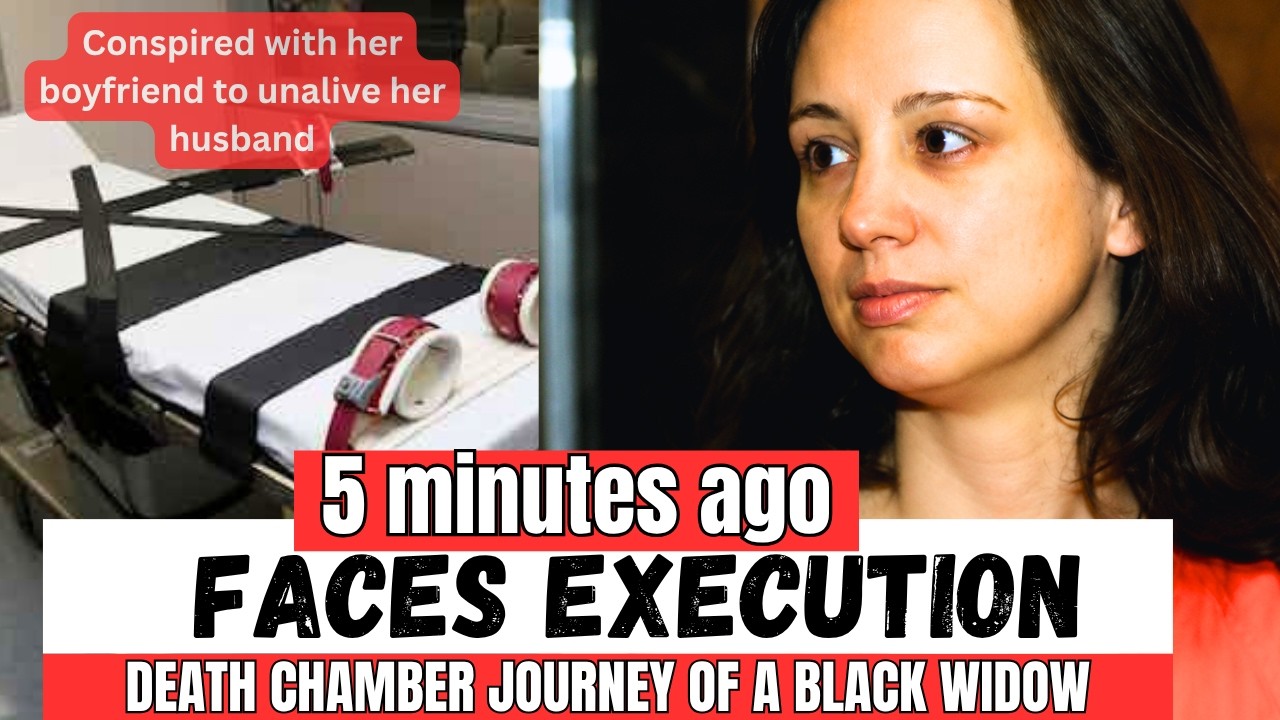 If the board recommends mercy, Governor Kevin Stitt could commute the sentence to life without parole. If not, Pavatt becomes the fourth person executed in Oklahoma in 2026, maintaining a pace of state-sanctioned killing that has drawn national scrutiny since a botched execution in 2014 drew widespread condemnation.
But the scheduling of Pavatt’s execution does nothing to resolve the central question that has divided judges, legal scholars, and the public since Brenda Andrew was sentenced to death on September 22, 2004. The state has always maintained that Andrew and Pavatt acted together, that she lured her estranged husband into the garage under the pretense of a broken pilot light while Pavatt waited with a 16-gauge shotgun. The prosecution’s case, however, rested not on forensic evidence placing the weapon in her hands, but on a weeks-long presentation of her sexual history, her wardrobe, and her demeanor in the days following the murder.
Four separate witnesses were called to describe outfits she wore years before the crime, including a leather ensemble deemed inappropriate for a woman of her station. The jury heard about how many times she had sex in a car, a detail with no bearing on whether she conspired to commit murder. A self-help book about keeping a romantic partner interested was entered into evidence.
In closing arguments, the prosecutor held up her underwear for the jury to see, called her a whore, and invited the twelve jurors to imagine Rob Andrew’s dying words as he looked into her face, suggesting he was trying to say I love you.
The Tenth Circuit’s January 13, 2026 ruling, authored by Judge Robert Bacharach, acknowledged that some of the gender-based evidence was troubling but concluded it did not rise to the level of making the trial fundamentally unfair under the stringent standards of federal review. This came after the Supreme Court’s 7-2 decision on January 21, 2025, which vacated an earlier Tenth Circuit ruling and remanded the case, with Justice Samuel Alito writing separately that due process rights can be violated when irrelevant and highly prejudicial evidence overwhelms admissible evidence. Justice Clarence Thomas dissented, joined by Justice Neil Gorsuch, arguing that the state’s case against Andrew was strong enough to stand regardless of how the trial was managed.
The full Tenth Circuit’s refusal to rehear the case on August 17, 2026, now leaves Andrew with no remaining federal avenue of appeal, though her legal team has indicated they will continue to pursue state-level remedies.
The story begins in Enid, Oklahoma, where a teenage Rob Andrew gathered the courage to speak to a girl named Brenda Evers at a public pool. She was a few years younger, the kind of person who, by all accounts of those who knew her family, never caused anyone any trouble. Good grades.
Church every Sunday without fail. A picture of a well-raised Midwest daughter, raised in a deeply religious family where faith was not merely a Sunday activity but the organizing structure of the entire week. Rob was headed to Oklahoma State University to study advertising, and according to those who knew him then, he decided almost immediately that he wanted to marry her.
He got what he wanted. In June of 1984, when Brenda turned 21, they married in a Lutheran ceremony in Enid, surrounded by two families who had raised their children on the same church-going, community-bound Midwest lifestyle.
For a long stretch of years afterward, the story looked exactly as everyone in that community expected it to for them. Rob built a career in advertising and worked his way up to a prestigious, well-paying executive position in Oklahoma City. The kind of job that comes with a title on the door and a parking spot with his name on it.
Brenda worked in banking for a while before the children came. A daughter first, born in 1990, then a son a few years later. She left the bank to raise them, and like many women in that community, devoted much of her time to the family church, not just attending but teaching Sunday school herself, becoming one of the figures other parents entrusted with their children weekly.
From the outside, looking at that family across the church parking lot on any given Sunday morning, it looked like a picture of a stable, faith-centered family in the Oklahoma City suburbs. Two children, a home with a garage, and a marriage that had already surpassed its first decade, further than many marriages make it.
But beneath that image, something had begun to unravel. There was no single incident anyone could point to on the calendar later, no affair anyone knew about yet, no argument loud enough for neighbors to hear. It was a slow drift, the kind that is almost impossible to date precisely when you look at it from a courtroom years later, trying to figure out when exactly things changed.
By the late 1990s, it was serious enough that Rob and Brenda sought counseling from their church, sitting before a pastor or counselor, trying to reclaim something that had already begun to slip through their fingers. It did not save the marriage. And in 1999, in a crueler irony than this case revolves around, it was Rob himself who introduced Brenda to James Pavatt.
Pavatt was not a stranger who had crept into their lives from nowhere. He was a former Air Force master sergeant, a man who had served his country for years before leaving the military and going into insurance. By the time he met the Andrew family, he was in his mid-forties, recently divorced, and deeply immersed in their church community, serving as a deacon and, like Brenda, a Sunday school teacher.
A person the congregation already trusted before any of this began.
The two families began spending real time together. Dinner parties at each other’s homes. Church committees.
Pavatt and Brenda ended up teaching Sunday school classes side by side, standing in front of the same children’s room every week. And somewhere in the middle of all that overlap, the potlucks, the committee meetings, and with the two families’ lives slowly intertwining, something began between Brenda and Pavatt that had nothing to do with scripture. It did not stay hidden for long.
Word spread through the congregation as it always does, whispered at first, then openly. Eventually they were asked to stop teaching. But being asked to stop teaching a Sunday school class is not the same as stopping what is happening between two people.
And here is the detail that turns a private betrayal into the financial engine of a murder case. As an insurance agent, James Pavatt had already sold Rob Andrew a life insurance policy. $800,000.
Brenda was listed as the primary beneficiary. The man having an affair with Rob’s wife was also the man who wrote the policy that paid out upon Rob’s death. A detail that seems, once investigators found it, almost too perfect, too obviously damning.
By the fall of 2001, the marriage was over on paper. Brenda filed for divorce, which was said to be against Rob’s wishes according to most accounts from those close to the family. Rob moved out, leaving her in the family home with the two children.
And here the story stops being merely about heartbreak and begins to revolve around money, with a corpse at the center. According to court records, Rob, who was only 38 years old and in perfectly good health by everyone’s account, with no reason to expect his life was in danger, began taking steps to remove Brenda as the beneficiary of that $800,000 policy. The man currently having an affair with the beneficiary was actively working to ensure she never got that money.
A month later, someone cut the brake lines on his car. There is something worth pausing on here, not just as a plot detail but as a pattern that repeats over and over in cases like this, rarely discussed with real honesty. Most people who are killed by someone close to them are not ambushed by strangers in a dark parking lot on an unexpected night.
They are killed by people who already had access to their homes, their money, their daily routines, their schedules. People they let into their lives for years before anyone pulled a trigger.
Rob Andrew received more warnings than almost anyone in his position gets. He survived an assassination attempt. He walked into a police station and named the two people he believed were responsible weeks before he died.
 And still, it was not enough. Because knowing exactly who wants you dead and being able to prevent that from happening are two entirely different problems. And the second problem is always harder to solve than people watching from the outside assume.
On November 20, 2001, two days before Thanksgiving, Rob drove to the home he used to share with his family to pick up the children for the holiday. It was a routine task, the kind divorced parents do every week in every city in the country without a second thought. He pulled into the driveway.
Before he could leave with his children, Brenda met him at the door and asked him to come into the garage. She said the pilot light on the furnace had gone out, and she needed his help relighting it. He went inside.
Inside the house, in the master bedroom, the two children were watching television with the volume up. They had no idea what was about to happen thirty feet away, behind a wall and a door. Rob knelt toward the furnace.
James Pavatt, who had been waiting inside that garage, shot him with a 16-gauge shotgun. Rob did not fall from the first shot. According to the narrative prosecutors built at trial, he reached for a bag of soda cans that had been placed on the garage floor.
A final instinct toward cover, toward surviving one second longer than the two people trying to kill him expected. It did not work. A second shot ended everything.
Brenda was also shot, once in the arm, a wound investigators later determined came from a . 22 caliber pistol fired at close range. Close enough that gunshot residue on her skin told a story that did not match the one she was about to tell the emergency dispatcher.
Two masked men, she said in the call. They came into the garage. They attacked both of us.
She told the dispatcher Rob was still conscious, trying to speak. By the time paramedics arrived, he was dead. At the hospital later, more than one witness would describe her demeanor as remarkably calm for a woman who said she had just watched her husband get shot to death in front of her.
A note that means almost nothing on its own. People process trauma in vastly different ways. But it was a point investigators, and later prosecutors, would return to again and again as the case developed.
Investigators became suspicious almost immediately because staged crime scenes rarely hold up to real scrutiny once trained eyes begin examining them. An empty shotgun shell casing was found resting on top of the family car. A place where two fleeing intruders in a panic could not possibly have left it.
A . 22 caliber bullet was found in the wall. Nothing was missing from inside the home.
Rob still had his wallet, ruling out robbery as a motive before investigators even finished their first pass through the crime scene. The wound on Brenda herself, meant to prove she had also been attacked by intruders, was inflicted from a distance too close to match her story of being shot while running from the garage into the house.
Police searched the neighboring home belonging to the Andrew family’s neighbors, a family named Gigstad. Inside the attic, they found evidence that someone had recently crawled through an opening in a bedroom closet. A hiding spot placed exactly where a man would need it to disappear from the crime scene without being seen running down the street.
They also learned that about a week before the murder, someone had purchased a . 22 caliber pistol from a local gun shop, the same caliber that caused the superficial wound on Brenda’s arm. A coworker of Pavatt’s, a woman named Larson, later told police something that rarely appears in abbreviated accounts of this case.
She said Pavatt warned her not to repeat that Brenda had asked him to kill Rob Andrew, threatening to kill her too if she did. The day after the murder, Pavatt borrowed his daughter’s car, telling her he was taking it for maintenance. When he returned it the next morning, it had not been serviced, but his daughter found a .
22 caliber bullet on the car floor. Later that day, in a conversation with Larson, he told her to dispose of the bullet and never mention it. Three days after the shooting, Rob Andrew’s funeral was held.
Brenda did not attend. Neither did James Pavatt. Nor did the children, because by the day of their father’s burial, all four had crossed the border into Mexico, fleeing an investigation that was closing in on them far faster than they had anticipated.
For nearly three months, two adults evading murder charges and two children unaware of what their mother had actually done lived somewhere south of the border, while investigators in Oklahoma City quietly built their case, waiting for their money to run out. When it did, Brenda and Pavatt attempted to return to the United States in February 2002. Border agents arrested them immediately.
Pavatt confessed almost immediately to shooting Rob Andrew. He has remained consistent on one specific point and has not wavered from it for the past 24 years, through his own trial and decades of appeals, right up to the present day. Brenda had nothing to do with it.
He says he acted alone. Investigators and prosecutors did not believe him. Both were charged with first-degree murder and conspiracy to commit murder.
There is a strange detail in this part of the case that is rarely mentioned in abbreviated accounts. Years later, a completely different man on death row named Zetain Tyrone Wood sent a letter confessing that he was the one who shot Rob Andrew. It became a minor legal skirmish within Pavatt’s separate appeals, with his lawyers arguing the jury should have been allowed to see and evaluate the letter.
But the letter turned out to contain nothing that was not already in the public record by that time, and no judge who reviewed it found it credible enough to change anything. The case went nowhere in the courts, but it remains a strange addition to a controversial case like this one. A strange man writing from inside the prison system attempting to implicate himself in a murder he appears to have had no real connection to, for reasons no one has ever fully explained.
Pavatt was tried first in 2003. A jury convicted him of first-degree murder and conspiracy and sentenced him to death. Brenda’s trial began in July 2004, and it became clear almost immediately that the prosecution had a real problem.
There was no forensic evidence placing the shotgun in her hands. No fingerprints, no gunshot residue on her clothing linking her directly to firing the weapon that killed her husband. The only man who could speak directly to what happened inside that garage had already testified under oath and explicitly exonerated her from any involvement.
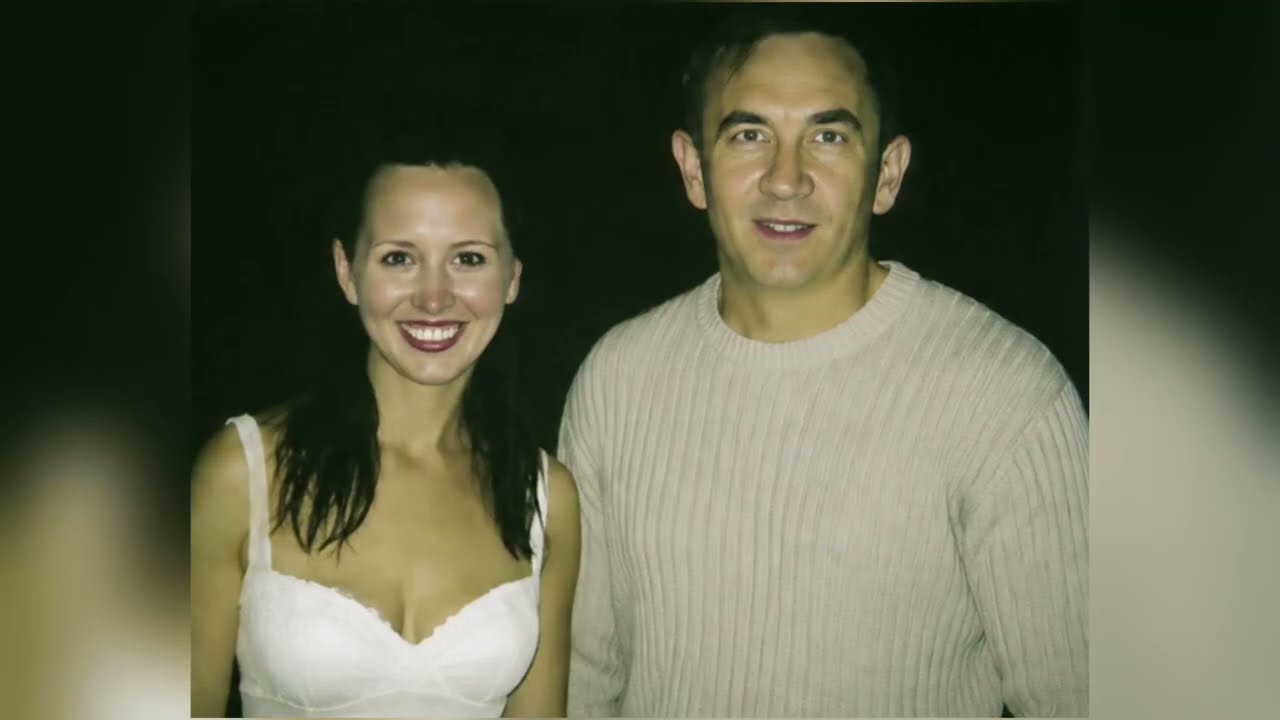 No, the state built its case differently. And that is the part of the story the Supreme Court would still be arguing about more than two decades later. Over the following weeks, the jury heard far more about Brenda Andrew’s underwear than they did about forensic evidence.
Four separate witnesses were called specifically to describe outfits she wore years before the crime, while out to dinner or shopping. A short skirt, low-cut tops, and dresses described in court testimony as very tight. A leather outfit one witness described as inappropriate for a woman in her position.
Witnesses were pushed repeatedly to say aloud whether they thought the clothing was modest, as if modesty itself were admissible evidence in a murder trial. The testimony reached back two decades into her sexual history, into affairs and encounters that had absolutely nothing to do with the crime being tried in that courtroom. Prosecutors asked how many times she had sex in a car, a detail with no relevance whatsoever to whether she conspired to kill her husband, and yet it was entered into the record.
A self-help book found among her possessions about how to keep a romantic partner interested was entered into evidence and shown to the jury. In just one day of testimony, her behavior and her apparent lack of tears after Rob’s death were referenced 15 times by prosecutors and witnesses. Over the entire trial, that number rises to more than 30 separate references to her appearance, her mannerisms, whether she cried enough, or whether she cried the right way.
Separately, according to the dissent later filed by Judge Robert Bacharach in the federal appeals court, police obtained a statement from Brenda under circumstances that raised a serious violation of her Miranda rights. She was interrogated without properly securing her constitutional rights while still recovering in a hospital bed from a gunshot wound to her arm.
Then came the closing arguments, and this is the moment that would end up defining the entire case for the next two decades of appeals. The prosecutor walked over to one of the bags Brenda had packed before fleeing to Mexico, opened it in front of the jury, and pulled out her underwear piece by piece, holding up a pair of panties for the entire courtroom to see, wondering aloud whether a grieving widow would pack something like that. In that same closing argument, he called her a whore in front of the twelve jurors deciding between life and death.
He told them she had sex in betrayal of her husband over and over again while keeping a lover. He compared her at every point to Rob, describing him to the jurors as a God-fearing man, a faithful husband betrayed by a wife who was not. At one point, he invited the jurors to imagine Rob’s last words as he lay dying on the garage floor, looking into Brenda’s face, suggesting he was trying to say I love you.
Because that was the kind of man he was. It is a stunningly dramatic closing argument. Years later, when the Oklahoma Court of Criminal Appeals reviewed that exact moment, the court ruled it was a fair comment on the evidence, not misconduct, not improper argument, but a permissible inference for a prosecutor to make before a jury about to impose a death sentence.
The jury convicted her of first-degree murder and conspiracy to commit murder. They recommended the death penalty. On September 22, 2004, Brenda Andrew was formally sentenced to death by lethal injection, becoming at that moment the only woman on Oklahoma’s death row.
A distinction she still holds more than two decades later in a state that has executed nearly 200 people since the early twentieth century, only a handful of them women.
Not every judge who reviewed the trial later agreed it was fair. In the Oklahoma Court of Criminal Appeals, Judge Arlene Johnson dissented, writing that the state’s presentation had no purpose other than to cement the idea that Brenda Andrew was a bad wife, a bad mother, and a bad woman. Years later, reviewing the same trial record in the federal Tenth Circuit, Judge Bacharach also dissented, writing that the case focused from start to finish on Andrew’s sex life, and that the evidence was not merely irrelevant.
It portrayed her as a woman obsessed with seducing the men around her, which deprived the jury, in his words, of any realistic chance to seriously consider her version of events. He described it as a portrayal of a fallen woman, a modern-day Jezebel, designed to provoke distrust based on nothing but her private life. He pointed to a specific and very precise detail in the trial’s structure, that the prosecution chose to open and close with evidence of her infidelity, creating what he called an exaggerated effect due to its temporal proximity to the moment of jury deliberation.
It is worth noting something that followers of Oklahoma’s capital punishment history have pointed out precisely about this case. It has been decades since the state faced this level of sustained public scrutiny over the prospect of executing a woman. The last time an American woman on death row became a national turning point like this was Karla Faye Tucker in Texas.
In the late 1990s, that case attracted commentators and public figures from across the political spectrum to debate mercy. Brenda Andrew’s case has revived a version of that national debate, but this time the fundamental question is not about redemption or rehabilitation on death row. It is about whether the trial that led there was legitimate in the first place.
A colder, more procedural question, but in some ways harder for the legal system to absorb because it does not ask whether she deserves mercy. It asks whether the conviction itself can be trusted.
Her legal team finally took that argument to the United States Supreme Court, arguing that the sheer volume of irrelevant sexual character evidence presented against her violated her right to due process under the Fourteenth Amendment. That gender stereotypes had effectively done the job that conclusive forensic evidence should have done in a capital murder case. On January 21, 2025, the Supreme Court issued its ruling, 7-2.
The justices did not directly overturn her conviction, and it is worth being precise about what they actually decided, because much of the media coverage at the time oversimplified it. In an unsigned opinion, the majority vacated the previous Tenth Circuit ruling and remanded the case downward, holding that established federal law clearly permits a due process challenge when a trial is saturated with prejudicial evidence like this. That the lower court had applied the wrong legal standard the first time, erroneously concluding there was no Supreme Court precedent governing a claim like hers.
Justice Alito, concurring separately, wrote that a defendant’s due process rights can be violated when irrelevant and highly prejudicial evidence overwhelms admissible evidence, rendering the trial fundamentally unfair. While being careful to say he was expressing no opinion on whether that very high standard had actually been met in Brenda Andrew’s specific case. Justice Thomas dissented, joined by Justice Gorsuch, arguing that the state’s case against Andrew was strong enough on its own to stand regardless of how the trial was managed.
And that some of the disputed testimony was fair rebuttal anyway, since her defense team had portrayed her at trial as a devoted mother who would never go to such lengths. A claim Thomas believes the state had a right to challenge with its own evidence. It was the first real glimmer of hope in this case in 20 years.
And for a few months, it seemed like it might actually change something. The Tenth Circuit heard the case again that summer. And on January 13, 2026, the panel issued its ruling.
Again, in an opinion written by Judge Bacharach, the same judge who had argued so forcefully for her in his 2023 dissent. Following the Supreme Court’s specific instructions this time, the panel wrote that it had considered the significance of the disputed evidence, the degree of prejudice against Andrew, and the trial court’s failure to provide any limiting instructions on how the jury should evaluate that evidence. After all that deliberation, the panel found that although some of the gender-based evidence was concerning, it did not rise to the level of making the trial fundamentally unfair under the stringent legal standards it was bound to apply in federal review.
The panel concluded that a fair-minded judge could still doubt that the trial was truly infected with unfairness. The petition for rehearing was denied a second time. Her team did not stop there.
On April 27, 2026, they filed a petition asking the full Tenth Circuit to reconsider the case en banc, not just the original three-judge panel, but the entire court. Every active judge participating in the deliberation together. Their argument was specific and direct.
That the January panel ignored most of the gender stereotype evidence presented at trial. That it evaluated only a fraction of it and in isolation. That it never grappled with the cumulative weight of weeks of testimony about her sex life, her clothing, her fitness as a mother.
Treating each piece of evidence separately as an individual matter. Rather than asking what all of that evidence, combined over the course of a full trial, did to 12 jurors trying to decide whether a woman should live or die. That petition is where much of the media coverage of this case still stops.
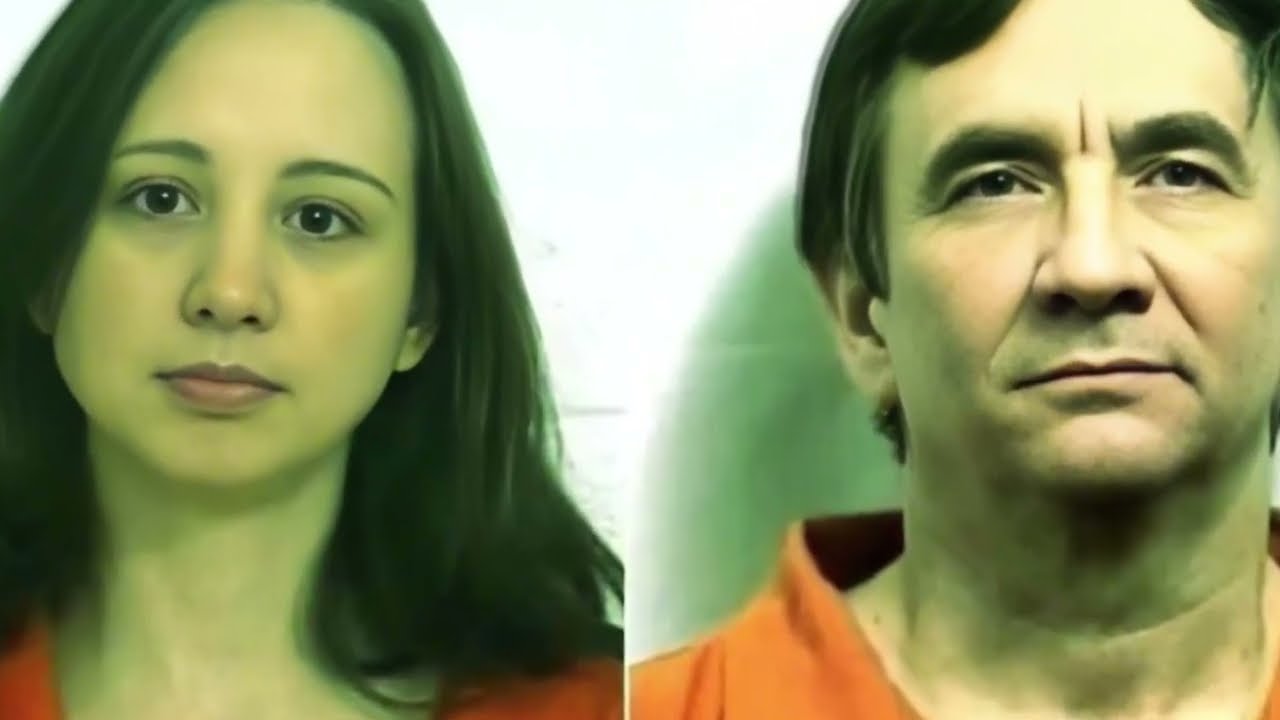 But it is not where the story actually stands. On August 17, 2026, less than two weeks before this video was published, the Tenth Circuit declined to rehear the case en banc. The petition is completely finished.
Brenda Andrew’s conviction and death sentence remain fully intact exactly as they have been since 2004, after more than two decades and two separate rounds of review before the Supreme Court and federal appellate courts, where at least four judges in three different courts have registered opinions, in one form or another, that something about how this trial was conducted troubled them. And it has not changed anything so far.
Ten days after that decision, on August 27, 2026, the Oklahoma Court of Criminal Appeals set James Pavatt’s execution date for November 12, 2026. The execution will be by lethal injection at the Oklahoma State Penitentiary in McAlester, the same facility that made national headlines for a botched execution in 2014. It is important to understand how strange Oklahoma’s execution schedule has become in recent years to realize what this date actually means.
The state attorney general has twice successfully petitioned courts to expand the required interval between executions. First from 30 days to 60 days in 2023. Then from 60 to 90 days in 2024, citing what officials described as severe psychological and emotional trauma experienced by Department of Corrections staff who carry out executions.
Pavatt’s execution date is not an isolated event. It fits into a broader pattern of a state working through a long backlog of death row cases at a pace currently matched by few other states in the country. Pavatt’s lawyers have called the November 12 date premature.
Arguing that there are still substantive questions that have not been answered in the underlying case. A clemency hearing before the Oklahoma Pardon and Parole Board is scheduled for mid-October, where his current legal team plans to focus heavily on his military record. A decorated master sergeant in the Air Force, a Baptist deacon, described by his defense as someone who had no trouble in his life before any of this, and who has, according to his attorneys, served as a trusted legal assistant and model inmate over more than two decades of incarceration.
If the board recommends mercy, Governor Kevin Stitt can commute the sentence to life without parole. If the board refuses or the governor takes no action, Pavatt is expected to become the fourth person executed in Oklahoma in 2026. And by all indications over the past 24 years, he is expected to face death still insisting, exactly as he did the day border agents arrested him in February 2002, that Brenda Andrew had no part in the killing of Rob Andrew.
Brenda Andrew remains at the Mabel Bassett Correctional Center in McAlester, Oklahoma. She is the only woman on the state’s death row, a distinction that means there is no one else in that system who shares her exact circumstances. No peer group, no comparable case down the hall to commiserate with.
More than two decades now inside a cell measuring approximately 6 feet by 9 feet, smaller than a standard parking space. A steel bed bolted to the wall, a steel toilet, a small metal sink. And for long stretches of those years, by most accounts, she has spent up to 22 or 24 hours a day locked in that space, with human contact often coming through a narrow slot in a steel door.
A guard passing a food tray through the slot or restraining her wrists before allowing her out for recreation. The wake-up announcement comes over the intercom system at around six in the morning. She washes her face at a small metal sink.
Breakfast is pushed through the slot, usually lukewarm by the time it reaches her. If she is lucky, she gets an hour of recreation, led out in restraints to a small enclosed concrete yard, perhaps 20 by 20 feet, covered by an opaque skylight that lets in light but offers no real view of the sky. She walks in circles.
She stretches. After 60 minutes, she is brought back inside, and the rest of the day is hers to fill however she can. Letters to her legal team, paperwork related to whatever appeal is currently active, religious reading.
Once a week, one hour with a chaplain, conducted through a glass barrier and over a telephone, with no physical contact permitted at all. For many people held in conditions like these, a visit like that becomes the emotional anchor around which the entire week is built. Lights out around eight in the evening.
Then it begins again the next morning, almost identically, with one exception. Every day for more than two decades, she has woken up in a cell built and run by a state that has spent all that time trying to carry out her execution. The two children who were watching television in the hallway while their father was being shot have grown up without either parent in the home.
One dead, the other convicted of killing him and shipped to a prison hours away from the home where they all used to live together, the home where they used to watch television together on ordinary afternoons before any of this happened. Whatever role their mother actually played on November 20, 2001. Those two children lost both parents that same afternoon, in the same house, and neither the courts nor the news coverage that followed over the next 25 years has had much time to ask what that cost them.
Here is the part of this case that should actually stay with you longer than the underwear, longer than the piece of clothing held up in the courtroom, longer than any sentence the prosecutor spoke aloud in 2004. Two people were tried and convicted for the exact same murder. By every account that exists in the public record, the man who confessed to firing both shots has spent 24 consecutive years insisting the woman had no role in it.
Throughout his trial, through decades of his appeal, right up to the clemency hearing that may decide whether he lives or dies in the next few months. And throughout that entire time, no forensic evidence has ever emerged placing the shotgun in her hands. Nothing linking her fingerprints to the weapon.
No gunshot residue on her clothing consistent with her having fired the shots. What convicted her, according to two dissenting judges in two separate courts across both the state and federal systems, was a trial that spent more time talking about her wardrobe and her sex life than it did about the actual physical mechanics of who killed Rob Andrew and how. It would be easy to simplify this case.
Easy to decide, the way the jury apparently did in 2004. That a woman who had an affair, filed for divorce, fled the country days after her husband was murdered instead of attending his funeral, and lived with a fabricated story about masked intruders for months before finally being caught at a border checkpoint, is exactly the kind of person capable of orchestrating her husband’s murder. None of those facts are in dispute.
She did have the affair. She did file for divorce against his wishes. She did flee with her children instead of burying her husband.
Those choices tell you real things about who Brenda Andrew is, and they are not admirable things. But there is a difference between someone capable of betrayal and abandonment, and someone capable of planning a murder. And a legal system built on due process exists precisely because juries, made up of ordinary people doing their best with limited information, can lose sight of that difference when the evidence in front of them is designed to blur it.
Maybe the jury was exactly right in 2004. Maybe Brenda Andrew did plan her husband’s murder, down to the insurance policy and the pilot light excuse, and James Pavatt has spent 24 years lying under oath, lying to the Pardon and Parole Board, and lying, apparently, all the way to his own execution, to protect a woman who did not deserve that kind of loyalty. That is a perfectly coherent version of this story, and it is the version Oklahoma’s attorney general has argued for two decades across multiple administrations.
Or maybe a jury looking at a case built on circumstantial evidence, with the shooter’s sworn confession of her innocence, and a prosecutor waving her underwear in front of 12 strangers, convicted the version of Brenda Andrew the state constructed inside the courtroom rather than the version supported by the actual evidence. Two federal courts, one state appeals judge, and nine Supreme Court justices have now looked closely and formally at that exact question using the full weight of the appellate system in American law, and they still do not all agree on the answer. If the people whose entire careers are built on resolving this type of dispute cannot reach a consensus after 20 years and two rounds of Supreme Court review, it is worth thinking about how much confidence we should have in a verdict reached by 12 jurors over a few weeks in the summer of 2004.
Here is what is worth asking yourself before the comments start flowing. If a jury in your hometown had to decide whether to sentence a woman to death, and a significant portion of the evidence presented against her was about what she wore to the grocery store two decades earlier, how many times she had sex in a car, and whether she cried the right way and at the right volume in the days after her husband was murdered, would you trust that verdict as much as you trust the death penalty itself to only be applied to people who truly deserve it? And if James Pavatt is executed on November 12, still saying the same thing he said the day border agents arrested him at that checkpoint in February 2002, that Brenda Andrew had nothing to do with it, does that settle anything at all about what actually happened in that garage?
Or does it just mean the state finished the job before the record was ever honestly and fully sorted out?