When the First World War erupted in August 1914, most of Europe was dragged into a conflict that would reshape the continent. Spain stood apart. It declared neutrality, and on paper, it stuck to that position. But behind the scenes, Spain became deeply entangled in the war’s politics, economics, and even covert operations.
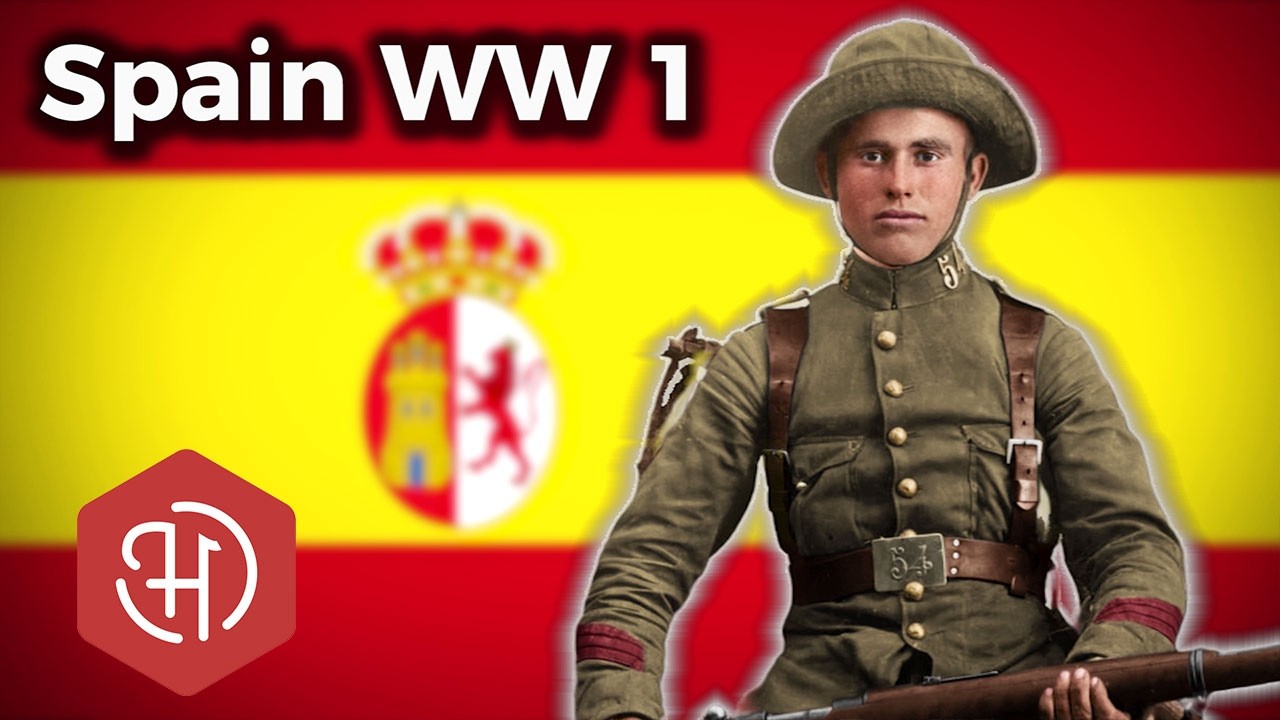
Some historians describe it as a war zone without battles. Spain was not a major military power in 1914. Its army was underfunded, its political system unstable, and its recent past was marked by the loss of its colonies in 1898. Entering a large-scale European war would have been a risky gamble.
Economically, Spain was closely tied to France and the United Kingdom, both of which would soon become key Allied Powers. Trade with these countries dominated Spanish imports and exports, making neutrality not just a political decision but an economic necessity. On August 4, 1914, the Spanish government, under Prime Minister Eduardo Dato, officially declared neutrality. But there was an important caveat.
Privately, Spain signaled to Britain that it would adopt what was called “benevolent neutrality” toward the Allies. Spain would stay out of the fighting but quietly favor one side. At first, neutrality seemed like a blessing. As war consumed Europe, Spain experienced an economic boom.
With major industrial nations focused on military production, Spain stepped in to supply food, minerals, and raw materials. Exports surged, prices rose, and certain sectors thrived. On paper, Spain was profiting from a war it wasn’t fighting. But this prosperity came at a cost.
The wealth was unevenly distributed. While industrialists and exporters grew rich, ordinary Spaniards struggled. Basic goods like bread became scarce and expensive, especially in working-class communities. Inflation soared, and social tensions began to rise.
Spain wasn’t fighting at the front, but internally, it was beginning to fracture. Spanish society also became deeply divided over the war itself. A fierce ideological battle broke out between two camps: the Germanophiles, who supported Germany and the Central Powers, and the Aliadófilos, who favored the Allies. Conservative elites, monarchists, and the Catholic Church often leaned toward Germany, seeing it as a defender of traditional order.
Meanwhile, liberals, intellectuals, and much of the working class sympathized with France and Britain, viewing them as champions of democracy and progress. Even King Alfonso XIII played a complicated role. While officially neutral, he became known for humanitarian efforts, helping prisoners of war and facilitating communication between families separated by the conflict. His actions earned international praise but also highlighted Spain’s unique position—close enough to the war to be involved, but distant enough to avoid direct fighting.
The idea that neutrality kept Spain safe from the war is misleading. The conflict seeped into the country in unexpected ways. Spain became a hub of espionage, propaganda, and economic warfare. Both the Allies and the Central Powers saw Spain as strategically valuable.
Its geographical position, controlling access between the Atlantic Ocean and the Mediterranean Sea, made it crucial for trade and military logistics. German agents operated throughout Spain, attempting to disrupt Allied supply lines and influence public opinion. British and French intelligence services did the same in reverse. Industrial sabotage plots, covert operations, and aggressive propaganda campaigns turned Spanish cities into silent battlegrounds.
Newspapers were filled with competing narratives, each side trying to win Spanish support. One of the most important aspects of Spain’s wartime role was its resources. The country was rich in minerals like iron ore and lead, all essential for modern warfare. Both sides wanted access, but in practice, most ended up in Allied hands.
That wasn’t an accident. The Spanish government signed trade agreements almost exclusively with Allied countries, effectively cutting off economic ties with Germany. A key figure in this pro-Allied shift was Álvaro de Figueroa, also known as Count Romanones. A leading liberal politician who served as Prime Minister from 1915 to 1917, he openly favored closer ties with the Allies and even questioned whether neutrality was in Spain’s best interest.
In a famous article titled “Neutrality That Kills,” he argued that staying out of the war could ultimately harm Spain’s national interests. Romanones went further than rhetoric. His government negotiated major trade deals with Britain and France. One agreement, known as the Cortina Agreement, exchanged Spanish iron ore for British coal, an essential resource for Spain’s industry.
These deals tied Spain’s economy even more closely to the Allied war effort. Spain also played a crucial role in supporting Gibraltar, a British-controlled territory at the southern tip of the Iberian Peninsula. Despite official neutrality laws, Spain supplied Gibraltar with food, coal, and other essentials. This support became especially important during major Allied operations, such as campaigns in the Eastern Mediterranean.
Spanish exports to Gibraltar increased dramatically during the war, showing how neutrality was often bent in practice. Yet this pro-Allied stance did not go unchallenged. Germany responded with its own pressure tactics, most notably through unrestricted submarine warfare. German U-boats targeted shipping across the Atlantic and Mediterranean, and Spanish vessels were not spared.
Over the course of the war, more than 80 Spanish ships were sunk. These attacks pushed Spain closer to the brink of entering the war. Public outrage grew, and political pressure mounted. When a German submarine sank the Spanish ship Ramón Larringa in 1918, the Spanish government issued strong protests and demanded compensation.
Even King Alfonso XIII, who had sometimes been seen as sympathetic to Germany, grew increasingly frustrated. Despite these tensions, Spain never declared war. There were several reasons for this. Militarily, Spain had little to offer compared to the already massive armies of the Allies.
Politically, the country was unstable, with frequent changes in government and rising social unrest. In 1917, Spain experienced a major crisis, including military unrest and revolutionary strikes, bringing the country closer to collapse. Perhaps most importantly, the Allies themselves were not particularly eager for Spain to join. Spain was already providing valuable economic and logistical support without demanding major concessions.
Bringing Spain into the war would complicate diplomacy without offering significant new advantages. Even Spanish Guinea, now Equatorial Guinea, played a role. It was a neutral territory that became a vital sanctuary for German troops fleeing Cameroon after 1916. While Spain maintained strict neutrality, thousands of German troops and Cameroonian civilians found refuge there.
As the war came to an end in 1918, Spain faced a sobering reality. Despite years of benevolent neutrality toward the Allies, it received little in return. Some Spanish leaders had hoped that supporting Britain and France would lead to territorial gains, particularly a more advantageous position in Morocco. But these ambitions never materialized.
In post-war negotiations, Spain had little leverage. Neutrality meant it had no seat at the table when the new European order was being decided. Looking back, Spain’s experience during the First World War reveals the complexity of neutrality in a total war. Far from being passive, neutrality required constant balancing, negotiation, and compromise.
Spain managed to avoid the devastating human cost of war, but it could not escape its economic and political consequences. In the end, neutrality was both a success and a limitation. It kept Spain out of the trenches and spared it the mass destruction seen elsewhere in Europe, but it also exposed the country’s internal divisions and its limited influence on the global stage. Spain had tried to walk a fine line between involvement and independence.
While it avoided catastrophe, it also missed the opportunity to shape the post-war world. Spain may not have fought in the First World War, but the war was very much fought within Spain itself.