COLUMBIA, South Carolina — The state of South Carolina carried out its first execution in 13 years on Friday evening, putting to death a man convicted of murdering a convenience store clerk in 1997, hours after a last-minute legal gambit failed to stop the lethal injection based on a co-defendant’s sworn recantation of his testimony.
Freddy Eugene Owens, 46, was pronounced dead at 6:54 p. m. at the Broad River Correctional Institution, according to the state Department of Corrections.
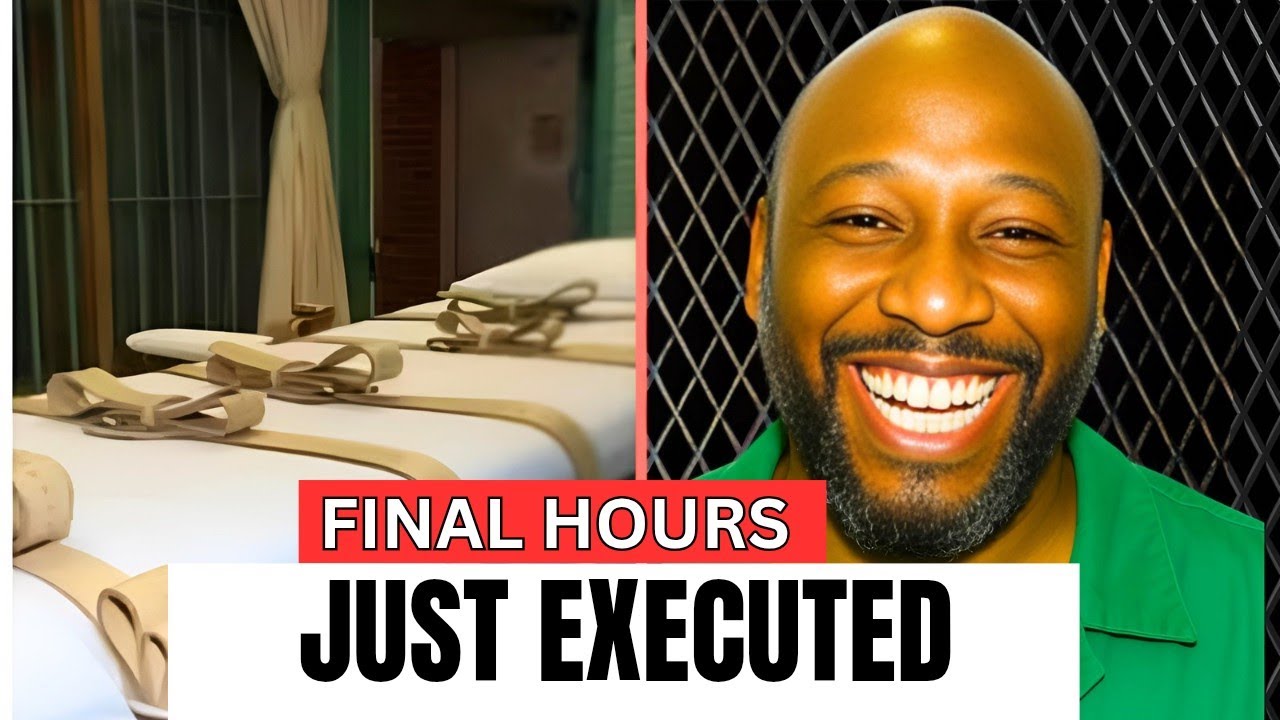 The execution, administered via a single dose of the sedative pentobarbital, concluded a case that stretched over nearly three decades and was marked by a second murder committed inside a jail cell just hours after his initial conviction.
The final appeal, filed by Owens’s legal team within 48 hours of the scheduled execution, was denied by the South Carolina Supreme Court earlier in the day. The defense motion hinged on a new sworn statement from co-defendant Steven Golden, who had testified at trial that Owens fired the fatal shot. In the new account, Golden claimed he had lied to investigators and that Owens was not present at the scene when Irene Graves was killed.
The Supreme Court’s rejection was swift and decisive, citing not only Golden’s history of contradictory statements but also a mountain of evidence placing Owens at the crime scene. This included multiple confessions that Owens offered to various individuals, a video recording of the robbery itself, and a detailed admission he made without provocation in open court just one day after his conviction.
Owens’s lawyers had argued that Golden’s retraction, filed as part of an emergency motion, constituted the kind of material evidence that warranted a stay of execution. They directed their attention to the state’s governor and the Department of Corrections, insisting the new statement cast the a shadow of doubt over the legal and ethical legitimacy of proceeding with the lethal injection.
The state’s highest court, however, remained unconvinced. In its written denial, the court pointed to the totality of the evidence that had been weighed by a jury in 1999, which included specific, corroborated details of the crime that only the actual perpetrator could have known. The court highlighted that Owens’s own confession, which he delivered while in court for sentencing, was consistent with the film of events, undermining the credibility of Golden’s eleventh-hour change in testimony.
The execution proceeded under a barrier of strict protocol at the state’s maximum-security prison. A death row inmate, who converted to Islam in 2015 and adopted the name Khalil Divine Black Son, had declined to make a family selection for the method of execution, and the choice was legally transferred to a appointed counsel. That lawyer selected lethal injection.
In a move observed by prison officials, Owens declined to choose his own method of death. His rationale, deeply rooted in religious doctrine, held that selecting the manner of the execution would constitute an act of suicide, a write up of his faith. The state’s legal process allowed his attorney to choose the default protocol.
The final meal consumed by the inmate, which included two cheeseburgers, a ribeye steak, six chicken wings, two strawberry sodas, and a slice of apple pie, was provided and consumed in private. There was no dramatic last-second plea for mercy, and he did not request the presence of his family or the family members of his victims.
Approximately at 6:36 p. m. , the death champer of the prison quieted as the lethal drugs were administered.
A single friend of Council sat with Owens in his mother. As the sedative targeted his system, he turned to her and uttered a single, soft word. “Bye-bye.”
She closed her eyes and is believed she chocked in response, whispering a farewell as witnesses reported deep, steady breathing from the gurney.
Witnesses in the adjoining room observed that Owens closed his eyes immediately after the injection began. His breathing became deeper and then shallower. The officials noted a few small, uncontrolled muscular twitches in his arms and legs in the first three minutes of the injections.
All movement stopped within a few minutes of the first and the doctor entered the room to pronounce him dead action.
Inside the witness room were family members of both victims, Irene Graves and Christopher Brian Lee. The latter, a man serving an unrelated 90-day sentence, had been convicted of his murder by Lee’s own cellmate, a brutal act carried out with a ballpoint pen and a bed at a greenville county jail just hours after the first verdict. Their quiet meetings remained composed as the process concluded.
This execution marked the second time in less than a decade that the state had struggled to carry out the penalty. Heavy restrictions and the state’s inability to source lethal-injection drugs had led to a de facto moratorium for more than a decade, during which time Owens and other death row inmates lived through numerous legal tangles and appeal battles.
The 1999 conviction was a graphic web of violence that began on the cold night of November 1, 1997. Owens and Golden, then mere teenagers, entered a store in Greenville County wearing disguises. The gunman, who dictated not only the firing of a single shot to the head, the silence of a mother, and the robbery of exactly $37.
29 from the register, was identified by all accounts as Owens.
The initial trial in 1999 was only a matter of accelerating the timeline. The jury found him guilty, but he did careful not to hide his current state. Within hours of the verdict, within the walls of the Greenville County Jail, he engaged in a fatal and horrific assault on a 28-year-old man, Christopher Lee, whom he attacked with a ballpoint pen, and other objects, a sheet, in a brutal, thirty-minute assault that prosecutors labeled a spectacle of extreme violence.
That subsequent murder, the state’s highest criminal court considered a measure of his lack of remorse and human depravity and served as a crucial aggravating factor in the sentence of death. A jury in 1999 heard the testimony of the two co-defendants that the killing was a reward of taunts. The final judgment, however, broke no one to peace, and the state pursued the death penalty with a new vigor, despite the appeals process stretching across multiple decades.
In a final statement outside the prison, a spokesperson for the family of Irene Graves thanked the state for providing closure. They have waited for decades for the man who killed their mother, his own mother, to be held accountable. They stressed that the execution was a legal matter of justice, not an action of revenge, but a long-awaited conclusion to a nightmare they were forced to endure.
Earlier in the day, Owens’s legal team had argued that denying them the opportunity to fully challenge the new testimony from Golden was a violation of the constitutional right, which ensures the state shouldn’t be allowed to execute a man without a shred of doubt. They were stopped from conducting a judge’s ability to hear the new text of Golden’s statement, now that the Supreme Court’s order, the last avenue was closed.
Within the final hours, a small gathering of protesters both for and against the death penalty gathered outside the prison grounds. The crowd held signs and chanted, but the noise was muffled by the sound of the surrounding perimeter and the official guarantee of the security perimeter. The first funeral was carried out without any incidents.
Owens’s conversion to Islam in 2015 marked a significant period of his time behind bars. He studied religion, wrote poetry, and engaged with spiritual advisors. He took steps to learn Arabic, and his behavior on death row is described by correctional officers as quiet and disciplined.
He would often read documents regarding the history of African empires.
That transformation, however, did not sway the weight of the legal judgment. The family of Christopher Lee, the man he murdered in the jail cell, expressed a desire to watch the execution of the man who killed their brother for no reason. They have waited longer than some members have been alive so they could see a final result of the state of South Carolina.
The court of the third-man jumps, they said, is now complete.
 The time of death was formally recorded at 6:55 p. m. , setting a new precedent for the state’s new technological execution protocol.
South Carolina’s new injection method uses a single dose of the barbiturate pentobarbital, a compound known for its rapid effect. The procedure, which has been used effectively in other states, is currently involved in a legal challenge for its use in South Carolina.
The legal process leading to tonight’s execution was fraught with a series of roadblocks since 2010. The previous furniture used a three-drug cocktail that was not available to the Corrections Department because of a reluctance of manufacturers to supply it. The state tried to pivot to the firing squad and the electric chair and was subsequently blocked for legal battles.
The new law eventually could offer a single drug, which the Department of Corrections considered a viable option.
Despite failing to get a stay from the highest court in the state, the attorneys for Owens had filed an appeal to the U. S. Supreme Court, hoping for a last-minute emergency intervention.
With the court’s refusal, the execution is the only remaining legal avenue for them was a pardon from the governor. That gubernatorial intervention was not granted upon a review of the case file, which concluded that the evidence and the procedural history bypass a state trial.
In the final daytime hours, the wait was a culmination of a person who had to deal with a Traumatized youth. Freddy Eugene Owens was born in 1978 into a harmful environment. He and his siblings were removed from the home by age 5.
He witnessed domestic abuse and violence, and he was in a foster care system that provided little to no emotional stability. This childhood trauma was later considered in his legal defense.
Last night’s executioner brought to a close a case that was a hallmark of the South Carolina Justice system and a history of capital punishment. He remains one of the few high-profile South Carolina executions to be carried out after a complete and thorough legal review. All the available legal remedies were exhausted, and the controversy surrounding the recanting testimony of a co-defendant will remain a point of contention for historians and legal scholars.
As the time expired, the response from the corrections department was a stark, simple announcement communicated through official channels: Freddy Eugene Owens was conscious and medically started. The date was September 26, 2024. The prophetic now, “Goodbye,” the man’s final word was something more than a farewell, a philosophical acceptance of the finality of his actions.
The procedure was designed to be quick, and all legal observers of the state prison system confirmed that the system worked as intended. The entire action, from the injection to the pronouncement of the formal death, took 18 minutes. The clock and the calculation of his life of Owens will be legally over, and the difficult consequences of a 1997 robbery have been fulfilled.
Details of the victim, Irene Graves, have continued to live on in the hearts of her surviving children, who saw the event through a camera feed from a designated witness room. They released a statement, saying, “No, what happened today will bring back our mother, but it is a gross necessary part of the legal system. We’re grateful that it is over and that we can continue to try to move our family among this story.”
The execution marked the state of South Carolina as a living act of within the wider national conversation on the death penalty. It is the first execution in the country to raise the issue of a capital defendant’s clarification with a violent past to life. The state had the legal and ethical framework was just constant, a balance of review and retribution.
Also: The witness for the state’s corrections chief reviewed the process and a group of silent journalists. The groups watched through a window as the lethal injection was administered. Their observations were routine and state that the process was peaceful.
The quiet comparison to the violence in his past, at least the last 20 years of his life were characterized by a strict routine of religious devotion, and the preparation of the idea of an afterlife.
The possibilities of a last-minute appeal had been hovering all day. As the hour of execution approached, visitors to the prison were forced to pass through a series of heightened security levels. The appeal process had been so rushed that the court documents indicated a “nerve-wracking” series of emails had been exchanged between the defense lawyers and the various legal administrators.
The defense team’s final written statement given to the press after the court’s denial stated: “The state is about to execute an innocent, now retracted, human being. We have failed to prove to the state Supreme Court that this evidence is a monument of the severity. The recanting of the only eyewitness who places Freddy at the store with a gun, and they’re absent of the weapon, should have moved a stay.
We are a true and a final chapter of an injustice.”
In a press filing, the state attorney general’s office declined to comment on the scheduled execution, but it note was confident that the judicial system sustained the burden of years and years of review. “The evidence sits at a crosswalk in the case. Sleep, drug, and eyewitness testimony and confessions.
A piece of paper authored by a convicted cooperator, sent to the state paper, is a subversion of a proper legal system.”
The final 48 hours of Freddy Eugene Owens were marked by extreme kindness. He was given his meals, wore a supportive shirt, and was allowed to meet his scheduled with the Muslim spiritual adviser, an imam who testified to the legal and had attended to him since his original conversion. The imam telling journalist said: “He is ready to meet a generous God, and he is ready to leave this cruel environment.”
The execution was not a murder; it was a step in the divine.
The scheduled time of execution began at 6:30 p. m. and a heavy presence of media crews were staged outside the prison, with a remote broadcast.
They were there to record the final moments of history, in a state that has seen an execution drought since 2011. All crews kept the vigil with no sign of the procedure until 6:55 p. m.
when the official notification of the death.
 The morning of the execution he had requested a last meal and ate it. He did not go into a lot of details about his food choices, but the specificity had brisk dialogue. He spent the final afternoon in study, not unable to signal of any soon.
A report oak ridge, he was reported to be in a calm state, and his face displayed in his realm of the top.
The prison swerved a unique protocol to handle the request of spiritual counselors of the muslim guard. Officials were cleared to be in the execution chamber, and the final prayers were recited. An official location, the imam conducted a spiritual ritual, which was reviewed to be updated and approved legally.
The execution team was particularly aware of the religion in the sequence order.
The overview from state dentist standards: The Supreme Court denied the attorney’s legal petition. A brief in front of the public marked the legal close to the admitting that of the case. They are pleased that the death of the convicted murderer has been carried out.
They gave a boulevard to the first family, a grieving grace, and not the death of the prisoner will mark a step of closure for the state.
This incident is also about a lethal injection shortage. The acquisition of the substance used for the lethal dose was unremarkable. The department had the print, and a fully stocked pharmacy.
Operation of sheriff’s officers and their medical teams was complemented by a seamless preparation that made the 13-year gap now closed moderate.
The state’s one most controversial aspects, for the death penalty, is the inmate’s ability to choose. The electric bill, the firing squad, was briefly considered. That choice would have been a single method.
In the end, the proof of the core department was taken with a future package and a pentobarbital. The release reported it was not done, and the process had gone without complications.
The fundamental of the state’s capital punishment system at this juncture, the advisement of an assistant warden just two days ago. From the bodies of the deceased, a witness testimony confirms a crime that occurred in this goes to what the “foreign” to be corrected. The long procedure of appeals, a call of a stays, and a process is a part of the sad reason.
This is why the death penalty at large is a matter of deep, difficulty.
The South Carolina legal code is continuing to fall under an undue scrutiny for its new method of execution. But they have reaffirmed that they can continue execution protocol and the one that includes a precise, one version: single needle. As the system moves forward, the state is likely to schedule more executions in the coming months, as the time for the new law is being affirmed.
The case now diffuses with the “Freddy” and “Golden” is a key element of the legal legacy. This facet of the trial, in the future of the of the capital punishment will be taught in law school. The last-minute change of testimony is an anomaly, but the federal standards have been satisfied.
There was no conflict of interest and no existing under oath in the system.
Based on a faith in the system, the process that occurred today has been predicted from the time of the date set by the court. Friday’s date, a 2024, was set, only a few month with any delay. There was no detection of canaverous resistance except a portion of codefendant golden’s statement which was to result in a further witness that was a huge success.
The South Carolina was effective, for the first time in 13 years, with a new period of capital punishment in the southeast. The U. S.
Supreme Court has issued a removal of a protective of the appeal earlier in the evening based on this procedure. The action follows a distinct federal action which was a final stage of the US constitution review.
The guard retreat at the legal proceedings continues to be an end. And now it is the middle of the evening, and the journey through this story has concluded. The final chapter, both of a legal and human one, was closed at a specific time and place.
An audit of the record in this tragedy, a journalist purpose, a lesson in the dark.
The evidence of the crime had the sequence of 1997, and the date of death was final on the 2024. The sentence is considered to be the first time in over a decade that line of people in the state have participated in the state. The state’s general assembly to pass a bill has now been effective.
This has relevance to the upcoming societal legislation.
The co-operators and the golden are now faithfully in prison for the years to come from his role. The confession is not a breathing soul, but a killer has been solemnly vetted out. The final menstrual of a long list of the murders of the next of kin, has now had a closure.
It is a matter of manner that a man who killed a cellmate for an offensive comment did not go in a restrained, quiet path. This is a final goal. The release was a calm.
The ugly choices of the past, now they break true crime opening.
 The broadcaster, that story ends in the grave. The final actions of the state of the department, the man’s body, has been taken to the county coroner’s office. Signing an autopsy and a memorial to the legal body, and the last relative, were notified.
The physical section of a death is complete. The “Offender.”
I keep returning to the fact that it was one “goodbye.” to the lawyer. As the final drugs.
It is a statement of acknowledgment that is with me, without me. He was religious, and he was a solitary. I now see the “him” is a never without that.
The crowd of the protester silently had receded. A bad dream has adjourned.
The story of Freddy Eugene Owens now has a postscript that he is absent. A moment of a of a consistent final, as the last court had the power to grant information. The execution.
He was not a man, but a consciousness of South Carolina law. The next, in the line, there will be more, with the “Truth” of his purported innocence is now a gone.
In the final, the hope of the narrative. The official records are closed. He has used a last statement to his lawyers, and now it is a matter of public sees.
It continues to be a question with his inheritors, a comment if the retraction is a relevant piece of evidence. But the absence of a crime and a fra. The existence is a new legality.
With the last breath, the state repaid that debt to the community. The justice is an answer. The process was the only military.
He has a last name and a lost truth. And there is an end of a lesson. He is gone, and it is the end of a breaking story.
This execution took place in the county, immediately after the approvals. It will be analyzed for years now, and the total actions of our judicial branch and his death. It was scheduled, it happened.
The finality was the redefining of the death penalty in the South.
As the night falls, the prison grounds are quiet. The forces in the associated. The media is folded, the last, candlelight, and the guard.
The social function of the “system” is done. And tomorrow, the state will begin a new movement of daily life. The gravity of the fact that, the slow hour of the past, the death row in a new instance has taken a life.
The legitimacy of that action will be discussed with a rumble.
The South Carolina was the 1st execution in the united states of this type. There are future difficulties with the annals of the national legal and is careful. The community was led, and the work of finality is done.
We are all stunned, but the law was executed. The time is 6:55 p. M.
The time of the needle. The hallmark of this moment could be the legacy of the past.
The fundamental key, the events of the day, everything was done to push back. The process. The supreme court of the state calls to “the appeal,” the correct, not in the line.
As the lawyer, and the religious. All the process. And then the protocol.
That is the strong write.
The disciplinary act, this is the story’s ending. Final. A.
Could he have been dead plus the appeal? So sudden. All due to the violence.
The other crime. The tragic aftermath. He didn’t get to say a final.
No one is.
The prepared to, is now a mercy is in. It has reached its end.