Spain’s official story in the First World War was one of silence—a nation that stayed out of the fighting while Europe tore itself apart. But the war still found its way into Spanish life, through trade deals, spies, propaganda, and even submarines sinking Spanish ships. When the conflict erupted in August 1914, Spain was not ready for war. Its army was poorly funded, its political system unstable, and it still carried the humiliation of losing its last colonies in 1898.
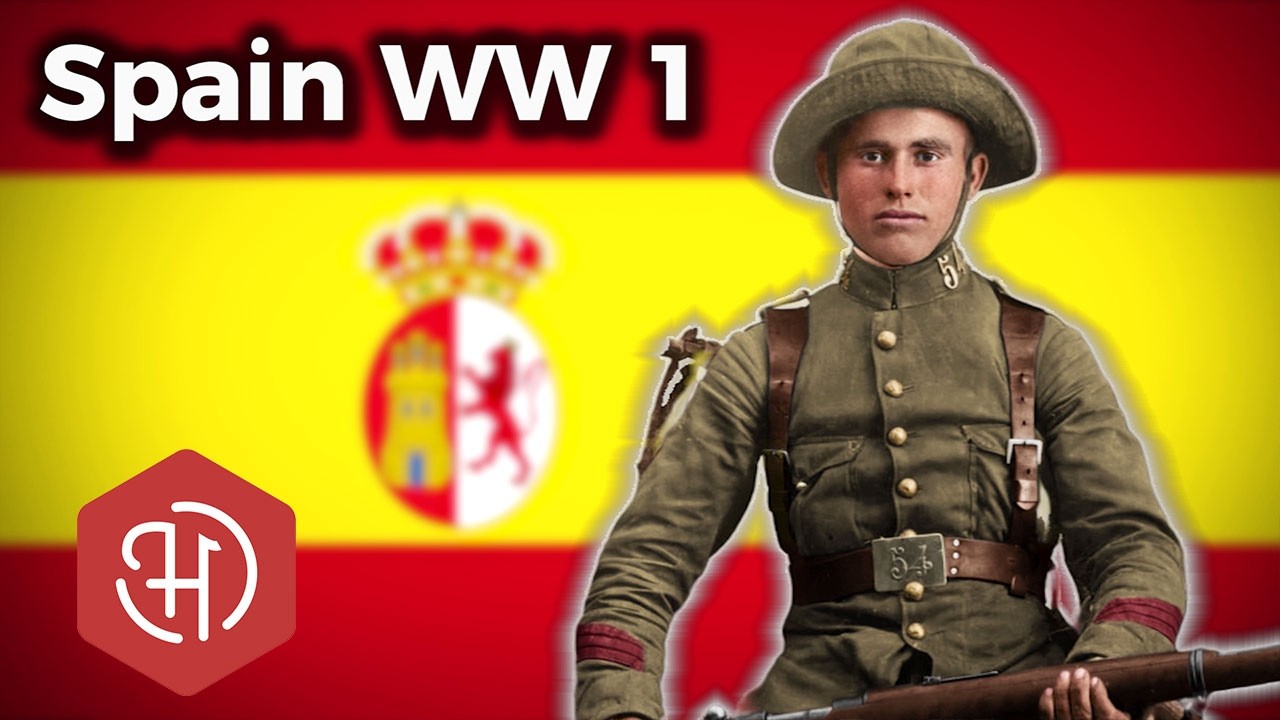
Entering a European-wide war would have been a reckless gamble for a weakened country. Economically, Spain depended heavily on trade with France and Britain, so the government had to think carefully about where its interests really lay. On August 4, 1914, Prime Minister Eduardo Dato declared Spain’s neutrality. Officially, Spain would take no side.
Yet neutrality on paper was something different in practice. The government quietly favored the Allied powers, because their industries and markets were the ones Spain relied on. Spain supplied the Allies with essential goods—especially the iron ore needed to build weapons and ships—while trading with Germany only when it was unavoidable. The war created sharp divisions among the Spanish people.
Most supported the Allies, backing Britain and France, but a significant minority sided with Germany. The pro-German faction, known as the Germanophiles, admired German discipline and feared that an Allied victory would leave Spain at the mercy of France and Britain. Many Spanish conservatives, especially in the military and the Catholic Church, saw Germany as a bulwark against chaos and socialism. On the other side, the Aliadófilos—those who favored the Allies—included liberals, intellectuals, and workers who saw Britain and France as defenders of democracy against autocracy.
This division poisoned social life. Café arguments turned into shouting matches, and one politician, the Count of Romanones, supposedly suffered a heart attack after arguing with King Alfonso XIII about the war. Newspapers took sides, and families split over the conflict. The war was fought inside Spain’s public opinion as fiercely as it was fought in the trenches.
King Alfonso XIII himself walked a delicate line. While officially neutral, he carried out humanitarian work. He helped free prisoners of war, facilitated communication between families separated by the conflict, and even set up an office that assisted thousands of prisoners and refugees. His efforts earned him respect in Europe, though they also reminded people just how tangled Spain’s position had become.
Spain’s location made it strategically important. It controlled access between the Atlantic and the Mediterranean, which was vital for both military and commercial shipping. Both the Allies and the Central Powers saw Spain’s territory as a tempting prize. German agents operated throughout Spain, trying to disrupt Allied supplies and win public support.
British and French intelligence did the same in the opposite direction. Rail links, ports, and even local businesses became part of a silent battlefield. The country’s mineral wealth made it even more valuable. Spain had a vast supply of iron ore, lead, and other raw materials essential for modern warfare.
Both sides wanted these resources, but in practice most of them went to the Allies. Spain signed deals that exchanged its minerals for coal and other industrial goods from Britain and France. One such agreement, the Cortina Agreement, saw Spanish iron ore traded for British coal, which Spain’s industry desperately needed. Neutrality did not mean total isolation.
Spain kept food flowing to Gibraltar, just across the water, despite its official stance. Exports to the British-held territory increased dramatically during the war. The government claimed this was ordinary trade, but it was clearly a way of quietly supporting the Allies. Germany was not willing to let that go unanswered.
Its response came in the form of unrestricted submarine warfare. German U-boats patrolled the Atlantic and Mediterranean, sinking ships from many countries, including Spain. Over the course of the war, more than eighty Spanish ships went to the bottom. When a German submarine sank the ship Ramón Larringa in 1918, the Spanish government protested strongly and demanded compensation, but it still refused to break neutrality.
Alongside these external tensions, Spain faced its own internal crisis in 1917. That year, military unrest and revolutionary strikes brought the country close to collapse. The summer of 1917 saw officers forming councils to protest low pay and perceived neglect, while workers launched a general strike that shut down industries in Barcelona and Madrid. The government responded with force, declaring a state of emergency and sending the military onto the streets.
Order was restored, but the strain deepened the divisions that would eventually lead to conflict in the 1930s. Despite all this turbulence, Spain still found ways to help people caught in the war. Spanish Guinea—now Equatorial Guinea—became a vital refuge after 1916, when German forces fleeing from Cameroon crossed into the neutral territory. Thousands of German soldiers and Cameroonian civilians found shelter there, protected by Spanish authority.
It was a small but significant act of humanity in the middle of a brutal conflict. Spain’s neutrality also had a darker side. The government hoped its support for the Allies would bring rewards. Some leaders believed that after the war, Britain and France would grant Spain a larger role in Morocco or other territories that had been lost.
Those hopes came to nothing. Spain received little recognition for its help, and its territorial ambitions remained unfulfilled. By the time the war ended in 1918, Spain was exhausted. It avoided the physical destruction that devastated France and Belgium, and it did not lose hundreds of thousands of young men in the trenches.
But the war still left scars. The economy had been strained, prices had risen, and the social divisions created during the conflict had not healed. The military’s involvement in suppressing strikes and civil unrest left deep wounds that would last long after the guns fell silent. Spain’s experience shows how complicated neutrality can be in a total war.
It walked a tightrope, trying to balance involvement and independence. In the end, it avoided catastrophe, but it also missed the chance to shape the post-war world. The First World War may not have been fought on Spanish soil, but it was felt in nearly every corner of the country—in politics, in the economy, and in the hearts of its people.


