The Battle of Berlin ended not with a dramatic last stand, but with a series of desperate negotiations, suicides, and a final surrender that took place in a building I’m standing in front of right now. This is where German General Helmuth Weidling signed the unconditional surrender of the Reich’s capital. By April 29, 1945, the Soviet Red Army was closing in on the government district of Berlin. A ragtag mix of SS troops, Wehrmacht soldiers, and Volkssturm men—old men and boys pressed into service—held on to the crumbling quarter.
Inside the Führerbunker, Adolf Hitler married his longtime companion Eva Braun just after midnight. Then he dictated his last will and testament. Hitler’s final act as head of state was to dismantle the position of Führer. He named Joseph Goebbels as Reich Chancellor, Admiral Karl Dönitz as Reich President, and Martin Bormann as party minister.
Hitler wanted Goebbels to leave Berlin, but Goebbels refused, out of loyalty. On the afternoon of April 30, Hitler and his new wife took their own lives. With Hitler dead, Goebbels remained in the bunker as the new Reich Chancellor, but the military situation was hopeless. Red Army troops were only a few hundred meters away.
The bodies of Hitler and Eva Braun were carried up to the Chancellery garden, placed in a shell crater, doused with petrol, and set alight. Goebbels and Bormann gave their final salutes as the flames consumed them. What followed was a confusing period of about 24 hours. Goebbels seemed to have told SS officer Heinz Linge, “I have also decided to bring my life to an end, but it is a very difficult moment.
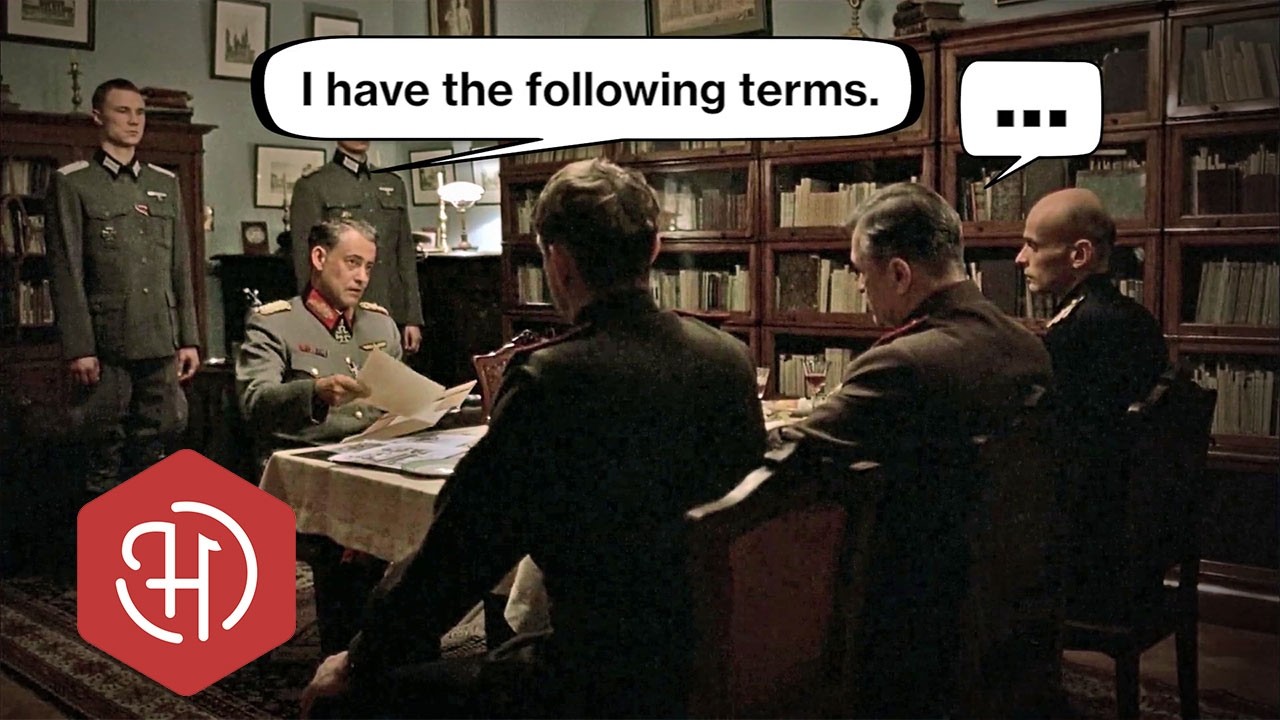
” Others in the bunker, including Bormann, were determined to try to escape. Bormann even made an attempt to negotiate with the Soviets. On the night of April 30 to May 1, Goebbels sent General Hans Krebs, Hitler’s last chief of staff, to the headquarters of Soviet General Vasily Chuikov, commander of the 8th Guards Army. Krebs carried a message from Goebbels, which read: “In accordance with the testament of the departed Führer, we empower General Krebs as follows.
We inform the leader of the Soviet people that today at 15:30 minutes the Führer voluntarily quitted his life. On the basis of his legal right. The Führer in his testament he left behind him transmitted all power to Dönitz, to myself and Bormann. I am empowered by Bormann to establish contact with the leader of the Soviet people.
This contact is essential for peace talks between the powers which have borne the heaviest losses. Goebbels. ”
It’s curious why Goebbels felt the need to state that he was authorized by Bormann, especially since in the following talks Krebs consistently emphasized that Goebbels was effectively acting in Hitler’s stead. Through Krebs, Goebbels requested that the Soviets allow the formation of a new German government to negotiate a more favorable peace agreement.
But this request was unrealistic. The Soviets had no reason to make concessions to the remnants of the German leadership. On his superior orders, Chuikov insisted on nothing short of an unconditional surrender. Soviet Marshal Georgy Zhukov made it clear that if Goebbels and Bormann did not agree, Berlin would be blasted into ruins.
At around noon on May 1, Krebs departed Chuikov’s headquarters to return to the bunker and consult with Goebbels. Whether Goebbels still imagined a future for himself as the head of a German government that could talk with the Soviets, or if he had already resolved to end his own life and that of his family, remains a mystery. In the afternoon of May 1, Goebbels dispatched a telegram to Dönitz announcing Hitler’s death and informing him of his new position. Goebbels and his wife Magda had intended to take their own lives the day before, but at the last moment they couldn’t go through with it.
Magda was emotionally devastated, yet both remained convinced that they and their six children should die rather than live in the world they believed was coming. The secretaries still inside the bunker begged them to let the children live and even offered to take care of them. But the Goebbels believed they were protecting their children by ending their lives. Around 6:00 p.
m. , SS doctor Ludwig Stumpfegger first gave the children a sedative and then cyanide. Shortly after, Goebbels and Magda went to the Chancellery Garden, where they took cyanide capsules. Goebbels may have also shot himself.
Their adjutant attempted to burn their bodies, but there wasn’t enough petrol, and doing so out in the open was too risky. Later that night, at about 11:00 p. m. , the remaining people in the bunker attempted to escape.
They divided into smaller groups and left at different times, fleeing the Reich Chancellery area through underground tunnels beneath the government district. A few escapees succeeded, but most were captured by advancing Soviet troops. Martin Bormann was killed near Lehrter Station in the early hours of May 2 while trying to escape along the railway tracks. At 8:30 in the morning of May 2, German commander of Berlin, Helmuth Weidling, formally surrendered the city without conditions.
Adolf Hitler was dead, and the Battle of Berlin had come to an end. A Red Army soldier wrote what he had seen: “Decrappit, scruffy, often completely exhausted German soldiers and officers are laying their guns down everywhere in the streets and squares and giving themselves up in droves as prisoner to our troops. The Germans are flying white flags on many houses. Right at this minute, I see two Hitler officers walking with lowered banners and no guns from the Tiergarten Park toward the Brandenburg Gate, near which there lies a pile of guns and crowds of German soldiers and officers are standing.
”
Even so, the Third Reich had not completely collapsed yet. Several more chaotic days followed before victory in Europe and the return of peace were officially declared. With Berlin in Soviet hands, the war continued for another week. The first mass German unconditional surrender occurred on May 4, 1945, but it was a partial surrender.
It happened on the Timmelo Berg, on the Lüneburg Heath, where German General von Friedeburg partially unconditionally surrendered to British Field Marshal Bernard Montgomery. On May 7, 1945, the German High Command, in the person of General Alfred Jodl, signed the unconditional surrender of all German forces east and west at Reims in northeastern France. On May 8, the definitive surrender was signed in Berlin. The actual signing was delayed until after midnight on May 9, Central European Time.
Until the end of the war, the northwest of Germany, Ostfriesland, and Schleswig-Holstein weren’t taken by the Allies. The Nazi rump government, under the leadership of Karl Dönitz, functioned until May 23. On that day, the Allies arrested the leaders of the last Nazi government. With that, the Third Reich came to its final end.
The last Germans would surrender in September, a few days after the Japanese surrender. These Germans were stationed on the Norwegian island of Svalbard. But that is a story for another time. Now, about Martin Bormann.
There are theories that he actually escaped and ended up in Paraguay, South America. Paraguay did play an interesting role in World War II.