Exploring the Evidence Behind One of History’s Most Discussed Dates
The question of when Jesus died on the cross has fascinated historians, theologians, and believers for centuries. While the spiritual meaning of the crucifixion remains at the center of Christian faith, scholars have also tried to determine the historical timing with surprising precision.
Most researchers agree on a general window: Jesus was crucified sometime between AD 26 and AD 36, during the governorship of Pontius Pilate in Judea. Beyond that, however, the exact year remains debated, shaped by biblical texts, ancient historical references, and astronomical calculations.
Among the leading proposals, many scholars lean toward AD 33, while others argue for AD 30. The discussion is complex, involving ancient regnal systems, Gospel chronology, Roman records, and even lunar cycles.
What follows is a structured exploration of the main factors used to narrow down the date, showing how different lines of evidence converge toward a possible conclusion.
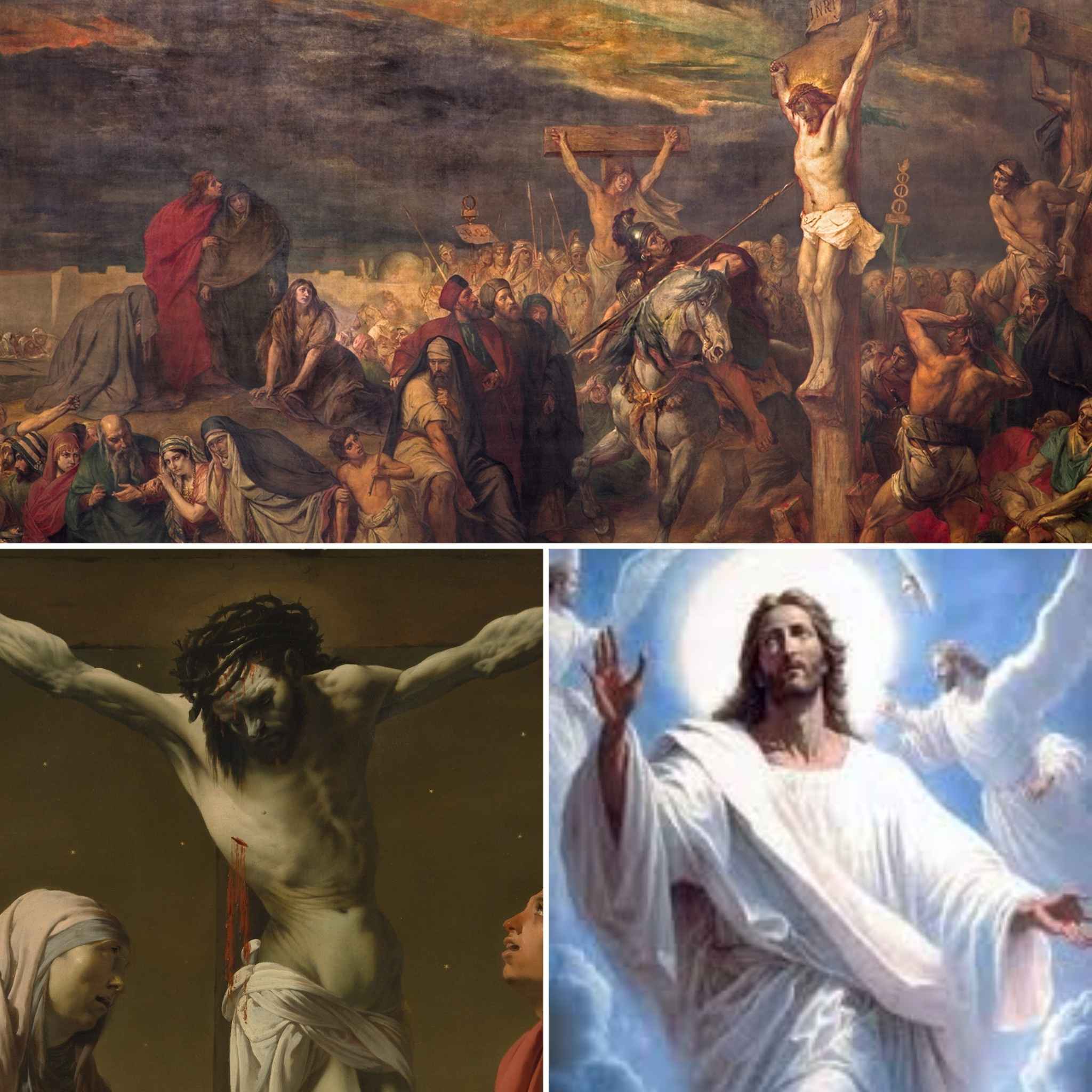
1. The Starting Point: The Reign of Tiberius
One of the earliest chronological anchors comes from the Gospel of Luke. Luke 3:1–2 states that John the Baptist began his ministry in the 15th year of Emperor Tiberius.
Tiberius succeeded Augustus in AD 14, but ancient historians calculated reigns differently. Most evidence suggests his official reign was counted from AD 14 onward, making his 15th year fall around AD 29.
This detail matters because Jesus’ public ministry began shortly after John the Baptist’s. If John appears in AD 29, Jesus’ ministry cannot reasonably begin much earlier.
This already eliminates some earlier proposed crucifixion dates and helps establish a broader framework for the timeline.
However, scholars debate whether Luke counted from Tiberius’ full reign or from a co-regency period with Augustus. If co-regency were used, the timeline could shift slightly earlier to AD 27–28.
Still, most historical sources support the simpler and more widely accepted calculation: AD 29 as the 15th year of Tiberius.
This becomes the starting point for reconstructing Jesus’ ministry timeline.

2. The Length of Jesus’ Ministry and the Passovers
The next major clue comes from the Gospel of John, which records at least three Passovers during Jesus’ ministry:
- John 2:13
- John 6:4
- John 12:1
Passover was a yearly event, meaning Jesus’ ministry must have spanned at least two to three years.
If Jesus began preaching shortly after John the Baptist in AD 29, then:
- First Passover: likely AD 30
- Second Passover: AD 31
- Third Passover (crucifixion): AD 33 or AD 34
This already narrows the possibilities significantly. A crucifixion in AD 30 becomes difficult to reconcile unless the timeline is compressed unusually.
Most chronological reconstructions therefore begin to cluster around AD 32–34 as the most realistic range.
3. Paul’s Timeline and Early Christian History
Another important piece comes from the Apostle Paul.
In Galatians 2:1, Paul refers to a visit to Jerusalem “after fourteen years.” Scholars generally interpret this as measuring time from his conversion.
Paul’s conversion is often placed shortly after the crucifixion, typically within a few years. His later movements, combined with references in Acts, suggest a structured timeline that intersects with known historical events.
One key external anchor is a famine in Judea during the governorship of Tiberius Alexander (around AD 46–48). Paul’s timeline must align with this period.
When scholars map backward from these events, they often find that:
- The crucifixion must have occurred at least 14–15 years before the late 40s AD
- This pushes the death of Jesus earlier than AD 35
- But still allows AD 32–34 as viable options
This factor helps eliminate some later possibilities and reinforces the mid-early 30s AD window.
4. Ancient References to Darkness
One of the most intriguing non-biblical references comes from the ancient writer Phlegon of Tralles, who described an unusual darkness during the time of Emperor Tiberius.
He wrote about a midday darkness during the fourth year of the 202nd Olympiad, which corresponds roughly to AD 32–33.
Christian writers such as Origen and Jerome later associated this account with the Gospel description of darkness during the crucifixion (Matthew 27:45).
Although Phlegon did not explicitly mention Jesus, his record of an extraordinary darkness has often been considered a possible external confirmation of the Gospel narrative.
Another ancient writer, Thallus, also referred to a mysterious darkness during the same period, though his explanation suggested it was a solar eclipse. Early Christian writers disagreed, pointing out that Passover occurs during a full moon, making a solar eclipse impossible.
While these accounts are debated, they contribute to the historical discussion by aligning broadly with the early 30s AD timeframe.
5. The Astronomical Clue: The Full Moon and Passover
Perhaps the most technical aspect of dating the crucifixion involves astronomy.
The Gospels state that Jesus died during Passover, which is tied to the Jewish lunar calendar. Passover begins on Nisan 14, which always occurs during a full moon.
This allows modern astronomers to reconstruct possible dates using ancient lunar cycles.
The key question becomes:
Did a full moon fall on a Thursday or Friday in the relevant years between AD 26 and AD 36?
Why Thursday or Friday?
Because the Gospels suggest:
- Last Supper: evening before crucifixion
- Crucifixion: Friday
- Passover meal timing: closely tied to that week
By reconstructing lunar data, scholars have proposed several candidates. One of the strongest matches occurs in AD 33, where a full moon aligns closely with early April.
Some reconstructions identify March 5, AD 33, as a Thursday full moon. This would place:
- Last Supper: Thursday evening
- Crucifixion: Friday, March 6, AD 33
This alignment fits both astronomical and chronological constraints, making AD 33 one of the strongest candidates.
6. Jesus’ Age and Historical Consistency
Luke 3:23 notes that Jesus was “about thirty years old” when he began his ministry.
If Jesus began around AD 29:
- A birth around 4 BC would make him roughly 33 years old
- This fits a crucifixion in AD 33 more naturally than AD 30
Some scholars see this as supporting a slightly longer ministry timeline, consistent with multiple Passovers and a multi-year public mission.
However, the phrase “about thirty” is not precise, and ancient writers often rounded numbers for theological or symbolic reasons.
So while helpful, this factor is not definitive on its own.
7. The Temple Timeline Clue
Another clue comes from John 2:20, where Jesus’ opponents say:
“This temple has been under construction for forty-six years.”
Herod the Great began expanding the temple around 18–17 BC.
If 46 years are added to that starting point, the result lands around AD 29–30.
This suggests that the conversation in John occurred early in Jesus’ ministry, reinforcing the idea that his public activity began around AD 29–30.
This supports the idea that the crucifixion likely occurred several years later, not immediately afterward.
8. The AD 30 vs AD 33 Debate
Two main dates dominate scholarly discussion:
AD 30 Theory
- Supported by some interpretations of John
- Requires a shorter ministry
- Fits certain temple chronology readings
- Less aligned with multiple Passovers
AD 33 Theory
- Matches astronomical calculations
- Fits a 3–4 year ministry
- Aligns with multiple Gospel timelines
- Supported by some ancient darkness references
- Increasingly favored in modern scholarship
One influential modern reconstruction by physicists and historians places the crucifixion on Friday, April 3, AD 33.
However, this depends on harmonizing Gospel accounts in a specific way, particularly regarding Passover timing differences between John and the Synoptic Gospels.
9. Reconciling Gospel Accounts
A major interpretive challenge is the apparent difference between:
- Synoptic Gospels (Matthew, Mark, Luke): Last Supper as Passover meal
- Gospel of John: different timing emphasis
Scholars propose several explanations:
- Different calendar traditions (Galilean vs Judean reckoning)
- Symbolic theological structuring
- Slight variations in timekeeping systems
- Different emphases rather than contradictions
Depending on how this is resolved, the crucifixion date shifts slightly.
This is one reason why both AD 30 and AD 33 remain plausible in scholarly debate.
10. The Most Widely Accepted Conclusion
After weighing all major factors—historical, astronomical, textual, and contextual—the majority of modern scholars lean toward:
Friday, April 3, AD 33
This date fits:
- Roman historical constraints
- Gospel narrative structure
- Lunar calendar alignment
- Length of Jesus’ ministry
- External ancient references
Still, it is not universally accepted, and AD 30 remains a serious alternative among some scholars.
11. Beyond the Date: The Historical and Theological Meaning
While historical reconstruction is valuable, it ultimately serves a broader purpose for many believers: understanding the context of Jesus’ life and death.
The crucifixion is not only a historical event but also a theological cornerstone of Christianity. For believers, the exact date is secondary to its significance.
As one reflection often noted in Christian writings suggests:
The importance of the crucifixion is not when it happened, but what it accomplished.
Conclusion: A Date That Still Invites Exploration
The question “When did Jesus die?” does not have a single universally accepted answer, but careful analysis narrows it significantly.
The strongest historical evidence points toward the early 30s AD, with AD 33 emerging as the most widely supported date among modern researchers.
Yet even after centuries of study, the discussion continues—showing how ancient history, astronomy, and biblical texts intersect in one of the most studied moments in human history.
What remains undisputed is that the crucifixion of Jesus continues to shape history, faith, and global culture nearly two thousand years later.
And perhaps that, more than the exact date itself, is what gives the question its lasting significance.