NASA Pushes Next-Generation Mars Helicopter Rotor Blades Beyond Mach 1
A Breakthrough That Could Redefine Flight on the Red Planet
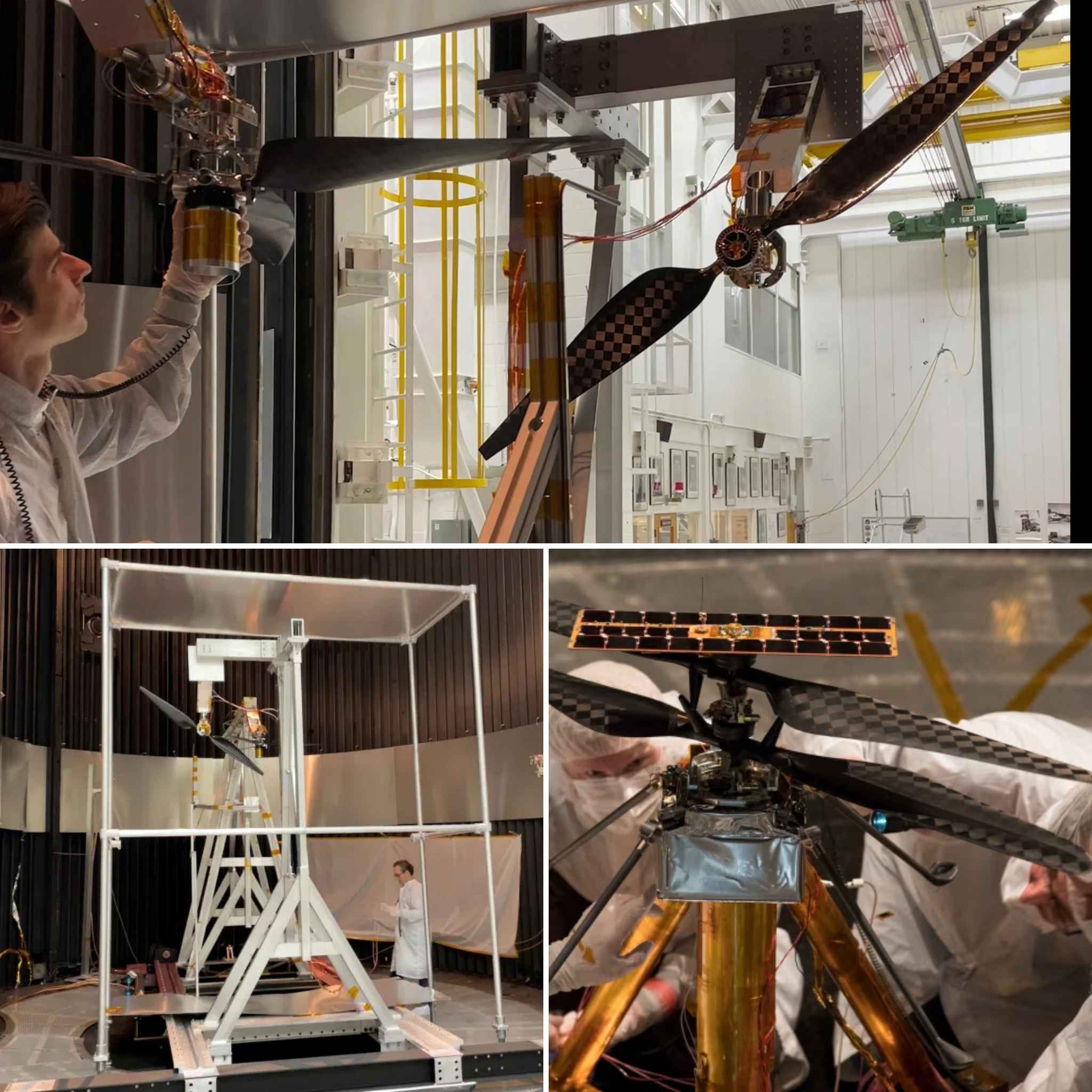
NASA engineers have achieved a major milestone in the future of extraterrestrial aviation after successfully testing next-generation Mars helicopter rotor blades at speeds exceeding Mach 1. The groundbreaking experiments were conducted at NASA’s Jet Propulsion Laboratory (JPL) in Southern California, where scientists recreated the extreme atmospheric conditions of Mars inside a specialized simulation chamber.
The results mark a significant step forward in the development of aerial exploration technology for Mars, potentially enabling future helicopters to carry heavier scientific instruments, travel farther distances, and operate more efficiently in the planet’s extremely thin atmosphere.
This advancement builds directly on the success of NASA’s Ingenuity Mars Helicopter, the first aircraft to achieve powered flight on another world, which demonstrated that controlled flight is possible on Mars despite its challenging environment.
Now, NASA is preparing for the next evolution.
A New Era of Martian Flight
NASA’s Mars exploration team is no longer focused solely on proving that flight is possible on the Red Planet. Instead, the goal has shifted toward making aerial exploration practical, durable, and scientifically productive.
Ingenuity, which made its historic first flight on April 19, 2021, was originally designed as a technology demonstration. It carried no scientific instruments and was intended only to test whether rotorcraft flight could be achieved in Mars’ extremely low-density atmosphere.
Despite those limitations, Ingenuity exceeded expectations by completing dozens of successful flights, far beyond its original mission plan.
But according to NASA officials, future missions will demand much more.
Al Chen, Mars Exploration Program manager at JPL, described the challenge clearly:
“We had a great run with Ingenuity, but now we’re asking next-generation aircraft to do even more at Mars. That’s not easy. Everything about Mars is difficult, and flying there is among the hardest engineering challenges we face.”
Mars presents a unique aerodynamic problem. Its atmosphere is roughly 100 times thinner than Earth’s, meaning rotor blades must spin much faster to generate lift. At the same time, Mars still has about 38% of Earth’s gravity, meaning aircraft must still work hard to remain airborne.
This combination makes flight both fragile and complex.
Why Supersonic Rotor Testing Matters
To overcome these challenges, NASA engineers are pushing rotor technology into entirely new performance ranges.
In recent testing, rotor blade tips were successfully accelerated beyond Mach 1, meaning they traveled faster than the speed of sound within Mars-like atmospheric conditions.
This is a major engineering milestone.
On Earth, breaking the sound barrier is associated with extreme stress, shockwaves, and instability. Aircraft like jets and rockets require specialized designs to manage the sudden changes in airflow that occur near Mach 1.
On Mars, the physics are different—but still extremely challenging.
Jaakko Karras, rotor test lead at JPL, explained:
“Things can get unpredictable around Mach 1. We had to understand exactly how the blades behave as they approach and exceed that threshold. That’s critical for safe flight on Mars.”
The team’s objective was not just to break Mach 1, but to determine whether rotor blades could do so reliably and without structural failure.
The answer, after extensive testing, was yes.
Inside NASA’s Mars Simulation Chamber
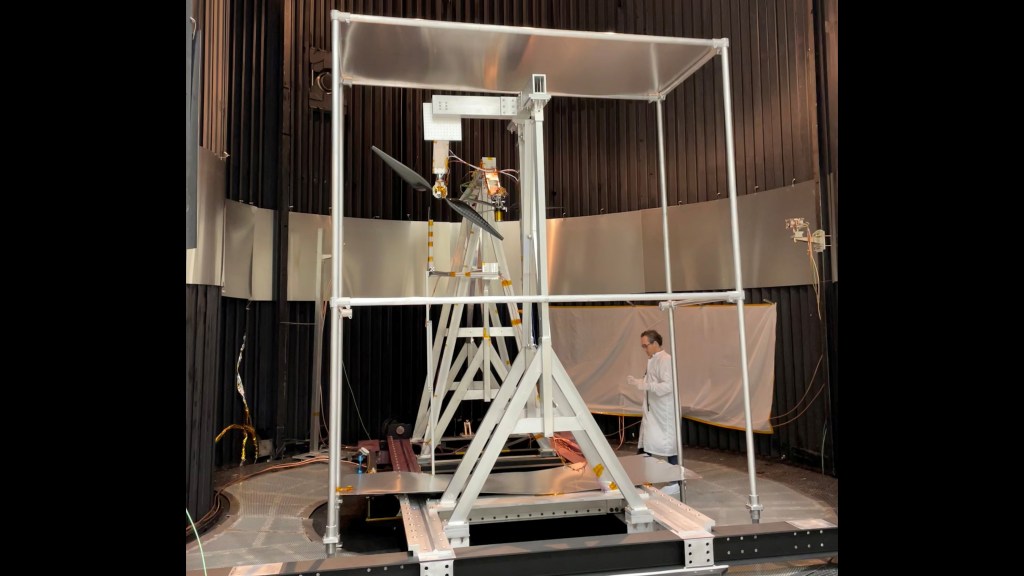
To conduct the experiments, engineers used JPL’s historic 25-Foot Space Simulator, one of the most advanced environmental testing chambers in the world.
Inside the chamber, conditions were carefully adjusted to replicate Mars:
- The air was removed
- Carbon dioxide was introduced to match Mars’ atmosphere
- Pressure was reduced to simulate Martian density
- Temperature and airflow were controlled for realism
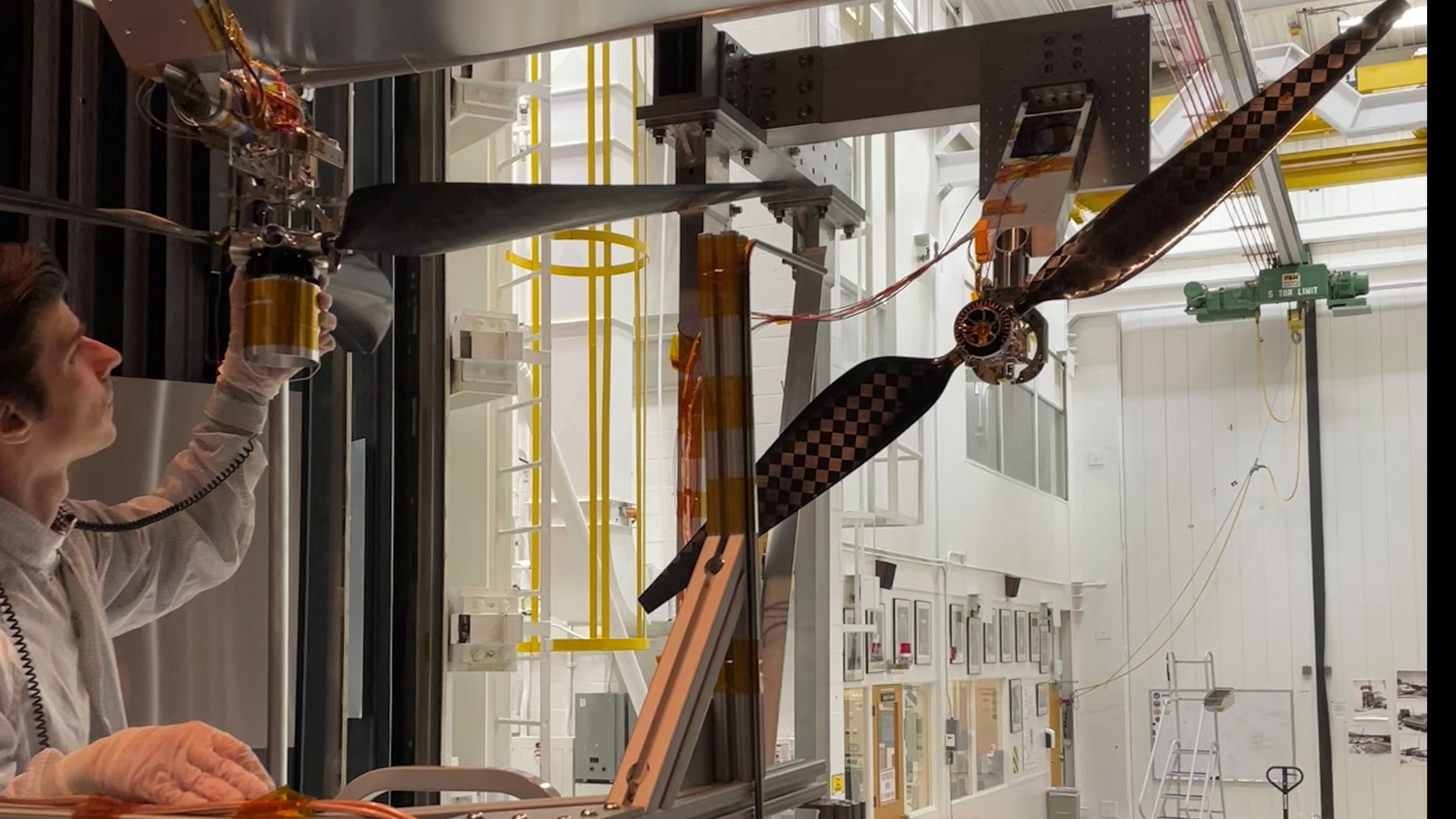
Once the environment matched Mars-like conditions, engineers mounted a prototype rotor system inside the chamber.
The rotors, developed by AeroVironment in California, were then spun at increasing speeds while high-powered fans simulated Martian winds and turbulence.
The testing environment allowed NASA to safely explore extreme aerodynamic conditions that would be impossible to replicate in Earth’s natural atmosphere.
Pushing the Limits: From Subsonic to Supersonic
At the beginning of the testing sequence, rotor speeds were kept within known safe limits.
Ingenuity, for example, never exceeded 2,700 revolutions per minute (rpm) during its Mars mission. This was intentional, designed to avoid unexpected aerodynamic behavior near the speed of sound.
But for next-generation missions, NASA needed more performance.
As testing progressed:
- Rotor speeds increased beyond 3,000 rpm
- Blade tips approached Mach 0.98
- Engineers introduced controlled headwinds
- Structural stress data was continuously recorded
At one stage, rotor tip speeds reached 3,750 rpm, pushing performance close to Mach 1.
Then came the breakthrough moment.
Under controlled wind conditions, the rotors successfully exceeded the speed of sound, reaching up to Mach 1.08, without structural failure.
This confirmed that future Mars rotorcraft can safely operate at supersonic blade tip speeds.
Why Mars Requires Extreme Rotor Speeds
Unlike Earth, Mars does not provide enough air density to generate lift using conventional helicopter design principles.
To compensate, engineers must rely on:
- Larger rotor diameters
- Faster rotational speeds
- Lightweight composite materials
- Highly optimized blade geometry
Even with these adaptations, Mars remains one of the most difficult environments for aviation.
At sea level on Earth:
- Speed of sound ≈ 760 mph (1,223 kph)
On Mars:
- Speed of sound ≈ 540 mph (869 kph)
Because the atmosphere is thinner and colder, sound travels more slowly, meaning rotor tips reach Mach speeds more easily—but also encounter different aerodynamic challenges.
NASA’s goal is to ensure that rotorcraft remain stable even as they cross this boundary.
The Ingenuity Legacy and What Comes Next
Ingenuity’s success changed planetary exploration forever.
Originally expected to complete only a handful of flights, it ultimately performed dozens of successful missions, proving that powered flight on another planet is not only possible but scientifically valuable.
It demonstrated that aerial vehicles can:
- Scout terrain ahead of rovers
- Capture high-resolution aerial images
- Assist in navigation planning
- Explore areas inaccessible to ground vehicles
Now, NASA is preparing to expand that capability significantly.
The next-generation Mars helicopter systems will:
- Carry scientific instruments
- Support longer-distance exploration
- Operate in more complex terrain
- Function as part of multi-vehicle missions
These improvements represent a shift from demonstration to operational science missions.
The SkyFall Mission Concept
One of the most ambitious upcoming concepts is the SkyFall project, designed to deliver multiple helicopters to Mars in a single mission.
Unlike Ingenuity, which traveled as a companion to the Perseverance rover, SkyFall envisions deploying three dedicated next-generation helicopters directly onto the Martian surface.
These aircraft would be capable of independent operation and coordinated exploration.
Planned objectives include:
- Geological mapping of unexplored terrain
- Atmospheric sampling at different altitudes
- Search for water ice and mineral deposits
- Support for future human mission site selection
SkyFall is currently targeted for a potential launch window in December 2028, though mission timelines remain subject to engineering development and launch readiness.
Engineering Breakthrough: 30% More Lift
One of the most significant outcomes of the Mach 1 rotor testing campaign is a 30% increase in lift capability.
This improvement is critical because:
- More lift allows heavier payloads
- Heavier payloads allow advanced science instruments
- Advanced instruments enable deeper planetary analysis
In practical terms, this means future Mars helicopters could carry:
- High-resolution imaging systems
- Ground-penetrating sensors
- Atmospheric chemistry analyzers
- Communication relay systems
- Extended-life power systems
Each improvement expands the scope of what aerial exploration can achieve on Mars.
Expert Reactions and Scientific Significance
NASA engineers involved in the project have described the results as a turning point.
Shannah Withrow-Maser, an aerodynamicist at NASA Ames Research Center, noted:
“We expected incremental progress. Instead, we achieved performance beyond what we thought was possible. These rotors are opening the door to entirely new mission designs.”
The successful supersonic testing suggests that future Mars aircraft will not be constrained by previous assumptions about rotor limits.
Instead, designers can now explore:
- Faster flight speeds
- Longer mission ranges
- Greater payload capacity
- More complex mission profiles
This represents a major leap forward in planetary aviation.
Broader Impact on Space Exploration
The implications of this technology extend beyond Mars.
Advancements in rotor design, aerodynamics, and lightweight materials could influence:
- Earth-based aviation
- Lunar exploration vehicles
- Titan atmospheric drones
- Future deep-space robotic systems
NASA’s long-term vision includes using aerial robotics as a standard exploration tool across multiple planetary bodies.
Mars is only the beginning.
Conclusion: A New Frontier in Planetary Flight
NASA’s successful testing of supersonic rotor blades marks a defining moment in the evolution of extraterrestrial flight technology.
From the pioneering success of Ingenuity to the upcoming SkyFall mission concept, Mars aviation is rapidly transitioning from experimental demonstration to practical exploration capability.
The ability to safely exceed Mach 1 in Mars-like conditions confirms that future rotorcraft can operate with greater speed, strength, and scientific capability than ever before.
As NASA continues refining these systems, one thing is clear:
The skies of Mars are no longer unreachable.
They are becoming the next frontier of exploration.