27 August 2026
The state of Texas executed Johnny Frank Garrett on February 11, 1992, a man who entered death row as a 17-year-old boy with the mental capacity of a child, and whose case now stands as one of the most haunting examples of a potential wrongful execution in American history. The lethal injection was administered at the Huntsville Unit, and with it, a life was extinguished that experts, advocates, and even some former prosecutors now believe may have been completely innocent of the brutal crime for which he was condemned. The horror began on Halloween night, 1981, in Amarillo, Texas, a night meant for costumes and laughter, but which instead descended into unspeakable violence. Inside the quiet St. Francis Convent, Sister Tadia Benz, a 76-year-old nun known for her kindness and devotion, prepared for bed. She had lived a life of faith and charity, seemingly untouchable by the world’s horrors. But sometime after midnight, an intruder slipped inside, and a brief, brutal struggle followed. By dawn, Sister Benz was dead, raped, assaulted, and strangled. The community was stunned, and pressure on police was immediate and overwhelming. Media stormed the streets, politicians demanded answers, and citizens demanded a suspect. Within days, Amarillo police delivered one: Johnny Frank Garrett, age 17, poor, learning disabled, terrified of authority, and completely unprepared for what came next. Police claimed they had a fingerprint and a confession, but what they really had was a teenager they could break. Johnny was interrogated for hours alone, exhausted and confused. He was threatened, manipulated, and fed details. Every psychological pressure available was used against him. When investigators realized he was not giving them what they wanted, they made him sign a confession written for him, filled with words he did not understand, describing acts he had no knowledge of. The next morning, the headline hit: Teenager confesses to nun’s murder. It did not matter that he immediately recanted. It did not matter that his IQ tested in the borderline impaired range, that he had no history of violence, that the timeline did not fit, or that there was another suspect, a man with a violent record whose fingerprint was found at the scene. The narrative was written, and the town wanted blood. Johnny, scared, poor, and without a real defense, became the perfect offering. His trial was fast, his defense was weak, the evidence was thin, and the science was flawed. The confession was coerced, but none of that stopped Texas. On February 11, 1992, at just 28 years old, Johnny Frank Garrett was strapped to a gurney and prepared for lethal injection. A boy who had spent his teenage years on death row, a child turned into a condemned man, spoke his last words through tears and rage: I would like to thank my family for loving me and taking care of me, and the rest of the world can kiss my ass. The needle entered his arm, the chemicals flowed, and Texas declared the case closed. But years later, as new evidence emerged, as DNA revealed contradictions, and as the alternate suspect’s violent history resurfaced, a horrifying truth began to spread: they may have executed the wrong person. Johnny Frank Garrett was simply a boy trying to survive in a world that seemed determined to break him long before the courts ever did. Born on Christmas Day in 1963, Johnny entered a life marked not by joy but by trauma, poverty, and abandonment. From as early as age six, he endured relentless abuse, physical, emotional, and sexual, inflicted by people who were supposed to protect him. These experiences shaped the way he thought, understood consequences, and interacted with the world. Psychologists later concluded that Johnny had the mental and emotional maturity of a child far younger than his real age. School was no refuge. Johnny struggled to read, struggled to understand instructions, and struggled to fit in. His IQ tested in the borderline impaired range, and teachers often described him as lost, confused, or easily manipulated. He had learning disabilities that went untreated, emotional wounds that went unaddressed, and a desperate need for safety that never came. Instead of help, he received punishment, and instead of therapy, he received discipline. By adolescence, Johnny drifted around Amarillo with no real structure in his life. He sometimes stayed with relatives, sometimes with neighbors, sometimes in foster placements that treated him more as a burden than a child in need. He developed coping mechanisms common among abused children: dissociation, compliance under pressure, and a willingness to please adults even when it hurt him. These traits would later make him devastatingly vulnerable in the interrogation room. Despite the chaos, those who knew Johnny described him as gentle, shy, goofy, and kind. He loved drawing characters from comic books, played with neighborhood kids even into his late teens, talked to animals, and apologized excessively when he thought he upset someone. He had a softness that made it clear he had never grown into the hardness the world demanded of him. He also struggled with seizures and head injuries caused by childhood abuse, conditions that further impaired his understanding of right and wrong. Doctors later said Johnny exhibited clear signs of trauma-induced developmental damage. Yet none of this was ever presented at trial. At age 17, still legally a minor, Johnny’s life took the turn that would kill him. When the murder of Sister Tadia Benz shocked Amarillo, police bent under pressure to find someone to blame. They picked Johnny not because he fit the evidence, but because he fit their expectations: young, poor, mentally delayed, and defenseless.…
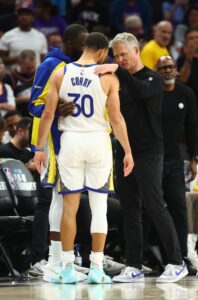
 During the negotiation process, discussions reportedly focused not only on contract terms but also on broader organizational issues, including offensive philosophy and roster construction. Despite initial uncertainty, both sides ultimately aligned on continuing the partnership.
 Kerr’s decision to return also reflects a desire to continue working with the team’s veteran core. Despite recent injuries and roster instability, including setbacks to key rotation players, the organization remains committed to keeping its championship window open.