A groundbreaking discovery in Montana has unveiled the DNA of a 12,900-year-old child, heralding a seismic shift in our understanding of the early inhabitants of North America. The child, buried with stone tools and ochre, was found in 1968 but only recently had its DNA sequenced, revealing connections to nearly all modern Indigenous peoples across the Americas.
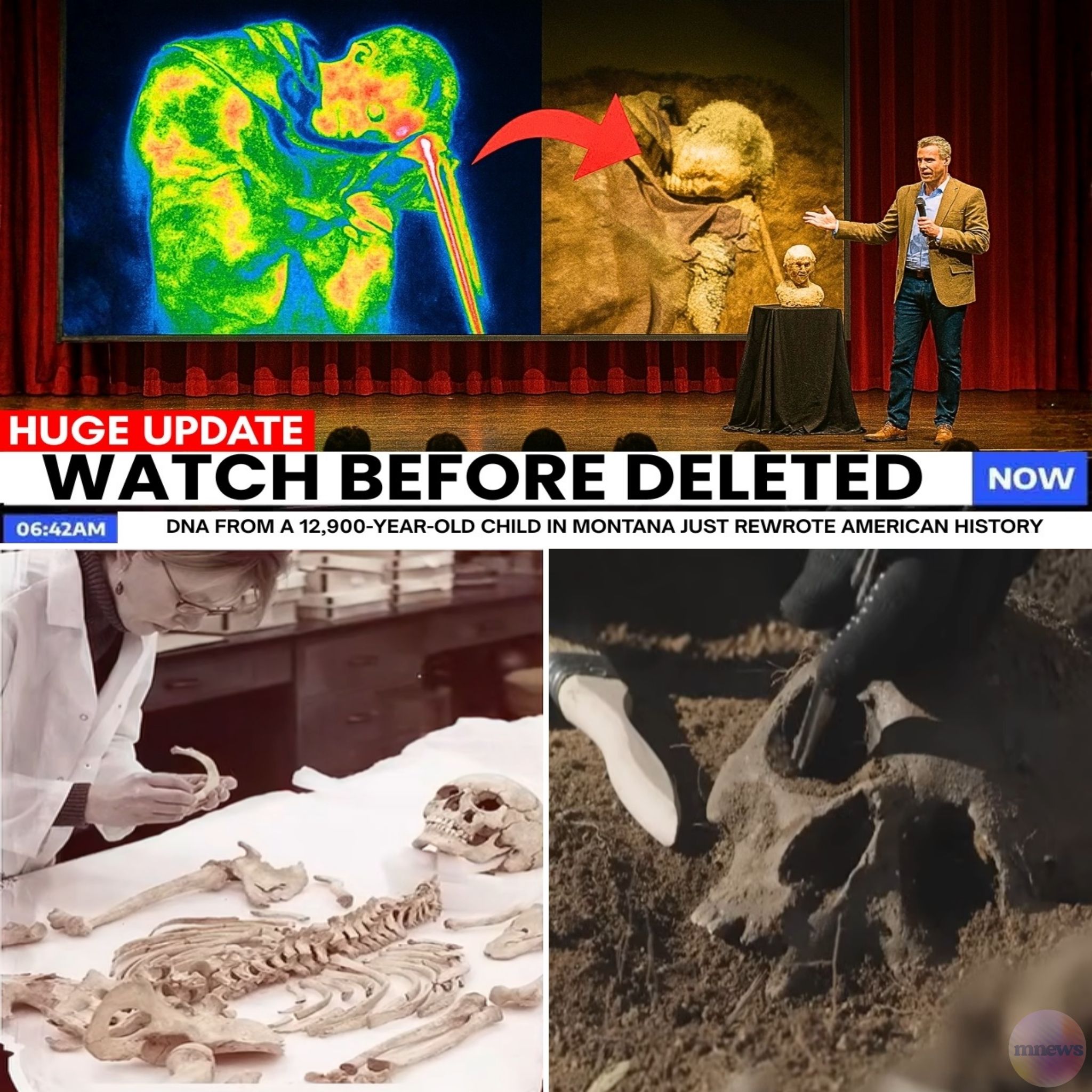
This revelation challenges long-standing theories about the migration and lineage of the first Americans. For decades, the Clovis culture was viewed as the earliest known civilization in North America, with its distinct spear points marking the supposed arrival of the first settlers. However, the DNA analysis from this ancient child has shattered that narrative, indicating that the Clovis people were not a separate, transient population but rather part of a continuous lineage that includes today’s Indigenous communities.
The Anzick site, where the child was found, has now become a pivotal archaeological location. The DNA extracted marks the oldest complete human genome ever recovered in the Americas, showing a direct genetic link to the ancestors of Indigenous peoples. This connection suggests that the first Americans did not arrive in isolated waves but were part of a broader, interconnected migration that spread across the continent much earlier than previously thought.
The implications of this discovery are profound. It indicates that the early inhabitants were not merely waiting for the right conditions to migrate; they were adaptable and mobile, utilizing multiple routes to traverse the continent. The traditional view of a singular corridor through Beringia has been called into question, with new models suggesting that early populations may have traveled along the Pacific coast, taking advantage of resources along what is now known as the “kelp highway.”
Moreover, this genetic evidence dismantles the controversial Solutrean hypothesis, which posited that European populations had a hand in forming the Clovis culture. The child’s DNA contains no European markers, reinforcing the idea that the first Americans primarily descended from Siberian ancestors.
For Native American tribes involved in the research, these findings resonate deeply with their oral histories, which have long asserted their continuous presence in the Americas. This discovery not only rewrites the narrative of the peopling of the Americas but also underscores the importance of recognizing Indigenous peoples’ deep-rooted connections to their ancestral lands.
As researchers continue to analyze the implications of this ancient genome, the story of the first Americans is being rewritten in real-time, reflecting a complex tapestry of migration, adaptation, and cultural continuity that has shaped the continent for millennia. The Montana child’s DNA is not merely a scientific breakthrough; it is a powerful reminder of the enduring legacy of Indigenous peoples and their profound ties to the land.