Humans Living on the Moon: The Reality Behind Humanity’s Most Ambitious Space Dream
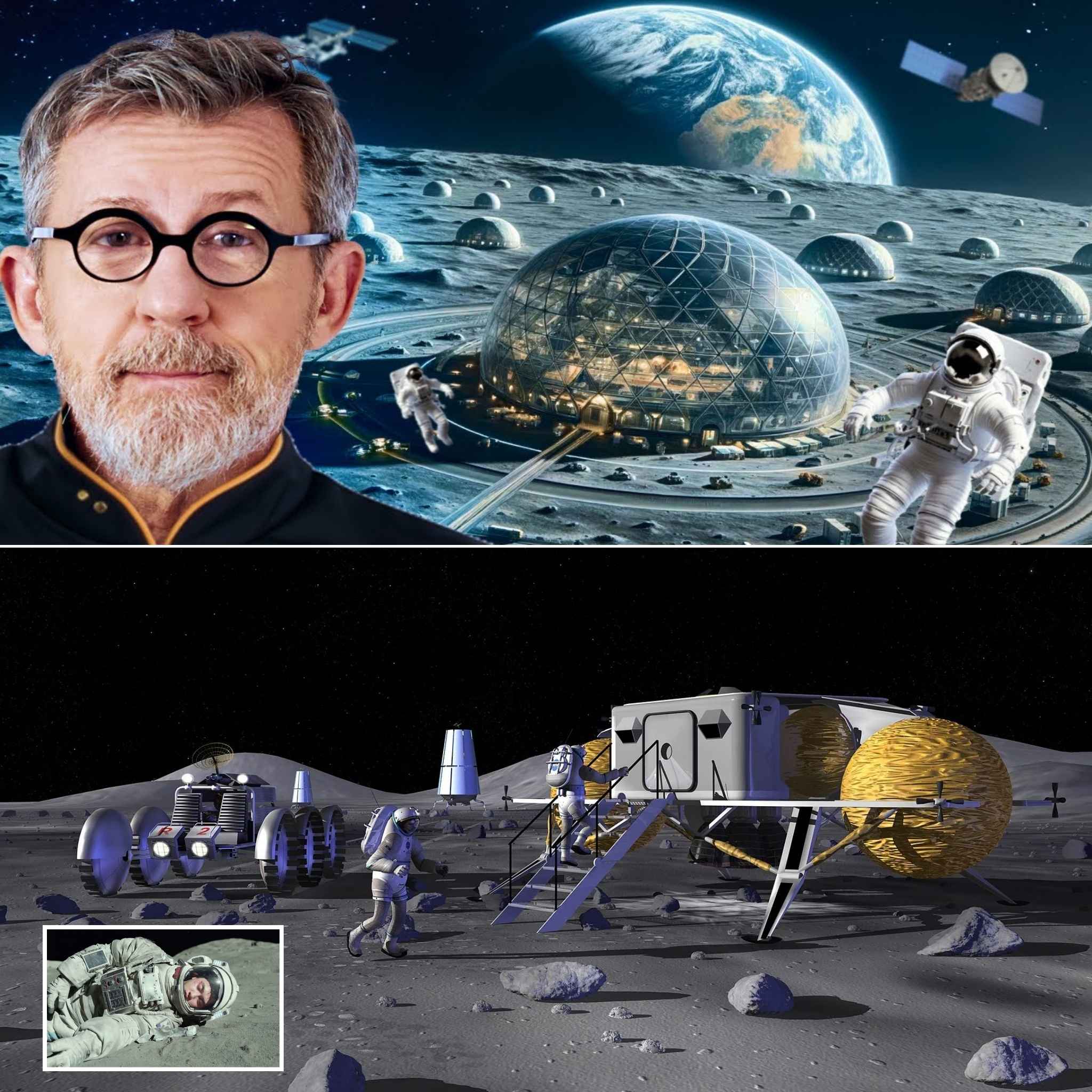
What It Would Actually Take to Build a Permanent Lunar Base
For decades, the idea of humans living on the Moon has captured global imagination. From science fiction novels to modern space agency roadmaps, the concept of a permanent lunar base has shifted from fantasy to active engineering discussion.
NASA, alongside international partners such as ESA, CNSA, and private aerospace companies, is now seriously planning for sustained human presence on the Moon within the coming decades.
But behind the excitement lies a far more complex reality.
Living on the Moon is not simply an extension of living on Earth—it is an entirely different survival environment, one that challenges human biology, engineering limits, and psychological resilience.
To understand what lunar living would truly involve, we need to break down the environment, the risks, and the technological solutions being developed to overcome them.
1. The Moon: A Hostile but Strategic Environment
The Moon is often described as Earth’s closest neighbor, but “close” does not mean “friendly.”
It has:
- No breathable atmosphere
- No liquid water on the surface (except trace ice in shadowed regions)
- Extreme temperature swings
- No global magnetic field
- Constant exposure to solar and cosmic radiation
Yet despite these challenges, the Moon is strategically valuable.
It is:
- Only 3 days away from Earth
- A potential testing ground for Mars missions
- Rich in scientific history and geological records
- Possibly containing water ice in polar regions
- A stable platform for deep space observation
This combination of danger and opportunity is what makes lunar exploration so compelling.

2. The Vacuum Problem: No Air, No Pressure, No Safety
One of the most immediate dangers on the Moon is the vacuum environment.
Unlike Earth, the Moon has no atmosphere to provide:
- oxygen
- air pressure
- weather protection
- sound transmission
- temperature regulation
Without a sealed suit or habitat, a human would be unable to survive for more than a few seconds.
This means every lunar mission depends entirely on:
- pressurized suits
- sealed habitats
- life-support systems
Even a small failure in sealing or pressure systems could be life-threatening.
This is why lunar engineering prioritizes redundancy and safety systems at every level.
3. Radiation: The Invisible Long-Term Threat
One of the most serious challenges for lunar living is radiation exposure.
On Earth, we are protected by:
- a thick atmosphere
- a strong magnetic field
On the Moon, both are absent.
This means astronauts are exposed to:
- solar radiation storms
- cosmic rays from deep space
- high-energy particle bombardment
Long-term exposure increases risks such as:
- cellular damage
- cancer
- neurological effects
- immune system disruption
To protect future lunar residents, habitats must include:
- underground construction or lunar lava tubes
- thick shielding materials (regolith-based walls)
- storm shelters for solar events
Radiation protection is one of the biggest engineering hurdles in lunar colonization.
4. Extreme Temperature Swings: A World of Fire and Ice
The Moon experiences some of the most extreme temperature changes in the solar system.
- Daytime surface temperature: up to +127°C (260°F)
- Nighttime temperature: down to -173°C (-280°F)
A lunar “day” lasts about 14 Earth days, followed by 14 days of night.
This creates a cycle of:
- prolonged heat exposure
- followed by extreme cold
- no atmospheric buffering
Any lunar base must therefore be designed with:
- advanced thermal insulation
- internal climate control systems
- energy storage solutions for long lunar nights
Without these systems, survival would be impossible.
5. Lunar Dust: The Unexpected Engineering Challenge
One of the most surprising hazards of the Moon is its dust—known as regolith.
Unlike Earth dust, lunar dust is:
- extremely fine
- electrostatically charged
- sharp and abrasive
- highly adhesive
Because there is no atmosphere or erosion, particles remain jagged like microscopic shards of glass.
This dust can:
- damage equipment seals
- scratch spacesuit surfaces
- irritate human lungs if inhaled
- interfere with electronics
- cling to every surface
During Apollo missions, astronauts reported that lunar dust smelled like burnt gunpowder and caused mechanical wear on equipment.
Managing lunar dust is now a major focus of engineering design.
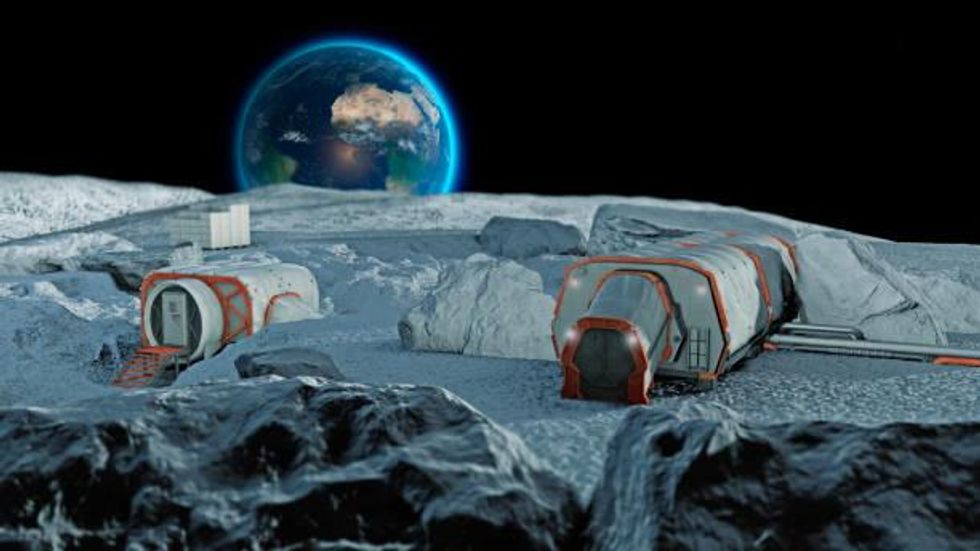
6. Gravity: Living in One-Sixth of Earth’s Pull
The Moon’s gravity is only about 16.5% of Earth’s.
This has both advantages and risks:
Advantages:
- easier movement
- lower fuel requirements for launch
- reduced structural load on buildings
Risks:
- muscle atrophy
- bone density loss
- cardiovascular changes
- long-term unknown health effects
Even in space stations, astronauts experience similar issues, but lunar gravity presents a different biological environment that is still not fully understood.
Scientists are actively studying how long-term reduced gravity affects the human body.
7. Psychological Challenges of Lunar Living
Beyond physical risks, there are serious psychological challenges.
A lunar base would involve:
- isolation from Earth
- limited social contact
- delayed communication (up to 2.5 seconds delay)
- confined living environments
- repetitive surroundings
These conditions can lead to:
- stress
- sleep disruption
- emotional strain
- cognitive fatigue
Space agencies are studying how to design habitats that support mental health, including:
- simulated natural environments
- virtual reality systems
- communal living spaces
- structured daily routines
Human psychology is as important as engineering in long-term space habitation.
8. Why Scientists Still Want to Go

Despite all these challenges, space agencies are actively pursuing lunar bases.
Why?
Because the Moon offers unique scientific and strategic value:
1. A Training Ground for Mars
The Moon is the closest place to test:
- life support systems
- long-term habitation
- resource extraction
- autonomous construction
2. Scientific Research
The lunar surface preserves:
- early solar system history
- impact craters billions of years old
- potential water ice deposits
3. Resource Potential
There is interest in:
- water ice (for fuel and oxygen)
- helium-3 (theoretical energy source)
- minerals for construction
4. Space Infrastructure
The Moon could serve as:
- a launch base for deep space missions
- a satellite observation platform
- a staging point for Mars exploration
9. Current Lunar Base Plans (Artemis Program)
NASA’s Artemis program is currently the most advanced lunar return initiative.
Its goals include:
- returning humans to the Moon
- building a sustainable presence near the lunar south pole
- developing long-term infrastructure
Key elements include:
- Artemis missions with astronauts
- Lunar Gateway space station
- surface habitats
- robotic construction systems
The first steps focus on temporary missions, followed by semi-permanent bases.
10. Building a Home on the Moon: How It Might Actually Work
Future lunar habitats may use:
Inflatable structures
Lightweight modules expanded on the surface.
3D-printed lunar structures
Using lunar soil (regolith) as building material.
Underground lava tubes
Natural caves that provide radiation shielding.
Modular habitats
Expandable units connected over time.
Each design focuses on minimizing Earth-dependent supply chains.
11. The Energy Problem
Powering a lunar base is another major challenge.
Possible solutions include:
- solar power systems
- nuclear fission reactors
- energy storage batteries
- hydrogen fuel systems
Because lunar nights last 14 Earth days, energy storage is critical.
12. The Real Question: Is It Worth It?
The idea of humans living on the Moon is not about escaping Earth—it is about expanding capability.
It represents:
- technological advancement
- scientific discovery
- preparation for Mars
- long-term survival strategy for humanity
But it also requires accepting:
- extreme environmental risk
- high cost
- slow development timelines
- unknown long-term effects on human biology
Conclusion: A Dream Built on Engineering, Not Mystery
Living on the Moon is not a hidden or mysterious goal—it is a carefully planned scientific and engineering challenge being developed step by step.
While the environment is extremely harsh, it is not unknowable. Every major hazard—radiation, dust, temperature, gravity, vacuum—has been studied in detail and is being addressed through modern engineering.
The Moon is not a place of secrets. It is a place of testing boundaries.
And perhaps that is the real reason humanity is returning.
Not because we expect it to be easy—but because it is the next step in learning how to live beyond Earth.