31 August 2026
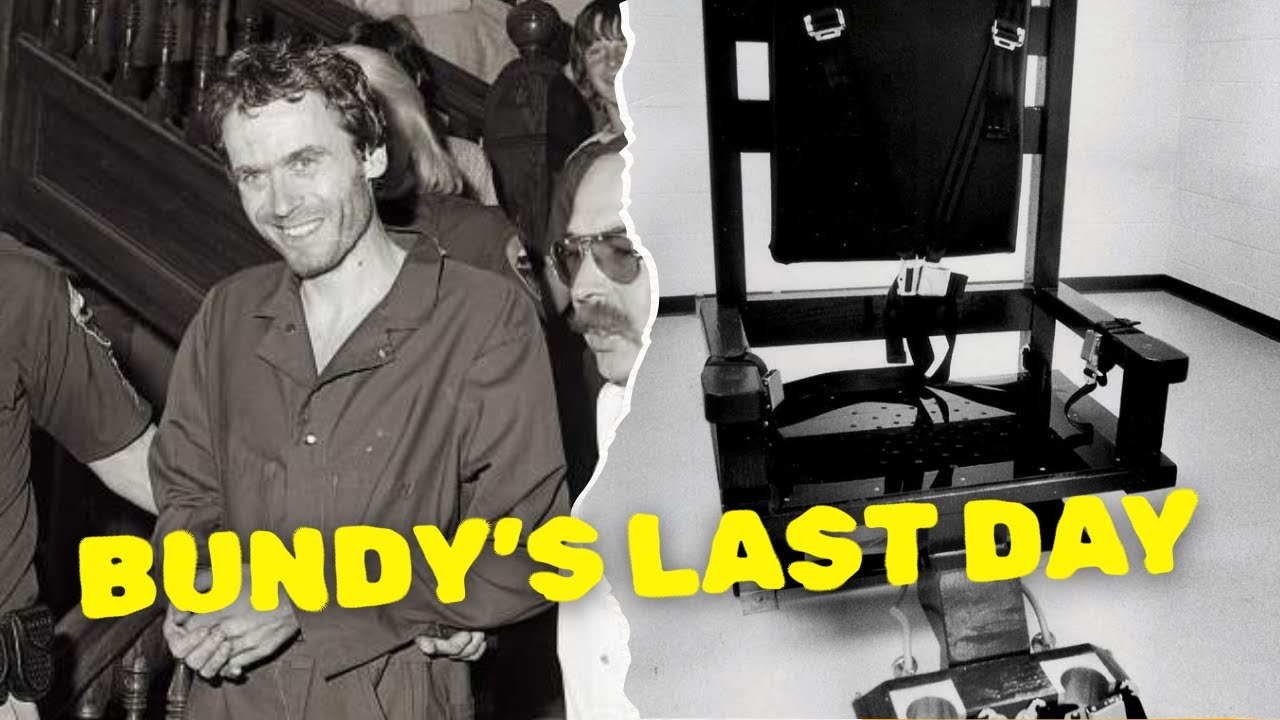
The final jolt of electricity that ended Theodore Robert Bundy’s life at 7:16 a. m. on January 24, 1989, did not silence the screams of his victims, nor did it erase the decade of terror he inflicted across a nation that had never seen a predator quite like him. As the switch was thrown inside the execution chamber at Florida State Prison in Starke, witnesses behind thick glass watched the man who had eluded law enforcement for years take his final breath, his body convulsing against the restraints of the infamous electric chair known as "Old Sparky." Outside the prison walls, a crowd that had gathered in the pre-dawn darkness erupted in cheers, car horns blared, and some held signs bearing the names of the women he had murdered, a stark contrast to the solemn silence that had enveloped the chamber moments earlier. The execution brought a definitive end to a legal saga that had spanned nearly a decade, but it opened a wound in the American psyche that has never fully healed. Bundy, who had confessed to approximately 30 murders across seven states before his death, with investigators believing the true number may never be known, had become more than a criminal; he was a cultural phenomenon, a study in the banality of evil, and a chilling reminder that danger often wears a charming smile. His final hours were a whirlwind of last-minute legal maneuvers, desperate phone calls, and a final meal, all while the machinery of the state prepared to carry out a sentence that had been delayed for years through a relentless series of appeals. In the early morning hours of January 24th, after the Supreme Court denied his final appeal, Bundy was moved from his cell on death row to a holding cell adjacent to the execution chamber. He had spent his last days speaking with a Christian psychologist, James Dobson, in an interview that was videotaped and later broadcast, in which he blamed violent pornography for his descent into madness, a claim that many experts dismissed as a final attempt to shift blame and manipulate public perception. He made phone calls to his mother and to his longtime girlfriend, expressing love and regret, but he steadfastly refused to provide investigators with a complete accounting of his crimes, leaving families of the missing with only fragments of information and a lifetime of unanswered questions. The path to that execution chamber was a long and twisted road that began in the quiet suburbs of the Pacific Northwest, where a young man named Ted Bundy was crafting a facade of normalcy that would allow him to hunt with impunity. Born Theodore Robert Cowell on November 24, 1946, in Burlington, Vermont, his early life was shrouded in a secret that would fundamentally fracture his identity; he was raised believing his mother was his sister and his grandparents were his parents. This revelation, which he learned in his teenage years, created a deep-seated resentment and a desperate need for control that would later manifest in unspeakable violence. As he grew older, Bundy moved with his family to Washington State, where he adopted his stepfather's surname and began to build a new identity, one that was intelligent, ambitious, and outwardly charming. He studied psychology at the University of Washington, volunteered at a suicide hotline, and even worked on political campaigns, presenting an image of a driven and compassionate young man to his peers. But beneath this veneer of respectability, a darker obsession was festering; he was consuming violent pornography and engaging in voyeuristic behavior, prowling neighborhoods at night and imagining power over strangers, a rehearsal for the horrors he would soon unleash. The year 1974 marked a turning point, as young women began to vanish from college towns and quiet neighborhoods across Washington and Oregon. The disappearances initially seemed unconnected, but a pattern soon emerged: witnesses described seeing a polite, unthreatening man named Ted, often with his arm in a cast or a limp, asking for help with a mundane task. The victims, typically young women with long, dark hair parted in the middle, would agree to assist him and then disappear without a trace, their bodies often dumped in remote, forested areas that were difficult to search. The list of names grew—Linda Healey, Donna Manson, Susan Rancourt, Roberta Parks—and fear began to grip the region. Despite the mounting evidence and witness descriptions, Bundy managed to stay ahead of investigators, largely due to a lack of coordination between police departments in different jurisdictions. He was finally identified as a person of interest after his girlfriend, Elizabeth Kloepfer, contacted police with her suspicions, but the lack of physical evidence and forensic technology meant he could not be held. He was pulled over and found to have handcuffs, a crowbar, and a ski mask in his car, yet he was released, a decision that allowed him to relocate to Utah and continue his killing spree with a new sense of confidence and impunity. In Utah, the violence continued, and in November 1974, he attempted to abduct Carol DaRonch, who miraculously fought her way free and later identified him in a lineup, becoming the first survivor to put a face to the terror. His arrest in August 1975 for the kidnapping of DaRonch led to a conviction and a prison sentence, but Bundy was far from finished. He escaped from custody twice, first from a courthouse in Aspen, Colorado, and then, more dramatically, from a jail cell in Glenwood Springs, sawing a hole in the ceiling and slipping away into the night, a fugitive once again. His flight led him to Tallahassee, Florida, where his violence escalated to a level of brutality that stunned even seasoned investigators. On the night of January 15, 1978, he broke into the Chi Omega sorority house at Florida State University and, in a frenzied attack lasting less than fifteen minutes, bludgeoned and strangled four women, killing two and severely injuring two others. Hours later, he abducted and murdered twelve-year-old Kimberly Leach, a crime that seemed to signal a complete unraveling of any remaining restraint. The randomness and savagery of these attacks galvanized a massive manhunt that finally ended with his arrest in Pensacola on February 15, 1978. The trials that followed were a national spectacle, a media circus that Bundy, acting as his own attorney, seemed to relish. He questioned witnesses, made dramatic objections, and attempted to manipulate the proceedings, but the evidence against him was overwhelming, including bite mark testimony that linked him to the Chi Omega murders. In July 1979, he was found guilty of the murders of Margaret Bowman and Lisa Levy and sentenced to death, a sentence that was followed by another for the murder of Kimberly Leach. He was sent to death row, but the legal battles were just beginning, as he filed a series of appeals that would delay his execution for nearly a decade. During those years on death row, Bundy became a master manipulator of the media, granting interviews and offering partial confessions that hinted at the full scope of his crimes without ever providing complete closure. He negotiated with investigators, offering details in exchange for more time, but he never gave them the full truth, leaving a trail of unresolved cases and grieving families in his wake. His final interview with James Dobson, in which he blamed pornography for his actions, was widely seen as a cynical attempt to absolve himself of responsibility, a final act of manipulation that fooled few. The execution of Ted Bundy was a moment of catharsis for a public that had grown weary of his notoriety, but it was also a moment of profound sorrow for the families of his victims, many of whom had never received the closure of finding their loved ones. The case forced a permanent change in American policing, highlighting the need for inter-agency communication and the development of behavioral profiling as a legitimate investigative tool. It also sparked a national conversation about the nature of evil, the dangers of trusting appearances, and the fine line between charm and manipulation. Today, thirty years after his death, Bundy's story continues to fascinate and horrify, retold in documentaries and crime series that seek to understand the mind of a killer. But the legacy of his case is not the notoriety of the man himself, but the lessons learned about the importance of vigilance, the cost of ignoring warning signs, and the enduring pain of lives cut short. The case is closed, but the memory of the victims and the questions that remain unanswered serve as a permanent reminder that evil does not always announce itself, and that the most dangerous predators are often the ones who look the most like us.
 Could a Super Bowl ring be the prelude to an engagement ring for Stefon Diggs and Cardi B? The New England Patriots star recently teased that popping the big question might be “on the agenda” — but only if he secures a Super Bowl win first.
 “It’s on the agenda, maybe,” Diggs joked. “Right? I gotta get mine first,” referring to his goal of winning a Super Bowl ring before moving forward with any plans to propose.
 While the future of Diggs and Cardi’s relationship remains uncertain, what’s clear is Cardi’s busy schedule. The rapper is set to hit the road for her “Little Miss Drama Tour” starting on February 11, where she will visit major cities like Houston, Detroit, New York, and Chicago in support of her chart-topping album, AM I THE DRAMA?