The Lion’s Head Pendant: A Journey Through Time from Board Game Piece to Sacred Artifact
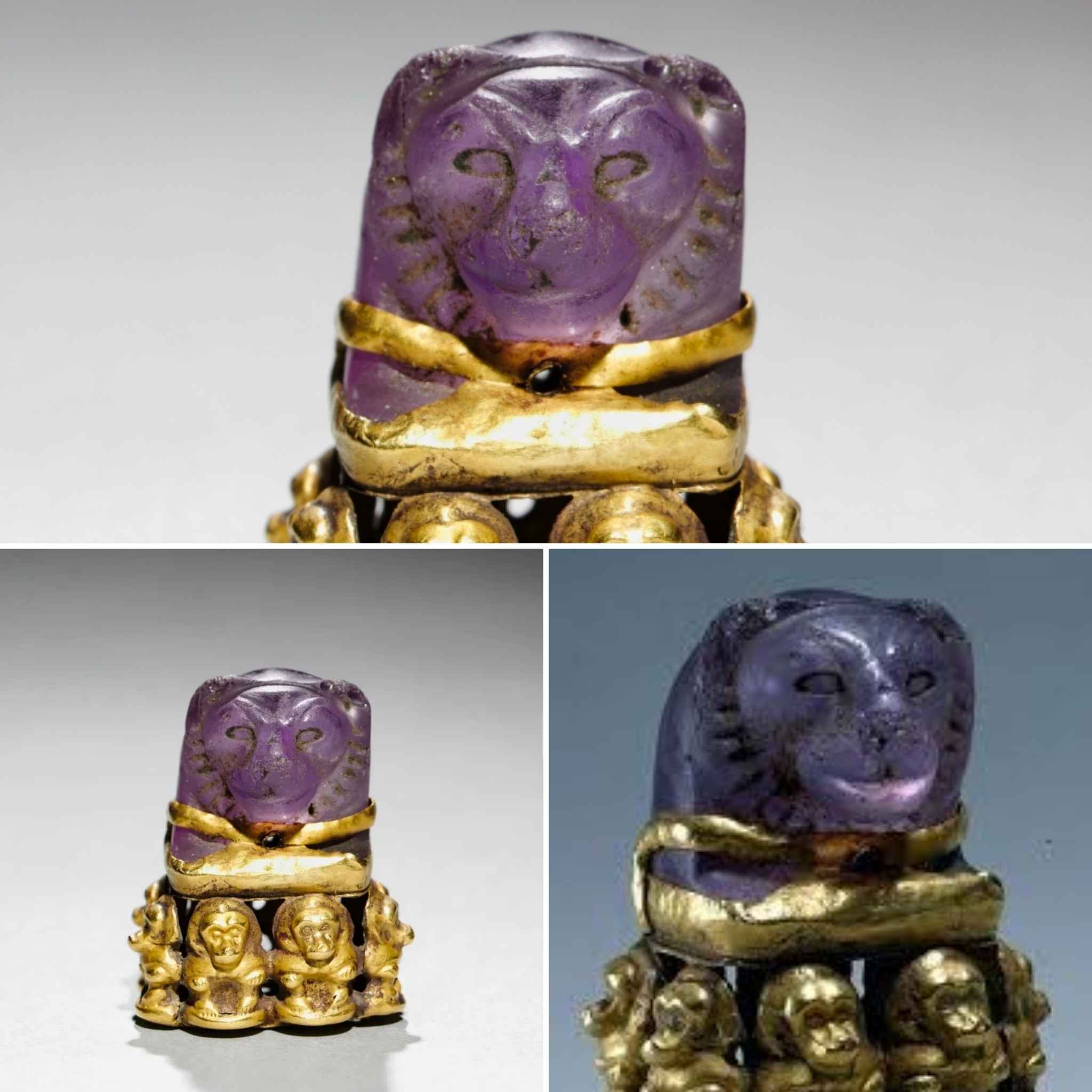
In the world of ancient Egyptian and Nubian artifacts, the Lion’s Head Pendant stands as an extraordinary example of both the craftsmanship and cultural adaptation that defined the civilizations of the Nile River region. What began as a simple board game piece in ancient Egypt was later transformed into a magical religious object in Sudan, giving it both a rich history and an enchanting aura. This pendant, which currently resides in the Cleveland Museum of Art, carries with it the story of ancient cultures that re-purposed objects of power and beauty, blending different traditions across millennia.
An Ancient Egyptian Game Piece
The origins of this intriguing artifact can be traced back to ancient Egyptian board games, specifically the game of senet. Senet was one of the most popular games in ancient Egypt, dating back over 5,000 years. Players would move pieces across a board consisting of 30 squares, and some pieces were intricately designed to symbolize different gods, kings, or animals.
The lion’s head that now adorns the pendant likely served as a piece in such a game during the New Kingdom period (circa 1550-1070 B.C.). Amethyst, a gemstone known for its deep purple hue, was often favored for the making of game pieces, amulets, and jewelry during this period. The lion’s head itself may have represented power and protection, typical attributes linked to animals in Egyptian culture. It was crafted with extraordinary attention to detail, using the finest gemstones of the time.
From Egyptian Game Piece to Religious Pendant in Sudan
Though originally a simple game piece, the lion’s head pendant’s history took a dramatic turn around 2,700 years ago during the Napatan period in Sudan. By then, the Egyptian piece had been removed from the board and given a new life in a transformed setting. During this time, the Nubian rulers in Sudan, who viewed themselves as descendants of Egypt’s pharaohs, began incorporating Egyptian designs and materials into their own culture. This practice was an assertion of political and religious legitimacy, as these rulers sought to blend Egyptian and Nubian customs.
The lion’s head, carved from amethyst, was mounted into a new gold frame that included eight seated baboons. The baboon was a significant animal in Nubian and Egyptian religion, often associated with the sun and moon, and frequently depicted in Egyptian art with their arms raised, invoking the power of the divine.
The baboons in this pendant are not just decorative; they carry symbolic meaning, with the lion being linked to the creator god Amun in the Kushite religion. Amun was considered a protector deity, often merged with Ra, the sun god, to form the powerful Amun-Ra. The pendant’s design, with the baboons lifting the lion’s head, signified the connection between Amun and the cosmos, as well as the divine power of the sun.
Cultural Significance and Symbolism
The Lion’s Head Pendant exemplifies how ancient cultures repurposed and imbued artifacts with religious significance. For the Nubians, recycling Egyptian artifacts wasn’t just about reusing materials; it was about connecting to the divine lineage of the Egyptian pharaohs. By using amethyst, gold, and ancient Egyptian imagery, the Nubian kings signaled their connection to the most powerful deities of Egypt while simultaneously reaffirming their own cultural identity.
In the case of the lion and baboon, the pendant’s symbolic purpose was twofold: it was an ornament of royal authority and a ritual object. Wearing this pendant wasn’t only a matter of fashion or personal adornment; it was an act that connected the wearer to the gods, most notably to Amun-Ra, the god of creation, and Ra, the god of the sun. The pendant, therefore, wasn’t just a beautiful piece of jewelry—it was an object of power, protection, and divine favor.
A Masterpiece of Recycled Art
The process of reusing old stones, such as amethyst, was common among the Nubians. They would often repurpose precious gems and carvings into new items, believing that by doing so, they were strengthening the connection to their ancestors. The use of a lion’s head—already a symbol of strength, protection, and power in ancient Egypt—combined with the sacred baboons in the pendant’s design emphasized the creator’s authority and belief in the protective force of the gods.
This approach also reflects the Nubians’ reverence for ancient Egyptian culture and their understanding that sacred objects could transcend their original purpose. In the case of the lion’s head pendant, what began as a game piece evolved into a magical religious object, continuing the ancient cycle of transformation, from mundane to divine.
The Lion’s Head Pendant, now housed in the Cleveland Museum of Art, serves as a remarkable testament to the interconnectedness of ancient cultures and their ability to adapt and re-contextualize objects through time. As much a piece of history as a work of art, it demonstrates how, even in antiquity, people understood the importance of legacy and the power of the divine. This pendant is a window into a past where religion, art, and politics came together to shape the beliefs and actions of an entire civilization.


