A Mysterious Roman City Rediscovered
In the heart of Spain’s Iberian Peninsula, a forgotten piece of Roman history has been unearthed. Archaeologists recently discovered a forum, the central square of a mysterious Roman town that was erased from history more than 2,000 years ago. The town, known as La Cabañeta, is located near El Burgo de Ebro, a municipality in the province of Zaragoza.
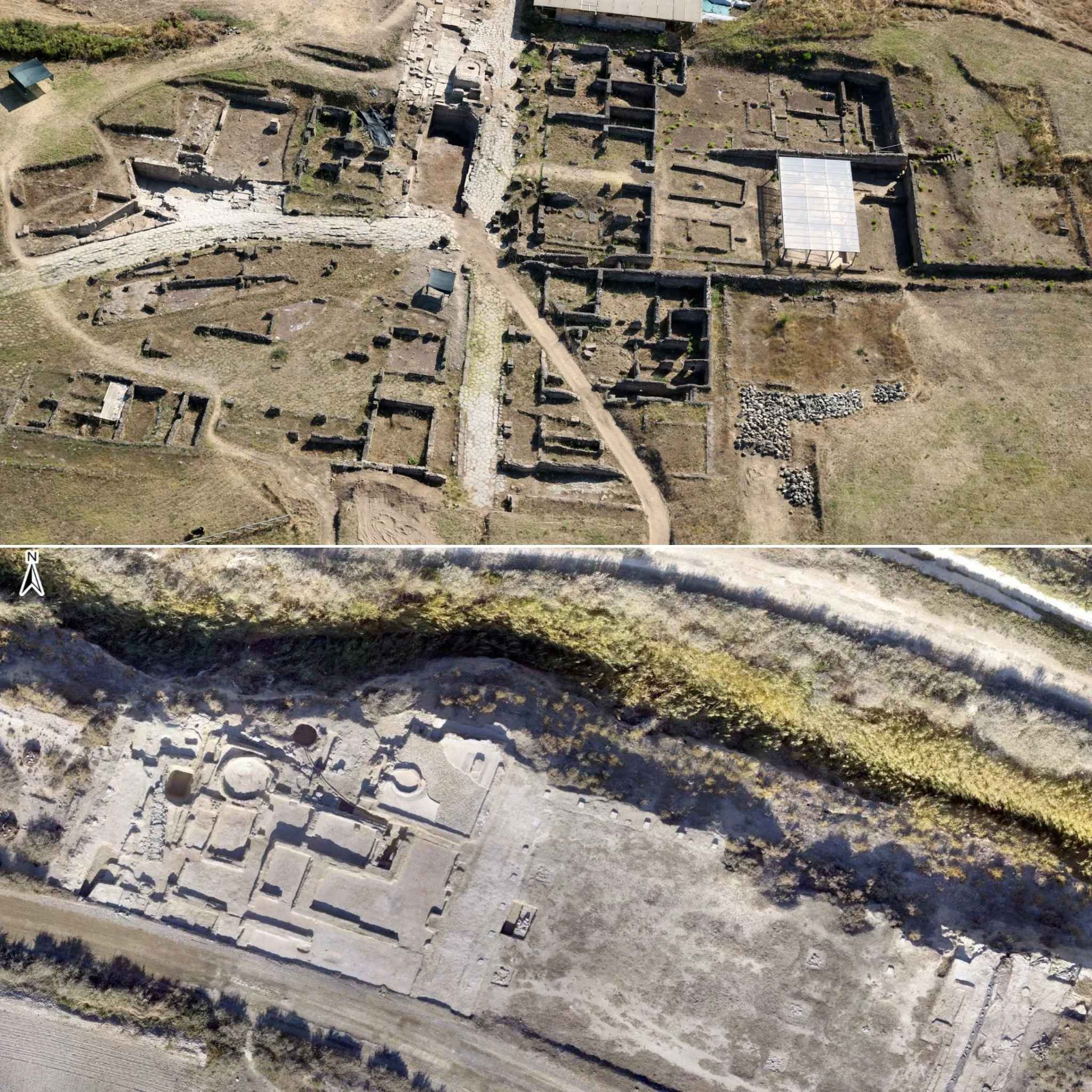
This forum, a central gathering place in Roman cities, was first hinted at a decade ago, when the site’s outer perimeter was discovered. However, it wasn’t until the summer of 2025 that excavations resumed and the forum’s remains were fully uncovered, shedding new light on the Roman presence in Iberia and providing an invaluable glimpse into the transition period of Roman society.
Borja Díaz Ariño, a researcher at the University of Zaragoza, co-leading the excavations at La Cabañeta, commented, “This year, we have been able to continue the excavation work, discovering part of the corner of the portico and confirming that we are facing a large square that, due to its location in the city and its characteristics, can be identified as the forum.”
A Roman Forum of Great Significance
The forum is dated to the first century BCE, making it the oldest Roman plaza of this kind found in the interior of the Iberian Peninsula. Interestingly, the discovery places La Cabañeta in a unique historical context—predating similar forums that appeared in the region during the reign of Emperor Augustus by more than a century.
For Díaz Ariño and his team, the significance of the forum lies less in its sheer size and more in its early chronology. He notes, “It offers a very precise image of a Roman city in transition from the 2nd to 1st century BCE,” a period that witnessed the rapid Romanization of the Iberian Peninsula.
What’s particularly exciting about this forum is how it reflects the cultural shifts taking place in Roman cities at the time, providing insight into the urban layout and social functions that defined Roman society during a time of great change.

A City Lost to the Sertorian War
One of the most intriguing aspects of La Cabañeta is its short-lived existence. Although the forum itself offers valuable clues, much of the settlement’s history remains a mystery. Archaeologists know that the city was destroyed during the Sertorian War (80 BCE), a conflict that saw Roman factions fighting for control of the Iberian Peninsula.
The Sertorian War—named after the Roman general Quintus Sertorius, who led a rebellion against Rome—had a dramatic impact on Iberian cities. La Cabañeta, established only a few decades before its destruction, fell victim to the turmoil. “We are still not able to ‘name’ the city,” said Díaz Ariño. “Its short life is a problem since we have little information from that period.”
Some experts believe that the city could be identified with Castra Aelia, a military camp mentioned by the historian Titus Livy. If this is the case, La Cabañeta may have originally been a military settlement that evolved into a full-fledged city before its sudden demise during the Sertorian War.
Italian Influence and Roman Culture in Iberia
Despite the city’s short lifespan, the archaeological evidence uncovered so far paints a fascinating picture of Roman life in the Iberian Peninsula during the late Republican era. Researchers have found clear signs that La Cabañeta was primarily inhabited by settlers from Italy—a hallmark of early Roman colonization efforts in Iberia.
Among the most remarkable finds is the presence of Roman public baths, which are considered some of the best examples of Republican-era baths in the Iberian Peninsula. Díaz Ariño describes them as “among the best examples of Roman public baths of the Republican era, whose closest parallels are found precisely in Italy (Fregellae and Musarna).” This suggests that Italian settlers were instrumental in shaping the city’s urban and cultural development.
In addition to the public baths, archaeologists have discovered an abundance of Italian-style ceramics, luxury goods, and Latin inscriptions—all of which reinforce the idea that La Cabañeta was not just a military outpost, but a thriving town with significant trade connections to Italy and the broader Roman world.

The Significance of the Forum
The forum, as a central gathering space, would have been the heart of life in La Cabañeta. It would have been used for a wide variety of social, political, and economic activities—from markets to religious ceremonies. As a multifunctional space, the forum was not only a venue for citizens to gather, but also a symbol of the city’s political and economic aspirations.
Díaz Ariño noted that the forum’s design and its strategic location suggest that it was integral to the city’s public life. “The forum is a multifunctional space intended for the development of economic and religious policies,” he explained. The researchers believe the forum may have housed a temple or religious space, though this has not yet been uncovered. Additionally, there may have been areas for conducting political activities, suggesting a highly organized and dynamic society that valued civic life.
Next Steps for Archaeological Excavation
For now, the excavation team at La Cabañeta has only uncovered part of the forum, and there is still much to learn about the layout of the city and its streets. “Our goal now is to continue the excavation of the forum,” Díaz Ariño said. “The forum is a multifunctional space intended for the development of economic and religious policies. That means it should have a temple (or at least a space intended for worship) that we have not yet located, as well as perhaps some space intended for the activity of policy.”
The excavation team is also eager to explore the warehouse building they discovered earlier in the dig. This building is considered exceptional because of its size, chronology, and the goods it contained, providing further evidence of the commercial nature of the city.
What’s Next for La Cabañeta?
As the excavation progresses, researchers hope to uncover more information about La Cabañeta’s short-lived history. The discovery of the forum and its surrounding areas promises to offer new insights into the daily lives of early Roman settlers in Iberia, their connections with Italy, and their rapid urban development in a period of great political turbulence.
A City Lost to Time, Rediscovered
The forum at La Cabañeta may not have been the largest plaza in the Roman world, but its significance goes far beyond its size. It is a rare glimpse into a Roman city in transition—a city that, for a brief time, flourished under Roman influence before falling victim to civil war. Its rediscovery offers an invaluable glimpse into the Romanization of the Iberian Peninsula and the cultural forces that shaped this ancient society.
As the excavation team continues to dig deeper, we can only imagine what other secrets La Cabañeta holds. Whether or not the city is ever named definitively, its forum will forever stand as a testament to the city’s fleeting yet important place in Roman history.
What do you think?
Could there be more forgotten Roman cities waiting to be rediscovered? Share your thoughts below and stay tuned for more archaeological breakthroughs!