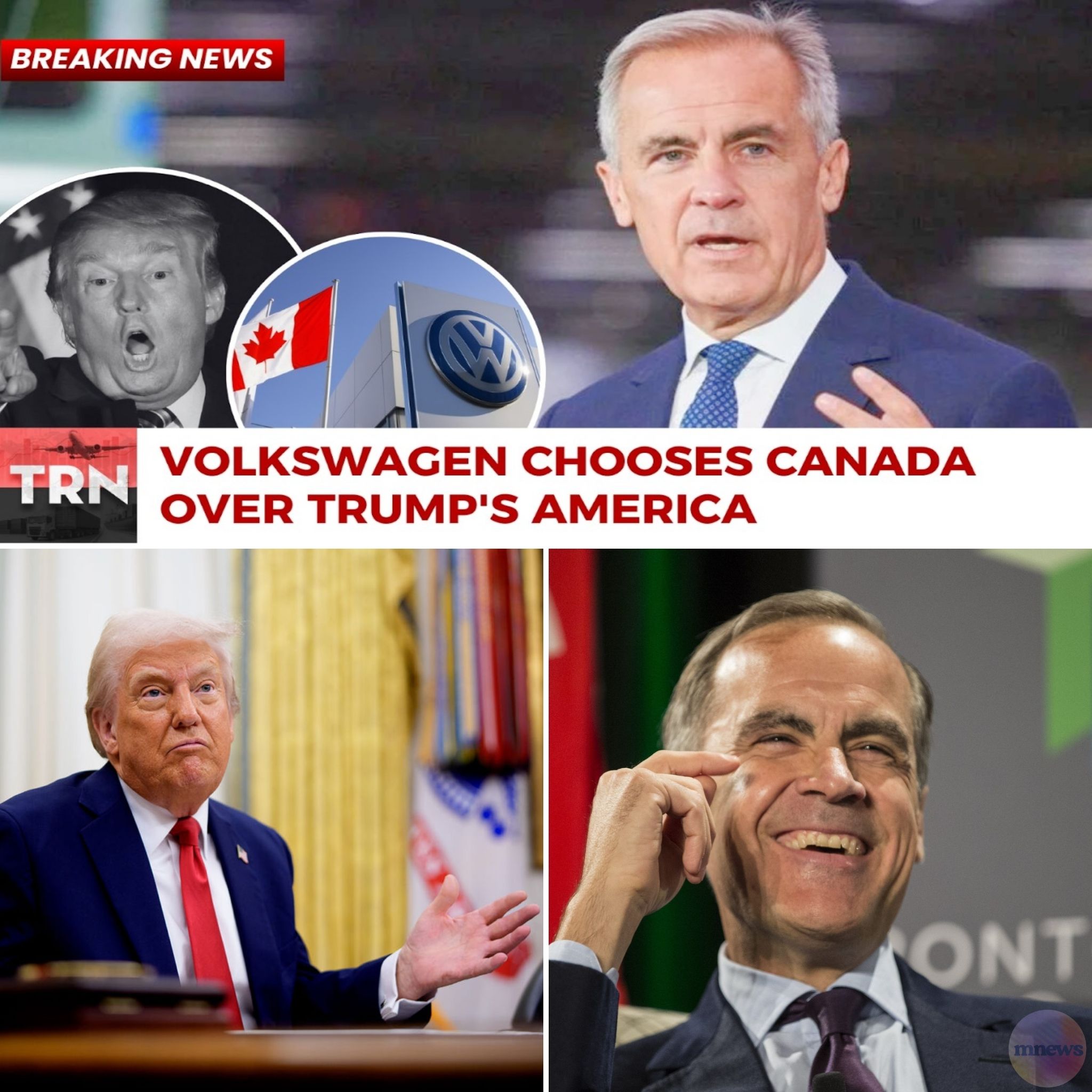
In a defining moment for North American industrial policy, global automotive giant Volkswagen has broken ground on its largest electric vehicle battery facility outside of Europe, choosing Ontario over the United States. The move is a stark rebuke of the tariff-driven trade uncertainty emanating from Washington and a massive vote of confidence in Canada’s long-term economic strategy.
The Power Co. Gigafactory in St. Thomas, Ontario, officially entered full construction this week, launching the development of three major buildings at the site. When production begins in 2027, it will be the largest facility of its kind in Canadian history, directly employing up to 3,000 people and anchoring the region’s automotive supply chain for decades.
Local officials framed the investment as a generational transformation for a community long tied to the auto sector’s volatility. “This allows families to stay, work, buy homes, and build a vibrant future,” said St. Thomas Mayor Joe Preston, highlighting the project’s profound local impact.
The strategic implications, however, resonate far beyond southwestern Ontario. In a statement that cut to the core of the decision, a project official noted, “This is the world’s largest automaker. They don’t make a plan for just this year, while Donald Trump’s tariffs. They’re making a plan, looking forward.”
That sentiment captures a fundamental divergence in approach between the two nations. As the Trump administration escalates tariffs and emergency trade measures, introducing what analysts call one of the biggest business risks in North America, Canada is positioning itself as a bastion of predictability and strategic coherence.
Volkswagen’s calculus was clear. The company sought energy stability, predictable climate policy, reliable access to critical minerals, and a consistent regulatory environment—all criteria Canada met decisively. The United States, embroiled in political and trade volatility, did not.
“Companies do not fear high taxes or strict regulations as much as they fear unpredictability. And that unpredictability now defines U.S. trade policy,” said a senior industry analyst familiar with the negotiations. “Volkswagen saw that gamble and walked toward stability.”
This monumental investment is not an isolated event but a centerpiece of a deliberate national strategy. Under Prime Minister Mark Carney, Canada is executing a comprehensive industrial plan focused on building complete, clean supply chains from mineral extraction to advanced manufacturing.
The government is leveraging long-term investment tax credits, securing international partnerships, and pushing to double non-U.S. exports within a decade. This stands in sharp contrast to the tariff shocks and policy whiplash characterizing the current U.S. approach.
The Volkswagen decision signals that Trump’s goal of forcibly reshoring manufacturing may be having the opposite effect. By destabilizing cross-border supply chains, the U.S. has made itself a riskier destination for the generational investments required in the electric vehicle revolution.
“Trump’s America is the short-term gamble. Canada is the long-term bet,” the official added, encapsulating the broader industrial realignment underway. Automakers and battery manufacturers are now prioritizing geopolitical and policy stability as much as market size.
The groundbreaking coincides with a new era of Canadian economic assertiveness. Prime Minister Carney recently unveiled a suite of nation-shaping mega-projects, including the indigenous-led Northwest Corridor and a sovereign fund for critical minerals, designed to diversify trade and build energy independence.
This confident posture was met with a jarring display of diplomatic friction this week, underscoring the tense backdrop. U.S. Ambassador Pete Hoekstra caused a scene at a formal Canada-U.S. gala in Ottawa, swearing at an Ontario trade official over a provincial advertisement criticizing tariffs.
The ad, featuring the voice of Ronald Reagan warning against protectionism, had previously drawn fury from President Trump. Ambassador Hoekstra’s outburst, witnessed by diplomats and business leaders, laid bare the deepening rift between the two governments.
Ontario Premier Doug Ford responded with measured firmness, demanding an apology and stating, “When you attack our province, you attack our country.” He emphasized resilience, separating the American people from political tactics, a sentiment echoing broadly across the Canadian public.
While Ford defended dignity publicly, Prime Minister Carney has pursued a strategy of quiet diversification, finalizing and expanding trade agreements with the European Union, Japan, South Korea, and Australia. Canadian exports to Asia and Europe are rising as Ottawa builds alternatives to the U.S. market.
The political fallout from U.S. tariffs has also ignited fierce debate within Canada’s Parliament. Conservative opposition leader Pierre Poilievre has aggressively blamed Carney’s government for job losses he attributes to American trade actions, claiming $50 billion in investment has left Canada.

Carney has forcefully reframed the challenge, pointing directly to Washington as the source of disruption. “The cause that the leader of the opposition is missing is the U.S. tariffs,” Carney stated in Parliament, citing duties on steel, lumber, and autos. He countered with Canada’s AAA credit rating and the lowest debt-to-GDP ratio in the G7.
Evidence suggests the tariff strategy is proving to be a double-edged sword, with costs mounting on both sides of the border. U.S. construction and manufacturing firms report higher costs for materials, while American farmers have lost export contracts as Canada diversifies its suppliers.
The Volkswagen Gigafactory, therefore, is more than an industrial milestone. It is a moment of clarity in the North American economic contest. It reveals that in the global race for capital, consistency and forward-looking policy are trumping protectionist pressure.
For Canada, the project declares that the nation can win global-scale factories and compete directly with its southern neighbor. For the United States, it serves as a potent indicator that tariff chaos does not attract investment—it actively repels it.
As the concrete is poured in St. Thomas, the message to the world is unequivocal. In an era of uncertainty, one country is building a foundation for the next century, not just the next election cycle. And for the world’s largest automaker, that country was Canada.