Homo erectus Genetic Material Sequenced for the First Time — And It Reveals Surprising Links to Modern Humans
In a groundbreaking scientific breakthrough, researchers have successfully sequenced genetic material from Homo erectus fossils for the first time in history — a discovery that is reshaping what scientists understand about ancient human evolution and the deep ancestral connections between extinct human species and modern people today.
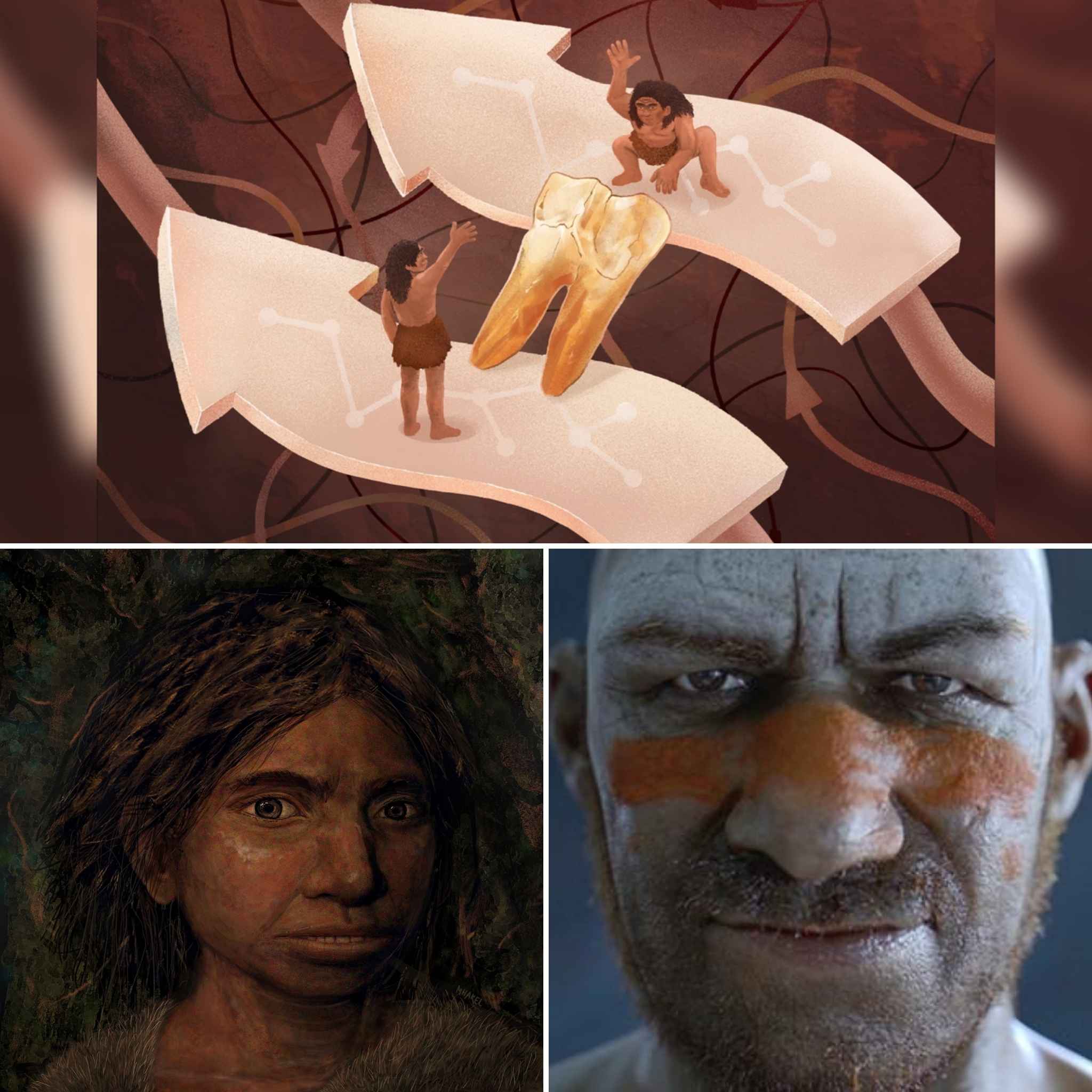
The study, published in the journal Nature, analyzed proteins extracted from the dental enamel of six Homo erectus individuals discovered in China and dating back approximately 400,000 years. The results revealed unexpected genetic connections not only to the mysterious Denisovans but also indirectly to some living human populations.
For decades, Homo erectus has remained one of the most important — and mysterious — human ancestors ever discovered. Now, thanks to advances in paleoproteomics, scientists are finally unlocking biological information from a species that disappeared more than 100,000 years ago.
Who Was Homo erectus?
Homo erectus occupies a crucial place in human evolutionary history.
Emerging roughly 1.8 million years ago, H. erectus was among the first ancient human species to successfully migrate out of Africa and spread across Europe, Asia, and Oceania. Unlike earlier hominins, Homo erectus possessed:
- relatively large brains
- upright walking posture similar to modern humans
- advanced stone tool technology
- impressive adaptability to different climates and environments
The species survived for an extraordinarily long time — longer than almost any other known human ancestor — before eventually disappearing around 108,000 years ago.
Scientists have long debated whether Homo erectus ever overlapped or interbred with later human species, including Homo sapiens, which evolved in Africa around 300,000 years ago.
Until now, however, direct genetic evidence from H. erectus itself had remained frustratingly out of reach.
Why This Discovery Is So Important
DNA is fragile and breaks down over time. In ancient fossils, especially those hundreds of thousands or millions of years old, recoverable DNA is extremely rare.
That limitation has made it almost impossible to study Homo erectus genetically — until scientists turned to a newer technique called paleoproteomics.
Rather than extracting DNA, researchers examined ancient proteins preserved inside fossilized tooth enamel.
Proteins survive much longer than DNA, sometimes for hundreds of thousands or even millions of years under favorable conditions. By analyzing the amino acids that make up these proteins, scientists can reconstruct portions of ancient genetic information.
In this study, researchers extracted 11 proteins from six Homo erectus individuals discovered at three archaeological sites in China.
The fossils all dated to approximately 400,000 years ago, during the Middle Pleistocene.
The Discovery That Shocked Researchers

Among the hundreds of amino acid positions analyzed, two variants stood out immediately.
Variant One: Unique to Homo erectus
One amino acid variant appeared in all six Homo erectus individuals but has never been found in any other known human lineage.
This suggests the variant may have been uniquely characteristic of this population of H. erectus.
Variant Two: Shared With Denisovans — and Eventually Humans
The second discovery was even more surprising.
Researchers found another amino acid variant shared between these Homo erectus individuals and the Denisovans, an extinct group of archaic humans that once lived across parts of Asia.
Scientists believe this genetic trait later passed from Denisovans into some modern human populations through interbreeding tens of thousands of years later.
In other words, a biological signal originating in ancient Homo erectus may still survive indirectly inside certain modern humans today.
The findings reveal what researchers described as “deep genetic links” between Homo erectus, Denisovans, and living people.
Who Were the Denisovans?


Denisovans remain one of the most mysterious branches of the human family tree.
They were first identified through DNA extracted from a finger bone found in Siberia’s Denisova Cave in 2010. Since then, researchers have discovered that Denisovans interbred with:
- Neanderthals
- Homo sapiens
- possibly other ancient human groups
Today, traces of Denisovan DNA survive in certain modern populations, especially among Indigenous groups in Oceania and parts of Asia.
The new study suggests Homo erectus may have contributed genetically to this broader network of ancient interbreeding events far earlier than previously understood.
The Rise of Paleoproteomics
The research also marks a major milestone for the growing scientific field of paleoproteomics.
Unlike DNA, which rapidly degrades over time, proteins can persist far longer in ancient fossils. This allows researchers to investigate species previously considered genetically inaccessible.
Study author Qiaomei Fu, director of the Ancient DNA Laboratory at the Chinese Academy of Sciences, explained that no previous successful DNA or protein sequencing had been conducted on Homo erectus fossils before this work.
However, Fu emphasized that scientists still need actual DNA to fully understand how Homo erectus evolved and how closely related these individuals were to Denisovans and modern humans.
At present, no usable Homo erectus DNA has yet been recovered.
Still, the protein evidence represents a huge breakthrough.
A Complicated Human Family Tree


The discovery adds to growing evidence that ancient human evolution was far more complex than scientists once believed.
For decades, paleoanthropologists classified ancient humans primarily by physical characteristics — skull shape, bone structure, tooth size, and other anatomical features. This approach is called the morphological species concept.
But advances in genetics over the past two decades have complicated that picture dramatically.
Scientists now know that:
- Neanderthals interbred with Homo sapiens
- Denisovans interbred with both Neanderthals and humans
- multiple ancient human groups overlapped geographically and biologically
- species boundaries may have been far blurrier than previously assumed
The new Homo erectus findings further blur those lines.
Researchers now suspect that some fossils previously labeled “Homo erectus” in China may actually belong to Denisovan relatives or entirely different populations scientists still do not fully understand.
The “Muddle in the Middle Pleistocene”

Experts often describe this confusing evolutionary period as the “muddle in the Middle Pleistocene.”
This era — roughly between 780,000 and 126,000 years ago — was a time of enormous evolutionary change among human ancestors.
Different human groups spread across Africa, Europe, and Asia, sometimes becoming isolated and sometimes reconnecting through migration and interbreeding.
The result was not a neat evolutionary ladder but a tangled web of populations constantly mixing and evolving.
Paleoanthropologist John Hawks said the new study highlights how uncertain scientists still are about ancient human classification.
“Many of these fossils are probably Denisovan relatives, or possibly they came from other groups we’ve been calling ‘erectus’ just because we don’t really understand them,” Hawks explained.
He praised the research as an impressive contribution that demonstrates how unclear ancient human boundaries truly were.
What Scientists Still Don’t Know

Despite the breakthrough, major mysteries remain unanswered:
- Did Homo erectus directly interbreed with Homo sapiens?
- Were these Chinese fossils true Homo erectus or another closely related population?
- How widespread was genetic mixing among ancient human groups?
- Could additional proteins or even DNA eventually be recovered from older fossils?
Scientists hope future discoveries and improved technology will provide clearer answers.
The possibility of eventually recovering actual Homo erectus DNA remains one of paleoanthropology’s greatest goals.
Rewriting Human Evolution
The new study reinforces an increasingly important realization in anthropology:
Human evolution was not a straight line.
Instead, it was a dynamic, interconnected process involving migration, isolation, adaptation, and repeated interbreeding between multiple human groups over hundreds of thousands of years.
The ancient world was populated not by a single evolving lineage, but by many overlapping human relatives interacting across continents and generations.
And now, thanks to proteins preserved in 400,000-year-old teeth, Homo erectus is finally beginning to speak genetically for the first time.
A Discovery That Changes the Story

The sequencing of Homo erectus genetic material marks a historic moment in the study of human origins.
For more than a century, scientists could only infer relationships between ancient humans based on bones and tools. Today, molecular science is uncovering biological links hidden deep within ancient fossils themselves.
The discovery not only deepens understanding of Homo erectus but also reveals how interconnected the human family truly was — with traces of ancient encounters potentially surviving in people alive today.
As researchers continue exploring ancient proteins and DNA, humanity’s evolutionary story may become even more surprising, complicated, and fascinating than anyone once imagined.