The Iliad, a Roman-Era Mummy, and a Mystery from Ancient Egypt
In a remarkable archaeological find at Oxyrhynchus, Egypt, researchers have uncovered a Roman-era mummy atop which rested a sealed packet of papyri containing fragments of Homer’s Iliad. The discovery, announced by the Egyptian Ministry of Tourism and Antiquities, offers a tantalizing glimpse into the intersection of literature, ritual, and magical beliefs in Greco-Roman Egypt.
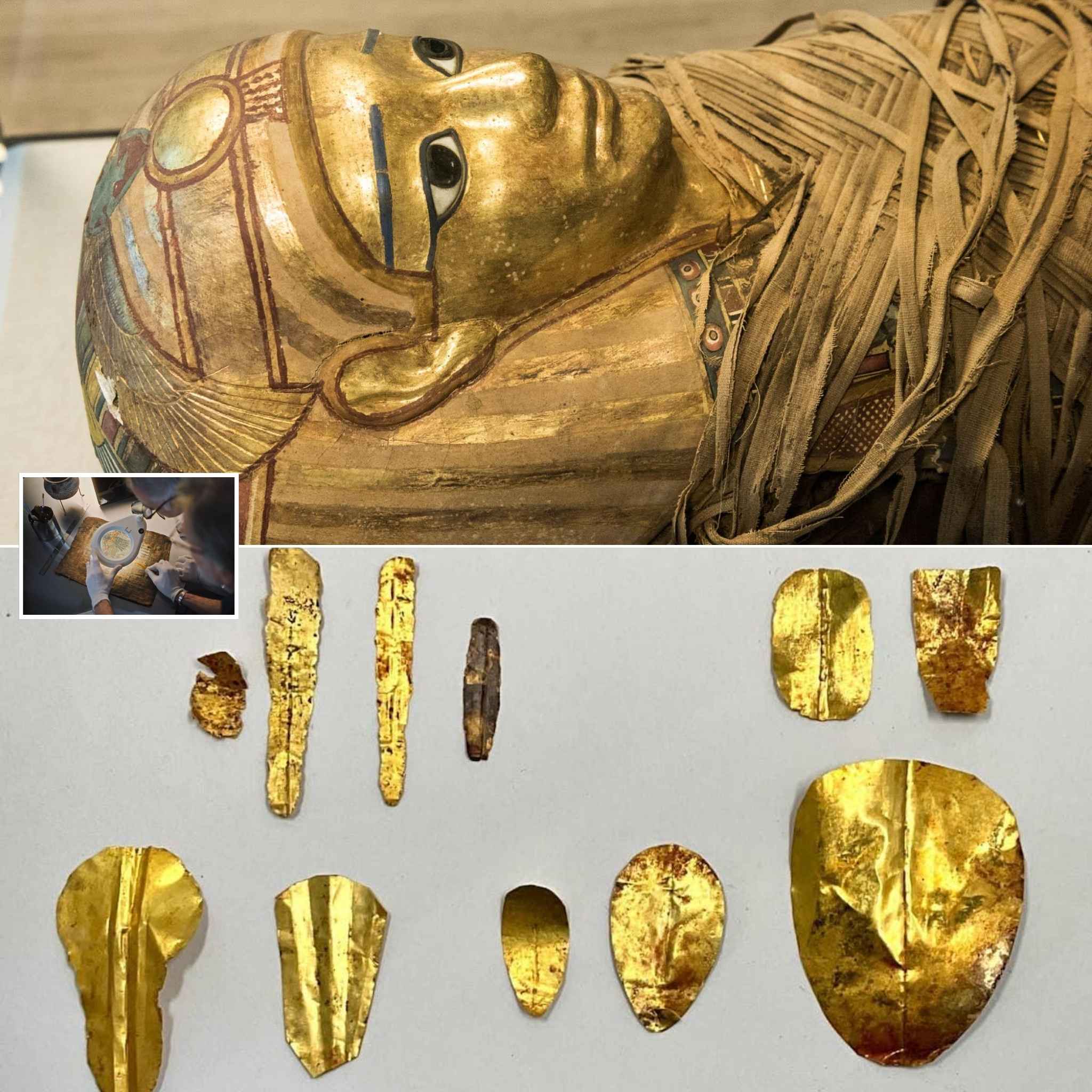
A Roman-Era Burial Like No Other
The mummy was excavated late last year by a Spanish-led team working in the High Necropolis, an area known for its elaborate burials from the Roman period. Unlike standard burials, the body was accompanied by carefully packaged papyrus packets, each sealed with clay emblems bearing hieroglyphs.
“These were not ordinary documents,” explains Ignasi Adiego, a philologist from the University of Barcelona and a member of the excavation team. “Seals were generally used for legal contracts, wills, or correspondence. Finding literary papyri sealed atop a mummy is unprecedented.”
Preliminary dating places the burial—and the papyri—around the first or second century A.D., decades after Egypt became a Roman province following Octavian’s conquest in 30 B.C.
Homer’s Iliad in the Afterlife

The fragments discovered contain passages from the Catalogue of Ships, one of the epic’s most detailed inventories of the Greek forces during the Trojan War. While Homeric texts were not unknown in Oxyrhynchus—over 800 fragments of the Iliad have been previously found in the city—the placement of these passages atop a mummy raises profound questions about their intended purpose.
Serena Perrone, a philologist at the University of Genoa, notes: “This is a very intriguing discovery. It opens up the possibility of a new context for Homeric poetry, suggesting it may have served as more than literary entertainment—it might have been used in funerary or magical rituals.”
In other words, these texts may have functioned as protective wards, designed to guide or safeguard the deceased in the afterlife—a fusion of Greek literary tradition with Egyptian religious practice.
Oxyrhynchus: A City of Papyri
Oxyrhynchus, now modern El-Bahnasa, lies roughly 118 miles south of Cairo. The city flourished under Greek rule following Alexander the Great’s conquest in 332 B.C., becoming a crucial hub linking the Mediterranean to western oases. Its history, however, stretches back further, with evidence of Nubian influence during the 8th century B.C.
The city is world-famous for its troves of papyri. Over centuries, residents discarded thousands of documents, including official records, literary texts, and even mundane scraps of paper. These papyri were often reused in creative ways. When texts became damaged or obsolete, they were repurposed as stuffing or papier-mâché-like coverings called cartonnage, which were then applied to mummies as part of the embalming process.
“The scale of papyrus survival at Oxyrhynchus is staggering,” Perrone notes. “Thousands upon thousands of fragments have been recovered—from tax records to comedic plays, tragedies, and philosophical treatises. To find Homer’s epic deliberately sealed atop a mummy is something extraordinary.”
Mystery and Meaning
The discovery raises numerous questions. Why were literary texts used in this manner? Was the Iliad chosen for its narrative of heroism, fate, and the divine? Did the Egyptians and Greek settlers in the city view the poetry as having protective or apotropaic properties, similar to spells and amulets?
Archaeologists suggest that the sealed packets could have been intended to guard the deceased, aligning with a broader pattern in Roman-era Egypt of blending Greek and Egyptian spiritual practices. The careful sealing and placement hint at ritual significance, rather than mere reuse of discarded writing.
The Iliad fragments may have been seen as containing moral, cosmological, or magical power, or perhaps they were symbolic guides for the soul navigating the afterlife—a concept deeply embedded in Egyptian funerary ideology.
Layers of History in One Tomb

This burial is remarkable not only for its literary component but also for what it reveals about cultural syncretism in Oxyrhynchus. Greek settlers, Egyptian natives, and Roman administrators all coexisted in the city, blending religious practices, linguistic traditions, and material culture.
The sealed Iliad packets exemplify this intersection: a Greek literary masterpiece incorporated into Egyptian mummification rituals during Roman rule.
What Comes Next
Excavators hope to study the other 19 papyrus packets discovered alongside this mummy, as each may contain additional fragments of classical texts. Combined analysis of the mummification, cartonnage materials, and papyri may shed light on how literature was perceived as a source of power or protection.
“The find opens an entirely new avenue of research,” Adiego says. “It challenges our assumptions about how literature was valued and used in daily and ritual life in Roman Egypt.”
Bridging Worlds: Literature, Magic, and Mortality
Ultimately, the mummy and its literary companion remind us of the rich tapestry of cultural practices in ancient Egypt under Greek and Roman influence. Here, Homer’s epic was not merely a text to be read but a potential instrument of ritual, bridging the human and divine, life and afterlife.
Oxyrhynchus continues to surprise archaeologists with its treasure trove of papyri and the stories they carry—stories that blur the line between the practical, the sacred, and the literary.
In a sealed packet atop a mummy, the Iliad now rests for centuries, silently hinting at the ancient human desire to harness words as a guide, a shield, and a bridge to the unknown.