The Mona Lisa, perhaps the most famous painting in the world, holds secrets that lie far beneath its iconic surface. Modern imaging and chemical analysis have revealed that Leonardo da Vinci’s masterpiece was far from a single, spontaneous creation. Using multispectral imaging, experts have been able to peer through the layers of paint, uncovering a complex process of experimentation and revision that unfolded over many years. These studies reveal that the painting was constantly evolving, with adjustments to composition, posture, and even elements that were ultimately removed, suggesting that Leonardo approached the work as both an artist and a meticulous experimenter.
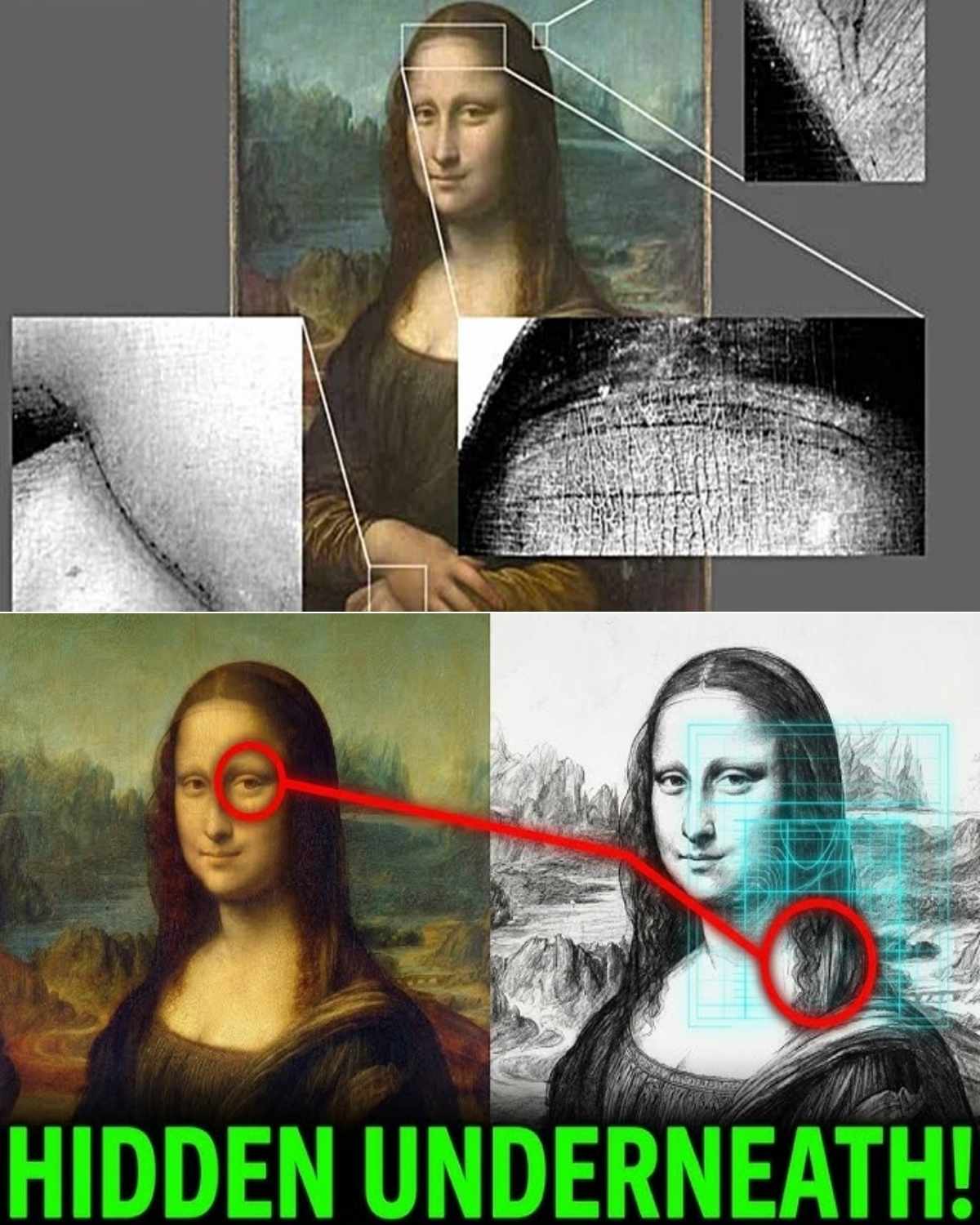
Chemical analyses have added another layer of insight, confirming Leonardo’s dual role as artist and scientist. Researchers discovered rare compounds in the ground layers of the painting, demonstrating that Leonardo deliberately manipulated materials to achieve specific optical effects. This technical mastery underpins the sfumato technique, creating the soft transitions and delicate shading that give the Mona Lisa her enigmatic expression. Every contour, every shadow, is not merely artistic intuition but the product of careful material engineering and a deep understanding of light and perception.
Viewed through this lens, the Mona Lisa becomes more than a portrait of Lisa Gherardini—it is a working laboratory, a document of Leonardo’s thought process, iterative experimentation, and continual refinement. The famous smile, the subtle modeling of the skin, and the depth of her gaze are all the result of precise calculations and material choices, reflecting a sophisticated interplay between chemistry, optics, and artistic vision.
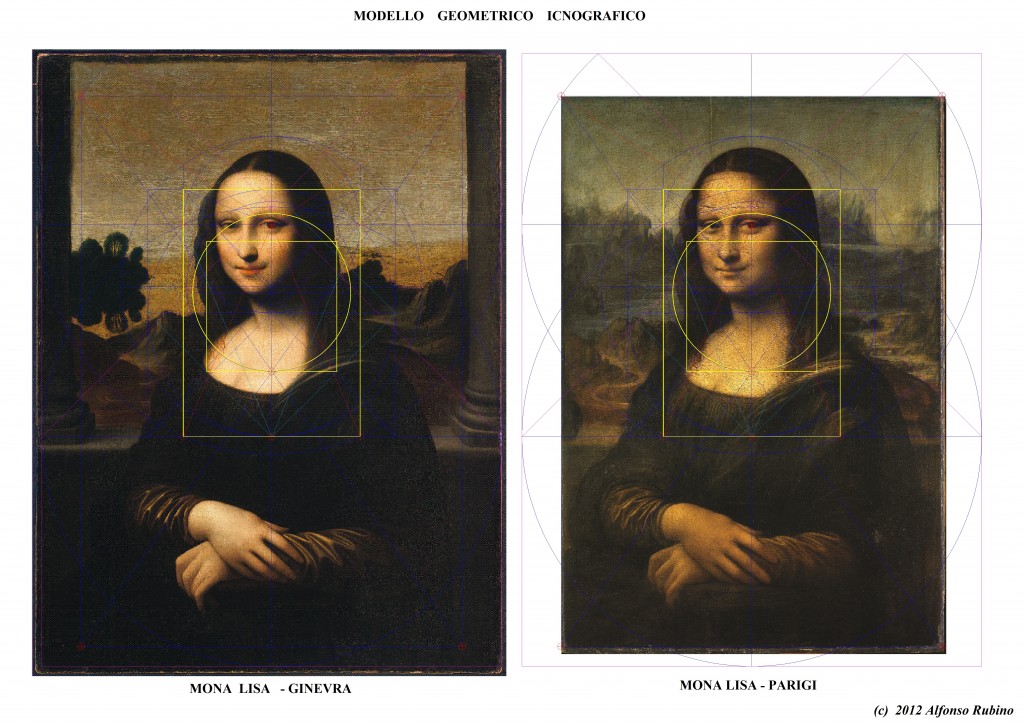
Preservation challenges have further shaped our understanding of the painting. Its turbulent history—including theft and attacks—has led to stringent protective measures, including bulletproof glass, which limit direct study and interaction with the work. Yet even through these constraints, modern technologies allow us to explore Leonardo’s techniques in unprecedented detail, revealing a master at work who combined science and artistry to create a painting that continues to captivate, puzzle, and inspire.
Ultimately, the Mona Lisa is both a portrait and a record of a mind at work—a testament to Leonardo’s relentless pursuit of perfection, his curiosity about materials and light, and his extraordinary ability to blend art and science in ways that remain unmatched centuries later.