Off the modern-day coast of Egypt, just north of Alexandria, lies a sunken city that for centuries was thought lost to the Nile Delta: Thonis-Heracleion. Once a bustling hub of trade and religion, the city’s history straddles the worlds of pharaohs and Greek settlers, temples and tombs, commerce and ritual. Today, it lives on beneath the waves, revealing new secrets thanks to underwater archaeology, including a monumental military ship and a Greek burial tumulus.
A City Sunk by Catastrophe
Thonis-Heracleion was no ordinary city. Its Temple of Amun drew pilgrims, priests, and merchants from across the Mediterranean, while Greeks later settled in the city during Egypt’s late pharaonic dynasties, constructing their own sanctuaries alongside older Egyptian temples.
But the city’s prosperity was abruptly ended in the 2nd century BCE. A series of catastrophic earthquakes triggered land liquefaction across a 42-square-mile (110-square-kilometer) portion of the Nile Delta. These natural disasters, combined with tidal waves, caused the collapse of Thonis-Heracleion and nearby Canopus, dragging temples, homes, and ships beneath the waters. Today, the remains of the city lie 4.3 miles (7 kilometers) offshore, preserved in the silt and clay of the Nile Delta.
Rediscovery and Ongoing Excavation
Modern interest in Thonis-Heracleion was rekindled in 1999 and 2001, when French underwater archaeologist Franck Goddio, working with the European Institute for Underwater Archaeology (IEASM) and Egypt’s Ministry of Tourism and Antiquities, rediscovered the city. Over the following decades, careful underwater excavations revealed a wealth of artifacts, from colossal statues and temple columns to coins, pottery, and jewelry.
Most recently, the team announced the discovery of a military ship and a Greek burial tumulus, highlighting both the city’s strategic importance and its cosmopolitan character.
The Military Ship: A Moment Frozen in Time
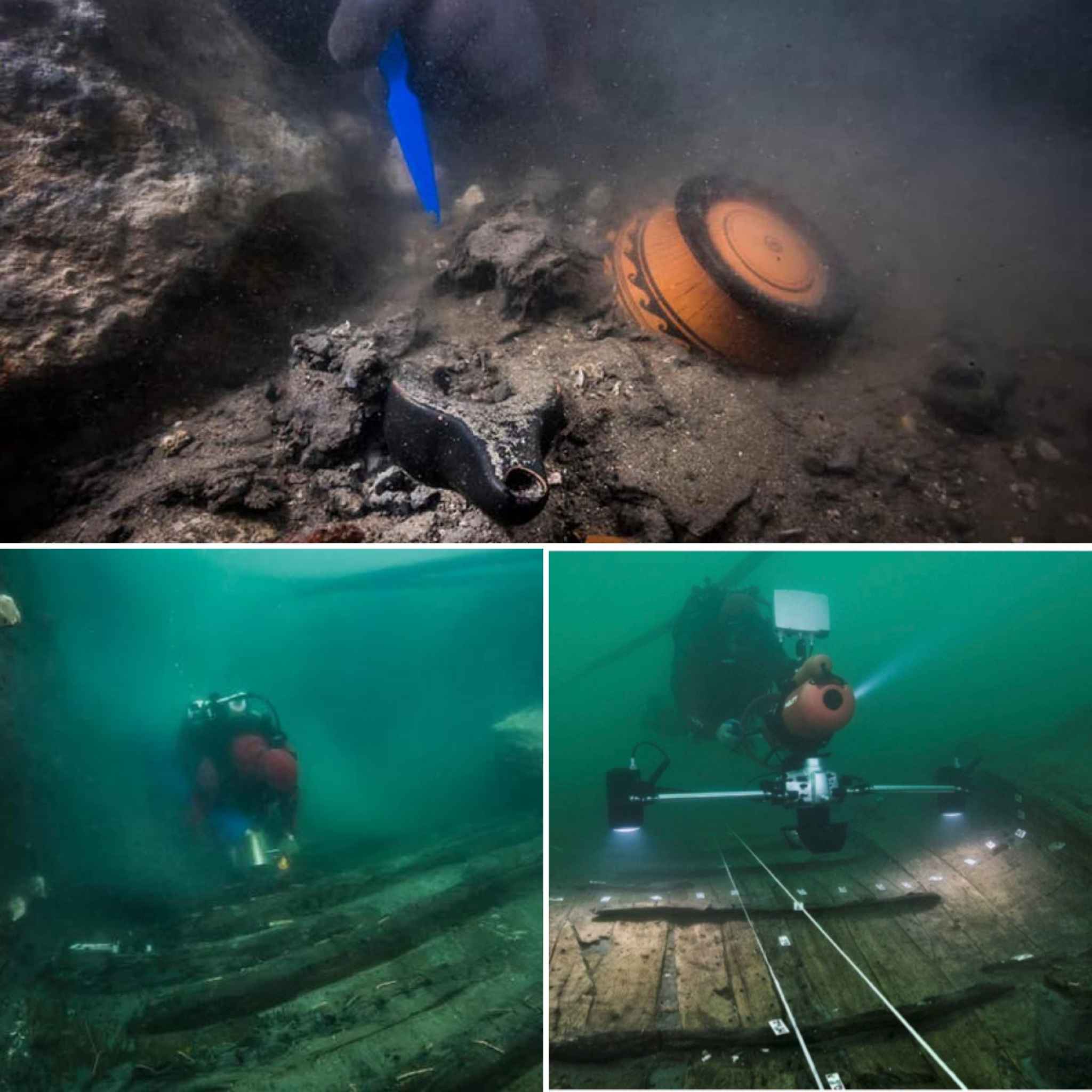
The newly discovered vessel stretches 82 feet (25 meters) in length and was found in a major canal along the south face of the Temple of Amun. According to Ayman Ashmawy, head of the Egyptian Antiquities Sector, the ship was detected using cutting-edge sub-bottom profiler electronic equipment, buried under nearly five meters of hardened clay mixed with remains of the temple itself.
The recently discovered military ship, buried under clay and temple debris, remains remarkably preserved. (Ministry of Tourism and Antiquities)
Archaeologists believe the vessel was transporting massive stone blocks from the Temple of Amun when the earthquake and tidal events struck, causing the ship to sink. Paradoxically, these same blocks protected the ship by anchoring it to the canal floor and sealing it beneath layers of silt, preserving it for over two millennia.
Ehab Fahmy, head of the Central Department of Underwater Antiquities, describes the ship as having a large sail, oars, and a flat-bottom keel, ideal for navigating the sometimes shallow and windless waters of the Nile Delta. The vessel’s construction combines classical shipbuilding techniques with typical Egyptian methods, including mortise-and-tenon joints and an internal framework designed for strength. Analysis of the wood also shows evidence of reused materials, suggesting practical and resourceful construction methods.
A Greek Burial Tumulus: Wealth and Ritual at the Nile’s Mouth
While the military ship has captured headlines, archaeologists uncovered another remarkable find: a Greek burial tumulus extending along the north-east entrance to the canal. Dated to the early 4th century BCE, the tumulus contains “rich donations” and offers a glimpse into the lives of Greek merchants and settlers who controlled access to Egypt through the Canopic branch of the Nile.
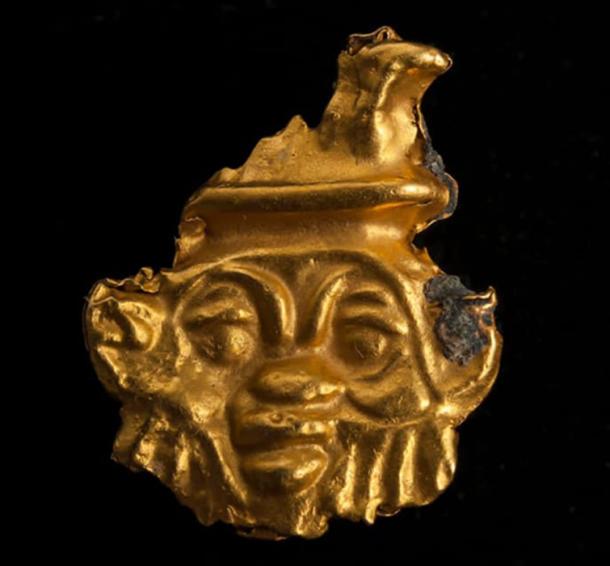
Artifacts from the Greek burial tumulus, including a golden mask, illustrate the wealth and status of Thonis-Heracleion’s Greek inhabitants. (Ministry of Tourism and Antiquities)
The burial site demonstrates the cultural fusion of Thonis-Heracleion. Egyptians and Greeks coexisted here, building temples, trading goods, and conducting ritual burials side by side. The elaborate graves suggest that Greek settlers were wealthy, influential, and fully integrated into the city’s maritime economy.
Preserving an Underwater Heritage
Thonis-Heracleion offers a rare window into the complexities of life, trade, and religion in the late pharaonic and early Hellenistic periods. The preservation of ships, temples, and burials under meters of clay and silt provides archaeologists with the opportunity to study construction, navigation, and funerary practices in unprecedented detail.
The discoveries underscore the city’s strategic importance as a gateway to Egypt, as well as its cultural richness. From military vessels frozen mid-journey to elaborate Greek tombs, Thonis-Heracleion reminds us that the past is rarely static—it is dynamic, interconnected, and full of stories waiting to be unearthed.
A Glimpse Into the Lost City
As excavation continues, each find adds another layer to the story of Thonis-Heracleion. The city, long swallowed by the waters of the Nile Delta, is revealing a civilization that blended Egyptian and Greek traditions, maritime ingenuity, and ritual grandeur. From monumental temples to sunken ships, the underwater city offers a testament to resilience, creativity, and the enduring human desire to connect with the sacred and the world beyond.
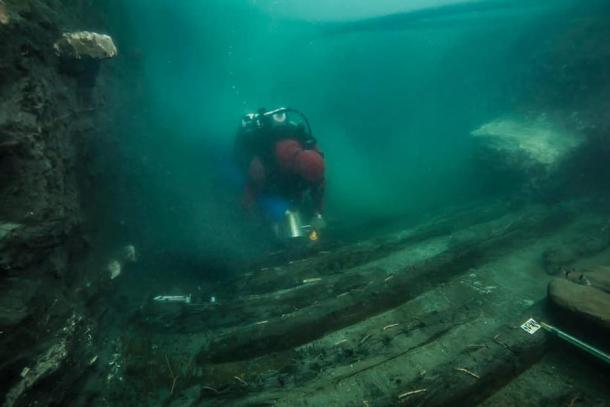
Submerged streets and temple ruins of Thonis-Heracleion, preserved beneath the waters of Abu Qir Bay. (Ministry of Tourism and Antiquities)
Thonis-Heracleion continues to captivate archaeologists and the public alike, revealing not only the violence of nature but also the ingenuity and cosmopolitan life of a city that thrived on the Nile’s edge. With every expedition, the ancient city whispers its secrets across the millennia, reminding us that even in the depths of the sea, history can survive—and astonish.