Long before modern science attempted to explain the origins of humanity through evolution, genetics, and cosmology, ancient civilizations turned to myth. These stories were not merely entertainment; they were attempts to answer the deepest questions imaginable: Where did the universe come from? Why do humans suffer? Who gave us knowledge? And why are the gods so often at war with one another?
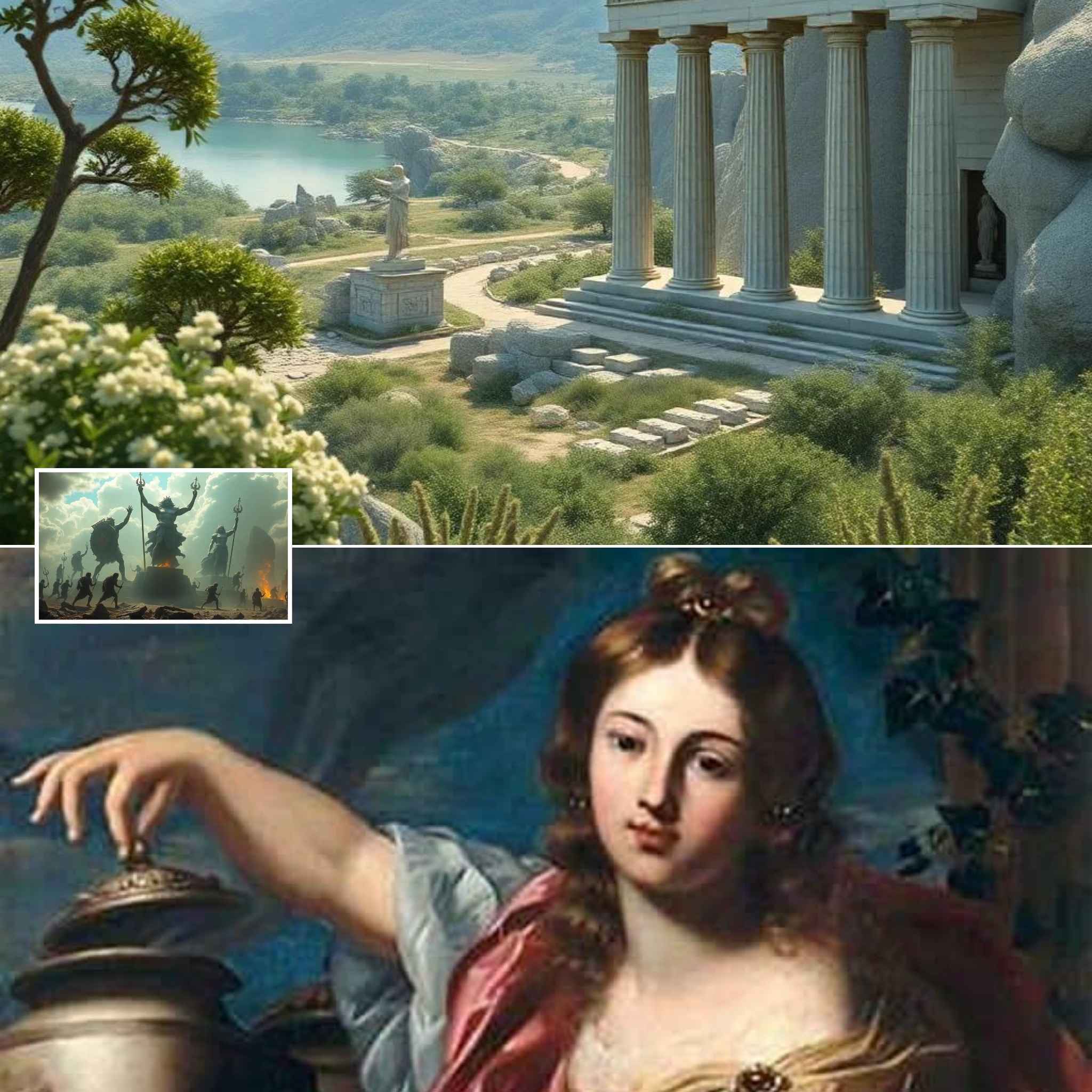
Among the most dramatic and influential of all creation stories is the origin myth of the ancient Greeks—a violent cosmic saga filled with betrayal, rebellion, prophecy, punishment, and the rise of humanity itself.
Unlike modern ideas of a carefully ordered universe, Greek mythology imagined creation as chaotic, emotional, and deeply unstable. The universe was born not from peace, but from conflict. Divine family members overthrew one another in brutal struggles for power, and humanity emerged almost accidentally amid the turmoil.
Much of what we know about these myths comes from Hesiod, an 8th-century BCE poet whose famous work Theogony attempted to organize centuries of Greek oral traditions into a single cosmic narrative.
His story begins not with gods or humans—but with emptiness itself.
In the Beginning, There Was Chaos
According to Greek mythology, the universe originally existed as Chaos.
Today the word “chaos” suggests disorder and confusion, but for the ancient Greeks, Chaos meant something closer to a vast, dark emptiness—a yawning void without structure, light, or life.
There was no Earth.
No sky.
No sea.
No gods.
Only an endless abyss.
Then, from this cosmic emptiness, the first primordial beings emerged.
Among them was Gaia, the living embodiment of Earth itself. Alongside Gaia came Eros, representing desire and creative force.
The appearance of Gaia was critical because she became the foundation upon which existence itself could unfold. In many ancient mythologies, Earth is created first as a home for divine beings, and Greek mythology follows this pattern closely.
Chaos also produced Nyx, goddess of the night, and Erebus, representing the deep darkness of the underworld.
Together, these primordial entities formed the earliest structure of the cosmos.


Gaia Gives Birth to the Universe
Gaia soon gave birth to Uranus—also known as Ouranos—the god of the heavens. She also brought forth mountains, rivers, and the sea.
Uranus became both Gaia’s son and consort, establishing one of the recurring themes in Greek mythology: divine family relationships were deeply intertwined, often in disturbing and violent ways.
Together, Gaia and Uranus produced the first great generation of powerful beings:
- The twelve Titans
- The Cyclopes
- The Hundred-Handers
Among the Titans was Cronus, destined to become one of the most important figures in Greek mythology.
Yet even at the dawn of creation, harmony did not last.
Uranus feared his own children.
According to the myth, he imprisoned many of them deep inside Gaia herself, forcing them into the caves and depths of the Earth. This caused Gaia immense pain and fury.
Desperate for revenge, she crafted a great adamantine sickle and begged her children to rebel against their father.
Only Cronus stepped forward.
The Violent Fall of Uranus
In one of the most shocking scenes in mythology, Cronus ambushed Uranus and castrated him using the weapon Gaia had forged.
As Uranus bled across the Earth and sea, even more beings were born from the violence.
From his blood emerged:
- The Giants
- The Erinyes (Furies)
- Various nymphs
And from the sea foam surrounding his severed genitals arose Aphrodite, one of the most famous deities in Greek mythology.
The universe itself, according to the Greeks, was literally shaped through cycles of rebellion, suffering, and bloodshed.
Cronus then seized control of the cosmos, becoming ruler of the Titans.
But the cycle of fear and betrayal was far from over.
Cronus and the Fear of Prophecy
After overthrowing Uranus, Cronus learned a terrifying prophecy: one day, one of his own children would overthrow him just as he had overthrown his father.
Terrified, Cronus attempted to prevent fate itself.
Whenever his wife Rhea gave birth, Cronus swallowed the child whole.
One after another disappeared into him:
- Hestia
- Demeter
- Hera
- Hades
- Poseidon
But when Rhea gave birth to her final child, she refused to let him suffer the same fate.
She hid the infant Zeus on the island of Crete and tricked Cronus into swallowing a stone wrapped in cloth instead.
Zeus grew up in secret, waiting for the moment to challenge his father.


The Titanomachy: War for the Universe
When Zeus reached adulthood, he forced Cronus to regurgitate the children he had swallowed.
Together, the siblings launched a massive war against the Titans.
This conflict became known as the Titanomachy—the legendary war between the old gods and the new.
For years, the battle raged across the cosmos.
Eventually Zeus freed the Cyclopes and Hundred-Handers from the depths of Tartarus. In gratitude, the Cyclopes forged Zeus’ greatest weapon: the thunderbolt.
Armed with lightning, Zeus and his allies defeated the Titans and imprisoned many of them forever within Tartarus.
The universe was then divided among the victorious gods:
- Zeus ruled the sky
- Poseidon ruled the sea
- Hades ruled the underworld
And atop Mount Olympus, the Olympian gods established their reign.
But humanity had not yet been created.
Prometheus Creates Humanity
The task of creating humans fell to the Titan Prometheus.
According to Greek mythology, Prometheus shaped mankind from clay or mud. Then Athena breathed life into the figures.
This motif appears across many ancient cultures: humans formed from earth and animated by divine breath.
Prometheus loved humanity deeply.
His brother Epimetheus had already distributed useful traits among the animals:
- Strength
- Speed
- Fur
- Wings
- Claws
Nothing was left for humans.
To compensate, Prometheus gave humanity two extraordinary gifts:
- Upright posture, resembling the gods
- Fire
Fire symbolized far more than warmth.
It represented knowledge, technology, civilization, power, and independence.
And this angered Zeus tremendously.
Zeus Punishes Humanity
Zeus feared humanity might become too powerful.
After Prometheus tricked Zeus during a sacrificial offering, Zeus removed fire from humanity entirely.
But Prometheus defied the king of the gods and stole fire back from Olympus, secretly returning it to mankind.
This act changed human destiny forever.
But it came at a terrible price.
To punish humanity, Zeus ordered the creation of the first woman: Pandora.
Crafted with the help of Hephaestus, Pandora was given a mysterious jar—or “box” in later retellings—and instructed never to open it.
Curiosity eventually overcame her.
When Pandora opened the jar, countless evils escaped into the world:
- Disease
- Suffering
- Pain
- Misfortune
- Death
Only hope remained trapped inside.


The myth attempted to explain one of humanity’s oldest questions:
Why does suffering exist?
According to the Greeks, suffering entered the world through divine punishment linked to knowledge and rebellion.
The Eternal Torment of Prometheus
Zeus reserved a special punishment for Prometheus himself.
The Titan was chained to a rock in the Caucasus Mountains, where every day an eagle descended to devour his liver.
Each night the organ regenerated.
Each day the torture began again.
The punishment symbolized eternal suffering for defying divine authority and giving forbidden knowledge to humanity.
Eventually, the hero Heracles—known in Roman mythology as Hercules—would free Prometheus from his torment.
Yet the myth’s deeper meaning endured.
Knowledge always comes with consequences.
The Themes Hidden Inside Greek Creation Myths
Though filled with monsters, gods, and supernatural battles, Greek mythology reflects surprisingly human concerns.
The myths explore:
- Fear of power
- Rebellion between generations
- The burden of knowledge
- Human suffering
- Fate versus free will
- The dangers of pride
Many themes parallel other ancient traditions.
Like Mesopotamian myths, Greek stories describe cosmic waters and primordial chaos. Like later religious traditions, they include divine punishment after humans gain forbidden knowledge.
Prometheus stealing fire has often been compared symbolically to humanity’s pursuit of science, technology, and enlightenment.
Even thousands of years later, these myths still resonate because they confront timeless questions about what it means to be human.
Why Greek Mythology Still Fascinates the World
Ancient Greek mythology continues to shape modern culture in profound ways.
Its stories influence:
- Literature
- Films
- Psychology
- Philosophy
- Art
- Political thought
The gods themselves feel remarkably human—jealous, emotional, flawed, and unpredictable.
Unlike distant perfect deities, the Greek gods fought, lied, loved, and betrayed one another constantly.
This made their myths dramatic, relatable, and enduring.
At the center of it all lies humanity itself: fragile beings caught between divine forces, gifted with intelligence yet condemned to suffer the consequences of knowledge.
For the ancient Greeks, human origins were never peaceful or simple.
They were born from chaos, shaped by rebellion, and forever tied to the dangerous gifts stolen from the gods.