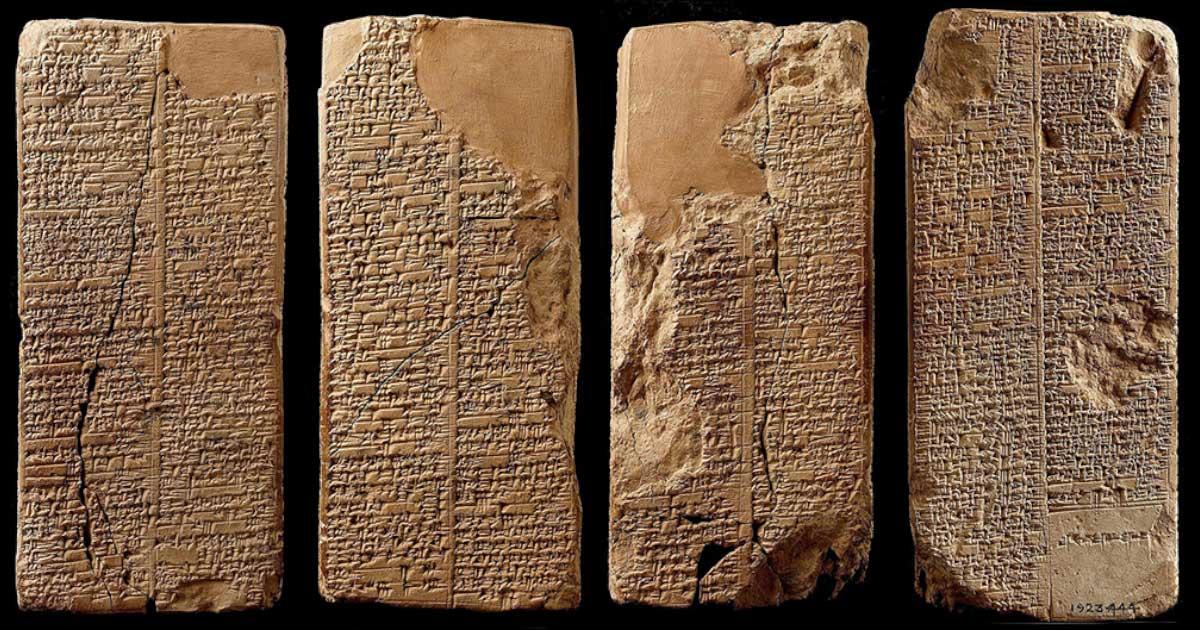
 Among the most fascinating artifacts recovered from ancient Mesopotamia is the Sumerian King List, a unique manuscript recorded in the Sumerian language. This ancient text, discovered across multiple cuneiform tablets in Iraq, chronicles the names of kings, their purported reign lengths, and the locations of official kingship — blending myth, legend, and historical record in a way unmatched in the ancient world.
Discovery and Manuscripts
The first fragment of the Sumerian King List was discovered in the early 1900s at the site of Nippur by German-American scholar Hermann Hilprecht, with findings published in 1906. Since then, at least 18 other exemplars have been unearthed, most dating from the latter half of the Isin Dynasty (c. 2017–1794 BC).
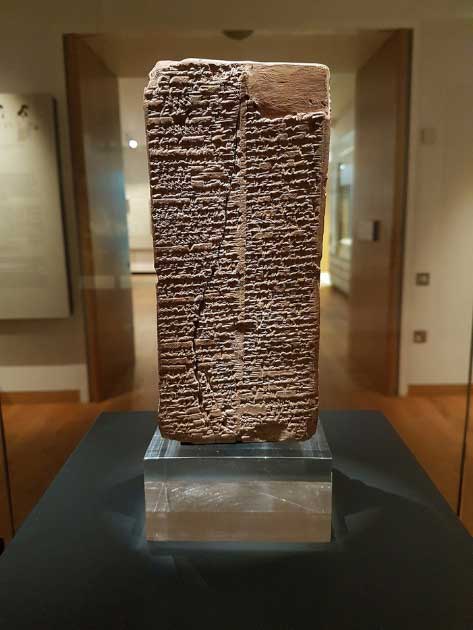
While no two copies are identical, all versions derive from a single, idealized account of Sumerian history, recording both mythical pre-dynastic rulers and historically attested kings. Among the most complete versions is the Weld-Blundell Prism, housed at the Ashmolean Museum in Oxford. The 8-inch prism, with four sides containing two columns each, was originally mounted on a wooden spindle for rotation, listing rulers from the antediluvian period to the 14th ruler of the Isin Dynasty (ca. 1763–1753 BC).
Sumer and the Rise of Kingship
Sumer, in southern Mesopotamia, represents the world’s earliest known civilization, with city-states such as Kish, Ur, Lagash, and Nippur emerging by the 3rd millennium BC. Initially, political power was distributed among citizens, but increasing rivalries led to the institution of kingship. The Sumerian King List begins with the divine descent of kingship from heaven and records rulers who reigned for fantastically long periods.
For example, in the earliest dynasties of Eridug, King Alulim reportedly ruled for 28,800 years, and his successor Alaljar for 36,000 years. In total, the pre-flood dynasties account for 241,200 years of reign. Figures such as Etana, Lugal-banda, and Gilgamesh, famous from Sumerian and Babylonian narrative traditions, appear as both legendary and semi-mythical rulers.
Interpreting the Immense Reigns
Scholars have debated the meaning of these extraordinary reigns. Some dismiss the figures entirely as symbolic, while others propose they reflect the perceived importance, power, or divine status of these early kings. Similar to ancient Egyptian inscriptions that exaggerate lifespans to honor influential figures, the lengthy reigns may have conveyed prestige and authority rather than literal years.
Additionally, while these early rulers may have been mythicized, later historical kings on the list likely correspond to actual historical rulers. The transition from fantastical to realistic reigns mirrors the broader shift in Sumerian historiography and social organization.
 Parallels With the Biblical Flood
The Sumerian King List also records a great deluge, echoing narratives found in Genesis. Both texts describe eight generations of long-lived rulers preceding the flood, after which lifespans dramatically shortened. This correlation has intrigued scholars for decades, raising questions about shared traditions or independent recording of catastrophic events in the ancient Near East.
A Mysterious Blend of Myth and History
The Sumerian King List remains one of Mesopotamia’s most perplexing documents. By combining mythological rulers with historical figures, recording implausible reign lengths, and referencing a catastrophic flood, the text offers insights into Sumerian beliefs, political ideology, and historiographical practices.
More than a century after its discovery, questions linger: Why were mythical and historical rulers combined? What cultural purpose did these enormous reign lengths serve? And why does the list mirror narratives in Genesis? While scholars continue to debate these issues, the Sumerian King List provides an unparalleled window into the worldview of one of humanity’s earliest civilizations.


