2 September 2026
The state of Texas carried out the execution of James Broadnax on Thursday evening, ending the life of a man whose 2009 conviction for the brutal double murder of two Garland music producers was shadowed by a last-minute, unheeded confession from his co-defendant and a final declaration of innocence that echoed through the death chamber as the drugs took hold. At 6:47 p. m. on April 30th, 2026, inside the Huntsville Walls Unit, Broadnax was pronounced dead, 18 years after a jury sentenced him to die for the execution-style killings of Steven Swan and Matthew Butler. The two victims, described as hardworking veterans of the local music scene, were gunned down in a parking lot outside a recording studio on June 19th, 2008, over a robbery that netted the assailants a mere $2 and a couple of cell phones. The sheer, senseless disproportion of the crime—two lives erased for pocket change—had cemented Broadnax's reputation as a remorseless predator in the public eye, a perception fueled by his own defiant and chillingly casual demeanor in the aftermath of his arrest. Broadnax, who was 19 at the time of the murders, did not slink into the shadows after his capture. Instead, he engaged in a series of actions that would define his public persona and, according to his legal team, seal his fate more than the evidence itself. Hours after being taken into custody in Texarkana, he agreed to speak to local news cameras. In that interview, he smiled, laughed, and shrugged off the double homicide as if it were a trivial inconvenience. "It's no big deal," he told the reporter. "I mean, it happened. It's over with." This footage, played on a loop during his trial, became the prosecution's most potent weapon, transforming a young man from a broken background into a symbol of pure evil and making the state's case for "future dangerousness" a foregone conclusion in the eyes of the jury. The trial in 2009 was less a legal proceeding and more a public reckoning with Broadnax's attitude. He sparred with prosecutors, smirked at the cameras, and practically dared the jury to give him the ultimate punishment. The prosecution argued that a man who could laugh about taking two lives for a handful of change was beyond any hope of redemption, a permanent threat even within the confines of a prison cell. The jury agreed, and after a short deliberation, they returned a verdict of capital murder and sentenced him to death by lethal injection. The bravado that had carried him through the trial began to crack as he was led away, but the image of the "smiling assassin" was already burned into the collective memory of North Texas. For 18 years, Broadnax languished on death row at the Polunsky Unit in Livingston, Texas, confined to an 8-by-12-foot cell for 23 hours a day. The gold-toothed grin that had become his trademark faded into the gaunt, hollowed-out features of a man who had spent nearly two decades in isolation. As the world outside changed with the advent of smartphones and shifting skylines, Broadnax existed in a static, psychological purgatory, waiting for a date with the executioner. His legal team filed a steady stream of appeals, but the narrative of the remorseless killer proved to be an insurmountable obstacle in the courts of public opinion and judicial review. The case took a dramatic and controversial turn in early 2026, when Demareus Cummings, Broadnax's cousin and co-defendant who was serving a life sentence for the same crime, signed a sworn affidavit claiming that he, not Broadnax, was the actual shooter. Cummings alleged that he had pressured his younger cousin to take the heat because Broadnax had a cleaner record at the time. This affidavit, if believed, would have upended the entire case, suggesting that Texas was poised to execute an innocent man for the crime of being a loudmouth teenager while the true triggerman served a life sentence. The defense scrambled, filing emergency stays and pointing to the confession as newly discovered evidence that demanded a hearing. The Texas Court of Criminal Appeals, however, viewed the affidavit with deep skepticism, dismissing it as a desperate, last-ditch attempt by a man already serving life to save his cousin from the needle. The court ruled the confession unreliable and refused to halt the machinery of death. The decision was a cold, procedural rejection that cleared the path for the execution to proceed, leaving a lingering question of whether the state was executing a man for his attitude rather than his actions. The disparity in sentencing between the two cousins—death for the one who talked, life for the one who stayed silent—became the central, unresolved controversy of the case. As the sun set on Thursday, Broadnax was moved from the Polunsky Unit to the Huntsville Walls Unit, a red-brick fortress that has witnessed more state-sanctioned deaths than any other facility in the Western world. He was placed in a death watch cell, steps away from the chamber where his life would end. In his final hours, he was offered a last meal, a tradition that some view as a final mercy. Broadnax ordered a heavy Southern feast of fried chicken, steaks, and cream gravy, a final act of agency against the bland, institutional food that had sustained him for nearly two decades. The meal was a stark reminder of the world of flavor and life he was about to leave behind. At 6:00 p. m. , the guards came for him. The walk to the execution chamber is only a few dozen steps, but for Broadnax, it was the culmination of an 18-year marathon of appeals, isolation, and psychological decay. He was strapped to the padded gurney, and IV lines were inserted into his arms. Through the thick glass of the witness windows, the families of Steven Swan and Matthew Butler watched in heavy silence, having waited nearly two decades for this moment of finality. They had endured years of appeals and legal maneuvering, and now they were about to see the man who had laughed at their pain face his own mortality. When the warden asked if he had any final words, Broadnax did not offer a smile or a defiant smirk. Instead, he looked at the ceiling and spoke with a calm, chilling clarity that seemed to bypass the "monster" persona entirely. According to official records from the Texas Department of Criminal Justice, his final statement was a direct indictment of the system that was about to kill him. "Texas got it wrong," he said. "I am an innocent man being killed for a crime I didn't commit. To the families, I am sorry for your loss, but the state is making a mistake today. I'm ready." He did not beg for his life; he simply issued a final verdict on the proceedings, a last echo of the defiance that had defined his public life.…
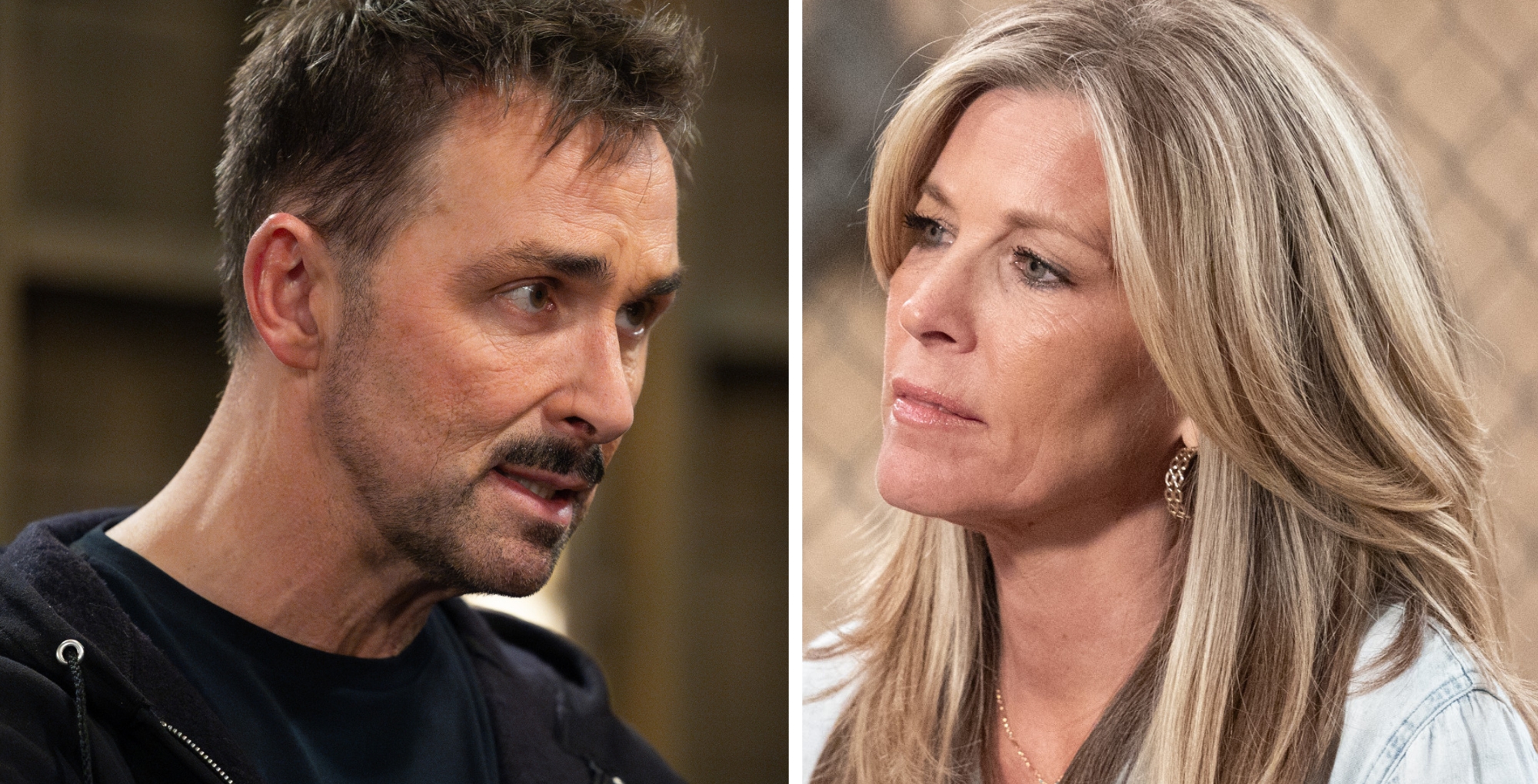 Port Charles, May 20, 2026 – Sparks are flying in Port Charles as Valentin (James Patrick Stuart) and Carly (Laura Wright) find themselves on opposing sides of a critical decision. While the couple has shared chaotic chemistry and a history of elaborate schemes, Wednesday’s events show that even their bond is being tested. Valentin pitches a new plan that Carly strongly disagrees with, intensifying their ongoing clashes over Jack (Chris McKenna) and other matters. Despite the tension, both are united in one goal: protecting the people they love and confronting threats like Cullum (Andrew Hawkes) and Sidwell (Carlo Rota).