Rare Roman Altar to the Sun God Sol Unearthed in Scotland Reveals Secret Underground Rituals
A mysterious 1,900-year-old Roman altar discovered beneath a future cricket pavilion in Scotland is shedding light on one of the ancient world’s most secretive religious cults.
The remarkable stone monument, dedicated to the Roman sun god Sol, was once used in hidden underground ceremonies performed exclusively by men. Archaeologists say the altar may have stood inside a subterranean temple where Roman soldiers gathered in darkness to participate in rituals centered on rebirth, cosmic order, and the eternal struggle between light and evil.
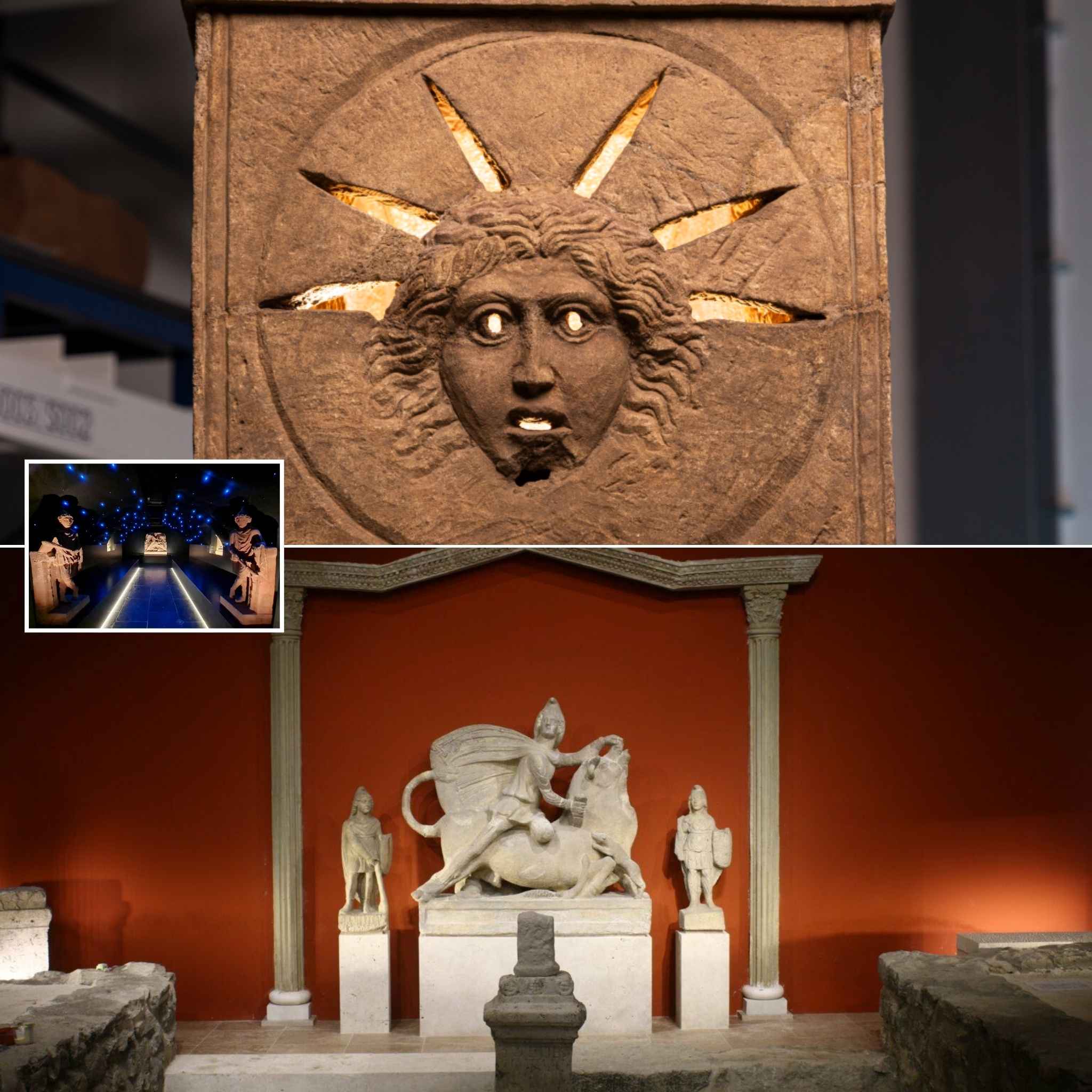
What makes the discovery especially extraordinary is the altar’s design itself.
When illuminated from behind, the carved face of Sol appears to glow through pierced eyes, mouth, and rays of sunlight — creating what must have been a haunting spectacle deep underground nearly two millennia ago.
A surprising discovery beneath a sports field


The altar was discovered in 2010 during archaeological surveys conducted before the construction of a new cricket pavilion at Lewisvale Park, near Edinburgh.
Excavators initially expected only routine findings.
Instead, they uncovered something exceptionally rare: a Roman-era religious monument unlike any previously found in Scotland.
The altar emerged in two broken pieces buried beneath the soil. Carved from buff sandstone, it originally stood about four feet (1.23 meters) tall.
Despite its age, many details remained remarkably preserved.
At the top of the monument were four female busts representing the seasons, symbolizing the cycle of time and nature. At the center was the face of Sol himself, framed inside a carved circle.
But the most striking feature was hidden in the craftsmanship.
The eyes, mouth, and six rays of Sol’s crown had all been pierced through the stone so that light could shine from behind the sculpture.
Archaeologists believe this effect was intentional — designed to create a supernatural glow during rituals conducted in darkness.
The terrifying power of light underground
Researchers say the altar likely stood inside a temple dedicated to Mithras, one of the Roman Empire’s most enigmatic deities.
Mithraic temples, known as Mithraea, were almost always built underground or inside cave-like chambers meant to symbolize the cosmos.
Inside these dim spaces, initiates participated in secret ceremonies hidden from the outside world.
Only men were allowed to join the cult.


According to archaeologists at National Museums Scotland, worshippers entering the temple would likely have seen the glowing face of Sol emerge from darkness as torchlight or lamps illuminated the altar from behind.
The effect must have been deeply dramatic.
In a world without electricity, sudden light appearing through the eyes of a god inside an underground sanctuary could create an overwhelming religious experience.
Experts believe these rituals symbolized the triumph of light over darkness and spiritual salvation after death.
The mysterious cult of Mithras
The cult of Mithras spread widely across the Roman Empire between the first and fourth centuries A.D., particularly among soldiers.
Despite its popularity, historians still know surprisingly little about it because its rituals were secretive and left almost no written records.
Most evidence comes from archaeology.
Mithras himself was often depicted slaying a sacred bull in scenes believed to symbolize cosmic renewal and rebirth. Sol, the sun god, frequently appeared alongside him and sometimes seems to have merged symbolically with Mithras in Roman religious thought.
The religion promised initiates spiritual meaning, brotherhood, and possibly hope for an afterlife.
For Roman soldiers stationed on distant frontiers far from home, these beliefs may have provided comfort and psychological strength.
Rome’s northern frontier
The altar’s inscription suggests it was dedicated by a Roman soldier named Gaius Cassius Flavianus, who may have commanded the military base at Inveresk.
That fort was established around A.D. 142 along the Antonine Wall, Rome’s northernmost frontier barrier in Britain.


The Antonine Wall stretched across central Scotland and represented Rome’s attempt to control territories beyond Hadrian’s Wall.
Life there was harsh.
Soldiers endured cold weather, isolation, tribal conflict, and constant uncertainty at the edge of the empire. Religious cults like Mithraism may have helped create solidarity and emotional stability among troops stationed in these remote outposts.
The newly discovered altar offers rare evidence of those beliefs surviving in Roman Britain.
A monument painted in red
The altar was not originally plain stone.
Archaeologists discovered traces of red pigment on its surface, suggesting it was once vividly painted. Laurel wreaths carved along the sides added further symbolic meaning associated with victory, honor, and divine favor.
Combined with the illuminated face of Sol, the monument would have appeared strikingly alive during ceremonies.
Researchers believe the altar was likely one of the focal points of worship within the underground sanctuary.
Nearby, archaeologists also discovered a second altar honoring Mithras himself, strengthening evidence that the site once hosted a functioning Mithraic cult center.
Why the discovery matters
Roman altars dedicated to Sol and Mithras are exceptionally rare in Scotland.
Their discovery provides valuable insight into the spiritual lives of soldiers stationed far from the center of Roman civilization.
More importantly, the monument reveals how religion in the Roman Empire was not limited to grand public temples and official state ceremonies.
Hidden beneath frontier forts and ordinary settlements, secret cults flourished in darkness — offering initiates mystery, belonging, and hope.
The Altar to Sol captures that hidden world with remarkable clarity.
It is both artwork and theatrical device, designed not merely to honor a god but to create a supernatural encounter.
The power of light in the ancient world
To modern eyes, the altar’s glowing effect may seem like an artistic curiosity.
But in antiquity, light carried profound religious meaning.
Across many ancient cultures, sunlight symbolized divine order, truth, rebirth, and victory over chaos. Underground religious rituals intensified that symbolism by surrounding worshippers with darkness before revealing illumination.
Inside a Mithraic temple, the shining face of Sol may have represented cosmic salvation itself.
For exhausted Roman soldiers standing at the edge of the known world, it may have offered reassurance that light would ultimately triumph over death and uncertainty.
A glimpse into Rome’s hidden religions
The Altar to Sol reminds archaeologists that many aspects of ancient religion remain mysterious.
Unlike mainstream Roman worship, mystery cults deliberately concealed their teachings from outsiders. Initiates advanced through secret stages, learned hidden symbolism, and participated in ceremonies still poorly understood today.
The underground temples themselves were designed to separate worshippers from ordinary life and immerse them in sacred experience.
Thanks to this extraordinary Scottish discovery, researchers now have a rare physical link to that hidden spiritual world.
Nearly 2,000 years later, the face of Sol still stares outward from the darkness — a silent witness to rituals lost to history.