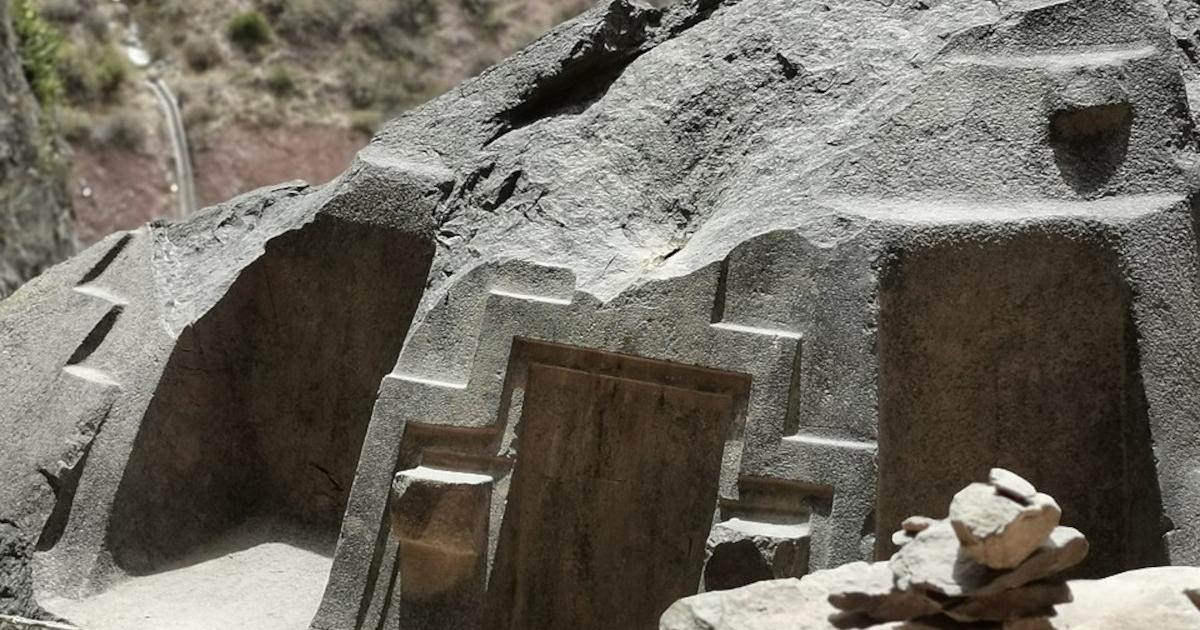
 Hidden high in the Andes Mountains of Peru, far from the crowded paths leading to Machu Picchu, lies one of South America’s most enigmatic archaeological sites — a place known as the Naupa Huaca portal.
Carved directly into a remote mountainside near Cusco, the ancient sanctuary has become the focus of growing fascination among researchers, alternative historians, and travelers alike due to its astonishingly precise stonework and mysterious architectural design.
At the center of the debate is a perfectly carved stone altar and a so-called “false door” cut deep into the rock face — features that some believe resemble sacred structures found thousands of miles away in ancient Egypt and Bolivia.
While mainstream archaeologists generally attribute the site to the Inca civilization or earlier Andean cultures, others argue that Naupa Huaca may preserve evidence of a much older and more advanced tradition of engineering and spiritual architecture.
A Stone Sanctuary Hidden in the Andes
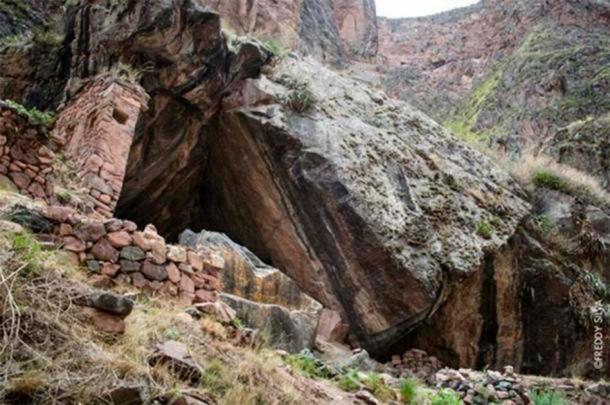
Reaching the Naupa Huaca portal requires a steep climb to nearly 3,000 meters above sea level through rugged mountain terrain. Visitors first encounter a naturally formed V-shaped cave opening, but it is the interior stonework that has drawn worldwide attention.
Inside the cave sits a massive block of polished andesite rock carved into what resembles a throne, altar, or ceremonial seat. The surfaces are extraordinarily smooth, with razor-sharp angles and geometric precision that many observers say appear almost machine-made.
Andesite is an extremely hard volcanic rock, making the craftsmanship even more remarkable. Researchers and engineers continue debating how ancient builders could have achieved such accuracy using the stone and bronze tools available in pre-Columbian South America.
The most mysterious feature, however, is the rectangular “false door” carved directly into the rock wall behind the altar. The recessed doorway leads nowhere physically, yet its symmetrical design and flawless proportions suggest it held ceremonial importance.
 Similarities to Ancient Egypt and Bolivia
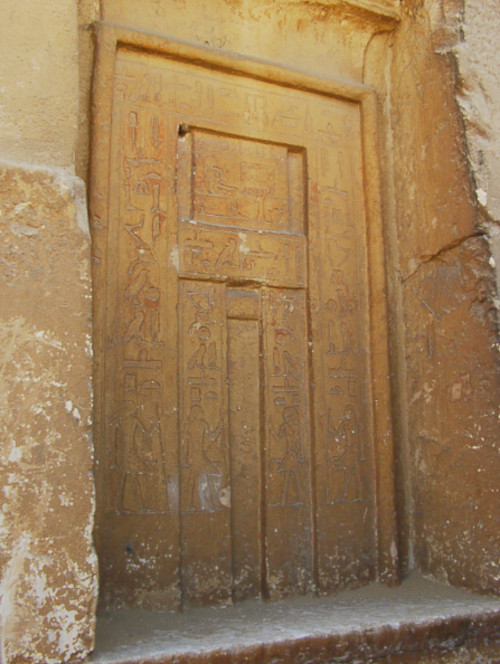
The “false door” concept has fueled comparisons between Naupa Huaca and ancient Egyptian sacred architecture.
In Egyptian tombs and temples, false doors were commonly used as symbolic gateways through which spirits could travel between worlds. Similar structures can be found in sites associated with the pharaohs, including areas connected to the Great Pyramid of Giza and other Old Kingdom monuments.
Researchers have also noted architectural parallels with the megalithic ruins of Puma Punku and Sacsayhuamán, where enormous precisely fitted stone blocks display unusually advanced masonry techniques.
These similarities have led some alternative historians to propose that ancient cultures across different continents may have inherited knowledge from a much older shared civilization — though no definitive evidence currently supports the existence of such a global culture.
Most mainstream archaeologists remain cautious, emphasizing that similar architectural solutions can emerge independently in different civilizations without direct contact.
 Claims of Magnetic and Acoustic Anomalies
Beyond the visual similarities, Naupa Huaca has also become associated with claims of unusual acoustic and electromagnetic behavior.
Some independent researchers and visitors report that compasses behave erratically near the altar and that the cave amplifies sound in unusual ways. According to these accounts, chanting or musical tones inside the chamber create powerful echoes and resonances throughout the stone structure.
Supporters of alternative theories suggest the site may have been intentionally designed for spiritual rituals involving sound, meditation, or altered states of consciousness.
However, these claims remain largely anecdotal and have not been conclusively verified through peer-reviewed scientific studies. Archaeologists note that caves and mineral-rich geological formations can naturally produce unusual acoustic or magnetic effects without requiring advanced ancient technology.
Inca Origins or Something Older?
Mainstream scholarship generally associates Naupa Huaca with the Inca civilization, which dominated much of the Andes during the 15th and early 16th centuries. However, local oral traditions often describe the site as far older than the Inca Empire itself.
Some Andean legends attribute ancient stone monuments to the creator deity Viracocha, a powerful figure said to have existed before the rise of the Inca.
Historians caution that myths alone cannot establish the true age or builders of the site, yet they acknowledge that many monumental Andean structures were indeed constructed by pre-Inca cultures later reused by the Inca themselves.
The exact purpose of Naupa Huaca also remains uncertain. Archaeologists generally interpret it as a ceremonial or ritual space connected to sacred mountain worship, a central feature of Andean spiritual life.
A Mystery That Continues to Fascinate
Whether viewed as an extraordinary ceremonial sanctuary, a masterpiece of ancient stoneworking, or evidence of forgotten knowledge, the Naupa Huaca portal continues to capture global attention.
Its isolated location, flawless stone craftsmanship, and mysterious symbolism have transformed it into one of Peru’s most discussed archaeological enigmas.
For now, scientists and historians agree on at least one thing: the site demonstrates a remarkable level of skill and spiritual significance that continues to challenge modern understanding of the ancient Andes.