7 September 2026
The final legal chapter for the man convicted of the deadliest act of domestic terrorism on American soil since September 11th remains unwritten, hanging in a state of legal limbo more than a decade after his conviction. Jokar Sarnav, now 32, remains on federal death row for his role in the 2013 Boston Marathon bombing, but a single unresolved question about juror misconduct continues to block the path toward his execution, leaving the families of his victims in a state of agonizing uncertainty. The case, which has already traversed the highest courts in the land and back again, now rests on the narrow but consequential question of whether two jurors lied during the selection process for his 2015 trial, a finding that could invalidate the death penalty phase of his sentencing. The inquiry, ordered by the First Circuit Court of Appeals in March 2024, is still pending before the original trial judge, George O'Toole Jr., a process that has now stretched into its second year without a definitive resolution. Sarnav was convicted on all 30 federal counts stemming from the bombing that killed three people and injured more than 260 others on April 15, 2013, and the subsequent murder of MIT police officer Sean Collier. The jury at the time recommended the death penalty on six of the counts, a sentence formally imposed by Judge O'Toole in June 2015. However, the procedural path to that sentence has been anything but straightforward, marked by a series of appeals, reversals, and reinstatements that have kept the case alive in the public consciousness for over a decade. The current impasse centers on allegations that surfaced years after the trial concluded, claiming that two members of the jury failed to disclose material information during voir dire, the process by which potential jurors are questioned to ensure they can be impartial. The first allegation involves a juror who reportedly retweeted a post during the trial that referred to Sarnav as a "piece of garbage" deserving execution, despite having sworn under oath that she had not commented on the case publicly. The second involves a juror who allegedly had a Facebook friend publicly encouraging him to get on the jury specifically to send Sarnav to his death, a fact that was never disclosed during the formal screening. In its 2024 ruling, the First Circuit did not overturn the death sentence outright but directed Judge O'Toole to conduct a thorough investigation into these specific claims, stating that the original inquiry had been constitutionally inadequate. The court was explicit in its order, stating that if either juror is found to have been improperly seated, the death sentence must be vacated, forcing prosecutors to hold an entirely new penalty phase trial to determine whether Sarnav should be executed or spend the rest of his life in prison without the possibility of release. Judge O'Toole, who has overseen the case since its inception, has yet to issue a final ruling on the juror matter. His handling of the inquiry has itself become a point of contention. In August 2025, Sarnav's defense team filed a motion to have Judge O'Toole removed from the case entirely, arguing that public comments he made on a legal podcast about the general challenges of jury selection and social media demonstrated a bias that would prevent him from fairly judging the conduct of his own original trial. The First Circuit rejected that recusal request, determining that discussing the broad difficulties of managing complex jury trials in professional forums did not constitute disqualifying bias. This decision means Judge O'Toole remains the arbiter of the very questions that will determine whether the death sentence he imposed a decade ago is ultimately carried out. The defense has argued that the judge has a vested interest in upholding the validity of his own original proceedings, a conflict they believe makes a fair investigation impossible. This latest procedural wrinkle is just the most recent development in a legal saga that has already seen the death sentence vacated once before. In 2020, the First Circuit overturned the sentence, finding that Judge O'Toole had failed to adequately screen potential jurors for bias given the massive amount of local media coverage the bombing had received in the Boston area. The federal government appealed that decision to the Supreme Court, which in March 2022 reversed the lower court's ruling in a 6-3 decision, reinstating the death sentence and affirming that the original trial had been conducted fairly with respect to jury selection. The Supreme Court's 2022 decision, however, was narrowly focused on the specific jury selection issue that had been raised at the time. It did not address the newer allegations of juror misconduct that came to light afterward, which is why the case was sent back down to the First Circuit for a second look. The appeals court's subsequent ruling in 2024 opened the door for the current investigation, which has now become the single most significant hurdle between Sarnav and his execution. For the families of the victims, the prolonged legal fight has been a source of profound anguish. The parents of 8-year-old Martin Richard, who was killed in the first explosion, have become vocal advocates for the death penalty, arguing that Sarnav's actions were premeditated and calculated to cause maximum harm. They have repeatedly stated that the endless appeals have prevented them from finding closure and have forced them to relive the trauma of that day every time the case returns to the headlines. The family of Lingzi Lu, a 23-year-old graduate student from China who was also killed in the blast, has expressed similar sentiments, though they have been less publicly vocal in their advocacy. The family of Krystle Campbell, the 29-year-old restaurant manager who died at the finish line, have also spoken about the difficulty of watching the legal process drag on for so many years without a final resolution. The legal arguments surrounding the current juror inquiry are complex and steeped in constitutional law. The defense team, led by death penalty specialist Judy Clarke, has argued that the integrity of the entire judicial process is at stake. They contend that if jurors lied to get on the panel with the express purpose of ensuring a death sentence, then the sentence itself is fundamentally flawed and cannot stand. They have framed the issue not as a technicality but as a core question of whether Sarnav received a fair trial as guaranteed by the Sixth Amendment. Prosecutors, on the other hand, have argued that the allegations are unsubstantiated and that the statements attributed to the jurors have been taken out of context. They have maintained that the original trial was fair and that the overwhelming evidence of Sarnav's guilt, which his own defense team conceded during the guilt phase, makes the question of juror bias in the penalty phase a secondary concern. They have also pointed out that the Supreme Court has already weighed in on the fairness of the trial, and they believe the current inquiry is an unnecessary delay tactic. The investigation itself has been conducted largely out of the public eye, with Judge O'Toole hearing arguments and reviewing evidence in chambers. The process has involved interviewing the two jurors in question, as well as examining their social media activity from the time of the trial. The judge has also had to consider the question of juror privacy, balancing the need for a thorough investigation against the importance of protecting jurors from harassment and public scrutiny. The stakes of the investigation could not be higher. If Judge O'Toole finds that the jurors were truthful, the death sentence will stand, and the case will move to the next stage of the appeals process, which could still take years to resolve. If he finds that they were not truthful, the death sentence will be vacated, and prosecutors will have to decide whether to pursue a new penalty phase trial, a process that would involve selecting a new jury and presenting the entire case for sentencing again, a task that would be both emotionally draining for the victims' families and logistically complex for the court. Even if the death sentence is ultimately upheld, the actual execution is likely years away. Federal death penalty cases are notoriously slow, with inmates often spending decades on death row while their appeals wind their way through the courts. Sarnav is currently held at the United States Penitentiary in Florence, Colorado, a supermax facility that houses some of the most dangerous inmates in the federal system. He is held under conditions that are among the most restrictive in the country, with limited human contact and almost no freedom of movement. The case has also been complicated by the broader political and legal landscape surrounding the federal death penalty. In 2021, Attorney General Merrick Garland imposed a moratorium on federal executions while the Department of Justice conducted a review of its policies and procedures. That moratorium remains in effect, meaning that even if Sarnav's appeals were to be exhausted tomorrow, an execution would not be scheduled until the moratorium is lifted. This moratorium adds another layer of uncertainty to an already uncertain situation. It means that even a definitive ruling in favor of the death sentence would not immediately lead to an execution date. The review of the federal death penalty is ongoing, and it is unclear when or if it will be completed, or what its conclusions will be. This has led some legal analysts to speculate that Sarnav may never actually be executed, regardless of the outcome of the current juror inquiry. The broader question of Sarnav's radicalization remains a subject of intense study and debate among counterterrorism experts and psychologists. The case has been used as a case study in how a seemingly well-adjusted young man, a high school wrestler and lifeguard who earned a scholarship from the city of Cambridge, could be drawn into a plot of such devastating violence. The influence of his older brother, Tamerlan, who was killed during the manhunt, has been a central focus of this analysis.…
 Prosecutors in the ongoing murder trial connected to the death of Julio Foolio are placing major focus on social media activity they believe links the defendants to the fatal June 2024 shooting in Tampa.
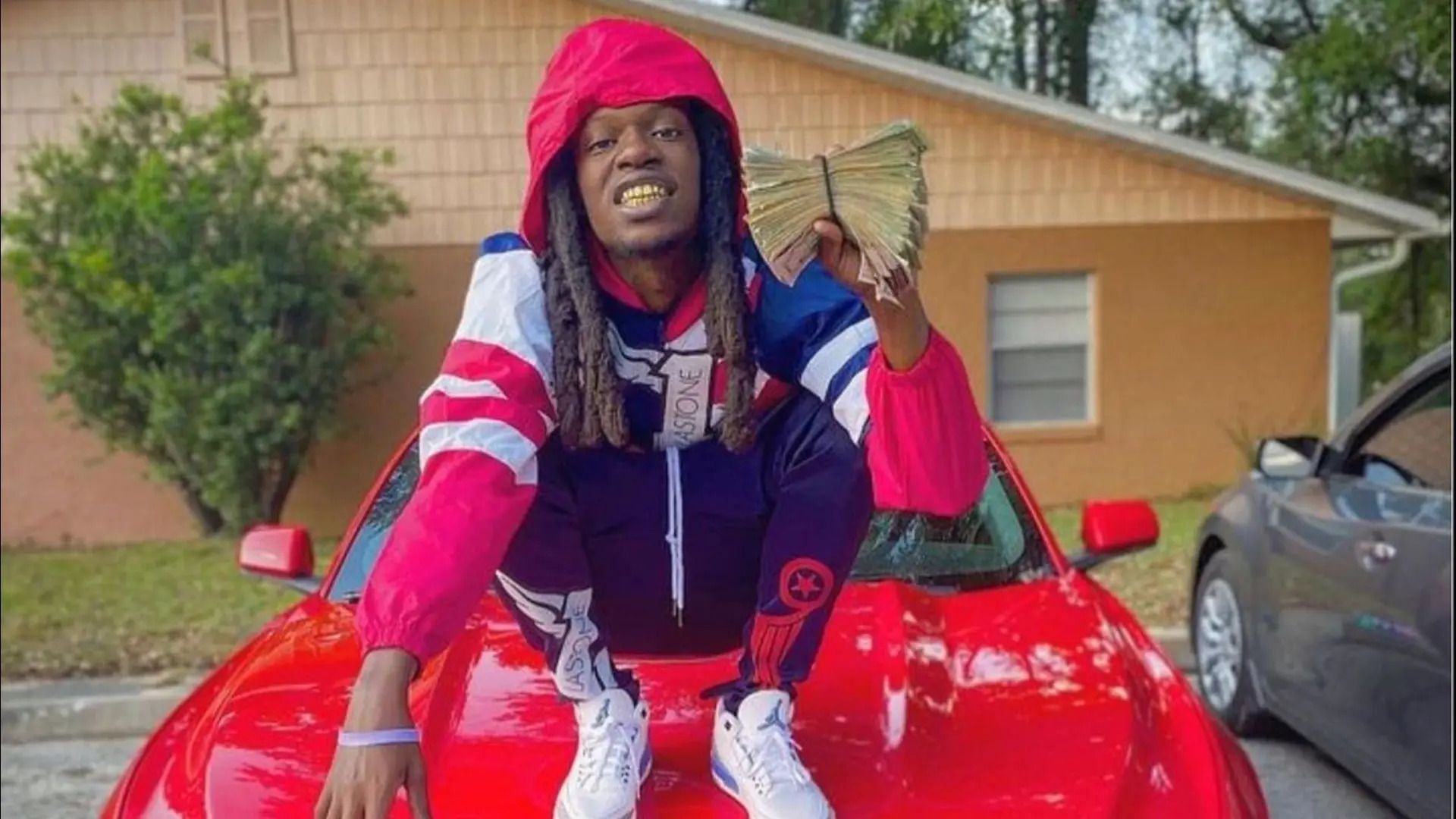 According to reports presented in court, surveillance footage from a nearby Tesla vehicle allegedly captured one of the shooters holding what investigators described as a fully automatic Glock-style weapon during the attack.


