 Archaeologists in Spain have uncovered a rare Roman artifact that is offering an extraordinary glimpse into the lives of soldiers who once served on the farthest frontiers of the Roman Empire.
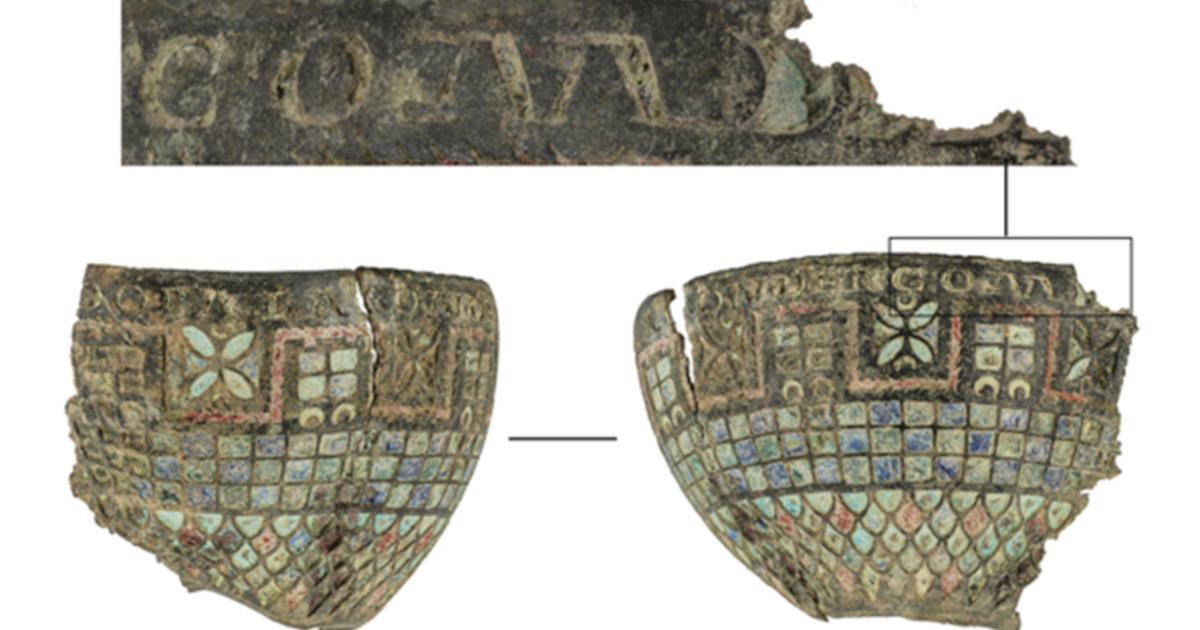
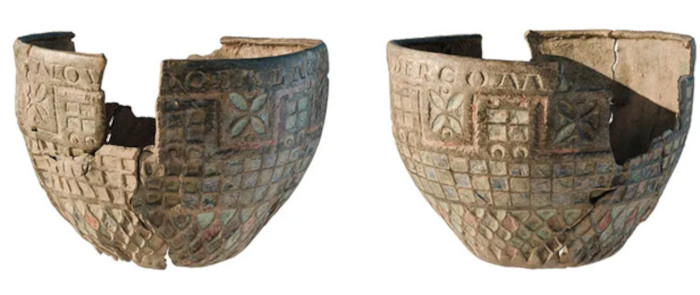
The object, known as the “Berlanga Cup,” is a finely decorated bronze vessel dating back nearly 1,900 years. Discovered in the municipality of Berlanga de Duero, the artifact is believed to have traveled more than 1,200 miles from Roman Britain and may have belonged to a soldier returning home after serving along Hadrian’s Wall.
Researchers say the discovery represents one of the clearest examples yet of how Roman soldiers carried memories — and prized possessions — across vast distances within the empire.
A Souvenir From Rome’s Northern Frontier
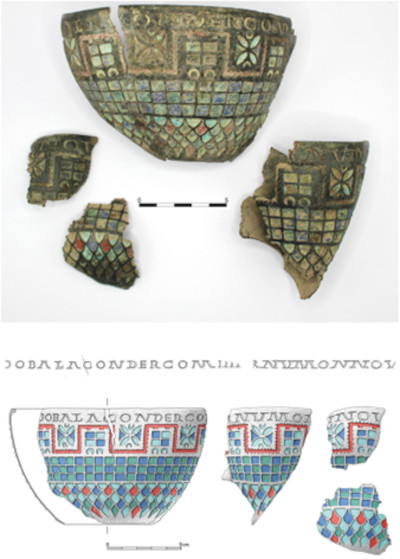
The small vessel is a miniature version of a Roman drinking cup known as a trulla, typically used for water or ceremonial purposes. Despite its size, the Berlanga Cup is richly decorated with colorful enamel work and carefully engraved Latin inscriptions.
What makes the artifact especially important is the list of Roman forts inscribed on its surface. The cup references four military sites located along the eastern section of Hadrian’s Wall: Cilurnum, Vindobala, Onno, and Condercom.
According to researchers, this is the only known Roman vessel of its kind to specifically mention forts from this region of Britain.
The study of the cup was recently published in the academic journal Britannia, where scholars described it as both a luxury object and a deeply personal keepsake.
 Connected to Roman Soldiers From Spain
Archaeologists believe the cup may have belonged to a veteran soldier from the Cohors I Celtiberorum, an auxiliary military unit recruited from Celtiberia — the ancient region corresponding to parts of modern central Spain.
Historical records show that troops from this unit were stationed near Hadrian’s Wall during the reign of Emperor Trajan before eventually returning to Hispania after their service.
Researchers suggest the cup may have served as a retirement gift, commemorative object, or treasured souvenir reminding the soldier of his years spent defending Rome’s distant northern frontier.
Jesús García Sánchez of the Archaeological Institute of Mérida explained that the object was not an ordinary cup. Crafted from bronze and decorated with expensive enamel detailing, it appears to have been customized specifically for its owner.
The craftsmanship and personalization suggest it was considered highly valuable both materially and emotionally.
Clues Hidden in the Metal
Scientific analysis of the cup’s composition provided another important clue about its origins.
Researchers determined that the bronze alloy — composed mainly of copper, tin, and lead — likely came from mines located in northern England. This strongly supports the theory that the object was manufactured locally near Hadrian’s Wall sometime between AD 124 and 199.
The site where the cup was found in Spain may correspond to the ancient Roman settlement of Valeranica. Archaeologists also uncovered fragments of Roman pottery and traces of masonry walls nearby, suggesting the area may once have been a rural Roman villa occupied for several centuries.
A Rare Link Between Two Ends of the Empire
The Berlanga Cup is only the second known object of its type ever discovered in Hispania, making it an exceptionally rare artifact.
Beyond its artistic value, researchers say the cup provides powerful evidence of the mobility of Roman soldiers and the cultural connections that linked distant parts of the empire.
For historians, the object serves as a tangible reminder that Roman military service often carried people thousands of miles from home — from the rugged frontier walls of Britain to the plains of Spain.
Nearly two millennia later, the small bronze vessel still tells the story of one soldier’s journey across an empire that once stretched from the Atlantic Ocean to the Middle East.