Ancient mysteries and burials
Laos’ mysterious “death jars” may have been ancestor tombs
One of the biggest archaeological stories involved the Plain of Jars.
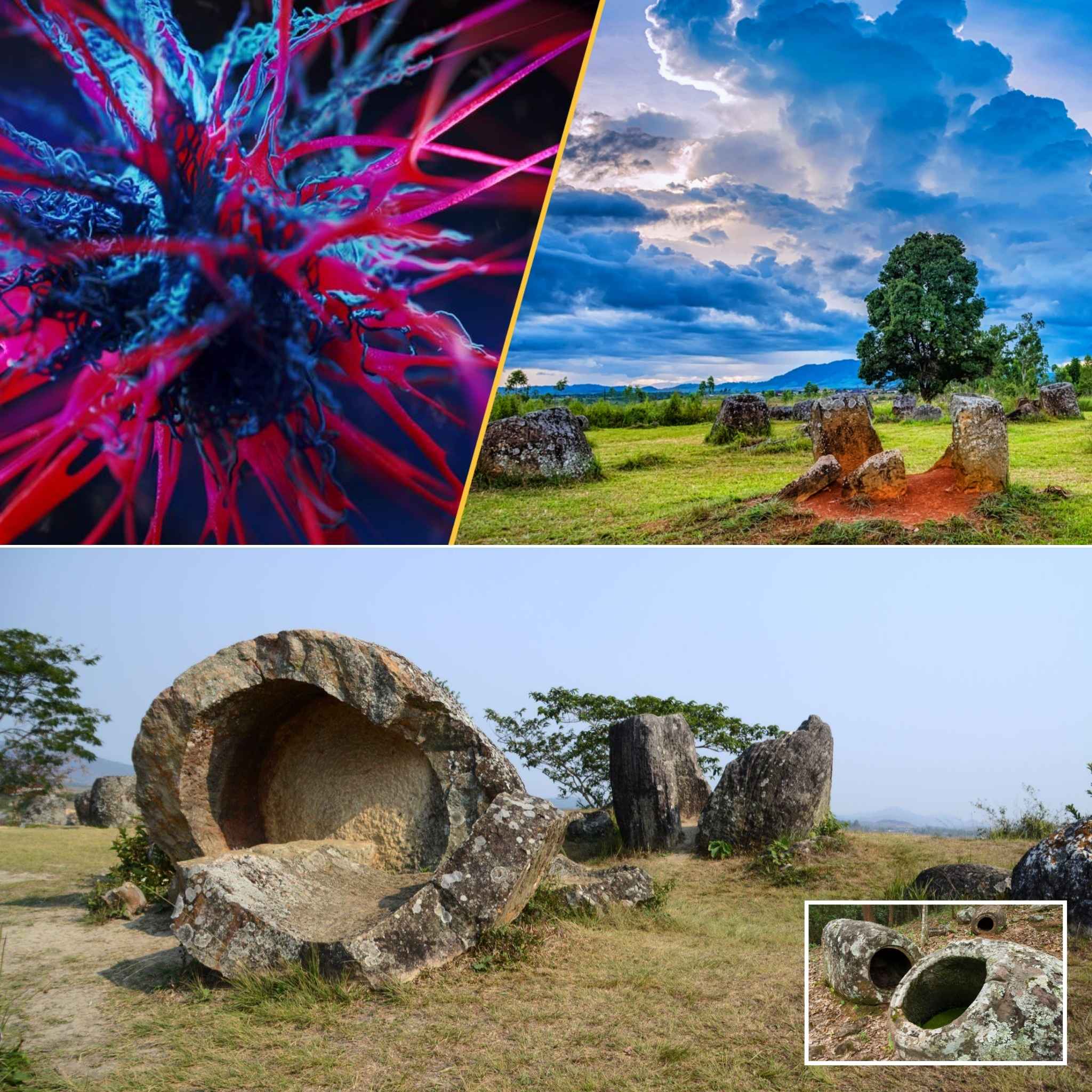
For nearly a century, archaeologists have debated why thousands of giant stone jars were scattered across the Laotian highlands.
Plain of Jars and stone urns


Researchers now believe at least some jars were connected to long-term burial rituals and ancestor worship after finding human remains from at least 37 individuals associated with one jar site.
That strengthens the idea that the area functioned as a ritual funerary landscape rather than simply a storage or ceremonial zone.
Other burial-related discoveries this week included:
- circular prehistoric graves identified through satellite imaging
- evidence that Aboriginal Australians maintained ritual relationships with a pet dingo burial for centuries
- reinterpretation of Poland’s famous “hugging skeletons” as a same-sex burial
Climate warning: rice may be nearing its heat limit
Another major story focused on rice — one of the world’s most important food crops.
Scientists studying roughly 9,000 years of rice cultivation data found that global warming is accelerating far faster than rice can naturally adapt.
Why this matters
Rice supports:
- billions of people nutritionally
- hundreds of millions economically
The concern is that many growing regions may soon exceed rice’s “thermal limit” — temperatures where yields sharply decline.
Rice farming and climate pressure


Researchers warn that warming is happening thousands of times faster than evolutionary adaptation rates observed in rice history.
That could lead to:
- reduced harvests
- food insecurity
- migration pressure
- economic instability in vulnerable agricultural regions
Why adaptation is difficult
Rice is especially sensitive during flowering and grain production. Even small increases in nighttime temperatures can reduce yields.
Scientists are now exploring:
- heat-resistant rice strains
- altered planting schedules
- water-management systems
- genetic modification approaches
But the pace of warming may outstrip many adaptation efforts.
Medical surprise: asthma drug helps fight aggressive cancer
One of the most unexpected stories this week involved repurposing an asthma medication for cancer treatment.
Researchers found that a drug originally designed for respiratory disease showed effectiveness against difficult-to-treat cancers in early studies.
Cancer research and targeted medicine


Drug repurposing is increasingly important because:
- existing drugs already have safety data
- development is faster
- costs are lower than creating new medications from scratch
Scientists are particularly interested in how inflammatory pathways involved in asthma may overlap with cancer cell survival mechanisms.
Other notable stories this week
Researchers also revisited the enduring mystery of why the Great Pyramid of Giza and neighboring pyramids have survived for more than 4,600 years despite earthquakes, erosion, and human activity.
Meanwhile, Arctic archaeology revealed how dangerous life was for 17th-century whalers, whose remote graveyards preserve evidence of disease, malnutrition, and brutal environmental conditions.
Overall, this week’s science news showed how modern research continues to connect climate, medicine, and archaeology into a much larger story about human survival — past, present, and future.