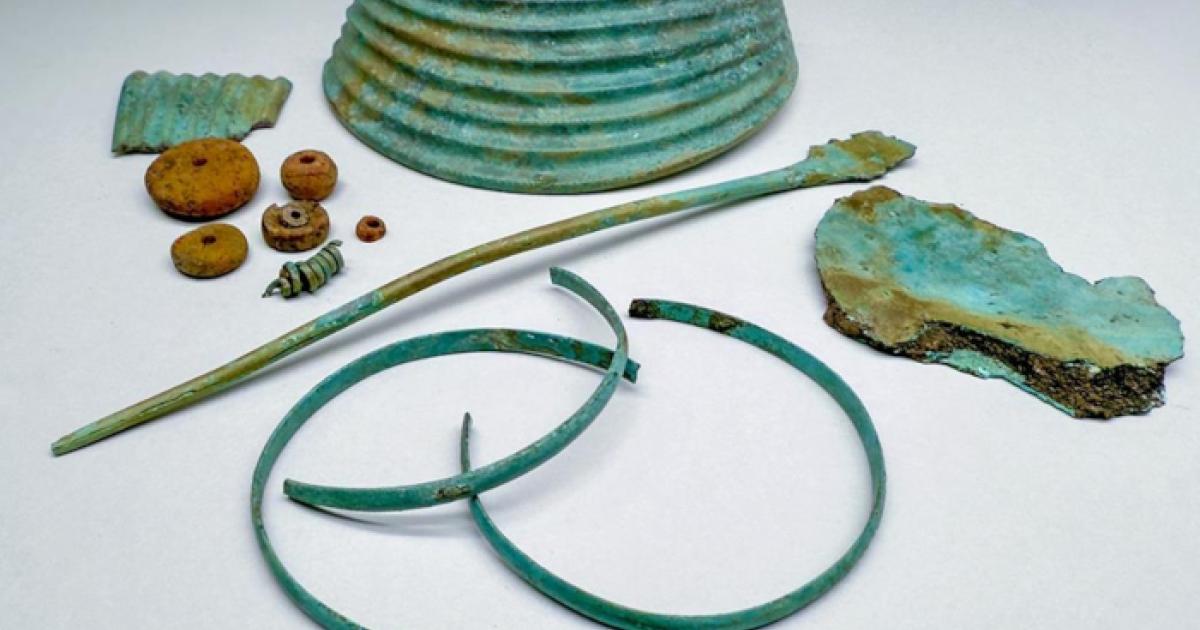
 A routine infrastructure project in northern Germany has turned into a major archaeological breakthrough, after researchers uncovered a rare Bronze Age jewelry hoard alongside evidence of settlements spanning from the Neolithic period to Late Antiquity.
The discoveries were made near Wolfenbüttel in Lower Saxony during a mandatory archaeological survey ahead of a wind farm development.
What was expected to be a standard environmental assessment has instead revealed a deeply layered landscape of human occupation stretching back more than 6,000 years.
Large-Scale Excavation Reveals Unexpected Ancient Landscape
Before construction began, archaeologists conducted a precautionary survey under the supervision of the Lower Saxony State Office for Heritage.
Between August 2024 and September 2025, researchers examined nearly 92,800 square meters of land and documented 412 archaeological features — a density of findings that significantly changes how the region’s ancient history is understood.
The investigation shows that the area was repeatedly inhabited, reused, and restructured by different communities across millennia.
A Rare Bronze Age Jewelry Hoard
The most striking discovery came during preparation work for a wind turbine foundation, where archaeologists uncovered a tightly packed cluster of bronze and organic materials buried underground.
Specialists carefully removed the deposit as a soil block for laboratory excavation, ensuring the fragile artifacts were preserved.
Inside, they identified a Bronze Age jewelry hoard dating to around 1500–1300 BC.
The assemblage includes:
- Bronze neck collars
- Arm spirals
- Decorative sheet metal ornaments
- Disc-headed pins
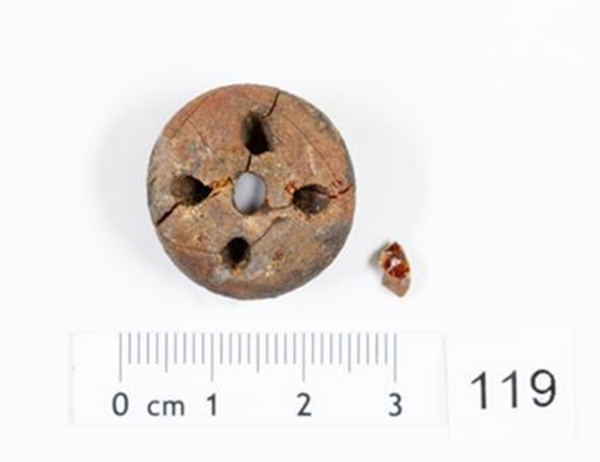
- And an exceptional amber necklace made of more than 156 beads
Researchers say the necklace is the largest Bronze Age amber find ever recorded in Lower Saxony, and likely belonged to at least three high-status women.
The hoard is interpreted not as hidden treasure, but as a deliberate ritual or symbolic deposition connected to identity, status, or belief systems.
Amber, Trade, and Ancient Networks
Amber was one of the most valuable materials in prehistoric Europe, often sourced from the Baltic region and transported over long-distance trade routes.
Studies from Aarhus University suggest that amber connected northern Europe with distant ancient civilizations, including regions of Mesopotamia.
In this context, the jewelry reflects not only wealth and craftsmanship, but also participation in extensive exchange networks that shaped Bronze Age society.
Researchers from Clausthal University of Technology are currently analyzing the materials to determine manufacturing techniques and the geographic origin of the amber.
 From Early Farmers to Ancient Ritual Sites
The site’s significance extends far beyond the Bronze Age.
Archaeologists also uncovered remains of Neolithic houses linked to the Linear Pottery Culture, dating back to the mid-6th millennium BC. These structures represent some of the earliest farming settlements in the region.
In addition, traces of later activity from the early centuries AD were discovered, including settlement pits, Roman-style pottery, and metal objects.
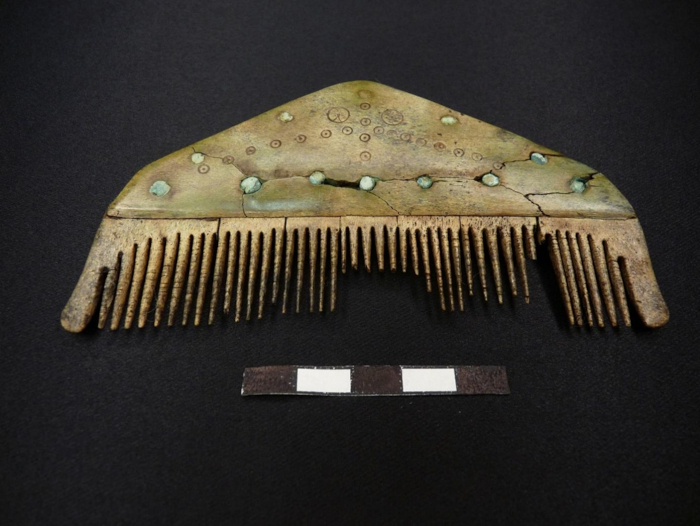
One particularly rare find is a nearly complete three-layer comb from the 4th–5th century AD, decorated with bronze rivets and geometric patterns — an exceptional survival compared to typical fragmented examples.
A Site That Rewrites Regional History
What began as a development survey has now become a major archaeological case study.
The findings demonstrate that even areas previously considered archaeologically insignificant can preserve continuous records of human activity spanning thousands of years — from early farming societies to complex Bronze Age social systems and Late Antique communities.
Researchers believe further analysis will continue to refine understanding of trade, migration, and cultural continuity in northern Europe.