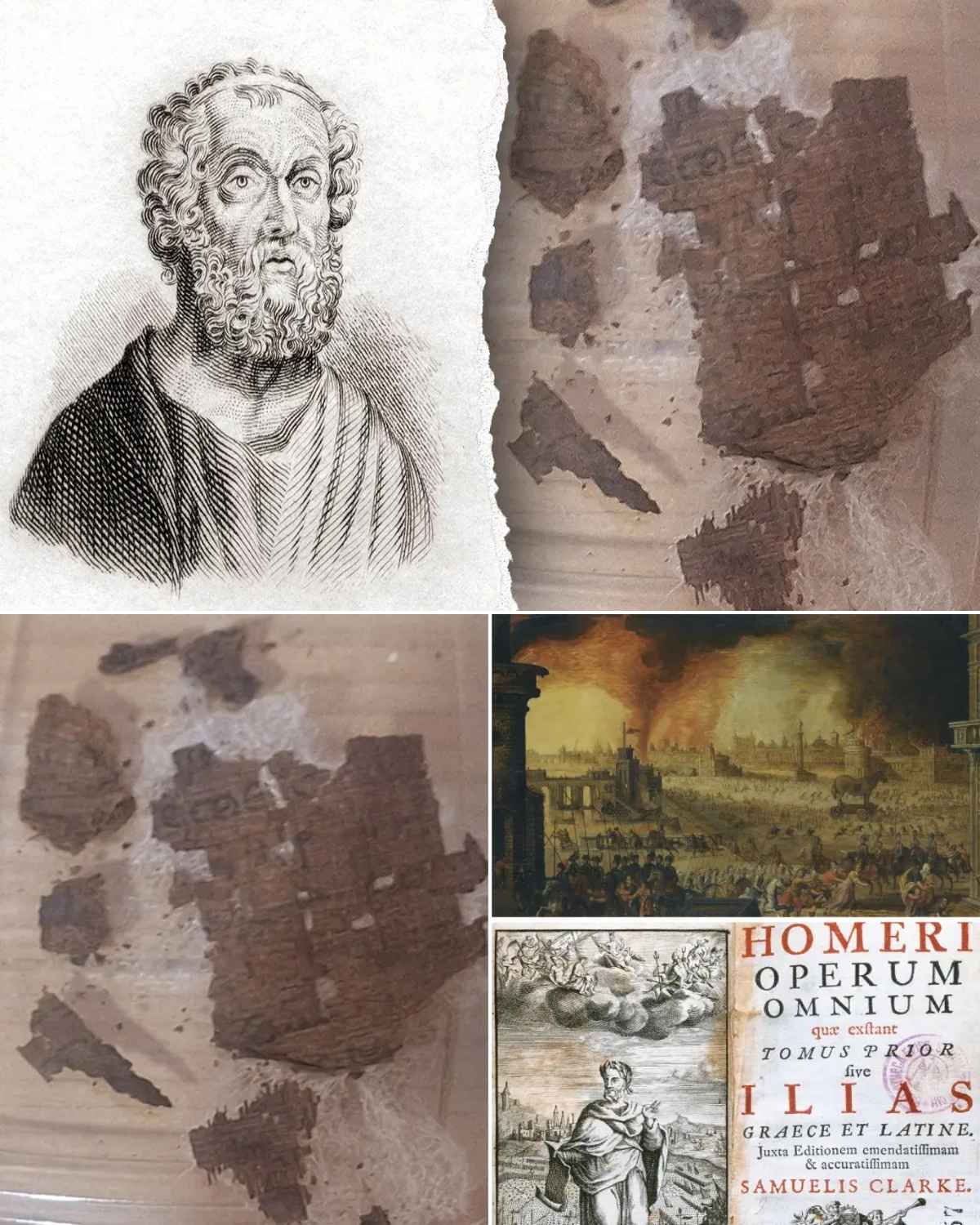
Archaeologists Left Speechless After Discovering Homer’s Iliad Hidden Inside Egyptian Mummy Ritual — A First in Human History
A stunning archaeological discovery in Egypt is rewriting what historians thought they knew about the ancient world.
Experts working in the ruins of ancient Oxyrhynchus uncovered a fragment of Homer’s legendary Iliad placed directly on the body of a mummy — an unprecedented find that scholars say has never before been documented in the history of archaeology.
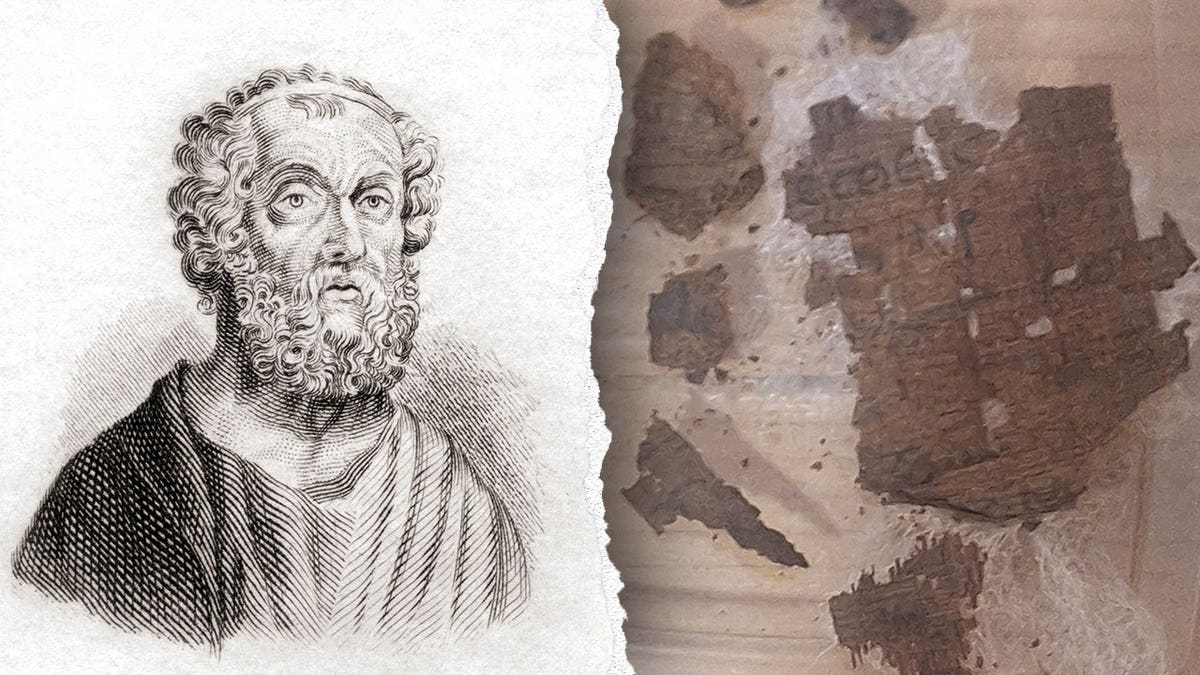
The discovery was announced by the University of Barcelona following excavations at the Al Bahnasa necropolis in central Egypt, a site once known as Oxyrhynchus, one of the most influential cities of Greco-Roman Egypt.
For seasoned archaeologists who have spent decades uncovering papyri, tombs, and burial relics across Egypt, this was different.
This was not a magical spell.
Not a funerary prayer.
Not a ritual incantation.
Instead, researchers found lines from one of the greatest literary masterpieces ever written deliberately incorporated into the mummification process itself.
“This changes the conversation entirely,” scholars involved in the excavation suggested after examining the papyrus fragment, which dates back roughly 1,600 years.
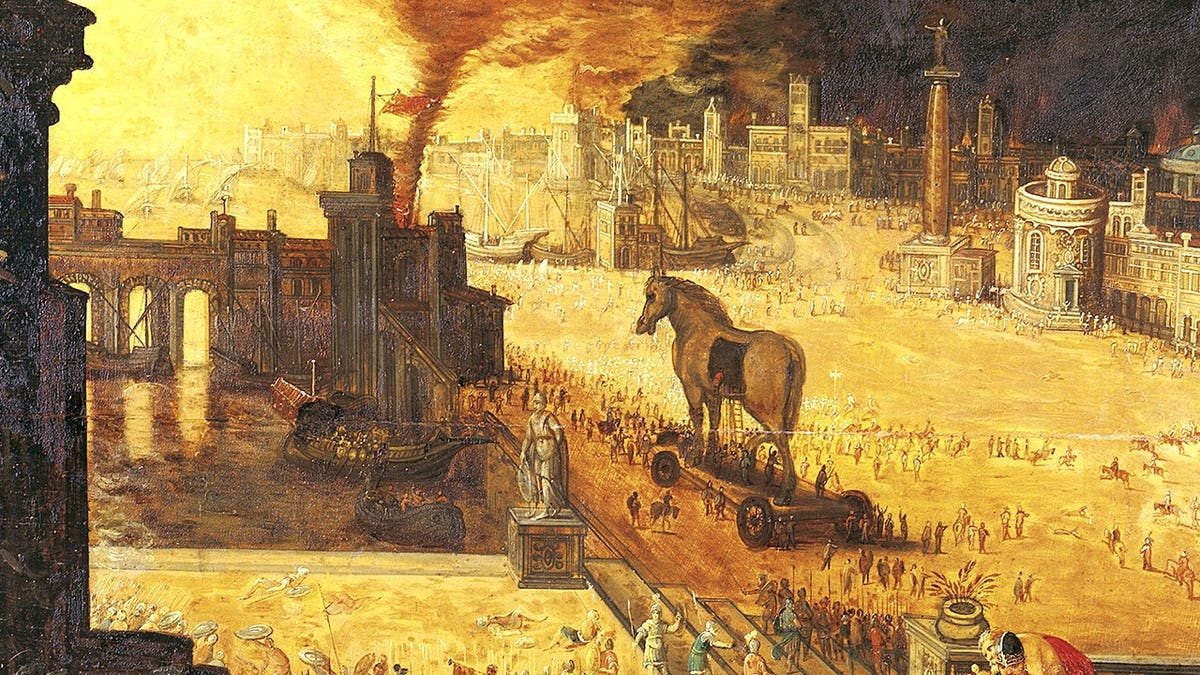
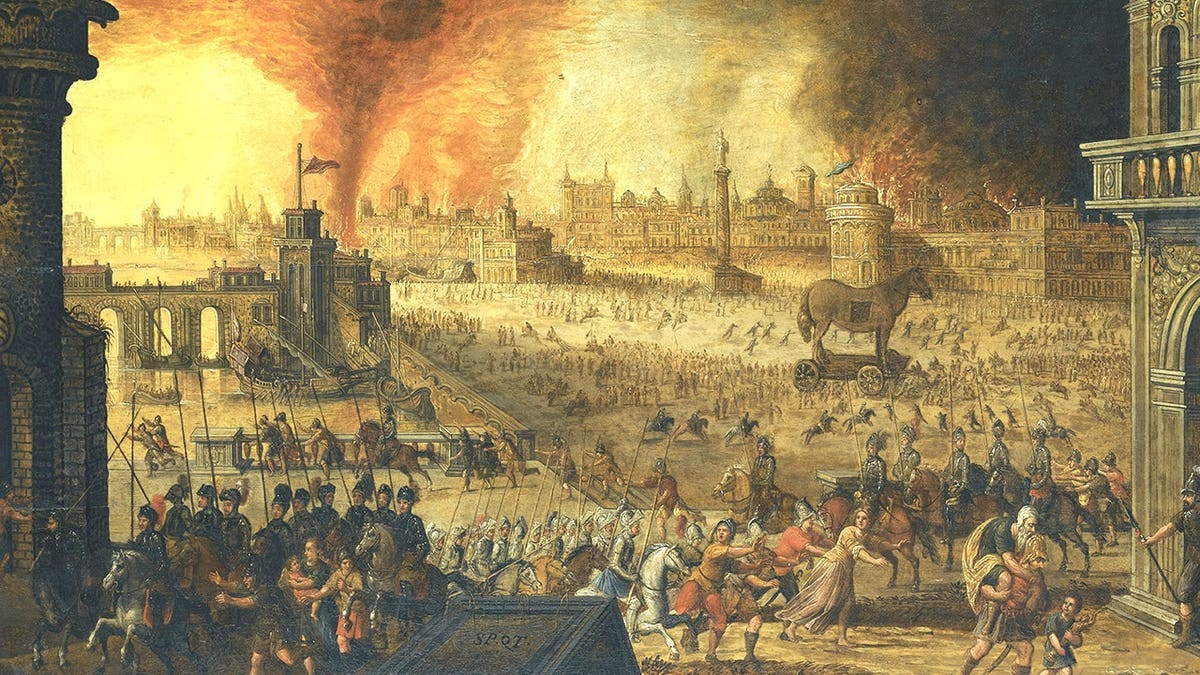
The text originates from Book II of Homer’s Iliad, the epic Greek poem centered around the Trojan War and believed to have been composed sometime during the 8th century B.C. — meaning the literary work was already more than a thousand years old when it was buried with the deceased.
According to excavation director Núria Castellano, the papyrus had been carefully positioned across the abdomen of the mummy as part of the embalming ritual.
That single detail is what stunned experts most.
Previous excavations in Oxyrhynchus had uncovered Greek papyri inside burial contexts before, but those texts almost always contained magical formulas, protective chants, or ritualistic writings intended to guide or protect the dead in the afterlife.
A literary masterpiece like the Iliad had never been found serving that role.
Papyrologist Leah Mascia later identified the fragment and confirmed its origin from Homer’s epic. The passage describes Greek forces preparing for the Trojan War — a scene of military mobilization, destiny, and looming conflict.
Why such a passage was selected for burial remains one of the biggest mysteries surrounding the discovery.
Some historians believe the text may have carried symbolic or spiritual significance beyond literature itself. Others speculate the deceased could have belonged to an educated elite class deeply influenced by Greek culture during Roman-controlled Egypt.
Ignasi-Xavier Adiego, professor at the University of Barcelona, emphasized how extraordinary the context truly is.
“Greek literary texts have been discovered at Oxyrhynchus for more than a century,” he explained. “But finding one intentionally integrated into a mummy’s embalming ritual is something entirely new.”
The implications are enormous.
The discovery may suggest that works like the Iliad were not viewed merely as entertainment or education in late Roman Egypt, but potentially held sacred, philosophical, or even protective value in death rituals.
Inside the tomb itself, archaeologists also uncovered multiple Roman-era mummies, elaborately painted wooden sarcophagi, and limestone burial chambers that showed signs of ancient looting.
Yet despite the scale of the excavation, the Homer fragment immediately became the centerpiece of international attention.
Experts described the find as “exceptional” and potentially historic in understanding the cultural fusion between Egyptian funerary traditions and Greek intellectual influence during the Roman Empire.
The excavation adds to a growing wave of remarkable discoveries emerging from Egypt in recent months.
Archaeologists recently revealed a colossal ancient statue believed by some researchers to depict a powerful pharaoh frequently associated with the biblical Exodus narrative.
Earlier this year, another excavation uncovered eight ancient papyrus scrolls alongside vividly colored coffins dating back more than 2,600 years.
But even among Egypt’s endless stream of discoveries, researchers say the Homer papyrus stands alone.
For the first time ever, one of humanity’s oldest literary masterpieces appears to have crossed the boundary between literature and the afterlife itself.