Ancient DNA Uncovers a Lost “Ghost” Lineage in China Linked to Tibetans
A remarkable genetic discovery from southwestern China is reshaping scientists’ understanding of early human populations in Asia. Researchers analyzing ancient DNA from more than 100 individuals uncovered evidence of a previously unknown human lineage — a so-called “ghost population” that may help explain one of the biggest mysteries surrounding the ancestry of modern Tibetans.
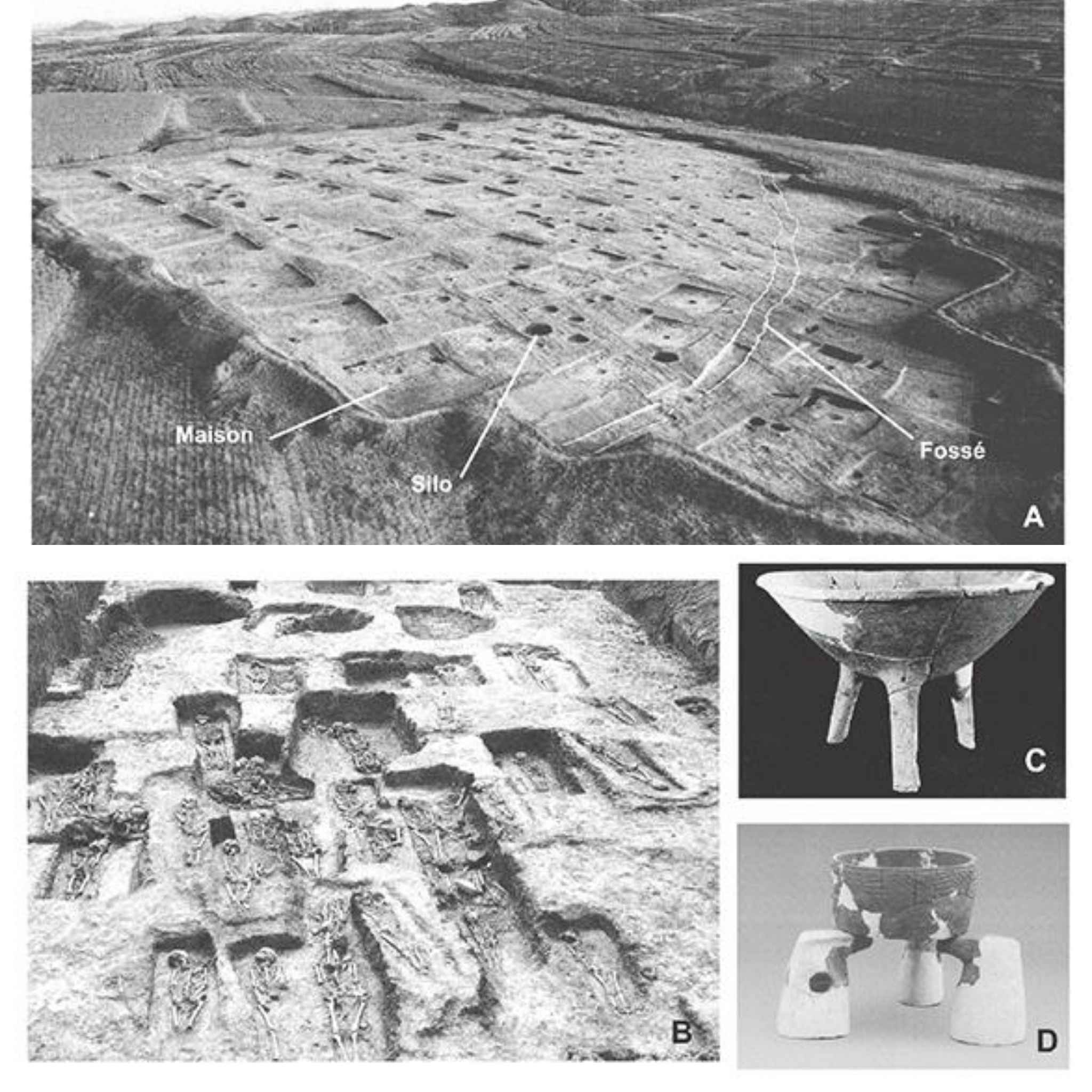
The study centers on a 7,100-year-old woman buried at the Xingyi archaeological site in Yunnan province, a region already famous for its extraordinary ethnic and linguistic diversity. Her DNA revealed something unexpected: she belonged to a deeply divergent human lineage that had never before been directly identified in skeletal remains.
A Hidden Branch of Humanity
The woman, referred to by researchers as Xingyi_EN, lived during the Early Neolithic period. Archaeologists discovered her burial beneath later graves at the Xingyi site, suggesting she may have belonged to one of the area’s earliest known communities.
Unlike most ancient East Asian genomes studied so far, Xingyi_EN’s DNA did not closely resemble the genetic profiles of known ancient populations from northern or southern East Asia. Instead, her ancestry appears tied to a mysterious “ghost” lineage that scientists had previously only inferred indirectly through statistical models.
A ghost population is a group that leaves behind genetic traces in later peoples but has not yet been identified through direct archaeological remains.
In this case, researchers found that Xingyi_EN carried ancestry linked to the mysterious genetic component long detected in modern Tibetan populations.
Images From the Discovery and Region


The Origins of the Tibetan Mystery
Previous genetic studies had already shown that Tibetans inherited ancestry from northern East Asian farming populations. But scientists repeatedly detected another ancient genetic signal that did not match any known population.
This unexplained ancestry became one of the biggest puzzles in Asian population genetics.
The new study suggests that the Xingyi woman may represent the missing link.
According to the researchers, the newly identified lineage — now called the Basal Asian Xingyi lineage — likely split from other human groups at least 40,000 years ago. For thousands of years, this population appears to have remained relatively isolated, avoiding significant interbreeding with neighboring groups.
Eventually, however, descendants of this lineage mixed with East Asian populations, contributing DNA that survives today in some Tibetan communities.
Not Neanderthal — Something Entirely Different
One of the most important aspects of the discovery is that the lineage is not related to Neanderthals or Denisovans in the usual sense.
While modern humans across Eurasia inherited small amounts of DNA from those archaic human groups, the Xingyi lineage represents something different: a previously unknown branch of early modern human diversity within Asia itself.
Researchers believe this population separated from other Asian groups tens of thousands of years ago and then remained isolated long enough to preserve a unique genetic signature.
That makes the find especially significant because it reveals just how complex human migration and interaction across Asia may have been.
Why Yunnan Matters
The discovery also highlights the importance of Yunnan province in human prehistory.
Today, Yunnan contains the greatest ethnic and linguistic diversity in China, and archaeologists increasingly believe the region served as a major crossroads connecting East Asia, Southeast Asia, and the Tibetan Plateau.
The study analyzed 127 ancient genomes dating between roughly 1,400 and 7,150 years ago. Together, these remains reveal that southwestern China was home to multiple genetically distinct groups interacting over thousands of years.
Researchers now suspect the region may preserve evidence for additional unknown populations that have yet to be sampled.
A More Complicated Human Story
The findings reinforce a growing realization among geneticists and archaeologists: ancient human history was far more tangled than previously believed.
Instead of simple migration waves replacing earlier peoples, prehistoric Asia appears to have been populated by multiple overlapping groups that mixed, separated, and reconnected over vast stretches of time.
The Xingyi woman may represent only the first direct glimpse into one of those forgotten populations.
More Visual Context


Caution and Future Research
Despite the excitement surrounding the discovery, scientists stress that conclusions remain tentative because the evidence currently comes from only a single individual.
Additional ancient DNA samples will be needed to confirm how widespread the Basal Asian Xingyi lineage once was and how exactly it contributed to Tibetan ancestry.
Still, the discovery marks a major breakthrough in the study of human evolution in Asia. It suggests that entire populations may have lived, migrated, and disappeared without leaving obvious traces in the archaeological record — except for fragments preserved deep within the genomes of people alive today.
As more ancient DNA studies emerge from East and Southeast Asia, researchers expect even more hidden branches of humanity may soon come to light.