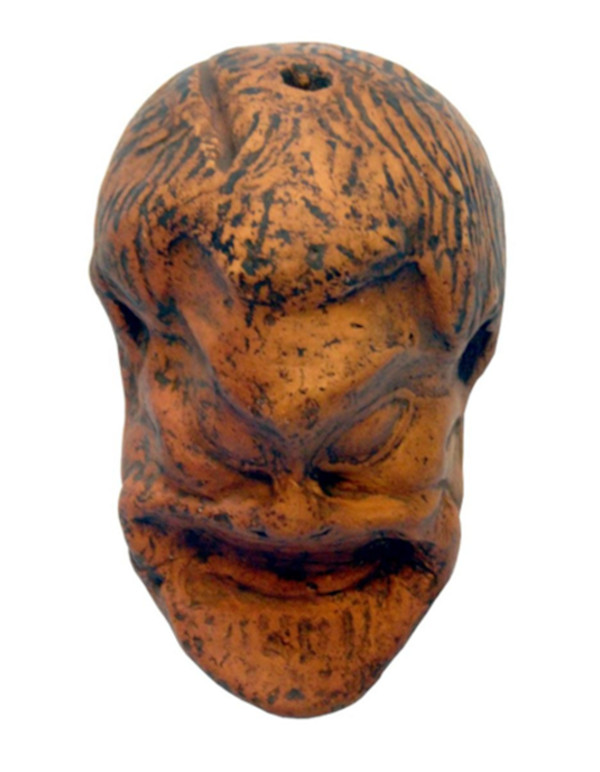
Archaeologists in Croatia have uncovered a rare 2,000-year-old terracotta theater mask hidden inside a cave on the Pelješac peninsula — and researchers believe it may be connected to ancient ritual ceremonies linked to the cult of Dionysus.
The striking artifact was discovered inside Crno Jezero Cave during excavations carried out by the Archaeological Museum of Dubrovnik Museums between April and May 2026.
Experts say the discovery offers an extraordinary glimpse into the blending of Greek and Illyrian spiritual traditions along the eastern Adriatic coast more than two millennia ago.
A Theater Mask Frozen in Time
The terracotta object depicts a dramatic Greek theatrical face and dates to the 4th or 3rd century BC.
Researchers say the mask was likely suspended on a wall or shrine surface because it contains a small hole at the top and is hollow inside.
Unlike modern decorative masks, theatrical masks in the ancient Greek world were closely tied to religious rituals, performances, and the worship of Dionysus.
The artifact was found in a secluded section of the cave that had remained sealed and undisturbed for centuries.
According to excavation leader Domagoj Perkić, the hidden location preserved the scene almost exactly as it had been left over 2,000 years ago.
Researchers described the discovery as a “frozen moment” from antiquity.
From Burial Site to Sacred Sanctuary
Crno Jezero Cave has a long and complex history of human use.
Earlier research revealed that the cave served multiple purposes over thousands of years:
- Temporary shelter during the Bronze Age
- A necropolis between roughly 1000–500 BC
- Later, an Illyrian sanctuary used for ritual activity
Archaeologists found evidence that the cave became an active religious site from the late 4th century BC through the 1st century BC.
The sanctuary phase included numerous miniature vessels, bowls, amphorae, and drinking cups — many of Greek origin — believed to have been left as ritual offerings.
 Possible Connection to Ancient Ritual Ceremonies
The combination of wine vessels and the theatrical mask strongly suggests ceremonial practices linked to Dionysus or a local Illyrian equivalent deity.
In the ancient Mediterranean world, Dionysus was associated not only with wine and theater, but also with transformation, ecstasy, and sacred ritual performance.
Researchers remain cautious about making definitive conclusions, but the discovery highlights how local Illyrian communities adopted and reinterpreted Greek cultural and religious elements within their own traditions.
A Rare Glimpse Into Illyrian Spiritual Life
Crno Jezero is one of only a few known Illyrian sanctuary caves discovered in the wider Dubrovnik region.
Together with nearby sacred cave sites, it is helping archaeologists better understand how ancient Adriatic societies interacted with Greek civilization through trade, religion, and cultural exchange.
Experts say discoveries like the theater mask are exceptionally valuable because they provide direct evidence of ritual practices that are otherwise rarely preserved in the archaeological record.
The excavation team believes further research inside the cave could reveal even more about the spiritual world of ancient communities that once gathered within its hidden chambers.