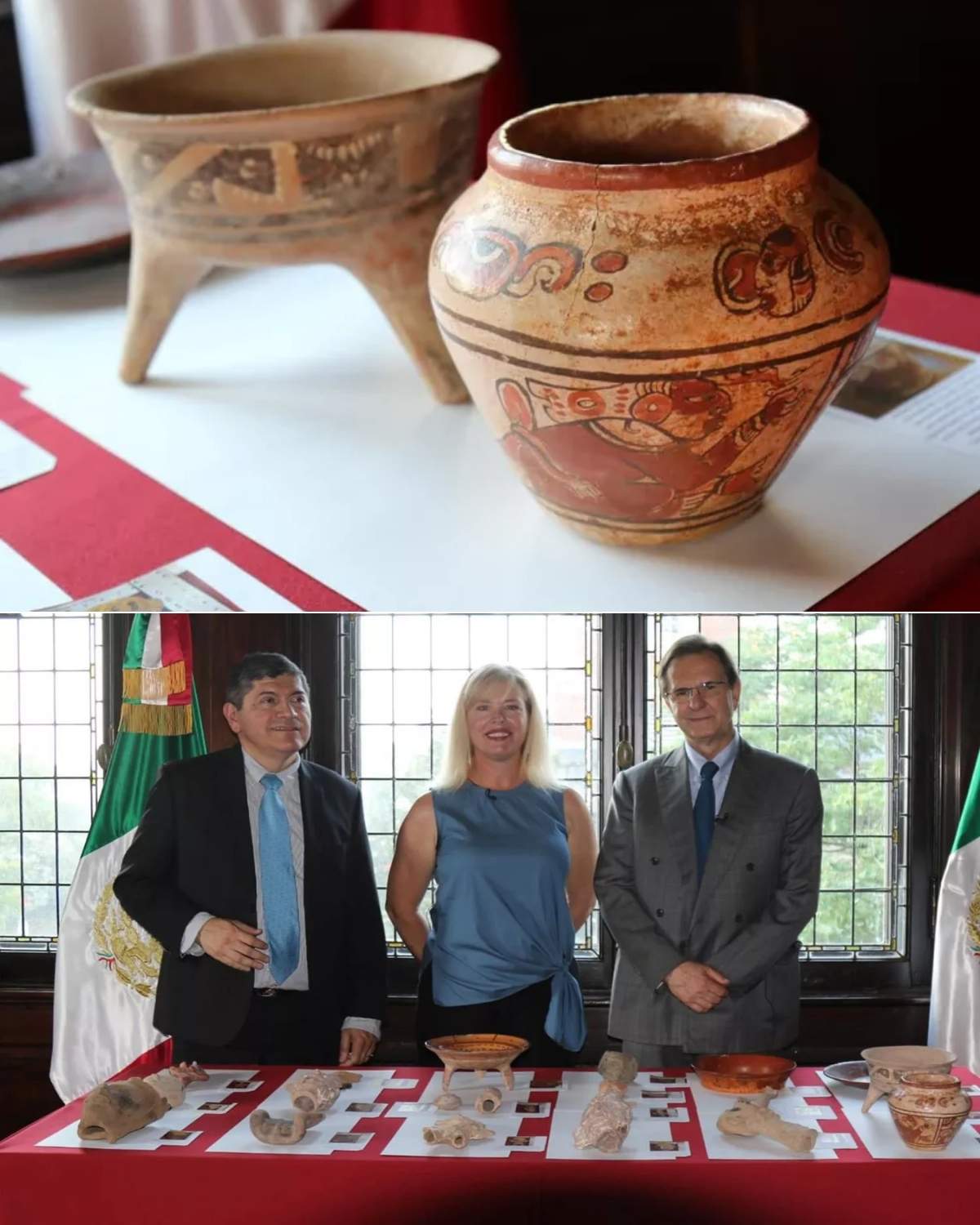
A woman from Washington, D.C. thought she was buying a simple decorative vase from a thrift store for just $3.99 — but years later, she discovered the object sitting on her shelf was actually an ancient Mayan artifact nearly 2,000 years old.
Anna Lee Dozier, a mother of three and cultural worker, originally found the vase while browsing inside 2A Thrift Store around five years ago.

At the time, she believed the piece was likely a modern tourist reproduction inspired by ancient Mayan designs.
“It did look old to me, but not old-old,” Dozier later explained, saying she assumed it was maybe a few decades old at most.
Because of her connection to Mexican culture through her work, she decided to buy it simply as a meaningful decorative item for her home.
For years, the vase quietly sat on a shelf without anyone realizing what it truly was.
That changed in January 2024 during a business trip to Mexico City.
While visiting National Museum of Anthropology, Dozier suddenly froze after spotting several ancient ceremonial vases that looked strikingly similar to the one sitting back in her house.
The resemblance was so close that she became concerned enough to speak directly with museum staff.
“Some of the things I was looking at looked awfully like what I had at home,” she recalled.
Although she still doubted her thrift store find could possibly be authentic, the similarities kept bothering her.
After returning home to the United States, Dozier contacted the Mexican Embassy and sent photographs and measurements of the vase for further analysis.
Anthropologists working with the embassy eventually confirmed the shocking truth: the object was a genuine ceremonial urn created by the Indigenous Mayan civilization sometime between 200 and 800 A.D.
In other words, the vase she purchased for less than five dollars had survived for nearly two millennia.
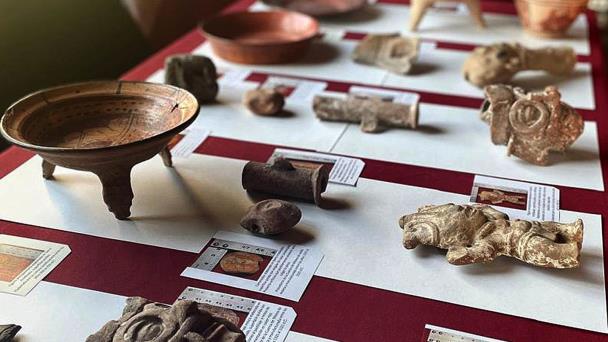
But instead of trying to sell the artifact or profit from its value, Dozier made a very different decision.
She chose to return it to Mexico.
Before transporting the priceless piece to the embassy, she admitted her biggest fear was accidentally damaging it while it remained inside her home with her energetic children nearby.
“I was petrified that after two-thousand years I would be the one to wreck it,” she joked.
Carefully wrapping the artifact in newspaper and placing it inside a cardboard box, she personally drove the vase to the Mexican Embassy in Washington, where officials prepared to send it back to Mexico permanently.
Esteban Moctezuma Barragán later announced the return publicly, describing the vase as “a valuable witness to Mayan history.”

The artifact is now expected to become part of the collection managed by Mexico’s National Institute of Anthropology and History, where it can be preserved and studied properly.
For Dozier, however, the emotional value of returning the artifact mattered far more than money ever could.
She said giving the vase back felt better than selling it online for profit because certain objects carry historical and cultural importance that simply cannot be measured financially.
And perhaps that’s what makes the story resonate so strongly.
What began as a random thrift store purchase turned into the unexpected rediscovery of a piece of ancient history — one that somehow survived nearly 2,000 years before quietly finding its way home again.