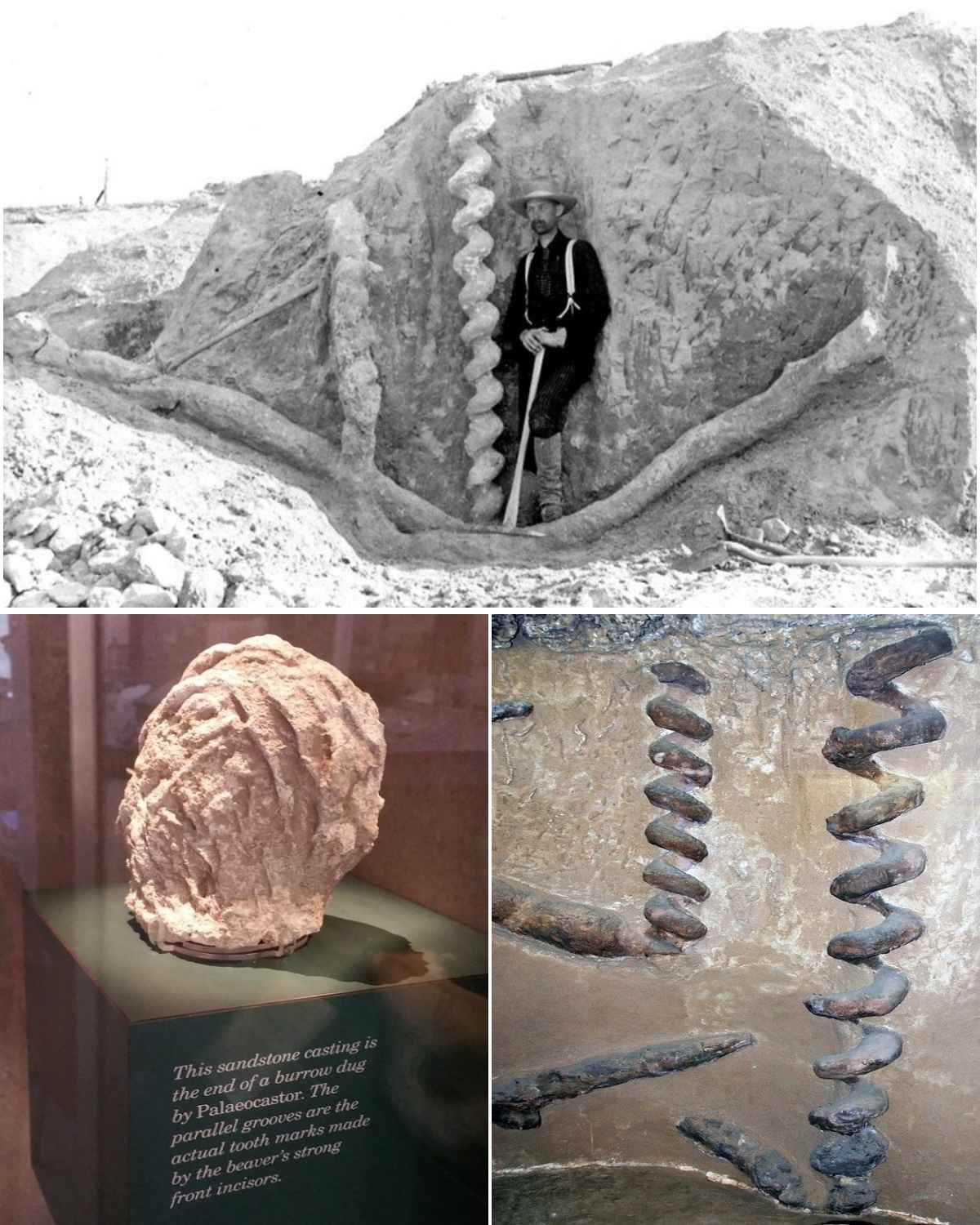
For more than a century, a bizarre fossil discovery in the badlands of Nebraska and Wyoming baffled some of the brightest minds in paleontology. Towering, corkscrew-shaped structures twisting deep into ancient rock layers seemed unlike anything ever seen before. Known as the “Devil’s Corkscrews,” these strange formations became one of North America’s most enduring fossil mysteries, sparking fierce scientific debates that lasted for decades.
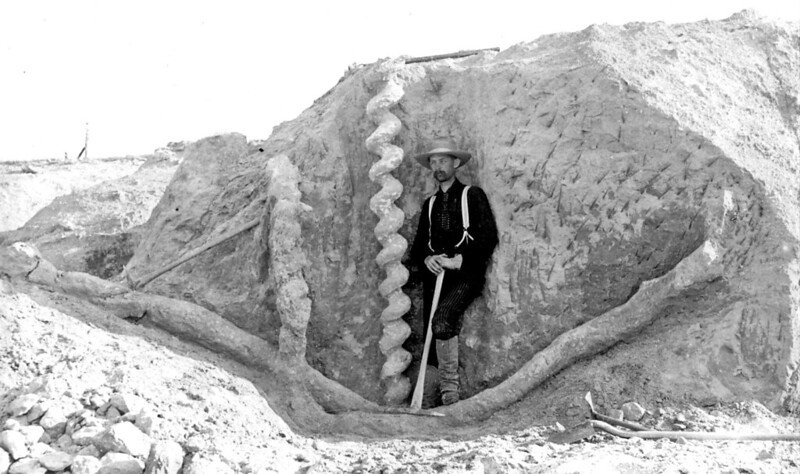
The fossils are primarily found within the Harrison Formation, a geological unit dating back approximately 20 to 23 million years to the Miocene Epoch. Rising several feet into the sediment, the spiraling structures appeared so unusual that early researchers struggled to determine whether they were biological, geological, or something entirely unknown.
The mystery began in the late 19th century when paleontologist Erwin H. Barbour first described the remarkable fossils. Convinced that the spirals represented the fossilized root systems of giant prehistoric plants, Barbour vigorously defended his interpretation. To him, the corkscrew formations appeared too regular and too deeply embedded within the earth to be the work of animals.
Not everyone agreed.
Prominent paleontologists Edward Drinker Cope and Theodor Fuchs challenged Barbour’s explanation, proposing a radically different theory. They argued that the spirals were not plants at all but the fossilized burrows of large rodents that once inhabited the ancient grasslands of North America. According to their hypothesis, some unknown mammal had excavated the twisting tunnels millions of years ago.
Barbour strongly rejected this idea and spent years defending his original interpretation. As a result, the Devil’s Corkscrew became one of the most hotly debated fossil enigmas of its era.
The turning point came when paleontologist Olaf Peterson made a crucial discovery. Inside several of the corkscrew structures, he found the skeletal remains of an extinct beaver known as Palaeocastor. This was the first direct clue linking the spirals to an animal rather than a plant.

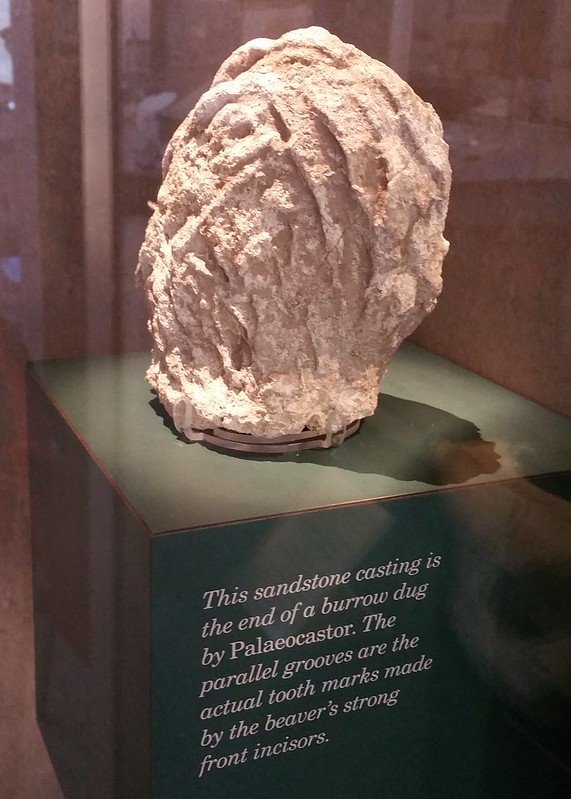
Even more intriguing were unusual grooves preserved within the sediment filling the burrows. These markings hinted that the structures had been actively excavated by a living creature. As more evidence accumulated, an increasing number of researchers began to favor the burrow hypothesis.
Yet questions remained unanswered. Why would an animal construct such unusual spiral tunnels? And what species was responsible?
The mystery was not fully resolved until the 1970s, when University of Kansas paleontologist Larry Martin and his graduate student Deb Bennett launched the most comprehensive investigation ever conducted on the Devil’s Corkscrews.
Their research took them across the badlands of Nebraska and Wyoming, where they carefully examined numerous specimens in their original geological settings. Back in the laboratory, they conducted detailed analyses of the fossils, comparing them with known mammalian anatomy and behavior.
Their groundbreaking study, published in 1977, finally provided compelling evidence that settled the debate.
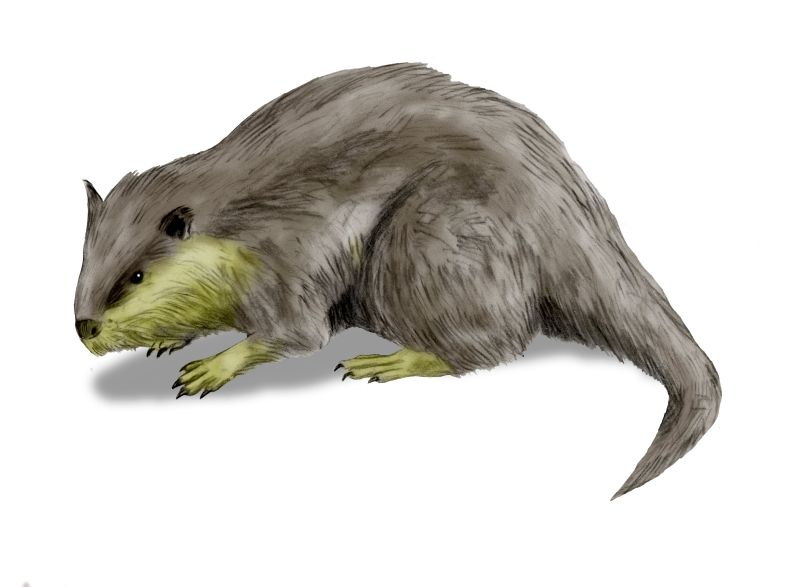
Martin and Bennett discovered that the incisor teeth of Palaeocastor perfectly matched the distinctive grooves found within the corkscrew structures. In addition, they identified claw marks preserved along the walls and floors of the tunnels. Together, these traces revealed exactly how the burrows had been excavated.
The conclusion was clear: the Devil’s Corkscrews were elaborate spiral burrows constructed by ancient beavers.
Rather than building dams like their modern relatives, Palaeocastor had adapted to life on open grasslands. These beavers dug deep underground homes featuring tightly wound corkscrew entrances that descended into living chambers below.
Researchers now believe the spiral design served an important purpose. The twisting tunnels may have helped regulate temperature, conserve moisture, and protect the animals from predators. In the harsh and often dry Miocene environment, such engineering would have offered significant survival advantages.
The discovery also revealed that Palaeocastor was far more social than previously believed.
Evidence indicates that these ancient beavers lived in large colonies resembling modern prairie dog towns. Across portions of Nebraska and Wyoming, hundreds of interconnected burrows created extensive underground communities. These colonies likely supported complex social behaviors and transformed the surrounding landscape.
The burrows also became miniature ecosystems.
Fossil evidence suggests that extinct relatives of martens and weasels occasionally entered the tunnels, probably hunting for young beavers or scavenging for food. Other small animals may have used abandoned burrows as shelters, seeking protection from predators and extreme weather conditions.
As a result, the Devil’s Corkscrews provide a rare glimpse into an ancient ecosystem that thrived more than 20 million years ago. What initially appeared to be a geological curiosity ultimately revealed an entire hidden world beneath the Miocene grasslands.
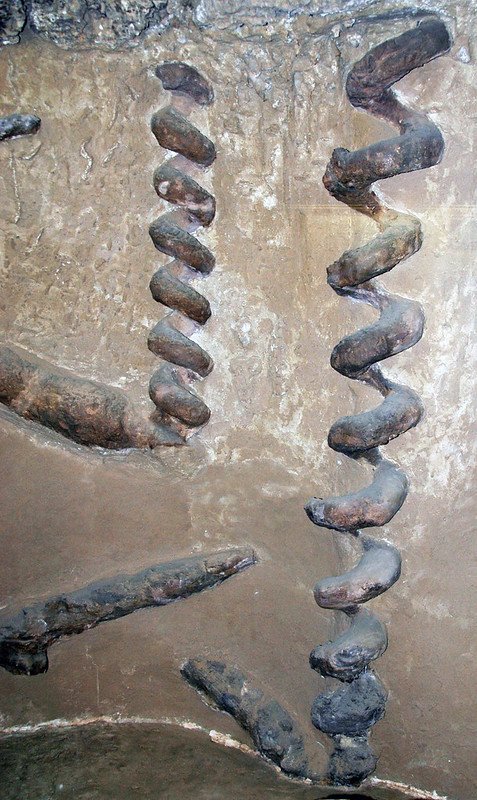
Today, the Devil’s Corkscrews stand as one of paleontology’s most fascinating success stories. For decades, scientists debated whether they were roots, geological formations, or something else entirely. Through careful fieldwork, fossil analysis, and persistence, researchers eventually uncovered the truth.
Far from being mysterious plant remains, the towering spirals are now recognized as extraordinary examples of prehistoric animal engineering—remarkable monuments left behind by a beaver unlike any living today.
What once puzzled generations of scientists has become one of the clearest windows into the behavior, ecology, and ingenuity of an extinct species, proving once again that some of nature’s strangest mysteries often have the most surprising explanations.