When Empires Leave Few Genes Behind: How Romans, Anglo-Saxons, and Vikings Shaped Britain in Very Different Ways
For generations, the history of Britain has often been told as a story of conquest.
Roman legions crossed the English Channel and transformed a distant island into a province of the world’s greatest empire. Centuries later, Germanic migrants known as the Anglo-Saxons arrived from northern Europe and established kingdoms that would ultimately form the foundation of England. Then came the Vikings, whose longships terrorized coastlines, conquered territories, and left a lasting imprint on British culture.
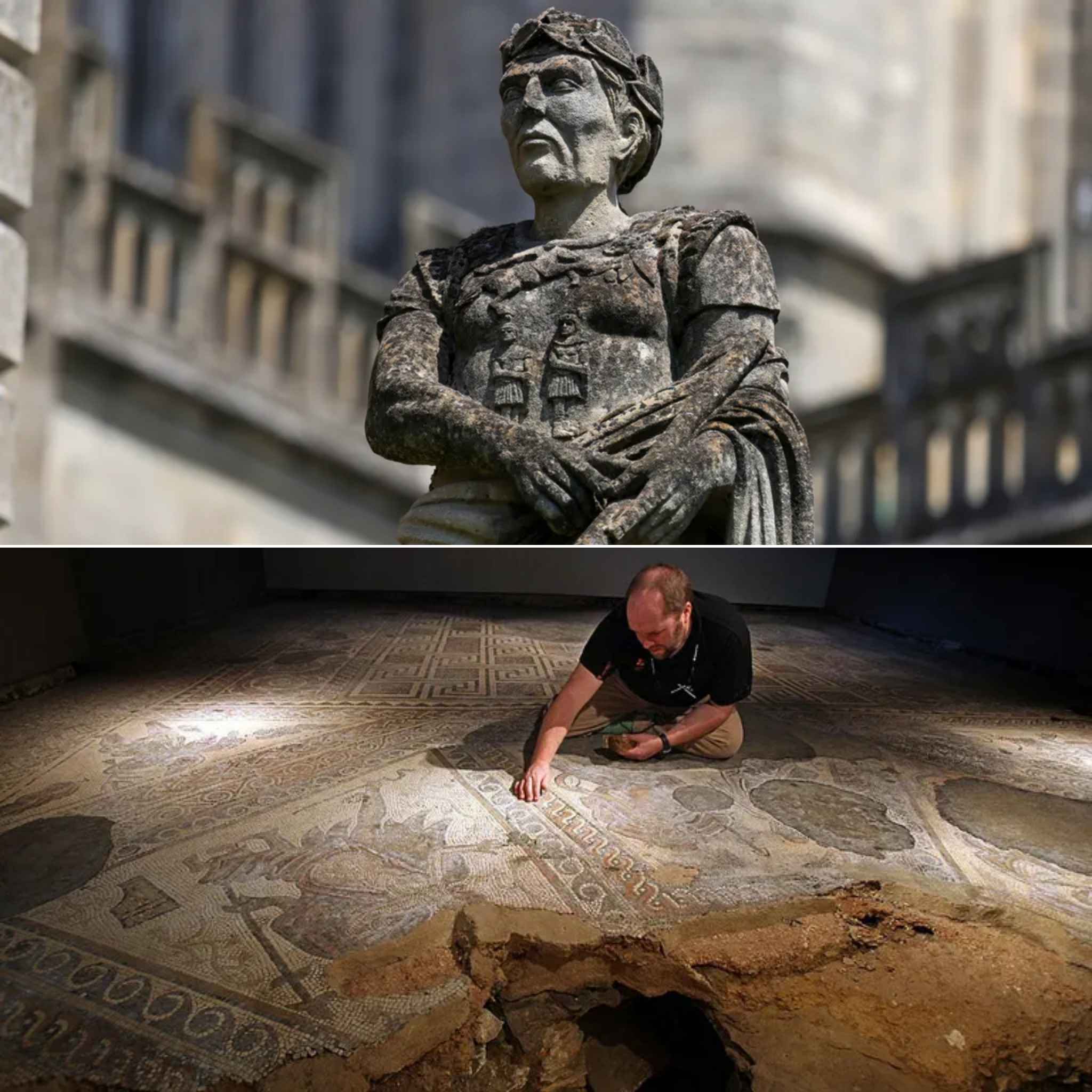
Each wave of newcomers changed Britain forever.
Yet according to a major new ancient-DNA study, these famous invasions did not all leave the same biological legacy.
The research suggests that despite ruling Britain for centuries, both the Romans and Vikings left surprisingly little genetic impact on the population. The Anglo-Saxons, however, appear to have transformed the genetic landscape of England on a scale far greater than historians once imagined.
The findings challenge long-standing assumptions about migration, conquest, and identity. They also reveal that cultural influence and genetic influence are not always the same thing.
An empire can change a society profoundly without replacing its people.
A Journey Through Nearly 4,000 Years of British History
To investigate Britain’s population history, researchers analyzed DNA from 1,039 individuals buried across Britain between approximately 2550 B.C. and A.D. 1150.
The study spans nearly four millennia, covering the Bronze Age, Iron Age, Roman occupation, Anglo-Saxon migration period, Viking Age, and early medieval era.
Using advanced genomic techniques, researchers compared the DNA of ancient individuals with genetic signatures from populations across Europe. Their goal was to determine how much ancestry entered Britain during different historical periods and how these migrations shaped later populations.
The results paint a surprisingly complex picture.
Rather than a simple sequence of population replacements, Britain appears to have experienced varying degrees of migration and cultural transformation, depending on the era.
Some conquerors left a large genetic footprint.
Others left mostly ideas, customs, institutions, and cultural traditions.
Roman Britain: An Empire Built More on Culture Than Colonization
Image 1: Reconstruction of Roman Britain, Roman roads and cities across the province of Britannia
When Emperor Claudius launched the Roman invasion of Britain in A.D. 43, it marked the beginning of nearly four centuries of imperial rule.
Roman soldiers established forts.
Engineers built roads.
Merchants expanded trade.
Cities such as Londinium, Verulamium, and Eboracum flourished.
To later generations, Roman Britain would appear almost inseparable from the wider Roman world.
Yet genetically, the occupation may have been surprisingly limited.
The study found that ancestry originating outside Britain accounted for only about 20 percent of the genetic profile of individuals buried during the Roman period.
This suggests that although migrants from across the empire certainly settled in Britain, they did not dramatically alter the genetic makeup of the broader population.
Instead, most native Britons remained where they were.
What changed was their culture.
Roman architecture spread across the landscape. Villas, bathhouses, temples, and amphitheaters appeared in regions that had previously been dominated by Celtic traditions.
Local elites adopted Roman dress, language, and customs. Trade connected Britain to distant provinces stretching from North Africa to the Middle East.
In many ways, Britain became Roman without becoming overwhelmingly populated by Romans.
This distinction is important because it demonstrates how powerful cultural influence can be.
The Roman Empire often succeeded by encouraging local populations to adopt Roman ways rather than replacing them entirely.
The Limits of Genetic Evidence
While the findings are significant, not all experts are convinced the picture is complete.
Archaeologist James Gerrard of Newcastle University has urged caution when interpreting the results.
Of the more than 1,000 individuals included in the study, only about 200 came from the Roman period.
Compared with decades of archaeological research involving thousands of Roman-era burials, this remains a relatively modest sample.
There is also the issue of geography.
Many of the sampled individuals came from urban environments where Roman influence was strongest. Rural communities may have experienced different patterns of migration and intermarriage.
Ancient DNA studies provide remarkable insights, but they are only as representative as the people whose remains survive and are analyzed.
As Gerrard noted, archaeologists still face a fundamental question:
Can a limited number of ancient genomes accurately represent an entire population?
The answer remains uncertain.
Celtic Traditions Before Rome
One of the most intriguing discoveries in the study concerns life before the Roman conquest.
Researchers found evidence suggesting that many pre-Roman communities organized burials according to matrilineal relationships.
In these societies, women often remained in their ancestral communities while men moved after marriage.
This pattern implies that women may have held important social and familial positions within certain Celtic groups.
For generations, historians have debated the status of women in Iron Age Britain.
Classical writers occasionally described Celtic women as unusually influential compared with their counterparts in the Mediterranean world.
The genetic evidence now offers support for the possibility that women occupied central roles within local communities.
Interestingly, traces of these traditions appear to have persisted in western Britain even after the Roman conquest.
However, Roman-era cemeteries generally lack these patterns.
This shift may reflect the spread of Roman patriarchal social structures and family organization.
Once again, Rome seems to have changed how people lived without dramatically changing who they were.
The Fall of Rome and the Arrival of New Peoples
By the early fifth century, Roman authority across western Europe was collapsing.
Facing mounting pressure from invasions and internal instability, imperial leaders withdrew troops from Britain around A.D. 410.
The departure created a power vacuum.
Political structures weakened.
Trade networks deteriorated.
Regional kingdoms emerged.
Into this changing landscape came newcomers from across the North Sea.
They would reshape Britain more profoundly than the Romans ever had.
The Anglo-Saxon Transformation
Image 2: Anglo-Saxon settlers arriving in Britain and establishing early kingdoms
The migrants who arrived during the fifth and sixth centuries came primarily from areas that now form parts of Germany, Denmark, and the Netherlands.
Traditionally grouped under the label “Anglo-Saxons,” these communities included Angles, Saxons, and Jutes.
For centuries historians debated whether their arrival represented a massive migration or merely the dominance of a relatively small elite.
The new DNA evidence strongly favors substantial migration.
According to the study, individuals buried during the Anglo-Saxon era derived approximately 70 percent of their ancestry from Germanic sources.
This level of genetic contribution is dramatically higher than that seen during the Roman occupation.
The findings suggest that large numbers of migrants settled in Britain and intermarried extensively with local populations.
Rather than simply ruling over native communities, they became part of them.
Over time, the descendants of these migrants formed the foundations of what would become the English people.
Why the Anglo-Saxons Were Different
The contrast between Roman and Anglo-Saxon influence raises an important question:
Why did one occupation leave such a large genetic impact while the other did not?
Part of the answer lies in the nature of migration.
Roman Britain functioned as a province of a vast empire.
Soldiers, officials, merchants, and specialists arrived from many regions, but they remained a relatively small proportion of the total population.
The Anglo-Saxons appear to have migrated differently.
Entire communities crossed the North Sea.
Families settled permanently.
Agricultural villages expanded.
New kingdoms emerged.
Language also played a crucial role.
Old English, the language spoken by the Anglo-Saxons, eventually replaced most Celtic languages across much of England.
This linguistic transformation suggests a deep demographic shift rather than merely political domination.
The genetic evidence aligns closely with that interpretation.
A New England Emerges
The consequences of Anglo-Saxon migration were enormous.
The political map changed.
The language changed.
Religious practices evolved.
Social structures transformed.
Many place names still used across England today originate from Old English.
Modern English itself developed from the language introduced by these settlers.
Unlike Roman influence, which faded after imperial withdrawal, Anglo-Saxon culture became deeply rooted in the island.
Their genetic legacy appears equally enduring.
The Viking Surprise
Image 3: Viking longships approaching the coast of Britain during the Viking Age
If the Roman findings are surprising, the Viking results may be even more unexpected.
Beginning in the late eighth century, Scandinavian raiders launched attacks on monasteries and settlements across Britain.
Over time, Viking activity evolved from seasonal raids into permanent settlement.
Large portions of northern and eastern England eventually fell under Danish control.
This region became known as the Danelaw.
Viking influence is visible throughout British history.
Many English words have Scandinavian origins.
Numerous towns retain Norse-derived names.
Archaeological evidence of Viking settlements is widespread.
Yet genetically, the impact appears modest.
The study found that only about 4 percent of individuals buried in Viking-era England possessed ancestry linked to Iron Age Scandinavia.
This suggests that Viking settlers may have been relatively few in number despite their enormous cultural influence.
The Difference Between Power and Population
The Viking findings highlight an important historical lesson.
Military and political control do not necessarily require large-scale migration.
A relatively small number of Scandinavian elites may have exercised authority over much larger local populations.
Trade networks, alliances, and cultural prestige could spread Norse influence far beyond the size of the actual migrant community.
As a result, Viking culture left a lasting imprint on England even though relatively few Scandinavian genes entered the population.
This pattern resembles Roman Britain in some respects.
Both groups changed society dramatically without replacing large portions of the population.
Medieval Migration Continues
The study also identified increasing ancestry from Central and Southern Europe beginning around the eighth century.
These genetic signals suggest that migration into England continued throughout the medieval period.
Merchants, pilgrims, craftsmen, clergy, and political refugees all contributed to the population.
Rather than a static society, medieval England appears to have remained connected to wider European networks.
Movement across borders was more common than many people imagine.
The Challenge of Interpreting Ancient DNA
Although ancient DNA has revolutionized archaeology, interpreting the results remains complex.
Genes do not tell the entire story of identity.
A person living in Roman Britain might have considered themselves Roman regardless of ancestry.
A resident of the Danelaw could embrace Viking customs without possessing Scandinavian DNA.
Likewise, cultural influence can spread through trade, religion, education, and politics without large-scale migration.
Ancient DNA reveals biological relationships.
History requires understanding how those relationships interacted with culture, belief, and power.
Neither genetics nor archaeology alone can provide the complete picture.
Together, however, they offer unprecedented insights into the past.
Britain as a Crossroads
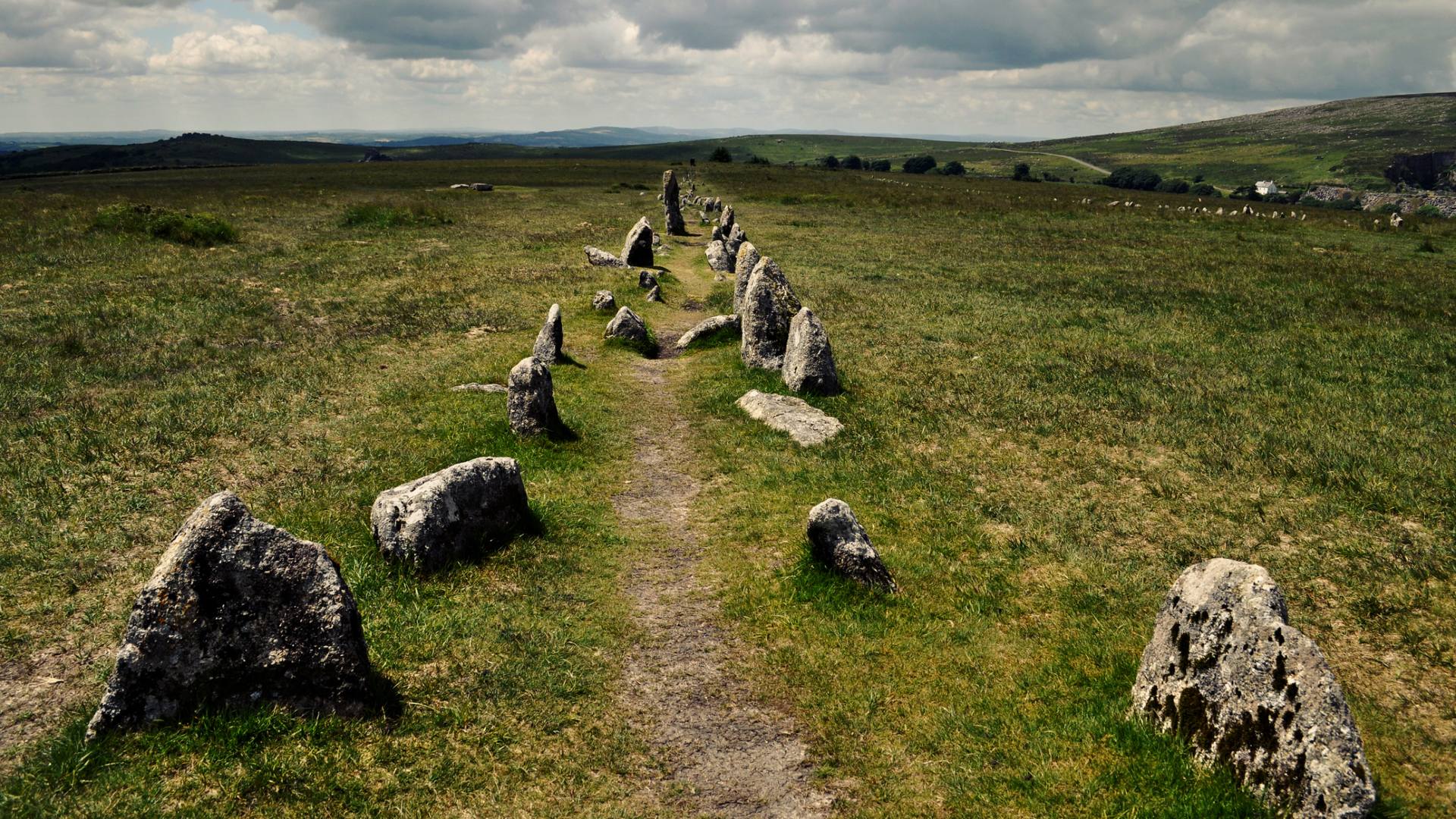
The study reinforces a broader understanding of Britain as a crossroads of peoples and cultures.
Over thousands of years, the island experienced repeated waves of migration, interaction, and adaptation.
Some newcomers arrived in large numbers.
Others arrived in smaller groups but exerted enormous cultural influence.
The Romans transformed administration, infrastructure, and urban life.
The Anglo-Saxons reshaped language, identity, and population structure.
The Vikings altered trade, law, and regional culture.
Each left a different legacy.
None can be understood solely through genetics.
Rewriting the Story of Ancient Britain
For centuries, historical narratives often portrayed invasions as straightforward episodes of conquest and replacement.
The emerging genetic evidence tells a more nuanced story.
People moved.
They intermarried.
They adopted new customs.
They blended traditions.
Sometimes newcomers became the majority.
Sometimes they remained a minority whose ideas spread far beyond their numbers.
Britain’s history was not shaped by a single population replacing another.
It was shaped by continual interaction between peoples from different regions and backgrounds.
The Legacy That Remains Today
Modern Britain still carries traces of these ancient encounters.
The roads built by Romans remain embedded in the landscape.
The English language owes much of its foundation to the Anglo-Saxons.
Place names, folklore, and legal traditions preserve echoes of Viking influence.
Yet the genetic story behind these transformations is more complicated than historians once believed.
The Romans ruled Britain for nearly four centuries but left relatively little genetic imprint.
The Vikings dominated parts of England and inspired centuries of legend but contributed surprisingly little Scandinavian ancestry.
The Anglo-Saxons, meanwhile, transformed both the culture and the genetic makeup of the population.
Their arrival represents one of the most significant demographic shifts in British history.
As researchers continue analyzing ancient genomes, new discoveries will undoubtedly refine this picture.
For now, however, the message is clear:
Empires can change a country without replacing its people. But sometimes, as with the Anglo-Saxons, migration changes both the culture and the population so profoundly that its legacy endures for more than a millennium.