Neanderthal Childhood Was Different: New Fossil Evidence Reveals Toddlers Grew Faster Than Modern Humans
For more than a century, Neanderthals have occupied a unique place in the story of human evolution.
They were our closest known relatives, sharing a common ancestor with modern humans roughly 600,000 years ago. They crafted sophisticated stone tools, hunted large game, cared for injured members of their communities, and survived some of the harshest climates of the Ice Age. Yet despite decades of research, many aspects of their lives remain mysterious.
Among the biggest questions is one that affects every human being: How did Neanderthal children grow?
Did they experience childhood the same way modern humans do today?
Did they develop at the same pace?
Or did they follow a completely different biological timetable?
A remarkable new study centered on the fragmented remains of a young Neanderthal discovered in Israel suggests that Neanderthal children may have matured much faster than modern humans during the earliest years of life. The findings indicate that these ancient humans followed a distinct developmental strategy, one that may have helped them survive the demanding environments of Ice Age Eurasia.
The research not only provides new insights into Neanderthal biology but also sheds light on how evolution can shape childhood itself.
A Child Frozen in Time
The story begins in northern Israel.
Nestled among the limestone hills of the Upper Galilee lies Amud Cave, one of the most important Neanderthal archaeological sites ever discovered.
Excavations conducted during the twentieth century uncovered numerous Neanderthal remains dating between approximately 51,000 and 56,000 years ago. These fossils offered researchers a rare glimpse into a population living near the southern edge of Neanderthal territory.
Among the discoveries was a particularly intriguing skeleton known as Amud 7.
Unlike the adult skeletons found at the site, Amud 7 belonged to a very young child.
The remains were discovered carefully placed within a niche carved into the cave wall. Resting above the skeleton was the jawbone of a red deer (Cervus elaphus), an arrangement that some archaeologists interpret as a possible burial offering.
If correct, it suggests that Neanderthals engaged in symbolic burial practices and treated their dead with ritual care.
Yet while the burial itself was fascinating, it was the child’s bones that would ultimately provide the greatest scientific revelations.
Reassembling a Prehistoric Puzzle
The skeleton of Amud 7 was far from complete.
Over thousands of years, geological processes had broken the remains into more than 100 separate fragments.
Researchers painstakingly reconstructed pieces of the skull, ribs, arms, legs, and other skeletal elements.
Even in its fragmented condition, the skeleton displayed unmistakable Neanderthal characteristics.
The shape of the skull.
The proportions of the limbs.
The robust structure of the bones.
All pointed clearly toward Neanderthal identity.
Yet determining the child’s age presented a major challenge.
In modern populations, scientists can estimate age by comparing developing teeth and bones with well-established growth charts. But Neanderthals may not have followed the same developmental patterns.
To understand how old Amud 7 was at death, researchers needed to examine multiple indicators simultaneously.
What they discovered would challenge long-held assumptions about Neanderthal childhood.
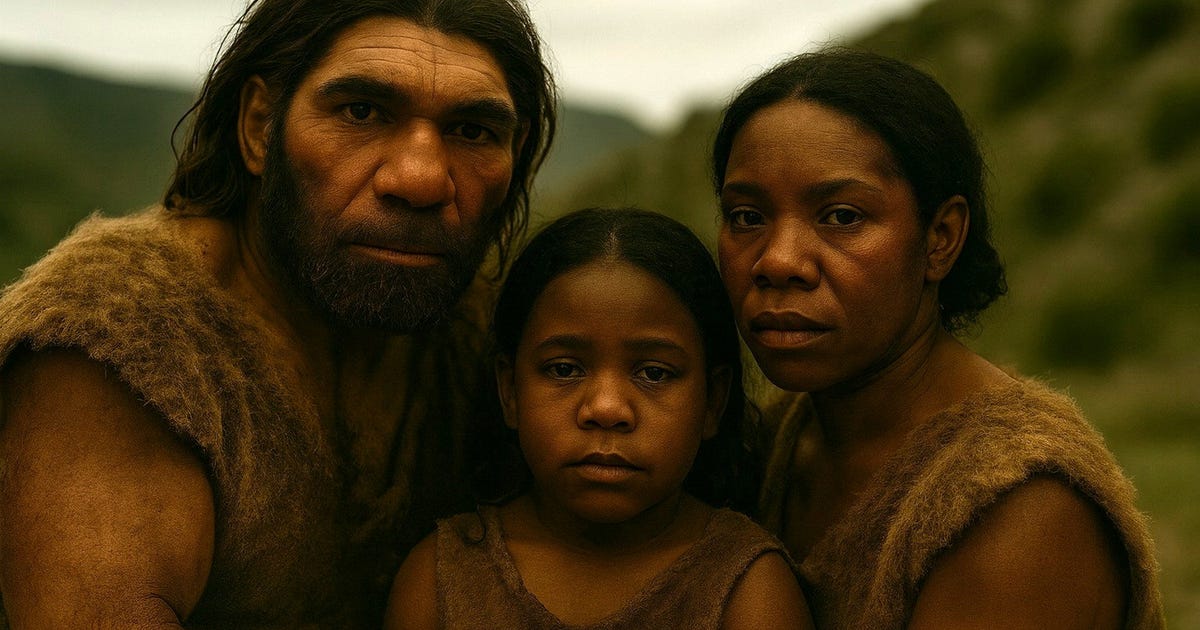
Caption: Amud Cave has yielded some of the most important Neanderthal fossils ever found in the Near East, including the remains of the child known as Amud 7.
Teeth Tell One Story
Teeth are among the most reliable indicators of age in ancient children.
Unlike many bones, teeth develop according to relatively predictable schedules.
Researchers analyzed the development of Amud 7’s lower front teeth and compared them with modern human growth patterns.
The results suggested an age of approximately six months.
At first glance, this seemed straightforward.
The child appeared to have died sometime during infancy.
But when researchers examined the rest of the skeleton, they encountered a problem.
The bones told a completely different story.
Bones Tell Another
The lengths and developmental stages of Amud 7’s arm and leg bones resembled those of a modern human child closer to 14 months old.
This created a striking discrepancy.
If the teeth indicated six months of age, why did the skeleton resemble that of a much older child?
The answer appears to lie in how Neanderthals grew.
Rather than following the developmental schedule seen in modern humans, Neanderthal toddlers may have experienced an accelerated phase of body growth during early childhood.
Their bones matured rapidly.
Their bodies expanded quickly.
Yet their dental development remained comparatively slower.
This mismatch between skeletal and dental growth provides some of the clearest evidence yet that Neanderthal childhood differed fundamentally from our own.
A Different Developmental Strategy
The researchers propose that Neanderthals followed a unique growth trajectory consisting of several stages.
At birth, Neanderthal infants appear surprisingly similar to modern human newborns.
Their teeth develop at roughly comparable rates.
Their arm and leg bones are similar in length.
In many respects, newborn Neanderthals and newborn Homo sapiens would have looked remarkably alike.
One major difference already existed, however.
Neanderthal babies possessed significantly larger skulls.
This suggests that brain growth and cranial development may have been emphasized from the very beginning of life.
Then came the critical divergence.
Between approximately one and six years of age, Neanderthal children appear to have entered a phase of accelerated body growth.
Their skeletal development outpaced dental development.
Their bodies became larger and stronger more quickly than those of modern human children.
Later, during middle childhood, growth rates seem to have stabilized.
At that point, Neanderthal developmental patterns became more similar to those of modern humans.
The result was a childhood trajectory unlike anything observed in living populations today.
Why Grow Faster?
The obvious question is why.
Why would evolution favor accelerated childhood growth?
The answer may lie in the environments Neanderthals inhabited.
For hundreds of thousands of years, Neanderthals occupied Europe and western Asia during periods characterized by extreme climatic instability.
Glacial cycles repeatedly transformed landscapes.
Temperatures often plummeted.
Resources fluctuated dramatically.
Survival required physical resilience.
Under such conditions, growing larger more quickly may have provided important advantages.
A rapidly developing child would become physically independent sooner.
Stronger muscles and larger body size could improve thermoregulation in cold environments.
Faster growth might also reduce vulnerability during the dangerous early years of life.
Natural selection may therefore have favored developmental strategies that emphasized rapid body growth.
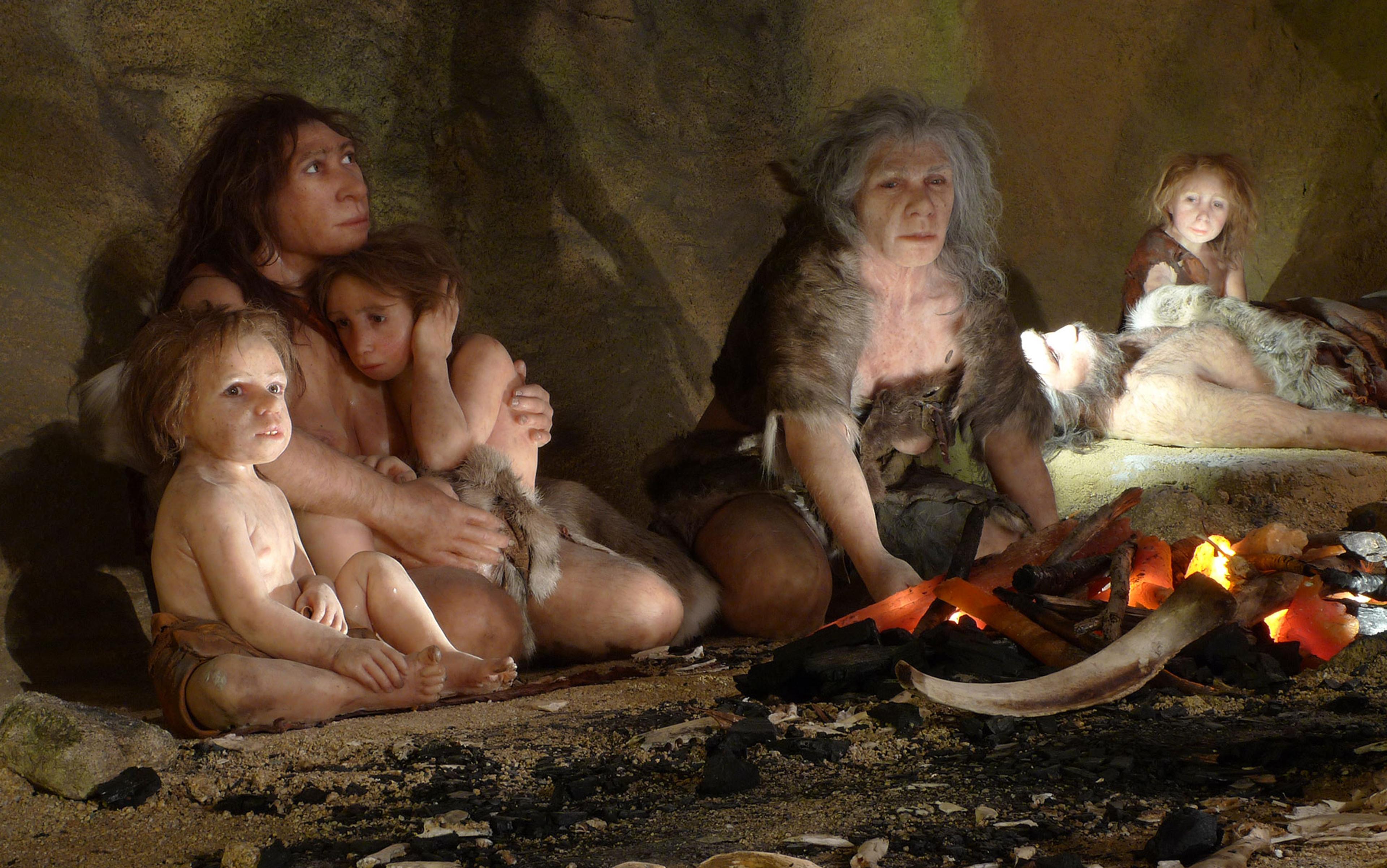
Caption: Researchers believe accelerated childhood growth may have helped young Neanderthals survive harsh Ice Age environments across Europe and western Asia.
The Challenge of Ice Age Childhood
Childhood is often romanticized today, but for prehistoric populations it was an exceptionally dangerous period.
Infant mortality rates were high.
Predators posed constant threats.
Food shortages could become deadly.
Disease and injury frequently claimed young lives.
For Neanderthals, these risks may have been even greater.
Ice Age winters were long and unforgiving.
Large prey animals migrated across vast territories.
Competition with carnivores such as wolves, cave lions, and hyenas added further challenges.
In such environments, children who matured physically more quickly may have enjoyed higher survival rates.
A developmental strategy emphasizing early growth would have provided a significant evolutionary advantage.
Bigger Brains, Bigger Costs
One of the most intriguing aspects of the study concerns the size of Neanderthal skulls.
Even as infants, Neanderthals possessed larger cranial volumes than modern humans.
This finding aligns with previous research showing that adult Neanderthal brains were, on average, slightly larger than those of modern humans.
Brain size alone does not determine intelligence.
However, larger brains require enormous amounts of energy.
In human infants, the brain consumes a substantial portion of total metabolic resources.
Maintaining rapid brain growth alongside accelerated body growth would have placed tremendous nutritional demands on Neanderthal families.
This suggests that Neanderthal mothers and caregivers invested heavily in early childhood development.
Understanding how they met these energetic requirements remains one of the most fascinating questions in paleoanthropology.
Were Neanderthals Smarter or Just Different?
For decades, scientists debated whether Neanderthals differed cognitively from modern humans.
Some researchers once argued that slower childhood development in modern humans allowed more time for learning and socialization.
According to this view, prolonged childhood may have contributed to the emergence of complex language, culture, and technology.
The new findings complicate that narrative.
Accelerated physical growth does not necessarily imply reduced cognitive development.
Indeed, Neanderthals displayed many behaviors once considered uniquely human.
They created sophisticated tools.
They controlled fire.
They hunted cooperatively.
They cared for injured group members.
They may have produced symbolic objects and buried their dead.
The developmental differences revealed by Amud 7 likely reflect alternative evolutionary solutions rather than superior or inferior intelligence.
The Importance of Childhood in Human Evolution
Childhood occupies a unique place in human biology.
Compared with most mammals, humans experience an unusually long period of dependence.
This extended childhood allows for prolonged brain development, social learning, and cultural transmission.
Many anthropologists consider prolonged childhood one of the defining features of our species.
Neanderthals challenge this perspective.
Their developmental pattern appears to have balanced extended brain growth with accelerated body maturation.
This combination suggests that multiple evolutionary pathways can support complex social and cognitive behavior.
Rather than following a single developmental blueprint, human evolution experimented with different solutions.
Neanderthals represent one of those experiments.
Life in a Different World
The world inhabited by Amud 7 was dramatically different from today’s.
The Levant served as a crossroads between Africa, Europe, and Asia.
Neanderthals occupied the region during periods when modern humans were also expanding beyond Africa.
Climate fluctuations repeatedly altered habitats.
Forests gave way to grasslands.
Animal populations shifted.
Human groups adapted continuously to changing conditions.
Within this dynamic environment, developmental flexibility may have been essential.
Rapid childhood growth could help populations respond to unpredictable ecological pressures.
The life of Amud 7 therefore provides a window not only into Neanderthal biology but also into the challenges of survival in a changing world.

Caption: Although newborn Neanderthals shared many similarities with modern human infants, their skulls were larger and their early developmental patterns appear to have differed significantly.
The Limits of a Single Child
Despite the importance of the findings, researchers urge caution.
Amud 7 represents only one individual.
Drawing broad conclusions about an entire species from a single child is inherently risky.
Variation exists within all populations.
Some developmental differences may reflect local environmental conditions rather than species-wide characteristics.
To confirm the pattern, scientists need additional juvenile Neanderthal skeletons.
Unfortunately, such remains are exceptionally rare.
Infant and child skeletons are fragile and often fail to survive in the archaeological record.
This scarcity makes every discovery enormously valuable.
Future finds may confirm the accelerated growth pattern observed in Amud 7—or reveal a more complex picture.
A Growing Understanding of Neanderthals
The image of Neanderthals has changed dramatically over the past century.
Once portrayed as primitive cave dwellers, they are now recognized as highly adaptable humans who successfully inhabited Eurasia for hundreds of thousands of years.
Genetic studies have revealed that Neanderthals interbred with modern humans.
Today, many people carry small percentages of Neanderthal DNA.
Archaeological discoveries continue to demonstrate their sophistication.
The study of Amud 7 adds another dimension to this evolving portrait.
It reveals that Neanderthals were not simply modern humans with slightly different skulls.
They possessed distinct biological strategies shaped by their unique evolutionary history.
Their childhoods unfolded differently.
Their bodies developed differently.
Their lives followed trajectories that modern humans no longer experience.
The Evolution of Being Human
The story of Amud 7 reminds us that there is no single way to be human.
Over the last several hundred thousand years, multiple human species occupied the planet simultaneously.
Each adapted to different environments.
Each developed unique solutions to common challenges.
Modern humans are merely the last surviving branch of a once-diverse family tree.
Neanderthals represent one of our closest relatives on that tree.
By studying their growth patterns, scientists gain insight into alternative forms of human development and evolution.
The differences revealed by Amud 7 highlight how flexible human biology can be.
Evolution did not produce a single formula for success.
Instead, it generated multiple pathways.
A Child’s Legacy
More than 50,000 years ago, a small child died in a cave overlooking the hills of northern Israel.
Family members carefully placed the body within a niche.
Perhaps they mourned.
Perhaps they performed rituals.
Perhaps they hoped the red deer jaw resting above the remains would accompany the child into another world.
Thousands of years later, fragments of that child’s skeleton continue to tell a story.
Not merely about one life, but about an entire species.
The bones of Amud 7 reveal that Neanderthal childhood unfolded according to rhythms different from our own.
They suggest that survival in Ice Age Eurasia favored rapid early growth.
They demonstrate that human evolution explored developmental possibilities that no longer exist today.
Most importantly, they remind us that our extinct relatives were not failed versions of ourselves.
They were a distinct kind of human, shaped by unique evolutionary pressures and adapted to a world far harsher than our own.
And through the fragile bones of one young child, we are beginning to understand just how different that world—and those people—really were.