Secrets of the Baltic Sea Anomaly: UFO, Lost Civilization, or Nature’s Greatest Illusion?
The world’s oceans remain one of humanity’s final frontiers. Hidden beneath miles of dark water lie shipwrecks, submerged cities, geological wonders, and countless mysteries that continue to challenge our understanding of the past. Every year, advances in underwater technology reveal new discoveries that reshape history. Yet few underwater mysteries have captured public imagination quite like the Baltic Sea Anomaly.
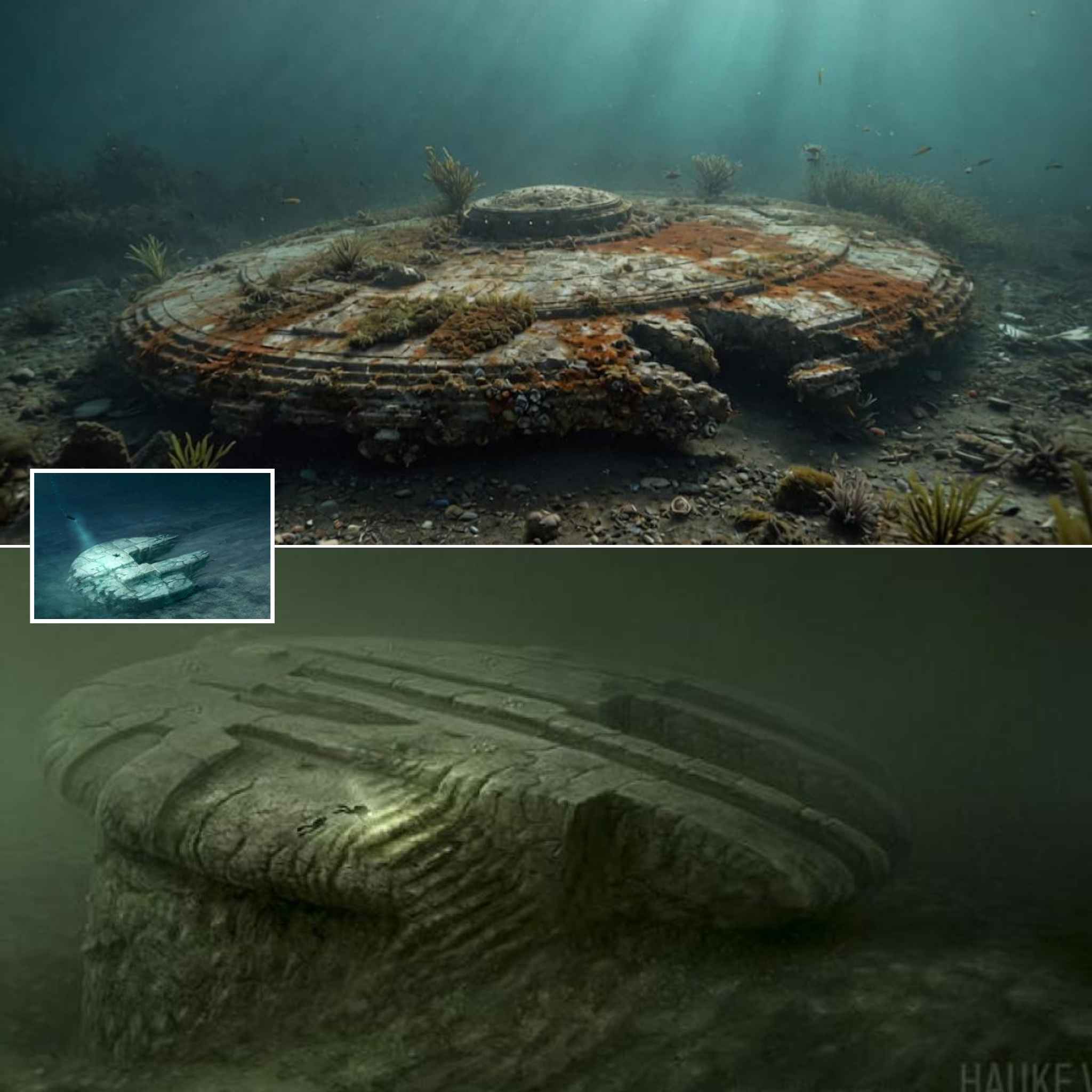
Discovered in 2011 on the floor of the Baltic Sea, the strange circular formation immediately ignited a storm of speculation. To some, it looked like a crashed alien spacecraft resting on the seabed. Others suggested it might be a secret military installation, an ancient monument, or evidence of a lost civilization swallowed by rising seas thousands of years ago.
The mystery became a global sensation almost overnight.
Newspapers published dramatic headlines. Television documentaries explored extraterrestrial theories. Internet forums exploded with debates and conspiracy theories. Comparisons were quickly made to the Millennium Falcon from Star Wars, with many people convinced that humanity had finally discovered proof of alien visitation.
More than a decade later, however, scientists have developed a very different explanation.
Ironically, the truth may be even more fascinating than science fiction.
A Discovery That Shocked the World
The story began in June 2011 when Ocean X, a Swedish treasure-hunting company, was conducting sonar surveys in the northern Baltic Sea.
The team was searching for historical shipwrecks and valuable cargo when their sonar equipment detected something unexpected. Resting approximately 295 feet (90 meters) beneath the surface was a massive circular object unlike anything they had encountered before.
The sonar image appeared to show a structure measuring nearly 200 feet (61 meters) across.
Even more intriguing were the apparent geometric features visible in the scan. The object seemed elevated above the seabed and displayed what looked like straight edges, right angles, and even a long trail extending behind it.
To many observers, it looked artificial.
Some immediately suggested that it resembled a giant spacecraft that had crashed into the ocean floor.
The discovery quickly went viral.

Diving Into the Unknown
The Baltic Sea is not an easy place to investigate.
Its cold waters, poor visibility, and unusual chemical composition create extremely difficult working conditions for divers and marine researchers. Sunlight barely penetrates to the depths where the anomaly rests, leaving much of the seafloor in perpetual darkness.
When Ocean X organized expeditions to inspect the site directly, the challenges became immediately apparent.
Divers reported near-zero visibility. Navigation proved difficult, and some claimed that electronic equipment behaved strangely near the structure. According to early reports, cameras malfunctioned and communication devices occasionally lost signal.
These accounts fueled even more speculation.
Supporters of the UFO theory argued that electromagnetic disturbances were evidence of advanced alien technology. Others suggested the reports were exaggerated or misunderstood.
Despite the difficulties, the team succeeded in collecting rock samples from the site.
The samples appeared dark and unusual, leading some observers to wonder whether they could be remnants of a metallic object.
For believers in the extraterrestrial hypothesis, this seemed like the breakthrough they had been waiting for.
Scientists remained unconvinced.
The Sonar Illusion
To understand why experts were skeptical, it is important to understand how sonar works.
Sonar creates images using reflected sound waves. While extremely useful for mapping underwater environments, the technology can sometimes produce misleading results.
The Baltic Sea is particularly challenging because of its unique conditions.
Different layers of water possess varying temperatures and salinity levels. These differences can bend sound waves and distort sonar readings. As a result, natural rock formations can sometimes appear remarkably artificial.
Marine geologists pointed out that many supposed geometric features visible in the original images were likely artifacts created during data processing.
Higher-resolution scans performed later revealed a much more irregular structure than originally portrayed.
The “spaceship” appearance began to fade under closer scientific examination.
What the Rocks Revealed
The strongest evidence against the UFO theory came from geological analysis.
Scientists studied the rock samples recovered from the anomaly and found nothing unusual about their composition.
The stones consisted primarily of basalt and granite.
These are common geological materials throughout northern Europe and are especially abundant in regions affected by ancient glaciers.
Far from being evidence of alien technology, the rocks appeared entirely natural.
Researchers concluded that the anomaly was most likely a glacial deposit formed during the last Ice Age.
The Legacy of the Ice Age
To understand the Baltic Sea Anomaly, we must travel back more than 10,000 years.
During the last Ice Age, enormous glaciers covered much of northern Europe. These moving sheets of ice acted like giant bulldozers, grinding rock and transporting enormous boulders across vast distances.
As the climate warmed and glaciers retreated, they deposited huge quantities of debris across the landscape.
Many of these deposits eventually became submerged when sea levels rose.
The Baltic basin is filled with such features.
Some formations are surprisingly circular. Others contain unusual combinations of rocks transported from distant regions.
To sonar equipment, these glacial remnants can sometimes appear astonishingly artificial.
Recent geological surveys suggest that the Baltic Sea Anomaly is likely one of these ancient glacial formations.

Advanced Mapping Changes the Picture
Modern marine science has dramatically improved since the anomaly was first discovered.
High-resolution multibeam echosounders now provide far more detailed images of the ocean floor than earlier systems.
These technologies reveal the Baltic seabed as an incredibly complex environment.
Researchers have identified countless ridges, moraines, and unusual rock formations left behind by retreating glaciers. Many possess shapes that could easily be mistaken for artificial structures when viewed through lower-quality sonar.
A 2024 bathymetric survey of the Baltic region demonstrated just how deceptive the seafloor can be.
Features once interpreted as walls, platforms, and geometric objects were revealed to be natural geological formations shaped by ice movement thousands of years ago.
The anomaly fits perfectly within this broader geological context.
The Surprise Discovery That Changed Everything
Ironically, while scientists were debunking claims about alien spacecraft, another discovery emerged that proved the Baltic Sea truly does hide ancient human structures.
In 2024, researchers announced the discovery of a massive Stone Age wall submerged beneath the western Baltic Sea.
Unlike the anomaly, this structure was unquestionably artificial.
Stretching approximately 3,200 feet (975 meters), the wall was constructed around 11,000 years ago by hunter-gatherers.
At that time, much of the Baltic basin was dry land.
Researchers believe the wall functioned as a hunting installation designed to funnel migrating reindeer into specific areas where hunters could more easily capture them.
The discovery transformed our understanding of prehistoric Europe.
It demonstrated that sophisticated human-built structures really do exist beneath the Baltic waters.
Lost Landscapes Beneath the Sea
The Stone Age wall is part of a much larger story.
Before rising sea levels flooded northern Europe, vast landscapes now hidden beneath the Baltic Sea were inhabited by human communities.
Rivers flowed across plains that today lie underwater.
Forests covered regions now buried beneath marine sediments.
People hunted, traveled, and built structures across these landscapes for thousands of years.
When the glaciers melted, the sea gradually advanced, swallowing entire ecosystems and human settlements.
Marine archaeologists believe countless traces of these ancient worlds remain hidden beneath the waves.
The discovery of the submerged wall has intensified efforts to map and explore these forgotten landscapes.
Why We Want to Believe
The enduring fascination with the Baltic Sea Anomaly says as much about human psychology as it does about underwater archaeology.
Humans are naturally drawn to mysteries.
When confronted with incomplete information, our brains seek patterns and explanations. Sometimes we see faces in clouds or shapes in random geological formations.
The blurry sonar images of the anomaly created the perfect environment for speculation.
People projected their own hopes, fears, and imagination onto the unknown.
Some saw extraterrestrials.
Others saw evidence of Atlantis.
Still others saw secret military technology.
The phenomenon illustrates how easily extraordinary claims can emerge when data is limited.
The Real Frontier
While the UFO explanation has largely been rejected by scientists, the Baltic Sea remains one of the world’s most exciting archaeological frontiers.
New technologies are revolutionizing underwater exploration.
Remotely operated vehicles can now investigate depths once inaccessible to divers. High-resolution sonar can reveal ancient landscapes hidden beneath sediment. Advances in underwater photography and mapping continue to uncover remarkable discoveries.
Every year brings new revelations.
Shipwrecks, submerged forests, ancient hunting structures, and forgotten settlements are emerging from the darkness.
Many mysteries remain unsolved.

The Verdict on the Baltic Sea Anomaly
Today, most geologists agree that the Baltic Sea Anomaly is almost certainly a natural formation created by glacial processes.
The evidence points overwhelmingly toward geology rather than extraterrestrial technology.
Yet this conclusion does not diminish the significance of the discovery.
On the contrary, the anomaly helped draw global attention to the hidden landscapes beneath the Baltic Sea. It inspired new research, encouraged exploration, and ultimately contributed to genuine archaeological breakthroughs.
The real story turned out to be richer and more complex than the original UFO theories.
Rather than revealing evidence of alien visitors, the anomaly highlighted the extraordinary power of natural geological forces and opened the door to discoveries about humanity’s distant past.
The Baltic Sea continues to guard countless secrets beneath its cold waters.
Some may prove to be natural wonders.
Others may reveal forgotten chapters of human history.
Whatever future explorers uncover, one thing is certain: the deep sea remains one of the last places on Earth where genuine mysteries still await discovery.
And sometimes, the truth hidden beneath the waves is even more extraordinary than the myths that surround it.
,type=downsize)