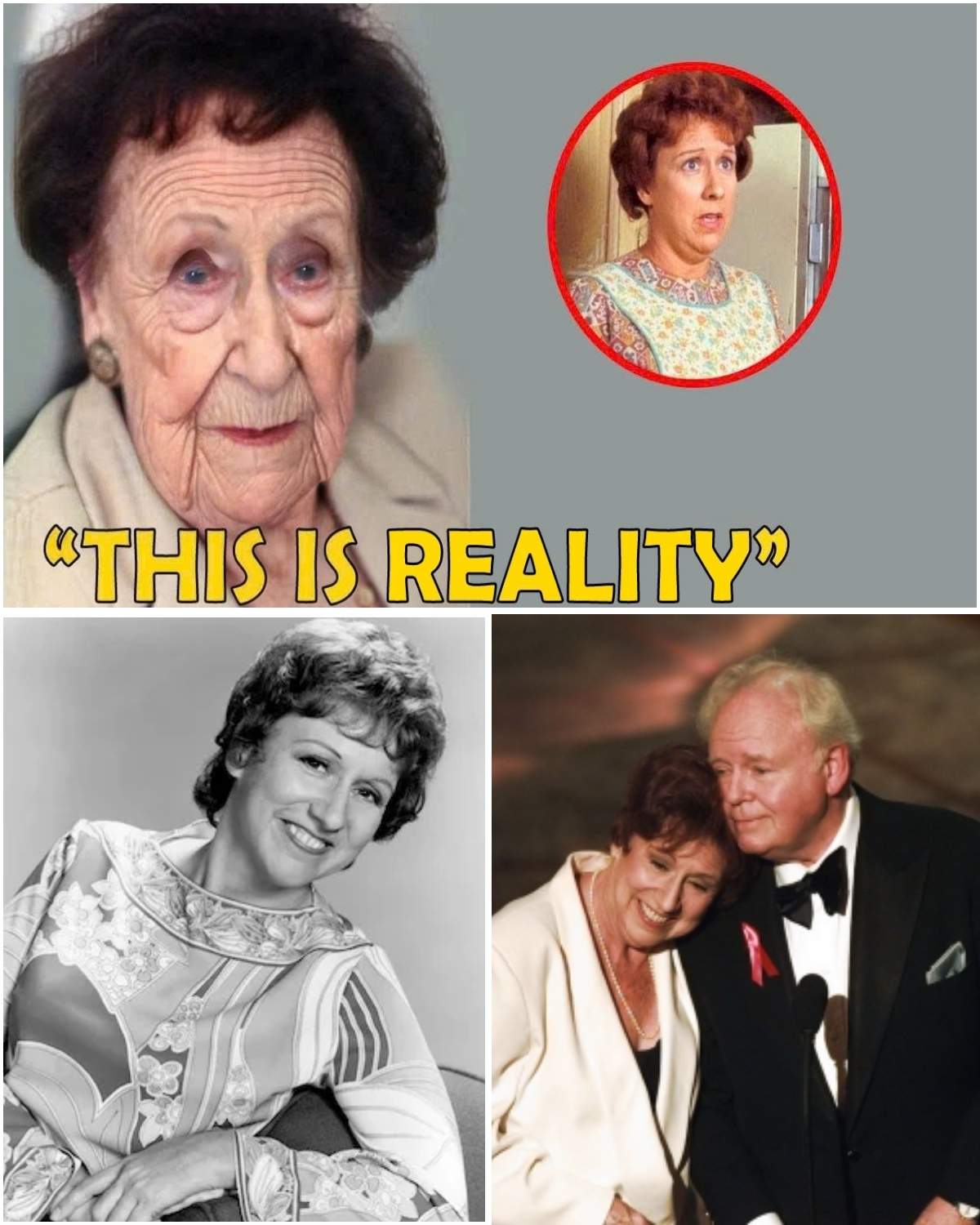
For millions of Americans, Jean Stapleton will always be remembered as Edith Bunker, the warm-hearted, soft-spoken wife who became the emotional center of All in the Family. Her portrayal was so convincing that audiences often forgot they were watching an actress. Yet behind one of television’s most beloved characters was a woman who spent much of her career fighting a different battle—the struggle to be seen as more than Edith Bunker.

The Role That Changed Everything
Long before All in the Family made her a television icon, Jean Stapleton had already built an impressive career on Broadway. She appeared in acclaimed productions such as Damn Yankees, Funny Girl, and Bells Are Ringing, earning a reputation as a skilled and versatile performer. When she accepted the role of Edith Bunker in 1971, she viewed it as another acting challenge rather than a defining career moment.
What followed exceeded anyone’s expectations. All in the Family became a cultural phenomenon, tackling issues such as racism, gender equality, politics, and generational conflict in ways television had rarely attempted before. At the heart of it all was Edith Bunker, whose kindness and quiet wisdom often exposed the flaws in Archie Bunker’s worldview more effectively than any direct confrontation could.
When a Character Becomes More Famous Than the Actor
Stapleton’s performance was far more sophisticated than many viewers realized. Edith’s distinctive voice, mannerisms, pauses, and misunderstandings were not natural traits of the actress. They were carefully crafted choices designed to create a believable and deeply human character.
Ironically, the success of that performance created a problem.
As Edith became more beloved, audiences increasingly struggled to separate the character from the actress who portrayed her. Fans approached Stapleton in public as though she actually was Edith. Many assumed her real personality mirrored the character’s gentle and somewhat naïve nature.
For Stapleton, this misunderstanding became increasingly frustrating. She believed actors should constantly evolve and explore new roles. Yet the more successful Edith became, the more difficult it was for audiences—and even Hollywood itself—to see her as anything else.
The Difficult Decision to Walk Away
By the late 1970s, All in the Family remained one of television’s highest-rated programs. Most actors would have been thrilled to continue playing such an iconic role indefinitely.
Stapleton felt differently.
She believed she had already explored everything the character had to offer. Continuing indefinitely risked turning meaningful storytelling into repetition. Rather than stay for comfort or financial security, she made the difficult decision to leave while the character still retained its power.
Her reasoning was simple: success should never become a trap.
Stapleton often compared remaining too long in one role to a musician playing the same notes night after night until the performance loses its life and spontaneity. She feared becoming creatively stagnant and refused to allow Edith Bunker—even a beloved Edith Bunker—to define the limits of her artistic future.
Norman Lear’s Emotional Struggle
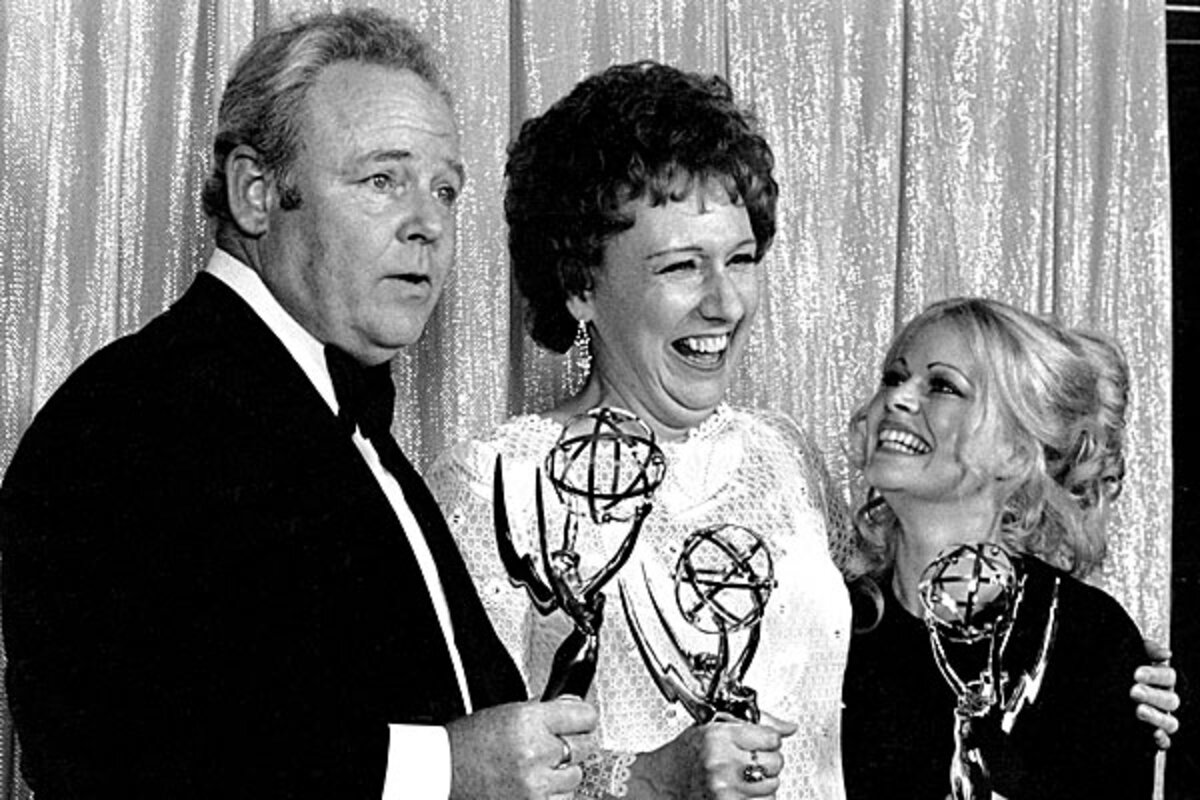
While Stapleton viewed her departure as a professional decision, creator Norman Lear saw it very differently.
To Lear, Edith Bunker was more than a fictional character. She represented the moral center of the entire series. Her compassion softened the show’s conflicts and allowed audiences to engage with difficult social issues through empathy rather than hostility.
When Stapleton informed Lear of her decision, their conversation revealed just how differently they viewed Edith. Stapleton reminded him that Edith was fictional—a role that could eventually end. Lear reportedly struggled with that perspective, admitting that the character felt real to him.
The exchange highlighted something remarkable about All in the Family: the characters had become emotionally real not only to viewers but also to the people who created them.
Saying Goodbye to Edith Bunker
Eventually, the producers decided Edith Bunker would die off-screen. Rather than dramatize the event, the show focused on Archie Bunker coping with her absence.
One of television’s most memorable moments followed. Archie returned home after Edith’s funeral and noticed a single slipper she had left behind. The scene was quiet, restrained, and devastatingly effective. Carol O’Connor delivered a heartbreaking performance that revealed a vulnerability rarely seen in Archie before.
The episode resonated deeply with viewers because it acknowledged what Edith truly represented—not just within the show, but in their own lives.
Her absence became part of the story itself.
When Audiences Couldn’t Separate Fiction from Reality
The morning after Edith’s death episode aired, Stapleton experienced a moment that perfectly illustrated the challenge she had faced for years.
While staying in a hotel during a theater tour, a maid entered her room and reacted with genuine shock. Having watched the episode, the woman believed Edith Bunker had truly died. Seeing Stapleton standing before her created a moment of sincere confusion.
Stapleton later recalled the story with humor, but it reinforced an important truth: Edith Bunker had become real to millions of people.
That level of emotional investment is rare in television history. Yet it also explained why Stapleton spent so much of her career trying to remind audiences that she was more than the character they loved.
The Woman Behind the Character
Off-screen, Jean Stapleton was considerably different from Edith Bunker.
She was articulate, politically engaged, and outspoken about issues she believed mattered. She publicly supported the Equal Rights Amendment, advocated for women’s rights, and participated in cultural exchange programs designed to connect artists from different countries.
While Edith often addressed conflict through patience and quiet persuasion, Stapleton was more direct in expressing her beliefs. She viewed public visibility as a responsibility and believed actors should engage with the world beyond entertainment.
This commitment to social causes revealed a side of her that many viewers never fully saw because they remained focused on Edith.

Refusing to Be Trapped by Success
After leaving All in the Family, Stapleton continued building a diverse body of work. She took on roles that challenged audience expectations, portraying strong authority figures, historical personalities, and dramatically different characters.
She returned frequently to theater, where audiences were often more willing to accept transformation. One of her most acclaimed later performances was her one-woman portrayal of Eleanor Roosevelt, a role that reflected both her artistic abilities and her personal values.
Even as Edith Bunker remained the role most people remembered, Stapleton never stopped proving that her talent extended far beyond a single character.
A Legacy Larger Than One Role
When Jean Stapleton passed away at age 90, tributes poured in from across the entertainment industry. Colleagues praised not only her talent but also her intelligence, integrity, and humanity.
In the end, the truth she spent years defending became impossible to ignore.
Yes, she gave the world Edith Bunker, one of television’s most unforgettable characters. But she was also a Broadway veteran, a committed advocate, a thoughtful artist, and a woman who refused to allow even her greatest success to define her entirely.
Perhaps that is the most important lesson of Jean Stapleton’s remarkable career.
The world may have first fallen in love with Edith Bunker, but Jean Stapleton spent a lifetime reminding everyone there was much more to her story than that.