Bronze Age Child’s Skull Reveals the Oldest Known Surgery in Central Asia
A 4,000-Year-Old Discovery in Uzbekistan Is Rewriting the History of Ancient Medicine
For thousands of years, humans have searched for ways to heal injuries, relieve pain, and understand the mysteries of the body. Long before modern hospitals, anesthesia, or surgical instruments, ancient communities experimented with medical treatments that often blended practical knowledge with spiritual beliefs.
Now, an extraordinary discovery from Uzbekistan is shedding new light on just how advanced some of those early practices may have been.
Archaeologists excavating a Bronze Age cemetery in southern Uzbekistan have uncovered the skull of a child who underwent a complex cranial procedure known as trepanation roughly 4,000 years ago. The finding represents the oldest documented evidence of surgery in Central Asia and one of the oldest known examples of cranial surgery anywhere in Asia.
The remarkable discovery raises profound questions. Why was such a risky operation performed on a five-year-old child? Who possessed the knowledge required to carry it out? And what does this reveal about the sophisticated society that once flourished in the heart of ancient Central Asia?
The answers may fundamentally reshape our understanding of medicine during the Bronze Age.
A Surprising Discovery Beneath the Sands
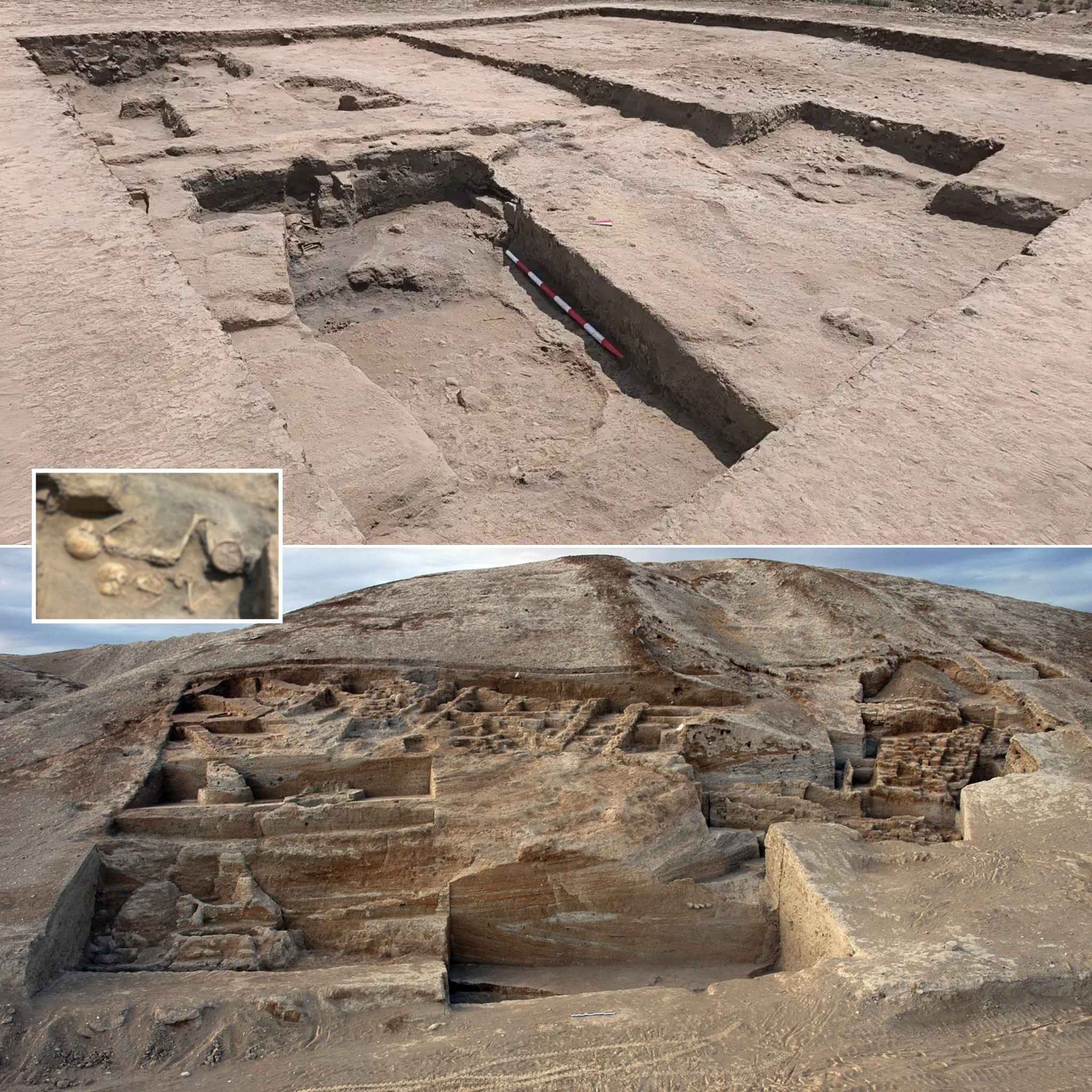
The discovery was made during archaeological excavations at Djarkutan, a major Bronze Age settlement located in the Surkhandarya region of southern Uzbekistan near the modern border with Afghanistan.
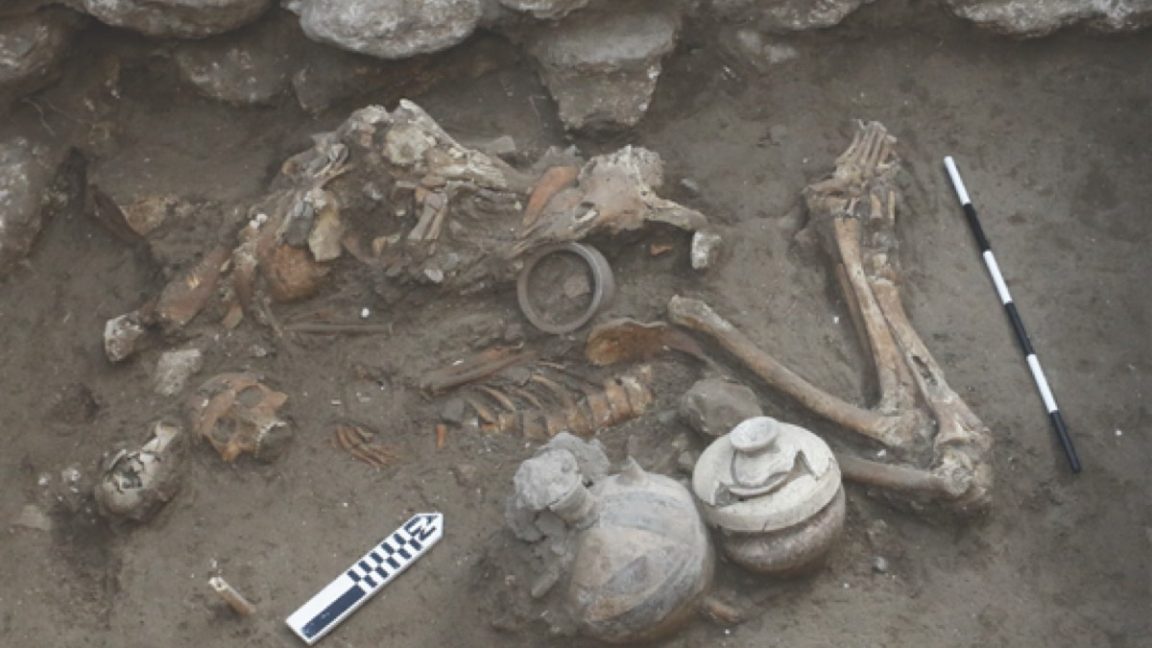
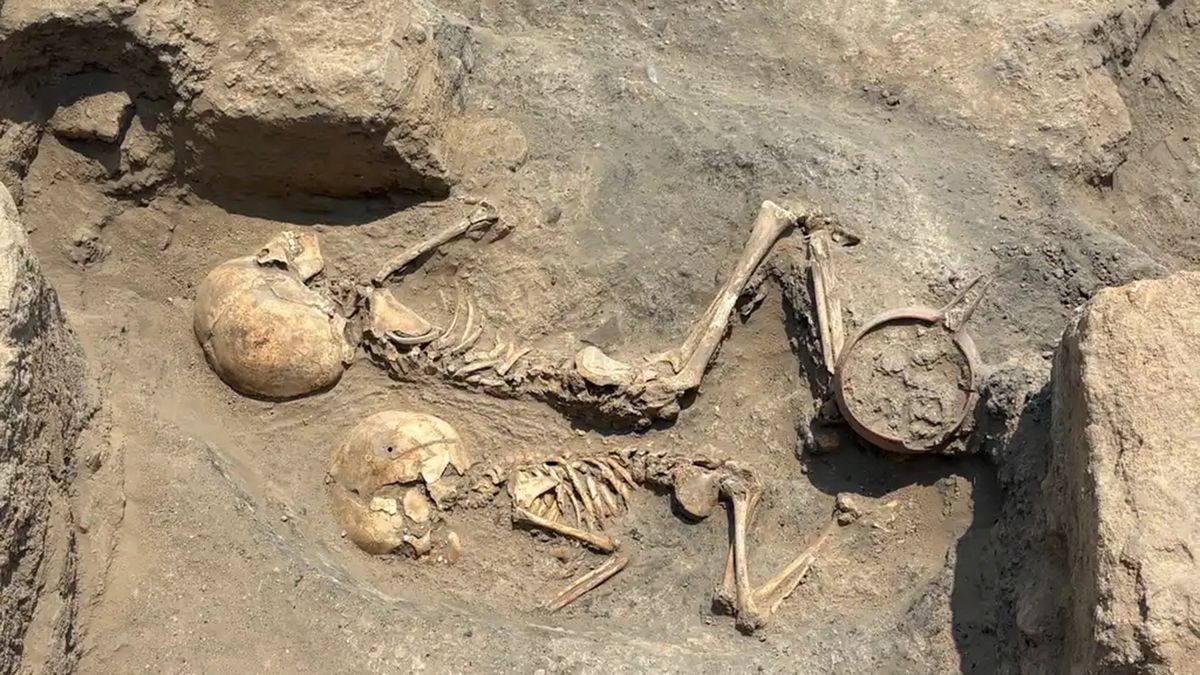
In April, researchers uncovered a grave containing the remains of two children. One child appears to have died at approximately three years of age, while the second was around five years old at the time of death.
At first glance, the burial seemed typical of many others found at Bronze Age archaeological sites.
Closer examination revealed something extraordinary.
The skull of the older child displayed unmistakable evidence of trepanation — a surgical procedure involving the deliberate cutting, scraping, or drilling of an opening into the skull.
Researchers reported that the operation was likely carried out using tools made from stone or bone.
The discovery immediately attracted international attention because of both its age and its rarity.
Trepanation is known from many ancient societies, but evidence from Central Asia remains extremely scarce. Finding such a procedure performed on a young child is even more unusual.
According to archaeologists, this is currently the oldest known example of surgery in Central Asia.
What Is Trepanation?
Trepanation is one of humanity’s oldest known surgical practices.
The procedure involves creating an opening in the skull by removing a portion of bone. Archaeological evidence shows that humans have performed trepanation for thousands of years across many different cultures.
Examples have been found in Europe, Africa, Asia, and the Americas.
In some cases, patients survived the procedure, as indicated by bone healing around the surgical opening. In others, death occurred during or shortly after the operation.
Ancient practitioners used various methods, including scraping away bone, cutting geometric sections, or drilling multiple small holes before removing part of the skull.
To modern observers, the idea of prehistoric brain surgery may seem shocking.
Yet trepanation appears to have been surprisingly widespread.
Researchers believe the procedure may have been performed for several reasons:
- Treatment of head injuries
- Relief of pressure inside the skull
- Attempts to cure epilepsy
- Treatment of severe headaches or migraines
- Management of behavioral disorders
- Ritual or spiritual practices
In many ancient societies, the distinction between medicine and religion was often blurred.
Illness might be viewed as both a physical condition and a spiritual problem.
As a result, trepanation may have served practical, ceremonial, or symbolic purposes—or perhaps all three simultaneously.
The Mystery of the Young Patient
One of the most puzzling aspects of the discovery is the age of the patient.
The child was only about five years old.
Performing trepanation on an adult would have carried enormous risks. Performing it on a young child would have been even more dangerous.
The procedure required precision, anatomical knowledge, and a careful understanding of how to avoid fatal damage to the brain.
This raises several intriguing possibilities.
The child may have suffered a severe head injury.
A fall, accident, or blow to the head could have caused swelling inside the skull. Ancient practitioners may have recognized that relieving pressure improved survival chances.
Another possibility is that the child suffered from seizures, chronic headaches, or neurological symptoms that the community attempted to treat through surgery.
A third possibility is that the operation was performed for ritual reasons.
Many ancient cultures believed physical ailments were connected to supernatural forces. Creating an opening in the skull may have been viewed as a way to release harmful spirits or restore balance.
At present, researchers cannot determine exactly why the procedure was performed.
The skull preserves evidence of the surgery itself but does not yet provide a clear explanation for its purpose.
The World of Ancient Oxus
To understand the significance of the discovery, it is important to understand the civilization in which it occurred.
The grave dates to the late third millennium B.C., a period when Central Asia was home to one of the ancient world’s most sophisticated yet least-known civilizations.
Today, archaeologists refer to this culture as the Oxus Civilization or the Bactria-Margiana Archaeological Complex (BMAC).
The civilization flourished between approximately 2500 and 1500 B.C.
Its territory stretched across parts of modern-day Uzbekistan, Turkmenistan, Tajikistan, Afghanistan, and northern Iran.
Unlike nomadic societies often associated with Central Asia, the Oxus civilization built large urban centers supported by advanced agriculture.
These communities developed:
- Complex irrigation systems
- Monumental architecture
- Specialized crafts
- Long-distance trade networks
- Rich religious traditions
Archaeologists have uncovered elaborate temples, palaces, workshops, and cemeteries associated with the civilization.
The people of Oxus traded with distant regions, including Mesopotamia and the Indus Valley.
Their settlements served as important hubs connecting East and West long before the Silk Road emerged.
Djarkutan was among the most important of these urban centers.
The discovery of surgical evidence there suggests that Oxus society may have possessed medical knowledge more advanced than previously believed.
A Civilization of Surprises
For decades, the Oxus civilization remained relatively unknown outside academic circles.
Unlike ancient Egypt or Mesopotamia, it left behind no famous pyramids, monumental inscriptions, or extensive written records.
As a result, many aspects of its culture remain mysterious.
Recent excavations, however, have begun revealing a society far more complex than once imagined.
Archaeologists have uncovered evidence of:
- Sophisticated urban planning
- Large ceremonial complexes
- Specialized metalworking industries
- Extensive trade connections
- Distinctive artistic traditions
The trepanation discovery adds another remarkable dimension.
It suggests that some members of society possessed detailed knowledge of human anatomy and surgical techniques.
Such expertise would likely have required years of observation and experience.
Whether these individuals were healers, priests, physicians, or some combination of all three remains unknown.
Surgery Before Modern Medicine
Modern surgery depends on advanced technology, sterilization, anesthesia, and detailed scientific understanding.
Bronze Age practitioners had none of these advantages.
Yet archaeological evidence demonstrates that ancient surgeons were often surprisingly skilled.
Trepanation is particularly remarkable because it requires careful control.
Removing too little bone would accomplish nothing.
Removing too much could be fatal.
Damaging underlying brain tissue could result in immediate death.
The survival of many ancient trepanation patients suggests practitioners learned techniques that minimized risk.
Researchers studying ancient skulls have found evidence of healing around surgical openings, indicating that patients sometimes lived for months, years, or even decades afterward.
Although the Djarkutan child ultimately died, the operation itself demonstrates a significant level of medical sophistication.
It represents a deliberate intervention rather than a random injury.
The people who performed it understood that the skull could be opened intentionally for therapeutic or ritual purposes.
That knowledge alone is extraordinary.

Medicine and Spirituality
One challenge facing researchers is understanding how ancient people viewed illness.
Modern medicine typically separates physical diseases from spiritual beliefs.
Bronze Age societies often did not.
Many ancient cultures interpreted sickness through both practical and supernatural frameworks.
A headache might be caused by an injury, a spirit, or both.
A seizure might be viewed as a medical condition and a spiritual event simultaneously.
As a result, trepanation may have served multiple purposes.
An operation intended to relieve pressure from an injury could also be accompanied by rituals designed to appease supernatural forces.
Researchers emphasize that it is difficult to distinguish medical treatment from ceremonial practice when studying prehistoric societies.
The two were often deeply intertwined.
This makes the Djarkutan discovery particularly fascinating.
It provides evidence of advanced intervention while simultaneously highlighting how different ancient concepts of healing may have been.
Who Performed the Surgery?
One of the most intriguing questions concerns the identity of the surgeon.
The operation required knowledge and skill.
Someone within the community had learned how to perform trepanation.
But who?
Researchers have proposed several possibilities.
The practitioner may have been a specialized healer whose expertise was passed down through generations.
Alternatively, the surgeon could have been a religious figure combining spiritual authority with medical responsibilities.
In many ancient societies, healers and priests occupied overlapping roles.
Another possibility is that multiple individuals participated.
One person may have conducted rituals while another carried out the physical procedure.
Without written records, certainty remains impossible.
Nevertheless, the operation demonstrates that specialized knowledge existed within the community.
That alone challenges assumptions about prehistoric medicine in Central Asia.
Ancient Knowledge Networks
The discovery also raises broader questions about the transmission of knowledge.
Trepanation has been documented in many regions of the ancient world.
Did communities independently develop the practice?
Or did knowledge spread through long-distance cultural contacts?
The Oxus civilization occupied a strategic location between major civilizations.
Trade routes connected Central Asia with Mesopotamia, the Iranian Plateau, and South Asia.
Ideas could travel alongside goods.
It is possible that surgical techniques spread through these networks.
Alternatively, communities facing similar medical challenges may have independently discovered comparable solutions.
Future discoveries may help researchers determine whether the Djarkutan procedure reflects local innovation or participation in a wider tradition of ancient medicine.
The Decline of a Great Civilization
Ironically, the civilization that produced this remarkable evidence eventually disappeared.
The decline of the Oxus civilization remains a subject of ongoing research.
Many scholars believe climate change played a major role.
Over time, important rivers began to shift course or dry up.
Agricultural productivity declined.
Settlements became increasingly difficult to sustain.
As environmental conditions worsened, populations dispersed.
Urban centers were gradually abandoned.
By around 1500 B.C., the civilization had largely vanished.
Its cities fell into ruin.
Its traditions faded.
Its achievements were buried beneath centuries of sand and sediment.
Only now are archaeologists beginning to rediscover what was lost.
New Questions, New Mysteries
Far from solving ancient mysteries, the discovery has created new ones.
Researchers now hope to determine:
- Whether the child survived the operation for any length of time
- What medical condition prompted the procedure
- Which tools were used
- Who performed the surgery
- Whether similar operations were common in the region
Further analysis of the skeleton may reveal clues about the child’s health and cause of death.
Additional excavations at Djarkutan may uncover more evidence of medical practices within the Oxus civilization.
Each discovery has the potential to transform our understanding of Bronze Age life.
Rewriting the History of Medicine
For centuries, ancient Central Asia has occupied a relatively small place in discussions of medical history.
Most attention has focused on Egypt, Greece, Rome, India, and China.
The Djarkutan discovery demonstrates that Central Asia deserves a place in that story as well.
Four thousand years ago, in a thriving city near the banks of ancient rivers, someone attempted a delicate operation on a young child.
Whether motivated by compassion, desperation, faith, or scientific observation, that act reflects a sophisticated understanding of healing.
The child did not leave behind written records.
The surgeon’s name is lost forever.
Yet the scar preserved in bone has survived across four millennia.
It offers a rare glimpse into a world where medicine, spirituality, and survival were inseparably connected.
As archaeologists continue their investigations, this small skull from Uzbekistan may prove to be one of the most important discoveries yet made about the origins of surgery in Asia.
And it serves as a powerful reminder that humanity’s quest to heal the sick and understand the body stretches far deeper into the past than many people realize.