The Final Words of an Ethiopian Monk About Jesus Christ Are Raising Questions
Ancient manuscripts, hidden monasteries, and a dying monk’s final testimony have reignited debate about one of Christianity’s oldest traditions
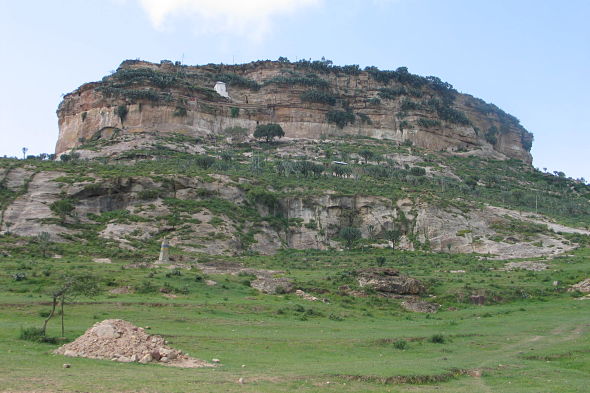
High atop a sheer cliff in northern Ethiopia stands one of the world’s most inaccessible monasteries.
For centuries, monks have climbed to it using nothing more than a leather rope hanging down a vertical rock face. Isolated from the modern world, the monastery has become a symbol of Ethiopia’s extraordinary religious heritage — a place where ancient traditions, sacred manuscripts, and centuries of devotion have survived largely untouched.
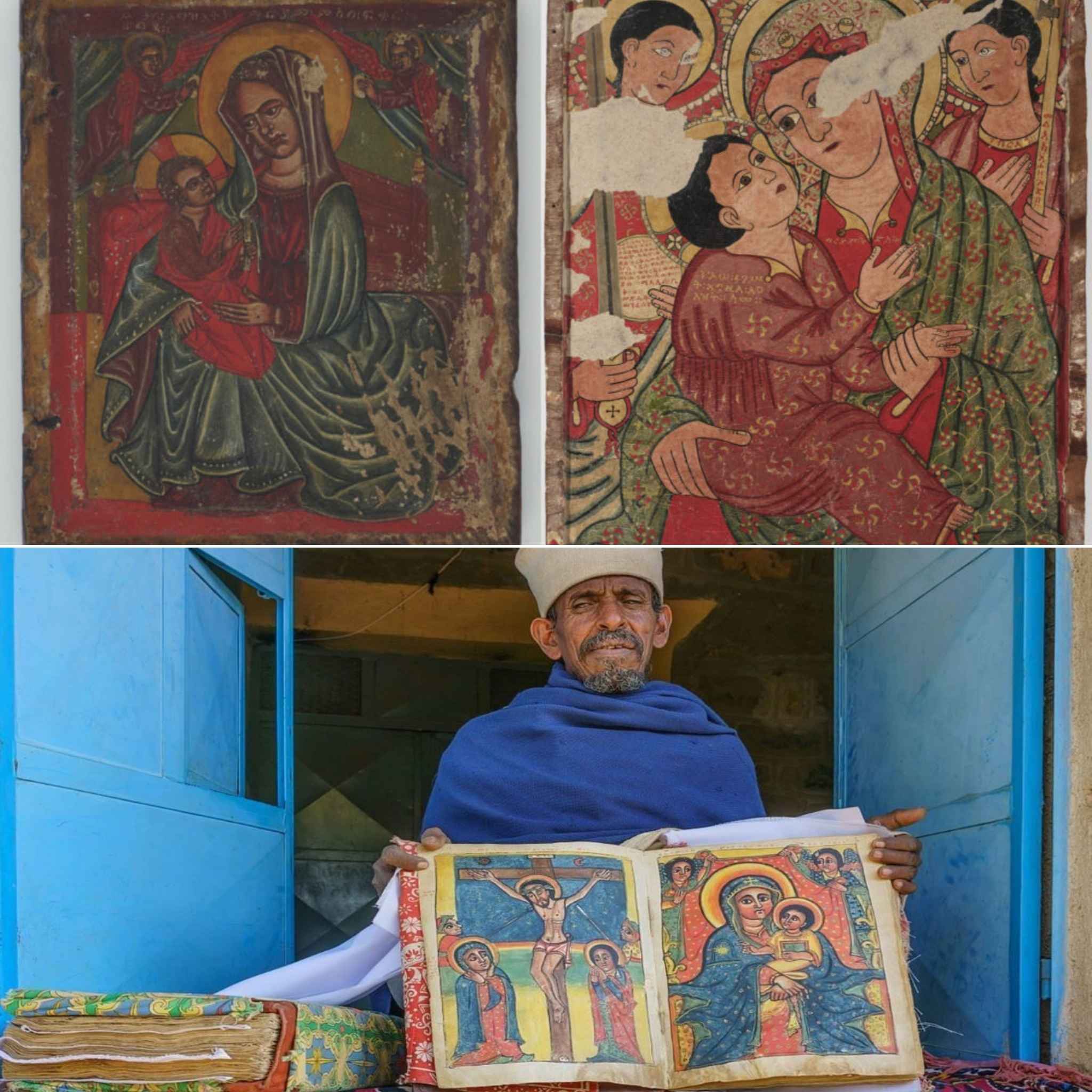
According to a story that has recently circulated online, one elderly monk spent six decades guarding a mysterious manuscript said to contain forgotten teachings of Jesus Christ. On the final night of his life, the story claims, he broke a lifetime of silence and revealed teachings that challenge some of the assumptions of Western Christianity.
The account has captivated millions of viewers.
It speaks of lost scriptures, hidden knowledge, secret teachings preserved in Ethiopia, and warnings allegedly delivered by the risen Christ himself.
But how much of the story is supported by historical evidence? And what role does Ethiopia actually play in the history of Christianity?
The answers reveal a fascinating reality that is every bit as remarkable as the legend itself.
Christianity’s Ancient Stronghold
Long before Christianity spread across much of Europe, it had already established deep roots in Ethiopia.
The Kingdom of Aksum, centered in what is now northern Ethiopia and Eritrea, officially adopted Christianity during the fourth century A.D., making it one of the earliest Christian nations in history.
While much of Europe was still undergoing political upheaval, Ethiopian monasteries were preserving biblical texts, developing theological traditions, and producing religious manuscripts of extraordinary beauty.
The Ethiopian Orthodox Tewahedo Church eventually became one of the oldest continuous Christian institutions in the world.
Unlike many Western churches, it developed in relative isolation.
This separation allowed Ethiopia to preserve traditions, texts, and practices that sometimes differed from those accepted elsewhere.
Today, that unique history continues to attract scholars interested in the development of early Christianity.

The Manuscripts That Survived the Centuries
At the center of the viral story is a claim that Ethiopia preserved books and traditions lost to the rest of the Christian world.
This claim contains an element of truth.
The Ethiopian Orthodox biblical canon is indeed larger than the Protestant Bible used by most Western Christians.
While Protestant traditions generally recognize 66 books, the Ethiopian Orthodox canon includes additional writings that are not part of most Western Bibles.
Among them is the Book of Enoch, an ancient Jewish text that was highly influential during the Second Temple period.
Fragments of Enoch were later discovered among the Dead Sea Scrolls, confirming its importance within some ancient religious communities.
Although Enoch was excluded from most later Christian biblical canons, Ethiopia preserved the text in full.
This has made Ethiopian manuscript collections enormously valuable to historians studying early Judaism and Christianity.
However, preserving ancient texts is not the same as preserving secret teachings.
Most scholars view Ethiopia’s expanded canon as evidence of a unique historical tradition rather than proof of hidden doctrines intentionally suppressed elsewhere.
The Mystery of the Book of the Covenant
One of the central claims in the monk story concerns a text known as the Mashafa Kidan, often translated as the “Book of the Covenant.”
Unlike the Book of Enoch, this work is not widely known outside Ethiopian Christianity.
The text exists within Ethiopian religious tradition and contains teachings, liturgical instructions, and theological material important to the church.
Yet many of the dramatic statements attributed to the manuscript in modern internet videos cannot be verified in surviving scholarly translations.
Researchers who specialize in Ethiopian Christianity note that ancient manuscripts often become surrounded by legends over time.
Stories grow. Interpretations evolve.
In some cases, modern authors blend authentic traditions with speculation, creating narratives that are far more dramatic than the original texts themselves.
That does not diminish the importance of the manuscripts.
Rather, it highlights the challenge of separating historical evidence from later storytelling.
Forty Days of Silence
One reason such stories resonate is because the New Testament provides relatively little detail about the period between Jesus’ resurrection and ascension.
According to the Gospels and the Book of Acts, Jesus appeared to his followers over a period of approximately forty days.
The texts describe several encounters but do not provide a comprehensive record of everything that was said during that time.
This gap has fascinated believers for centuries.
Ancient Christian communities produced numerous writings attempting to fill it.
Some became part of accepted tradition.
Others were classified as apocryphal texts.
Still others disappeared entirely.
As a result, claims that lost teachings may exist somewhere continue to attract attention.
For historians, however, extraordinary claims require extraordinary evidence.
To date, no manuscript discovered in Ethiopia has fundamentally rewritten the accepted historical understanding of Jesus’ life and teachings.
The Temple of the Heart
One of the most striking themes in the story is the idea that true spirituality comes from within rather than from institutions.
The teaching is summarized through a phrase attributed to Christ:
“Build the temple of the heart.”
Whether or not this exact wording appears in any ancient manuscript, the concept itself is hardly foreign to Christianity.
The New Testament repeatedly emphasizes inward transformation over outward appearances.
Jesus criticized religious hypocrisy and warned against empty ritual divorced from genuine faith.
The Apostle Paul described believers themselves as temples of God.
Mystical traditions within Christianity have long taught that the divine can be encountered internally through prayer, contemplation, and spiritual discipline.
In that sense, the story reflects ideas that have existed within Christianity for centuries.
What makes the narrative powerful is not necessarily its originality, but the dramatic context in which it is presented.
Ethiopia and the Ark of the Covenant
No discussion of Ethiopian religious traditions would be complete without mentioning the Ark of the Covenant.
Perhaps no claim associated with Ethiopia is more famous.
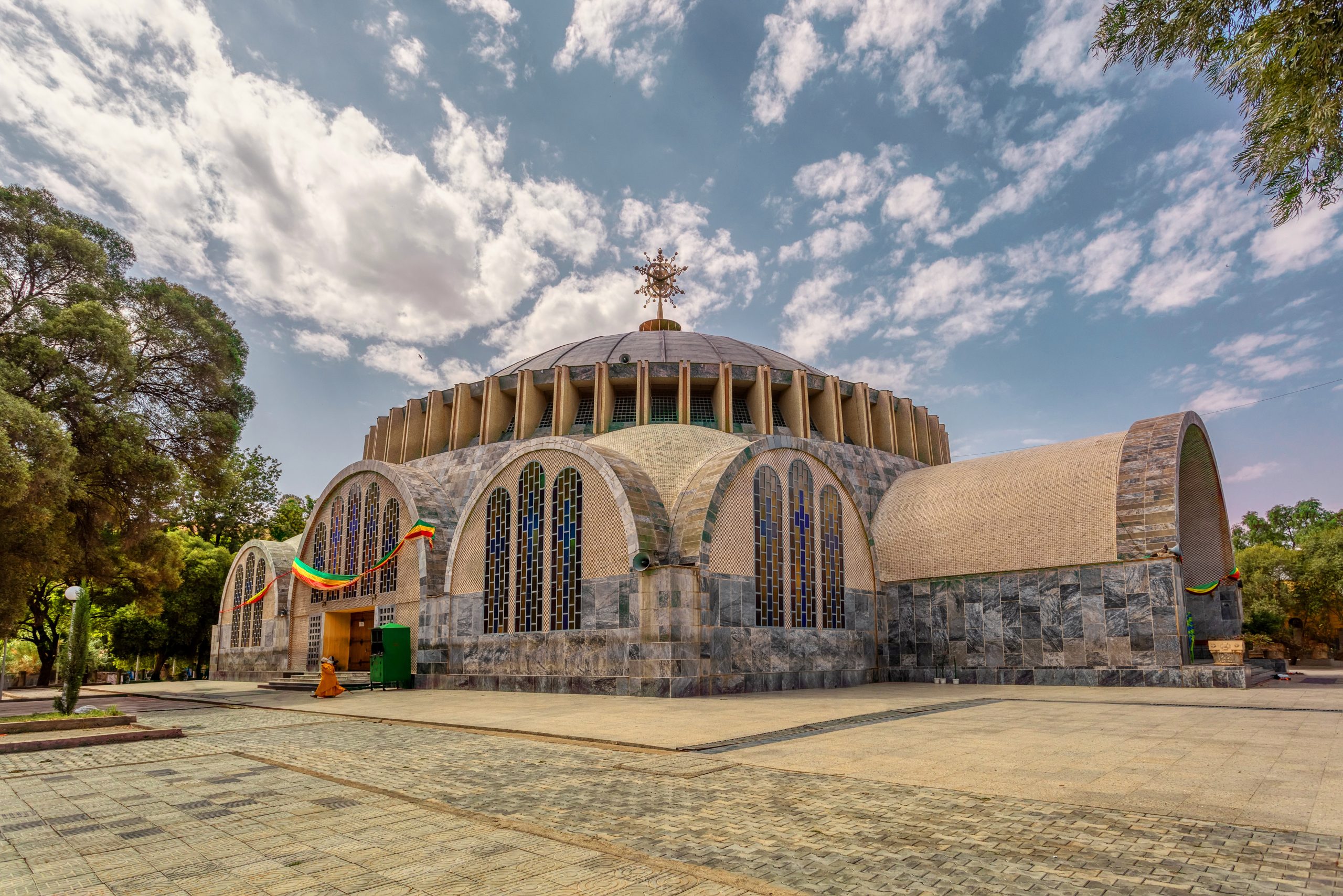
According to Ethiopian tradition, the Ark now resides in the Church of Our Lady Mary of Zion in Aksum.
The belief is rooted in the Kebra Nagast, a medieval Ethiopian text that recounts the story of the Queen of Sheba and her son Menelik I.
According to the tradition, Menelik eventually brought the Ark from Jerusalem to Ethiopia.
The claim has fascinated explorers, historians, and religious believers for generations.
Yet there is no publicly available evidence proving that the biblical Ark is in Ethiopia.
The object remains inaccessible to researchers.
Only a designated guardian monk is permitted to see it.
As a result, the question remains unresolved.
For believers, the tradition is an essential part of Ethiopia’s sacred history.
For historians, it remains an intriguing but unverified claim.
The Churches Carved From Stone
The viral account also highlights Ethiopia’s remarkable rock-hewn churches.
Unlike many legendary elements of the story, these structures are undeniably real.
The churches of Lalibela are among the most extraordinary religious monuments on Earth.
Rather than being built upward from stone blocks, they were carved downward into solid volcanic rock.
Entire sanctuaries, columns, windows, passageways, and courtyards were excavated from the living stone itself.
Constructed during the medieval period, the churches remain active places of worship today.
Their creation required astonishing engineering skill.
Although legends attribute parts of the work to angels, historians generally explain the achievement through human labor, planning, and craftsmanship accumulated over generations.
Even so, the churches continue to inspire wonder.
They stand as tangible evidence of Ethiopia’s rich religious and architectural heritage.
Why Ethiopia Fascinates Scholars
The true significance of Ethiopia lies not in hidden conspiracies or secret revelations, but in its unique historical position.
For centuries, Ethiopian Christianity developed along its own path.
The church preserved ancient languages, maintained distinctive traditions, and safeguarded manuscripts that disappeared elsewhere.
Some of the oldest surviving Christian manuscripts in existence have been found in Ethiopia.
The famous Garima Gospels, for example, are among the earliest illustrated Christian manuscripts known.
Their survival provides invaluable insight into the development of early Christian art and biblical transmission.
Because of this, scholars increasingly recognize Ethiopia as one of the world’s most important repositories of ancient Christian history.
The Power of the Story
Whether the dying monk described in the viral narrative actually existed as portrayed is difficult to determine.
Many details cannot be independently verified.
The manuscript’s alleged revelations remain unsupported by mainstream historical research.
Yet the story continues to resonate.
Why?
Because it speaks to concerns that transcend religion.
It asks whether institutions sometimes lose sight of their founding principles.
It questions the relationship between power and spirituality.
It challenges readers to look inward rather than relying solely on external authority.
And perhaps most importantly, it reminds audiences that history is far more complex than many people realize.
A Legacy Still Being Explored
The real story of Ethiopian Christianity is not one of secret conspiracies hidden for two thousand years.
It is something arguably more remarkable.
It is the story of an ancient Christian civilization that preserved texts, traditions, and cultural treasures through centuries of political upheaval, isolation, and change.
Its monasteries safeguarded manuscripts when many others were lost.
Its scholars maintained theological traditions stretching back to the earliest centuries of Christianity.
And its churches continue to serve as living connections to a distant past.
Whether one views the tale of the dying monk as history, legend, or spiritual allegory, it highlights a truth historians readily acknowledge:
Some of Christianity’s oldest surviving traditions are found not in Rome, Constantinople, or Jerusalem, but in the highlands of Ethiopia.
And despite centuries of study, many of their secrets have yet to be fully understood.
As researchers continue to study Ethiopia’s ancient manuscripts, archaeological sites, and religious traditions, new discoveries will undoubtedly emerge. Some may clarify old mysteries. Others may raise entirely new questions.
But one thing is certain: Ethiopia remains one of the most fascinating chapters in the history of Christianity, a place where faith, history, and legend continue to intersect in ways that captivate believers and scholars alike.