Ancient Human Relatives Interbred With an Unknown Species, Genetic Study Suggests
DNA recovered from Denisovan fossils reveals traces of a mysterious hominin lineage that has never been identified in the archaeological record, offering a glimpse into a far more complex human past than scientists once imagined.
For much of the twentieth century, the story of human evolution seemed relatively straightforward.
Researchers believed that a succession of human ancestors gradually evolved over time, with only a few branches appearing before eventually disappearing. Modern humans, Neanderthals, and perhaps a handful of other species occupied the family tree.
In recent decades, however, advances in ancient DNA analysis have transformed that picture.
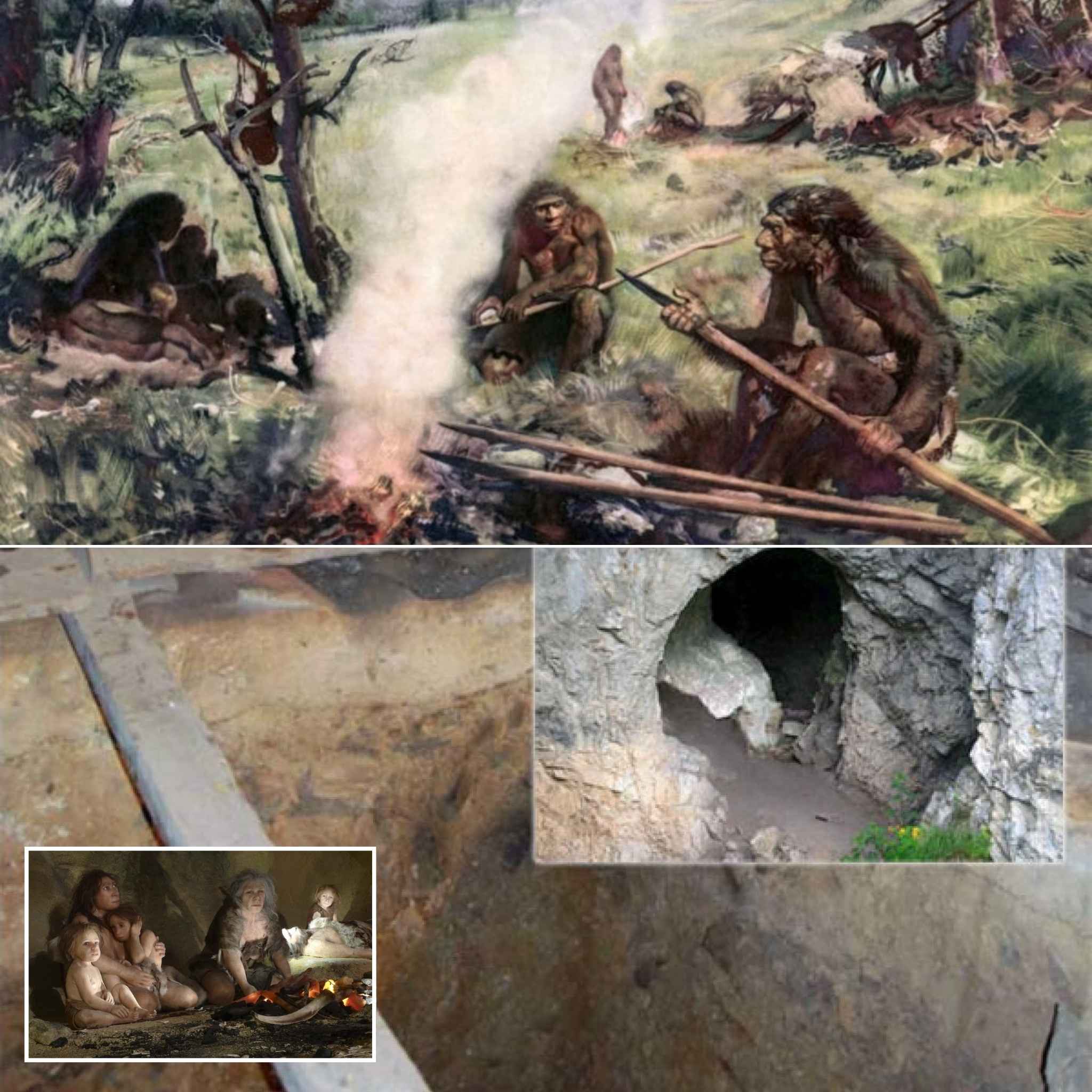
Scientists now know that the ancient world was populated by multiple human groups living simultaneously across Africa, Europe, and Asia. These populations did not exist in complete isolation. Instead, they frequently encountered one another, exchanged genes, and sometimes produced offspring together.
The latest evidence suggests that this story may be even more complicated than previously thought.
A genetic study presented at a meeting of the Royal Society in London revealed that Denisovans—an extinct group of ancient humans known primarily through DNA evidence—appear to have inherited part of their genome from an entirely unknown hominin population.
The discovery points to the existence of a mysterious human relative that has not yet been identified through fossils and may represent a previously unknown branch of the human family tree.
Rather than a simple evolutionary narrative, researchers increasingly describe ancient Eurasia as a landscape occupied by multiple human populations interacting over hundreds of thousands of years.
The Discovery of the Denisovans
The story begins in Siberia.
In 2008, archaeologists excavating Denisova Cave in the Altai Mountains uncovered a small finger bone and several teeth belonging to an ancient human relative.
At first glance, the fossils appeared unremarkable.
Unlike complete skeletons, they revealed little about the individual’s appearance.
Yet advances in genetic technology allowed researchers to extract and sequence DNA from the remains.
The results stunned the scientific community.
The fossils belonged neither to modern humans nor to Neanderthals.
Instead, they represented an entirely new group of ancient humans.
Researchers named them Denisovans, after the cave where the remains were found.
Although only a handful of fossils have been discovered, scientists have successfully reconstructed much of the Denisovan genome.
This achievement has provided an unprecedented opportunity to study a population that left few physical traces but a substantial genetic legacy.
A Hidden Genetic Signature
As researchers examined the Denisovan genome in greater detail, they noticed something unusual.
Part of the DNA appeared significantly different from both modern humans and Neanderthals.
The genetic sequence suggested that Denisovans had inherited genes from another ancient population.
The problem was that no known human species matched the genetic pattern.
The mystery DNA did not come from modern humans.
It did not come from Neanderthals.
And it did not appear to belong to Denisovans themselves.
Instead, it pointed toward a previously unidentified hominin population.
In other words, Denisovans may have interbred with a species that scientists have never formally recognized.
The implications are profound.
Rather than a world occupied by a few human species, ancient Eurasia may have been home to numerous populations interacting in complex ways.
A Crowded Human Landscape
For decades, popular depictions of prehistory often portrayed a single dominant human species replacing another in a straightforward sequence.
Modern evidence paints a very different picture.
By at least 50,000 years ago, several human groups were living across Eurasia.
These included:
- Modern humans (Homo sapiens)
- Neanderthals
- Denisovans
- Potentially other unidentified populations
Genetic evidence already demonstrates that modern humans interbred with Neanderthals.
Many people living today still carry small percentages of Neanderthal DNA.
Similarly, populations in parts of Asia and Oceania possess Denisovan ancestry.
Now researchers believe Denisovans themselves may have inherited genes from an even older lineage.
The result resembles a network rather than a branching tree.
Instead of separate species evolving independently, ancient humans repeatedly interacted and exchanged genetic material.
Evolutionary geneticist Mark Thomas described this scenario as resembling a “Lord of the Rings-type world” populated by multiple hominin groups.

Who Were the Mystery Hominins?
The biggest question remains unanswered.
Who exactly were these unknown humans?
Researchers have proposed several possibilities.
One hypothesis suggests the mystery population descended from Homo heidelbergensis, an ancient human species that lived in Africa and Eurasia hundreds of thousands of years ago.
Many scientists regard Homo heidelbergensis as a probable ancestor of Neanderthals and possibly Denisovans.
A population of these humans could have migrated eastward into Asia and remained genetically isolated long enough to develop distinctive characteristics.
When Denisovans later encountered them, interbreeding may have occurred.
Other researchers remain cautious.
Paleoanthropologist Chris Stringer of London’s Natural History Museum openly acknowledged the uncertainty.
“We don’t have the faintest idea,” he admitted regarding the identity of the mystery population.
This uncertainty highlights one of the most exciting aspects of modern paleoanthropology.
The fossil record remains incomplete.
Entire populations may have existed without leaving easily identifiable remains.
In some cases, DNA reveals their existence before bones do.
Ancient DNA Changes the Rules
Historically, human evolution was reconstructed primarily through fossils.
Researchers compared skulls, teeth, limb bones, and other anatomical features to determine relationships between species.
Ancient DNA has added a powerful new tool.
Now scientists can detect evolutionary relationships invisible in skeletal remains.
In some cases, genetic evidence reveals interactions that would otherwise remain unknown.
The Denisovans themselves provide a perfect example.
Before their DNA was analyzed, the tiny finger bone discovered in Siberia offered few clues about its owner’s identity.
Without genetics, researchers might never have recognized Denisovans as a distinct population.
Similarly, the newly identified mystery lineage may eventually be recognized through fossils.
For now, however, it exists primarily as a genetic signal preserved within Denisovan DNA.
Evidence From a Finger Bone and Teeth
Remarkably, much of what scientists know about Denisovans comes from extremely limited material.
The original evidence included:
- A finger bone
- Two large molars
- Additional fragmentary remains discovered later
Despite this scarcity, researchers successfully reconstructed a high-quality Denisovan genome.
The preservation conditions inside Denisova Cave played a crucial role.
Cold temperatures helped protect ancient DNA from degradation.
This allowed scientists to recover far more genetic information than would normally be possible from fossils tens of thousands of years old.
As genetic techniques continue to improve, researchers may be able to identify additional hidden populations from similarly fragmentary remains.

The Denisovan Legacy Lives On
Although Denisovans disappeared thousands of years ago, traces of their DNA survive in living people.
Modern populations in parts of Asia, Melanesia, Papua New Guinea, and Australia possess Denisovan ancestry.
Some individuals carry as much as five percent Denisovan DNA.
These inherited genes have even been linked to biological adaptations.
For example, certain Tibetan populations possess Denisovan-derived genetic variants that help them thrive at high altitudes where oxygen levels are low.
This demonstrates that interbreeding between ancient human groups was not merely incidental.
It sometimes produced genetic changes that proved advantageous and persisted for thousands of generations.
The newly identified mystery lineage may also have contributed useful genes to Denisovans.
Researchers hope future studies will clarify these relationships.
Human Evolution Was Not Linear
One of the most important lessons from the discovery is that human evolution was far more complicated than once believed.
Rather than a sequence of species replacing one another, ancient humans often coexisted.
They migrated.
They interacted.
They competed.
And sometimes they had children together.
This realization has fundamentally altered scientific understanding of prehistory.
The traditional image of evolution as a straight line leading toward modern humans has largely been abandoned.
Instead, researchers increasingly describe human evolution as a braided stream with multiple branches intersecting and reconnecting over time.
The mystery species detected within Denisovan DNA represents yet another strand in that complex story.
Could Fossils Already Exist?
An intriguing possibility is that fossils belonging to the unknown population have already been discovered but remain misidentified.
Asia contains numerous fragmentary human fossils that do not fit neatly into existing categories.
Some specimens have proven difficult to classify because they display a mixture of features associated with different species.
Future genetic analysis may reveal whether some of these fossils belong to the mystery lineage.
Alternatively, researchers may eventually uncover entirely new remains.
Many regions of Asia remain underexplored from a paleoanthropological perspective.
New discoveries continue to emerge from caves, river valleys, and ancient sediments.
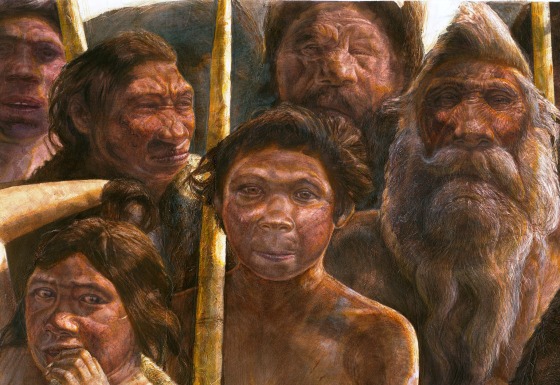
The mystery species may one day gain a name, a face, and a place in the human family tree.
A New Era of Discovery
The discovery highlights the extraordinary pace of progress in ancient DNA research.
Only a few decades ago, sequencing genetic material from extinct humans seemed impossible.
Today, researchers can reconstruct entire genomes from tiny fragments of bone.
Each new analysis reveals unexpected complexity.
Ancient populations once thought isolated are now known to have interacted extensively.
Unknown lineages emerge from genetic data.
Long-standing assumptions about human evolution continue to be revised.
What makes the Denisovan mystery especially compelling is that it points to a population scientists did not even know existed.
The Search Continues
The identity of the mystery hominin remains one of the most intriguing unanswered questions in paleoanthropology.
Who were they?
Where did they live?
How long did they survive?
What did they look like?
And how many other unknown populations may still be hidden within the genomes of ancient humans?
Researchers hope future discoveries will provide answers.
Additional fossils, improved genetic techniques, and new archaeological investigations may eventually reveal the identity of the elusive species.
For now, the mystery remains unsolved.
A More Complex Human Story
The Denisovan genome has revealed that human evolution was not a simple progression from one species to the next.
Instead, it was a dynamic process involving multiple populations sharing landscapes, exchanging genes, and influencing one another over vast stretches of time.
The newly detected genetic contribution from an unknown hominin adds another chapter to that story.
Far from being alone, our ancient ancestors inhabited a world filled with other human relatives.
Some are known from fossils.
Some survive through traces of DNA.
And some remain hidden, waiting to be discovered.
As genetic research continues to uncover these forgotten branches of humanity, one thing becomes increasingly clear: the story of human origins is far richer, more interconnected, and more surprising than anyone once imagined.