7 Common Myths About the Vikings — and What History Actually Tells Us
Popular culture has transformed the Vikings into larger-than-life warriors wearing horned helmets, raiding helpless villages, and conquering the seas through sheer brutality. But many of the most familiar images of Viking life are based more on nineteenth-century imagination than on historical evidence. Modern archaeology, genetics, and historical research paint a far more complex picture of the people who lived in Scandinavia during the Viking Age.
Few historical groups have captured the popular imagination quite like the Vikings.
From blockbuster films and television series to sports mascots and fantasy novels, Vikings are often portrayed as fearless warriors who sailed across stormy seas wearing horned helmets, wielding massive axes, and leaving destruction wherever they landed.
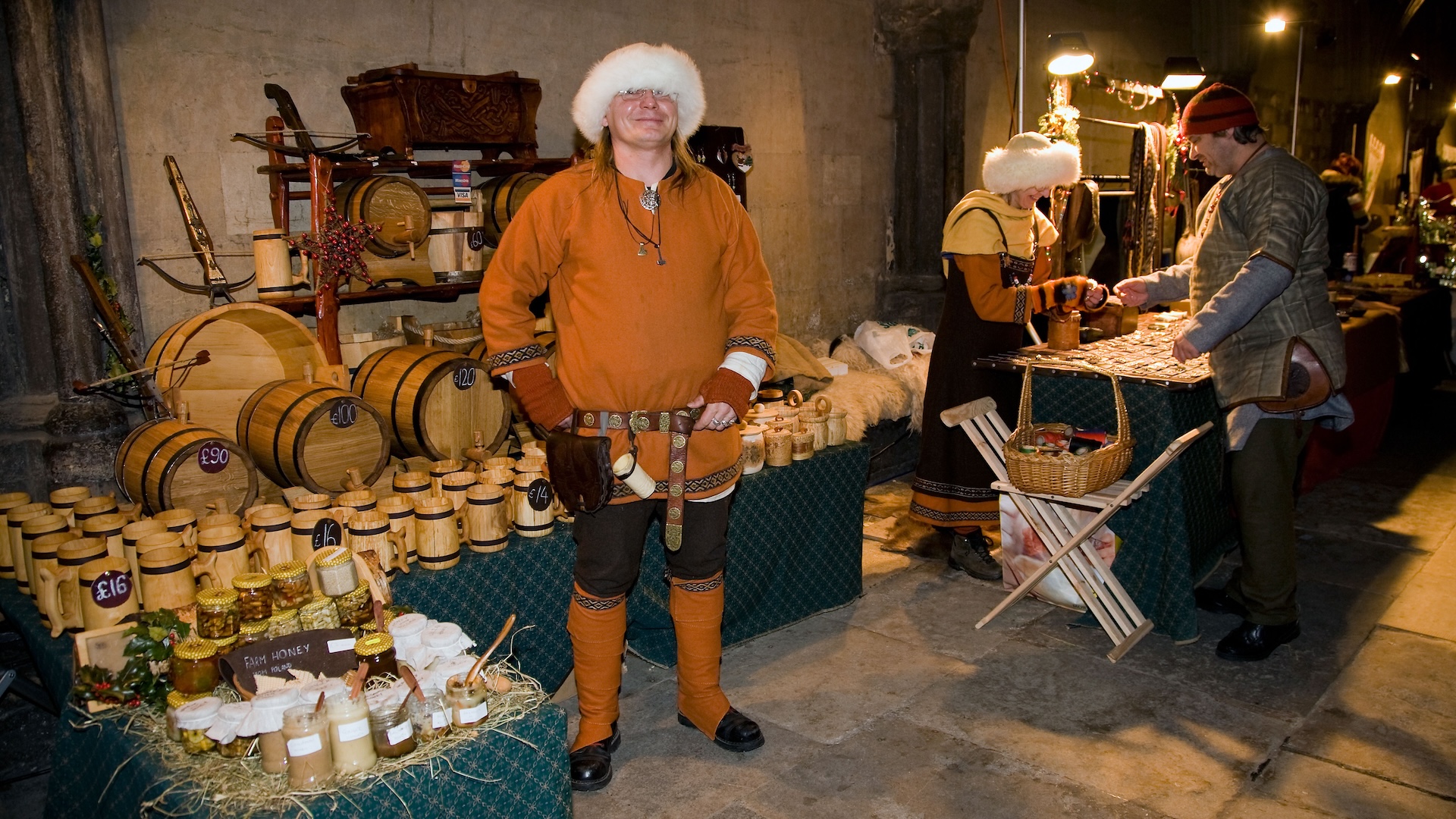
These images have become so widespread that many people assume they accurately reflect Viking society.
Yet historians and archaeologists have spent decades uncovering a different story.
The Viking Age, generally dated from around A.D. 793 to 1066, was indeed marked by exploration, warfare, and expansion. However, the people we call Vikings were also farmers, merchants, craftsmen, settlers, sailors, and political leaders.
Recent discoveries—from ancient DNA studies to archaeological excavations across Europe and North America—have revealed that many popular assumptions about Vikings are either exaggerated or completely incorrect.
Here are seven of the most persistent Viking myths and what historical evidence actually reveals.
Myth 1: Vikings Wore Horned or Winged Helmets
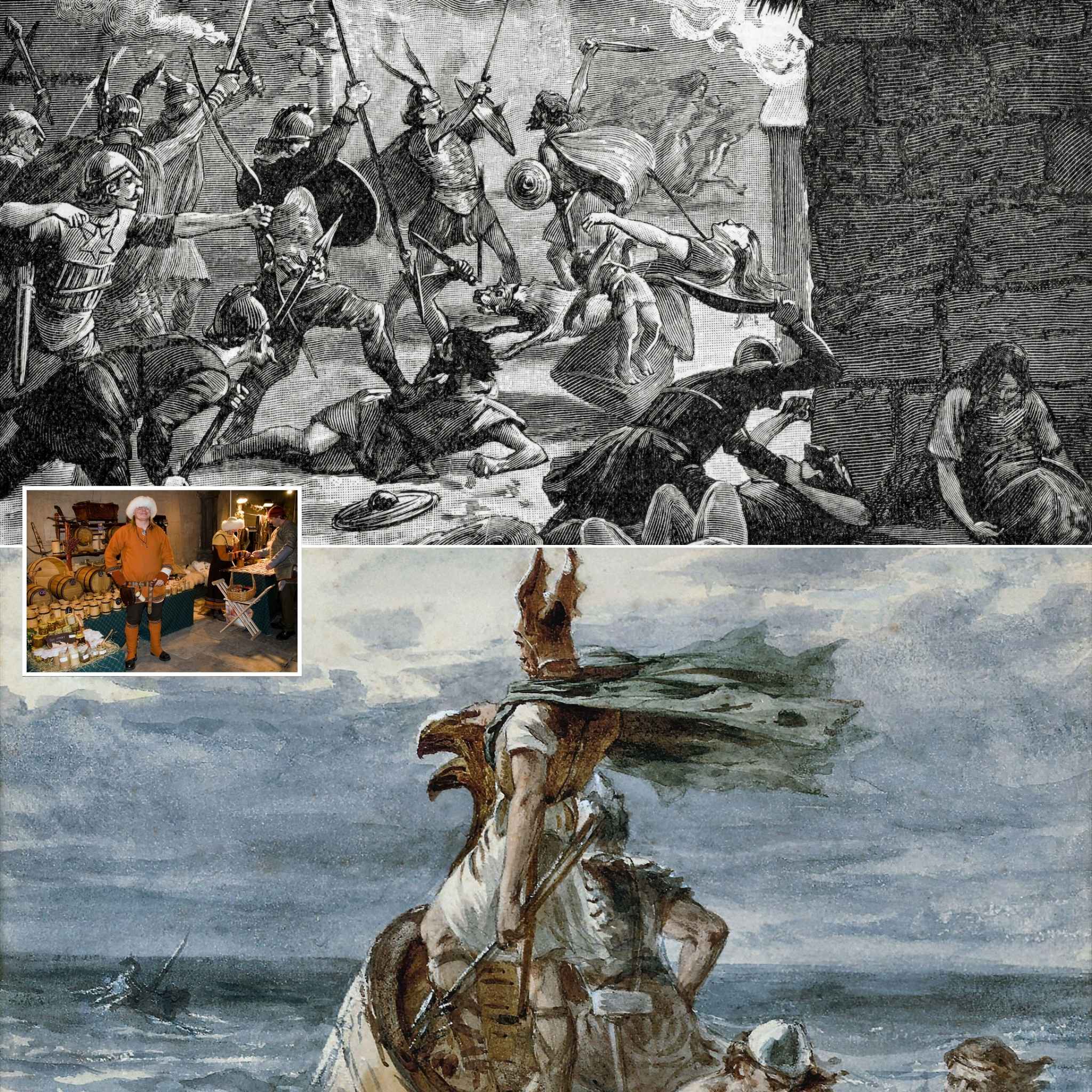
Perhaps no image is more closely associated with Vikings than the horned helmet.
It appears everywhere, from cartoons and advertisements to Hollywood productions.
Yet archaeologists have never found evidence that Viking warriors routinely wore helmets adorned with horns or wings in battle.
The misconception largely emerged during the nineteenth century.
German artist Carl Emil Doepler designed costumes for Richard Wagner’s famous opera cycle Der Ring des Nibelungen. In his illustrations, Germanic gods such as Odin were depicted wearing dramatic winged helmets.
The imagery proved popular and gradually became associated with Vikings.
At roughly the same time, artists began portraying Viking warriors with horned helmets, creating an image that would spread throughout Europe.
Archaeologists have uncovered ceremonial helmets with horns in Denmark, but these date to approximately 900 B.C., more than a thousand years before the Viking Age.
Actual Viking helmets discovered in graves and archaeological sites are generally simple iron helmets designed for protection rather than decoration.
For warriors facing arrows, swords, and spears, practicality mattered far more than appearance.

Myth 2: Vikings Regularly Performed the “Blood Eagle” Execution
Few Viking legends are as gruesome as the so-called blood eagle.
According to later medieval accounts, certain Viking rulers supposedly executed enemies by cutting open their backs, separating the ribs from the spine, and pulling the lungs outward to resemble wings.
The description is horrifying.
It is also highly controversial.
The blood eagle appears primarily in medieval Icelandic sagas written centuries after the events they describe.
These texts often blend history, legend, and literary embellishment.
While the sagas mention a few alleged examples, no archaeological evidence has ever confirmed that the practice actually occurred.
Many historians believe the accounts may represent poetic descriptions, misunderstandings of older texts, or deliberate exaggerations intended to emphasize the brutality of legendary rulers.
The dramatic nature of the story ensured its survival in popular culture, especially in modern television dramas and novels.
Yet from a historical perspective, the blood eagle remains unproven.
Whether it was ever performed remains one of the enduring mysteries of Viking history.
Myth 3: Vikings Were Only Raiders
The word “Viking” often brings to mind images of ships arriving unexpectedly on foreign shores, followed by looting and destruction.
While raiding certainly formed part of Viking activity, it was only one aspect of a much broader society.
The Vikings were among the most successful traders of the medieval world.
Archaeologists have found evidence of Viking trade stretching from North America to Central Asia.
Silver coins from the Islamic Caliphates have been discovered in Scandinavia.
Luxury goods from Byzantium reached Viking settlements.
Amber, furs, walrus ivory, and other northern products traveled across vast distances through Viking trading networks.
Many Viking towns flourished as commercial centers.
Places such as Birka, Hedeby, and Dublin became major hubs connecting different parts of Europe.
The Vikings were also remarkable explorers.
Around A.D. 1000, Norse settlers established a short-lived settlement at L’Anse aux Meadows in Newfoundland, making them the first known Europeans to reach North America centuries before Christopher Columbus.
Rather than viewing Vikings solely as raiders, historians increasingly see them as participants in a dynamic network of trade, migration, exploration, and cultural exchange.
Myth 4: Vikings Were More Violent Than Everyone Else
Historical sources often describe Viking attacks with horror.
The raid on the monastery of Lindisfarne in A.D. 793 became particularly infamous and is frequently cited as the beginning of the Viking Age.
Because many surviving accounts were written by victims—especially monks and clerics—Vikings acquired a reputation for extraordinary brutality.
There is no doubt that Viking raids could be violent.
However, modern historians caution against assuming that Vikings were uniquely savage.
Medieval Europe was a violent world.
Wars, massacres, political assassinations, and brutal punishments were common throughout the continent.
Frankish kingdoms, Anglo-Saxon rulers, Byzantine emperors, and numerous other societies engaged in warfare that could be just as destructive as Viking raids.
The notion that Vikings were exceptionally violent compared to their contemporaries emerged largely during the Victorian era, when historians often contrasted “civilized” societies with supposedly barbaric outsiders.
Today, scholars emphasize that Vikings operated within a broader medieval culture where violence was unfortunately commonplace.
Myth 5: All Vikings Were Blonde and Blue-Eyed
Modern stereotypes frequently depict Vikings as tall, blonde-haired, blue-eyed Scandinavians.
This image became popular during the nineteenth century alongside emerging racial theories in Europe.
Recent genetic research tells a different story.
Large-scale DNA studies have shown that Viking populations were far more diverse than previously assumed.
While many Vikings did originate from Scandinavia, centuries of migration, trade, intermarriage, and travel produced considerable genetic variety.
Researchers have identified ancestry linked to:
- Southern Europe
- Eastern Europe
- The British Isles
- The Baltic region
- Indigenous Sami populations of northern Scandinavia
Some Viking individuals had dark hair.
Others likely had brown eyes.
The Viking world was connected to distant regions through commerce and migration, bringing people of varied backgrounds into Norse communities.
Importantly, “Viking” referred more to a cultural identity and way of life than to a specific ethnic group.
A person could participate in Viking society without fitting modern stereotypes of Nordic appearance.

Myth 6: Vikings Were Dirty and Uncivilized
Popular depictions often portray Vikings as filthy warriors covered in mud and blood.
Archaeological evidence suggests the opposite.
Excavations of Viking settlements have uncovered a surprising number of grooming tools, including:
- Combs
- Tweezers
- Razors
- Ear cleaners
Historical accounts from neighboring societies also indicate that Vikings paid considerable attention to personal appearance.
One English observer even complained that Norse settlers bathed too frequently and groomed themselves so carefully that they attracted local women.
While such comments were likely exaggerated, they suggest that cleanliness was valued within Viking culture.
Bathing was often performed weekly, a practice that may have exceeded hygiene standards elsewhere in medieval Europe.
Clothing, jewelry, hairstyles, and personal presentation were important indicators of status and identity.
Far from being uncivilized, Viking communities maintained sophisticated social customs and standards of appearance.
Myth 7: Viking Society Was Entirely Male-Dominated
For much of modern history, Viking narratives focused almost exclusively on male warriors and kings.
Recent archaeological discoveries have challenged this view.
One of the most famous examples emerged from a grave at Birka, Sweden.
For more than a century, researchers assumed that the richly furnished warrior burial belonged to a man because it contained weapons and military equipment.
DNA analysis later revealed that the individual was female.
Although scholars continue debating the precise interpretation of the burial, it demonstrates that women could occupy positions traditionally associated with military authority.
Historical sources also indicate that Viking women often enjoyed greater legal rights than many of their European contemporaries.
Women could:
- Own property
- Manage households
- Initiate divorce under certain circumstances
- Inherit wealth
Some women became influential landowners, merchants, or religious figures.
Others participated in long-distance travel and settlement projects.
While Viking society was certainly patriarchal by modern standards, women often exercised more social and economic influence than earlier historians recognized.

The Real Vikings
The enduring fascination with Vikings stems partly from their complexity.
They were warriors, but they were also traders.
They conducted raids, but they also built towns.
They explored distant lands while maintaining strong agricultural communities at home.
Their world stretched from North America to the Middle East, connecting cultures across vast distances.
Modern archaeology continues to reveal new aspects of Viking life.
Ancient DNA studies are reshaping understanding of Viking origins and diversity.
Excavations uncover evidence of daily routines, trade networks, religious beliefs, and social structures.
As a result, the Vikings emerging from historical research are often more interesting than the myths.
They were not simply horned-helmet warriors charging into battle.
They were members of a sophisticated maritime culture that helped shape medieval Europe and left a legacy that continues to capture imaginations more than a thousand years later.
The real story of the Vikings is not one of simple legends or stereotypes. It is the story of a dynamic society whose influence stretched across continents and whose history remains one of the most fascinating chapters of the medieval world.