The Satavahana Dynasty: The Ancient Indian Empire That Connected South Asia to the Roman World
For nearly four centuries, the Satavahana Dynasty ruled vast territories across central and southern India, overseeing thriving trade networks that stretched from the Deccan Plateau to the Mediterranean. Although often overshadowed by the Mauryas and Guptas, the Satavahanas played a pivotal role in shaping early Indian civilization and fostering one of the ancient world’s most lucrative international trading systems.
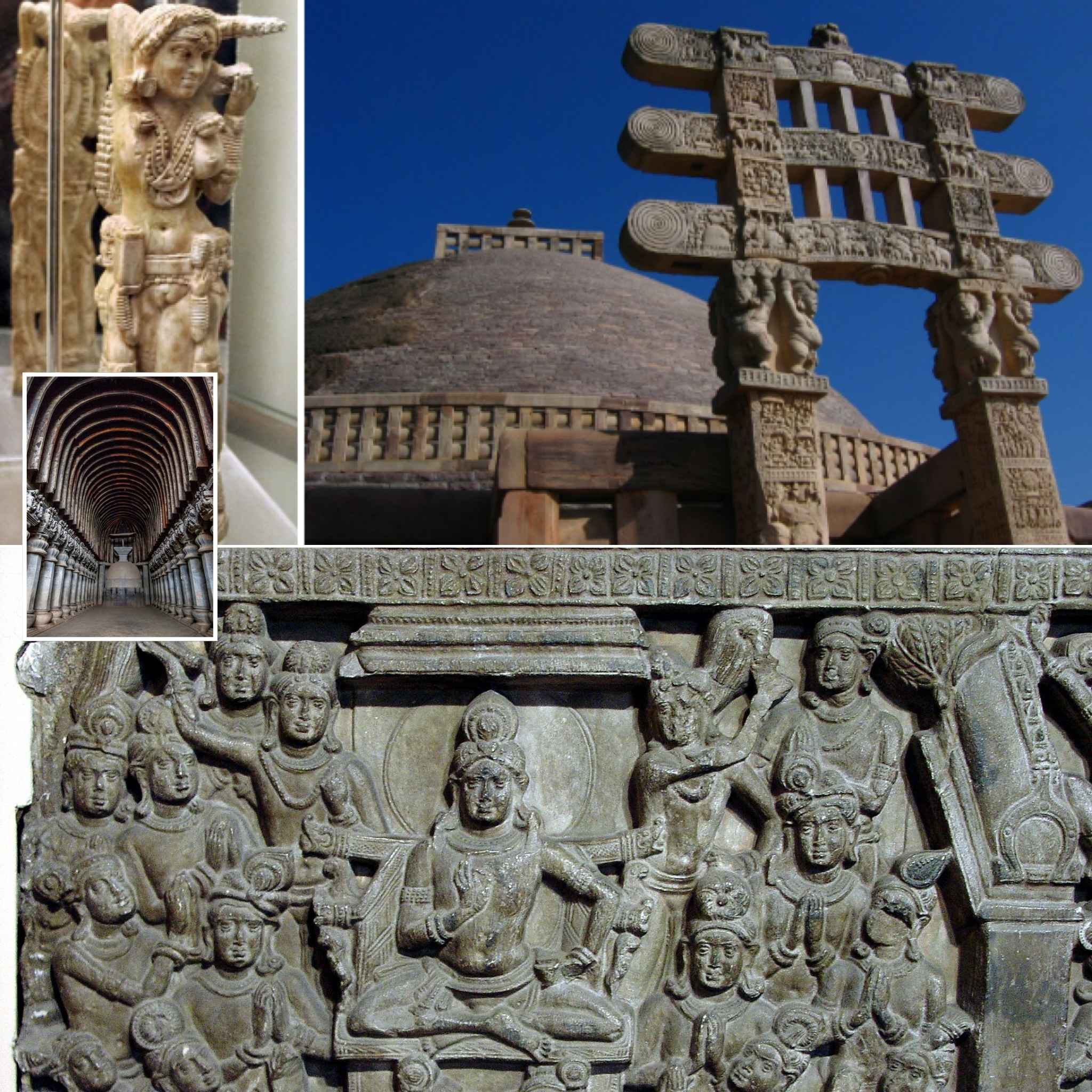
When people think of ancient Indian empires, names such as the Mauryan Empire of Ashoka or the later Gupta Empire often dominate the conversation.
Yet between these two powerful states flourished a dynasty that helped transform the Indian subcontinent through commerce, cultural exchange, urban development, and political integration.
Known as the Satavahana Dynasty, this kingdom ruled much of the Deccan region from approximately the second century B.C. to the third century A.D.
At its height, the Satavahana realm stretched across large portions of present-day Maharashtra, Telangana, Andhra Pradesh, Madhya Pradesh, Karnataka, and Gujarat.
Its rulers controlled strategic trade routes connecting northern and southern India while simultaneously participating in a vast maritime network that linked India to Egypt, Arabia, and the Roman Empire.
The wealth generated through this commerce contributed to the rise of prosperous cities, monumental religious architecture, and one of the most influential political powers of ancient India.
The Rise of the Satavahanas
The Satavahana Dynasty emerged following the decline of the Mauryan Empire.
After the death of Emperor Ashoka in the third century B.C., the Mauryan state gradually weakened, leading to political fragmentation across much of India.
Regional powers began competing for territory and influence.
Among these emerging kingdoms were the Satavahanas, who established themselves in the Deccan Plateau, a vast region located between northern and southern India.
The dynasty’s early history remains somewhat uncertain because surviving written records are limited.
Much of what historians know comes from inscriptions, coins, archaeological discoveries, and references in foreign sources.
Most scholars believe the dynasty began around the late second century B.C.
Its earliest rulers gradually expanded their authority over neighboring territories, creating a kingdom that would eventually become one of India’s most significant regional powers.
Building an Empire in the Deccan
Unlike many ancient states concentrated around a single capital city, the Satavahana Empire governed a diverse and geographically expansive territory.
Its rulers controlled fertile agricultural lands, mineral-rich interior regions, and important trade corridors.
Several cities served as major administrative and commercial centers, including:
- Pratishthana (modern Paithan)
- Amaravati
- Junnar
- Dharanikota
- Ter
These urban centers became hubs for merchants, artisans, religious communities, and administrators.
The dynasty’s strategic position allowed it to dominate routes connecting northern India with southern ports.
Control of these corridors brought considerable wealth and political influence.
Rather than relying solely on military conquest, the Satavahanas often strengthened their authority through alliances, diplomacy, and regional administration.
A Golden Age of Trade
One of the defining features of the Satavahana Empire was its participation in international commerce.
During the first centuries B.C. and A.D., trade between India and the Mediterranean world expanded dramatically.
Roman merchants sought luxury goods from India, while Indian traders benefited from access to foreign markets.
The Satavahanas occupied a crucial position within this network.
Merchants transported goods from inland production centers to ports along India’s western and eastern coasts.
From there, ships sailed across the Arabian Sea and the Indian Ocean.
Ancient texts and archaeological evidence indicate that Satavahana territories exported:
- Cotton textiles
- Spices
- Precious stones
- Pearls
- Ivory
- Aromatic woods
- Metal goods
In return, foreign merchants brought:
- Roman gold coins
- Silverware
- Wine
- Glassware
- Luxury products
The flow of wealth into India was substantial.
Roman authors even complained that vast quantities of Roman gold were leaving the empire to pay for eastern luxury goods.
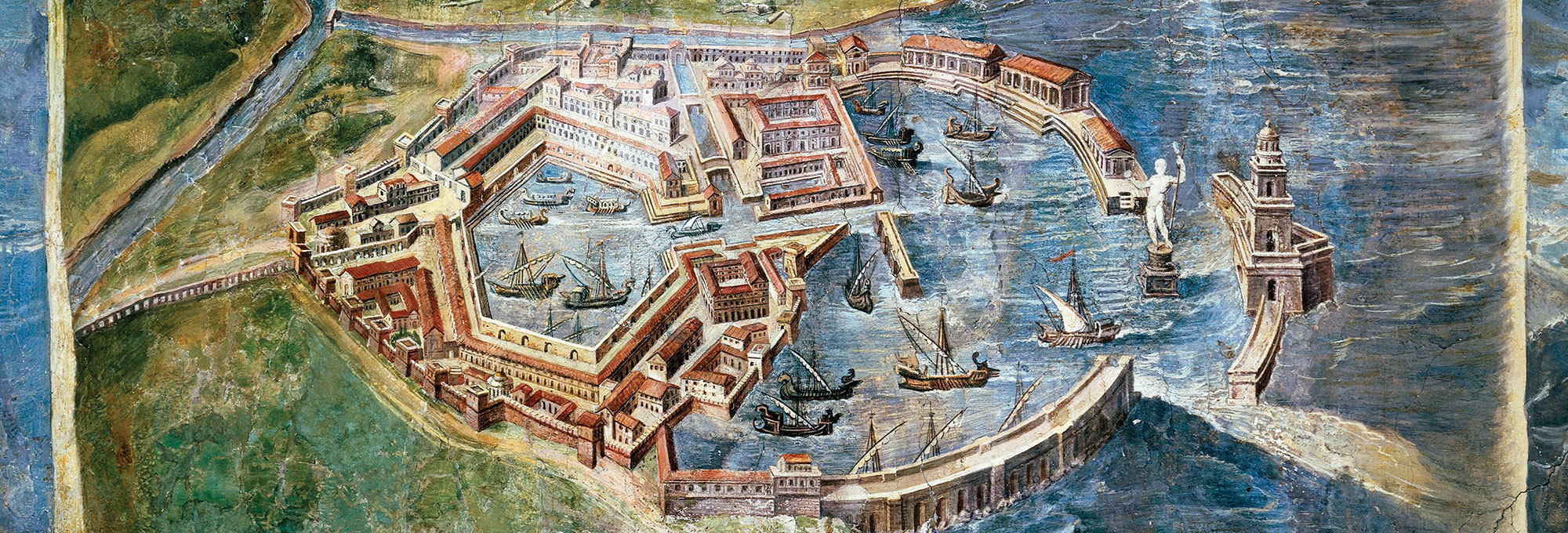
Roman Coins in India
Perhaps the most striking evidence of Indo-Roman trade comes from archaeology.
Thousands of Roman coins have been discovered across India, particularly in regions connected to Satavahana commerce.
These coins bear the images of Roman emperors such as:
- Augustus
- Tiberius
- Nero
- Trajan
The presence of these coins demonstrates the scale of economic interaction between the two civilizations.
Some Roman coins circulated as currency.
Others were melted down and reused by local craftsmen.
Their discovery highlights how interconnected the ancient world had become.
Although separated by thousands of miles, Roman and Indian economies influenced one another through long-distance trade.
The Satavahana Navy and Maritime Networks
The Satavahanas understood the importance of maritime commerce.
Several of their coins depict ships, suggesting official recognition of seaborne trade.
Ports under their influence connected India to:
- Egypt
- Arabia
- East Africa
- Southeast Asia
- The Mediterranean
Monsoon winds allowed merchants to travel across the Indian Ocean more efficiently than ever before.
This maritime revolution transformed coastal cities into thriving commercial centers.
Trade generated wealth not only for rulers but also for merchants, craftsmen, and religious institutions.
Many of the empire’s greatest architectural achievements were funded by commercial prosperity.
Gautamiputra Satakarni: The Empire’s Greatest Ruler
Among the dynasty’s many rulers, none is more celebrated than Gautamiputra Satakarni, who ruled during the second century A.D.
He is widely regarded as the greatest Satavahana king.
During his reign, the empire reached its greatest extent.
Gautamiputra successfully defeated rival powers, including the Western Kshatrapas, who controlled important territories in western India.
Inscriptions describe him as a powerful ruler who restored Satavahana authority and protected traditional social institutions.
His achievements strengthened political stability and helped secure major trade routes.
As a result, economic growth continued throughout much of the empire.
Religion and Cultural Patronage
The Satavahanas played a significant role in the religious development of ancient India.
Their rulers generally supported Brahmanical traditions while also patronizing Buddhism.
This religious inclusiveness contributed to cultural flourishing throughout the empire.
Many important Buddhist sites expanded during Satavahana rule, including:
- Amaravati
- Nagarjunakonda
- Karla Caves
- Bhaja Caves
- Nasik Caves
Merchants frequently donated funds for religious construction.
As trade increased, so did patronage of monasteries and sacred architecture.
The resulting monuments remain among India’s most important archaeological treasures.
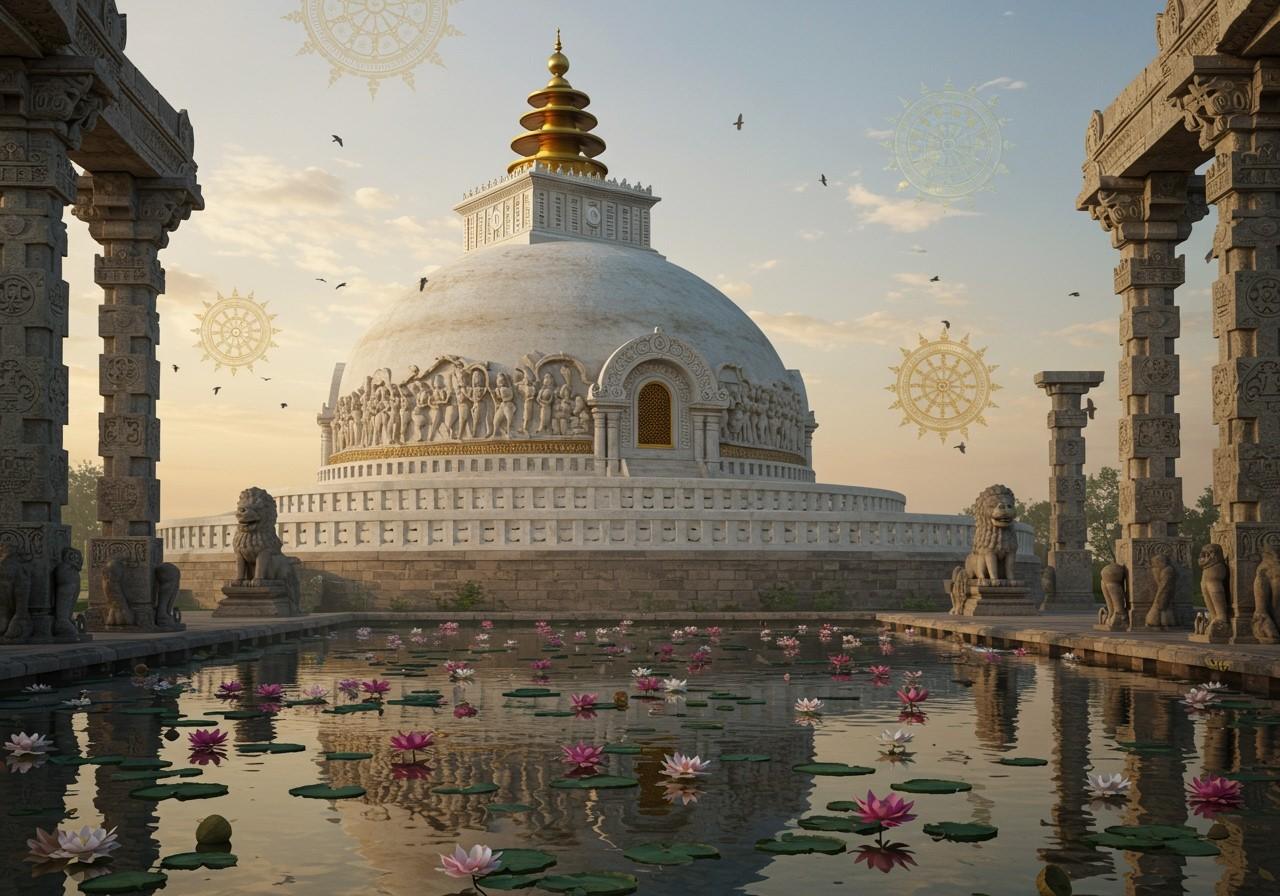
The Great Stupa of Amaravati
One of the most impressive achievements of Satavahana-era art was the development of the Amaravati Stupa.
Located in present-day Andhra Pradesh, this Buddhist monument became one of the largest and most elaborate stupas in India.
Its sculpted reliefs depicted:
- Scenes from the Buddha’s life
- Religious symbols
- Processions
- Daily life
- Mythological narratives
The artistic style developed at Amaravati influenced Buddhist art across South and Southeast Asia.
Although much of the original structure has been damaged or dispersed, surviving sculptures demonstrate exceptional craftsmanship.
[IMAGE 2: Reconstruction of the Amaravati Stupa with elaborate stone carvings and Buddhist pilgrims.]
Society Under the Satavahanas
The Satavahana Empire governed a diverse population composed of farmers, merchants, artisans, soldiers, and religious communities.
Agriculture formed the economic foundation of society.
Farmers cultivated crops such as:
- Rice
- Wheat
- Millet
- Pulses
- Cotton
Urban centers supported specialized industries including:
- Textile production
- Metalworking
- Pottery
- Bead-making
- Stone carving
Trade encouraged social mobility and economic specialization.
Merchant guilds became increasingly influential.
Many inscriptions record donations made by traders, suggesting that commerce elevated the status of wealthy merchant families.
Women also appear in inscriptions as donors and patrons, indicating their participation in economic and religious life.
A Distinctive Coinage Tradition
The Satavahanas issued large quantities of coins, providing valuable insights into their economy and administration.
Unlike many contemporary states that relied primarily on precious metals, Satavahana coins were often made from:
- Lead
- Copper
- Bronze
- Potin alloys
These coins frequently featured:
- Royal portraits
- Animals
- Ships
- Religious symbols
The use of regional languages and scripts on coinage demonstrates the dynasty’s integration of diverse cultural traditions.
Coins served not only economic purposes but also helped communicate political authority across the empire.
Connections Beyond India
The Satavahanas occupied an important position within broader Eurasian exchange networks.
Through trade and diplomacy, they interacted with numerous neighboring cultures.
Goods and ideas flowed between India and:
- Rome
- Persia
- Arabia
- Central Asia
- Southeast Asia
These connections contributed to the spread of technologies, artistic styles, and religious traditions.
Buddhist ideas, for example, continued moving along commercial routes that connected India with distant regions.
The Satavahana Empire therefore played a role in larger processes of cultural globalization during antiquity.
Decline of the Dynasty
Like many ancient empires, the Satavahana state eventually faced growing challenges.
By the third century A.D., several factors contributed to its decline:
- Regional fragmentation
- Succession disputes
- External pressures
- Rising rival kingdoms
As central authority weakened, local rulers gained greater independence.
Territories gradually broke away from imperial control.
New powers emerged across the Deccan and southern India.
Although the dynasty disappeared, many of its institutions and cultural achievements endured.
Its trade networks, urban centers, and religious monuments continued influencing later societies.
A Legacy Often Overlooked
The Satavahana Dynasty occupies a crucial place in Indian history.
It bridged the gap between the Mauryan and Gupta eras while helping shape the political and economic landscape of the Deccan.
Its rulers fostered:
- Long-distance trade
- Urban growth
- Religious patronage
- Cultural exchange
- Political integration
Perhaps most importantly, the dynasty connected India to one of the ancient world’s largest commercial systems.
Roman merchants sailed across oceans seeking Indian goods, while Indian traders carried products, ideas, and cultural influences across vast distances.
The archaeological evidence—from Roman coins and Buddhist monuments to inscriptions and port cities—reveals a civilization deeply engaged with the wider world.
The Empire That Linked India to the Ancient World
Although often overshadowed by larger and better-known dynasties, the Satavahanas were among the most influential powers of ancient South Asia.
They governed a strategic crossroads between northern and southern India, facilitated trade stretching from the Mediterranean to Southeast Asia, and supported religious and artistic traditions that would shape the region for centuries.
Their story reminds us that ancient history was never isolated.
Across deserts, mountains, and oceans, civilizations interacted in ways that transformed entire regions.
The Satavahana Dynasty stood at the center of those exchanges, serving as a bridge between India and the wider ancient world.
Today, its monuments, inscriptions, and artifacts continue to reveal the remarkable achievements of an empire that helped connect Rome, India, and Asia long before the modern age.