25 August 2026
ATMORE, Alabama — The mask was industrial, heavy, and fitted tight against his face, connected to a tangle of hoses that snaked away into the machinery of the execution chamber. Kenneth Eugene Smith was strapped into a steel chair bolted to the floor of the William C. Holman Correctional Facility, and for the first time in human history, a government was about to kill a man with nothing but nitrogen gas. There was no gurney tonight. No IV line. No bag of clear fluid hanging from a metal pole. Just a mask, a chair, and a method that had existed only in theory until this moment. Outside the prison walls, protesters and journalists had been gathering since the afternoon, cameras from news outlets around the world pointed at a building most of them had never heard of a week earlier. Inside, correctional officers moved with practiced choreography, but every single one of them was operating without precedent. There was no manual written from experience. Everyone in that chamber tonight was, in one sense, guessing. This was not Kenneth Smith's first appointment with a death chamber. Two years earlier, he had been strapped down for a different execution entirely, and it had not gone the way the state planned. The execution team had spent four hours searching for a usable vein, jabbing needles into his arms and hands while he lay conscious, bleeding, sweating, watching the clock tick toward midnight when his death warrant would expire. They had failed. He had walked out of that chamber alive. Tonight, Alabama was determined that would not happen twice. But to understand how a man ended up in that chair, breathing nothing but nitrogen while the entire world watched to see what would happen, you have to go back nearly four decades. Back to a woman named Elizabeth Dorlene Sennett, who on March 18, 1988, was living an unremarkable, decent life in Sheffield, Alabama. She was 45 years old, a wife, a mother to grown sons, a pastor's wife in a small, close-knit community where people still waved at cars they did not recognize and left doors unlocked because nothing much ever happened there. Her husband, Charles Sennett Sr. , was the pastor of the West Side Church of Christ. Every Sunday, he stood in front of a room full of people and told them how to live a righteous life. By every account available from the people who knew her, Elizabeth was well-regarded, warm, and trusting. She was the kind of person who took her husband's word at face value because why would not she? He was, as far as she knew, exactly who he presented himself to be, a husband, a father, a man of God. What Elizabeth did not know was that Charles was quietly unraveling. He was in serious debt, the kind that keeps a man up at night doing math that never comes out right. And alongside the financial pressure, there was a secret relationship, an affair, the sort of thing a pastor in a small town absolutely cannot afford to have discovered. In a community that small, a scandal like that would cost him everything, his marriage, his pulpit, his entire identity. Charles looked at Elizabeth's life insurance policy instead. He did not act on it alone, and he did not act on it quickly. What he needed first was someone willing to actually do the killing, because whatever Charles Sennett had become capable of imagining, he apparently was not capable of doing it himself. He turned to Billy Gray Williams, one of his own tenants, and offered him money to have Elizabeth killed. Williams said yes. But Williams did not plan on doing it himself either. Instead, he reached further down the chain and brought in two more men, Kenneth Eugene Smith and John Forrest Parker. Each man was promised a thousand dollars for his role in ending Elizabeth Sennett's life, a sum that, even adjusted for 1988, was a devastatingly small price for what it was buying. A pastor with a secret paying a tenant who recruits two more men, one of whom would spend the next 36 years connected to this case, right up until the night the entire country watched him die. On the morning of March 18, 1988, Elizabeth was home alone. Her sons were away. Her husband had told her in advance that two men would be stopping by, something about wanting to look over the property for hunting. It was such a small, believable lie. Smith and Parker arrived at the house that morning. They did not force their way in. They did not threaten her. They walked the property, made small talk, and when Elizabeth, being careful, called Charles to confirm the two strangers were who they said they were, he told her yes, go ahead, let them look around. That phone call is the entire tragedy of this story compressed into a single moment. Elizabeth did exactly what a careful, sensible person would do. She checked. She confirmed. And the person she checked with, the one person whose word should have meant something, lied to her directly, in real time, knowing exactly what those two men were actually there to do. For a while, the morning unfolded almost peacefully. The men walked the property. They pretended to look for hunting spots. Elizabeth went back inside. Then they knocked again. Could they use the bathroom?…
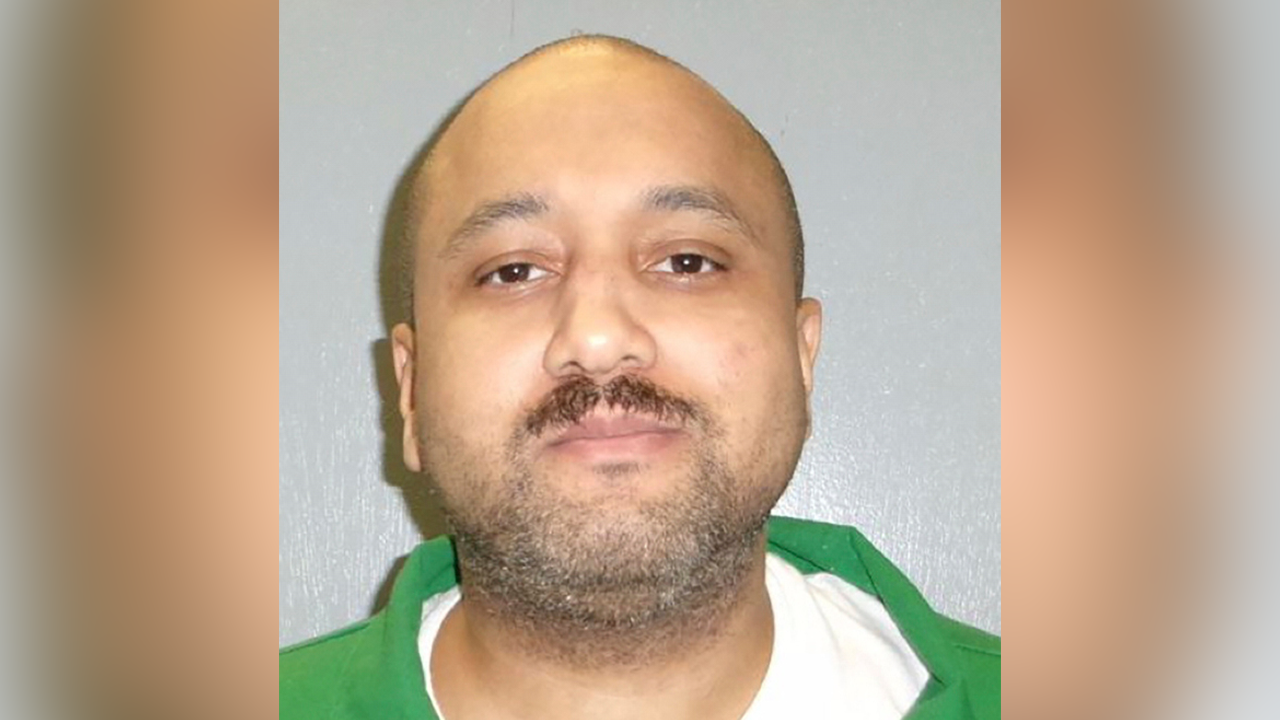 On April 11, 2025, South Carolina executed Mikal Deen Mahdi by firing squad, making him one of the few inmates in modern American history to be executed using the method. Mahdi had been sentenced to death for a series of violent crimes, including the 2004 murder of Orangeburg Public Safety Captain James Myers.
 The case attracted renewed attention after reports concerning Mahdi’s autopsy raised questions about the placement of the gunshot wounds and whether the execution occurred exactly as intended. Attorneys and death penalty critics argued that the findings warranted additional scrutiny, while state officials maintained that the execution complied with established procedures.
 The controversy quickly became part of a broader national debate surrounding execution methods, transparency, and the administration of capital punishment. Supporters of the sentence pointed to Mahdi’s convictions and years of judicial review, while critics questioned whether the circumstances of the execution revealed potential problems with the firing squad protocol.

