24 August 2026
The afternoon sun cast long shadows over the industrial stretch of North 31st Street in Milwaukee, but inside a nondescript recording studio, the atmosphere was supposed to be one of creative energy and ambition. Instead, it became the scene of a brutal, double homicide that has sent shockwaves through the city’s hip-hop community and raised chilling questions about loyalty, betrayal, and the thin line between friendship and fatal violence. Two men, both rising figures in Milwaukee’s rap scene, were gunned down in what authorities are now investigating as a targeted attack that may have stemmed from a stolen firearm and a simmering grudge. The suspect, a 28-year-old man who was also part of the same social circle, was arrested shortly after the shooting, but the full story of what transpired inside that studio remains shrouded in a fog of grief, anger, and unanswered questions. The victims have been identified by family members and close associates as Quinton Williams, 33, known professionally as Funny Money, and Dquazian Evans, 21, who performed under the name Lil Shisty. Williams was a cornerstone of Milwaukee’s burgeoning hip-hop scene, a lyricist who had recently signed a major deal with Create Music Group, a label that has backed artists like Big 30. His music, characterized by punchy beats and raw storytelling, had garnered hundreds of thousands of views online, and he was widely seen as the city’s next big breakout star. Evans, a young father of three, was viewed as a promising up-and-comer, an intern in the industry who looked up to Williams as a mentor. Their deaths have left a void in the local music community, but the circumstances surrounding the shooting suggest a far more personal and sinister motive than random violence. According to law enforcement sources and witness accounts pieced together from the chaotic aftermath, the incident unfolded on Monday, August 17, 2026, inside a commercial warehouse building near the intersection of 31st Street and West Cameron Avenue. Williams and Evans had arrived at the studio to record new material, a routine session that was supposed to be productive. Also present was a third man, Kelvin Harris, 28, a former standout high school basketball player who had also dabbled in the local rap scene under the moniker Lord Shy. The three men were reportedly part of a loose collective known as Young Money, or YM, a group that had formed through mutual connections in the city’s streets and music circles. But tensions had been brewing, and the catalyst for the violence appears to have been a stolen firearm. Investigators have not officially confirmed the motive, but multiple sources close to the case have alleged that the conflict began when Evans, the youngest of the trio, took Harris’s gun. The details of how the theft occurred remain murky, but it is believed that Harris discovered the missing weapon and became enraged. The stolen gun was not just a piece of hardware; in the world of street entrepreneurship and rap culture, a firearm is often a symbol of status, protection, and respect. To have it taken by someone within your own circle is a profound violation, one that can escalate quickly into deadly confrontation. Harris, feeling disrespected and potentially threatened, allegedly left the studio after the theft, but he did not go far. He returned shortly after, armed and intent on confronting Evans. What happened next is a matter of life and death. Witnesses and preliminary reports suggest that when Harris came back, he was not looking for a conversation. He was looking for retribution. The studio, a confined space meant for creativity, became a trap. Evans, the 21-year-old who had allegedly taken the gun, was the primary target. But Williams, the older, more established rapper, found himself caught in the crossfire. Those who knew Williams describe him as a mediator, a man who tried to keep the peace and de-escalate conflicts. It is believed that when Harris burst in, Williams attempted to step between the two younger men, to calm the situation and prevent bloodshed. Instead, he became a casualty of his own good intentions. Harris allegedly opened fire, striking both Evans and Williams. The gunfire was rapid and final. By the time police arrived at the scene around 3:40 p. m. , both men were dead from multiple gunshot wounds. The aftermath was immediate and visceral. Family members, alerted by frantic phone calls and social media posts, rushed to the scene. The air was filled with screams and wails as loved ones identified the bodies. Quinton Williams’s mother, a woman who would later speak at a balloon release for her son, was among the first to arrive. Her grief was raw and public, captured in a video that has since gone viral. “My little brother, I just called and talked to him yesterday, bro,” she sobbed, her voice cracking with anguish. She described her son as a funny, genuine soul who loved his city deeply. “He let every [expletive] body know,” she said, struggling to compose herself. She also extended her condolences to the family of Dquazian Evans, the young father who died alongside her son. “Let’s not forget about him, because he was there, too,” she pleaded, her words a stark reminder that two families were now shattered. Dquazian Evans’s family is equally devastated. His twin sister, Jaquasia Evans, spoke to local media, her voice trembling as she remembered her brother. “He was a rapper and he was very family oriented,” she said. “He got three kids that he loved dearly.” She described the pain of losing a sibling, of having to wear his jackets just to feel close to him. The family is no stranger to gun violence; they have lost other loved ones in recent years, and the cycle of death has left them exhausted and heartbroken. “We need to change our focus. We need to change our mindsets if we want to live,” Jaquasia said, her words a desperate plea for an end to the bloodshed that has plagued their community. Kelvin Harris, the alleged shooter, did not stay at the scene. After the shooting, he fled the studio and ran to a nearby business, where he reportedly confessed to killing two people. Police were called, and he was apprehended shortly after without further incident. His arrest was swift, but the handling of his identity has been a source of controversy. Authorities initially refused to release his name, citing an ongoing investigation. It was only after 72 hours of digging by local journalists that his identity became public.…
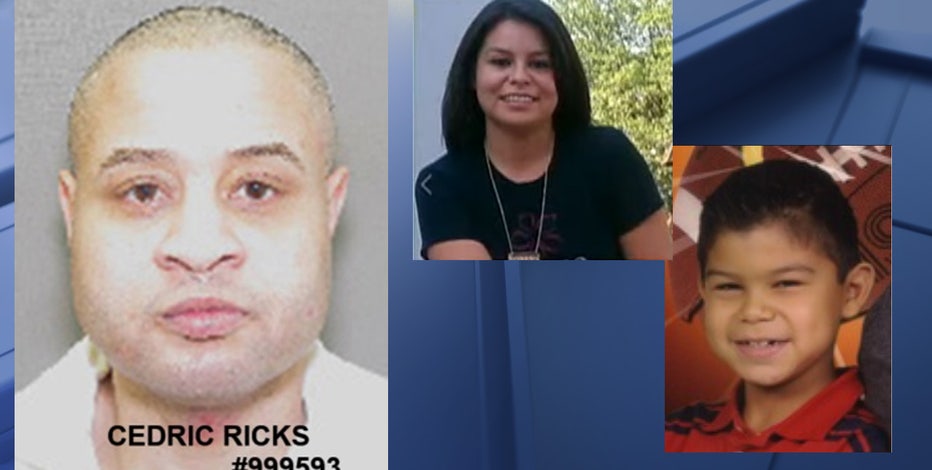 Cedric Ricks was executed by the State of Texas after spending more than twenty years on death row for a triple murder that occurred in Harris County. His case became one of many Texas capital murder prosecutions that moved through decades of appeals before ultimately reaching a final resolution.
 Witnesses reported that Ricks used his final moments to address family members and others present. Shortly afterward, the lethal injection procedure began, and he was pronounced dead by prison officials.

