3I/ATLAS — officially designated C/2025 N1 (ATLAS) — is the third confirmed interstellar object ever observed passing through our solar system, following ʻOumuamua and 2I/Borisov. Astronomers determined its hyperbolic trajectory and high velocity show it came from outside our solar system and will continue back into interstellar space after its brief encounter with the Sun.

NASA observations indicate that 3I/ATLAS is an icy interstellar comet, with an active coma of gas and dust formed as sunlight warmed its surface, causing sublimation of ice. It passed closest to the Sun (perihelion) in late October 2025 and remained far from Earth, posing no impact danger.
Physicist Michio Kaku has publicly commented on the object’s unusual aspects, noting that some features — such as the high carbon dioxide to water ratio and its extreme origin conditions — make 3I/ATLAS stand out compared with typical comets from our solar system. Some reports quote him urging for transparency and access to full data so scientists can better assess its nature.
This discourse reflects broader scientific interest in 3I/ATLAS rather than a confirmed “extraordinary discovery.” While hypotheses about non‑natural origins or alien technology have been discussed in public forums, mainstream astronomy continues to treat 3I/ATLAS as a natural interstellar object, gathering insights into conditions in other planetary systems and comet formation processes.
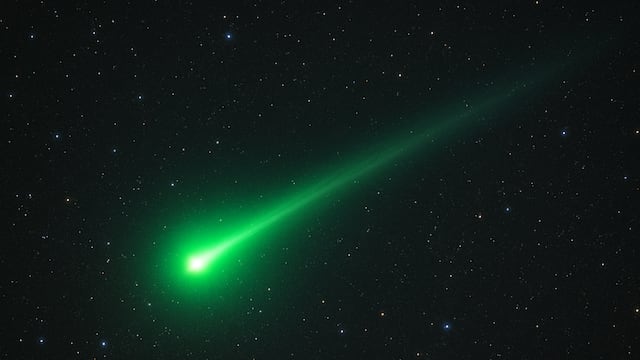
Recent research also highlights that interstellar visitors can release gases like methane and carbon dioxide in unexpected ratios, offering clues about their formation environments outside the solar system and enriching comparative studies of comet chemistry.
Overall, current evidence supports the view that 3I/ATLAS is a rare and scientifically valuable interstellar comet, with ongoing observations helping astronomers refine models of how such objects form, evolve, and interact with stellar environments.