Ancient Rock Art in Egypt’s Sinai Desert Reveals 10,000 Years of Human Activity
A Remarkable Discovery in One of Egypt’s Most Historic Landscapes
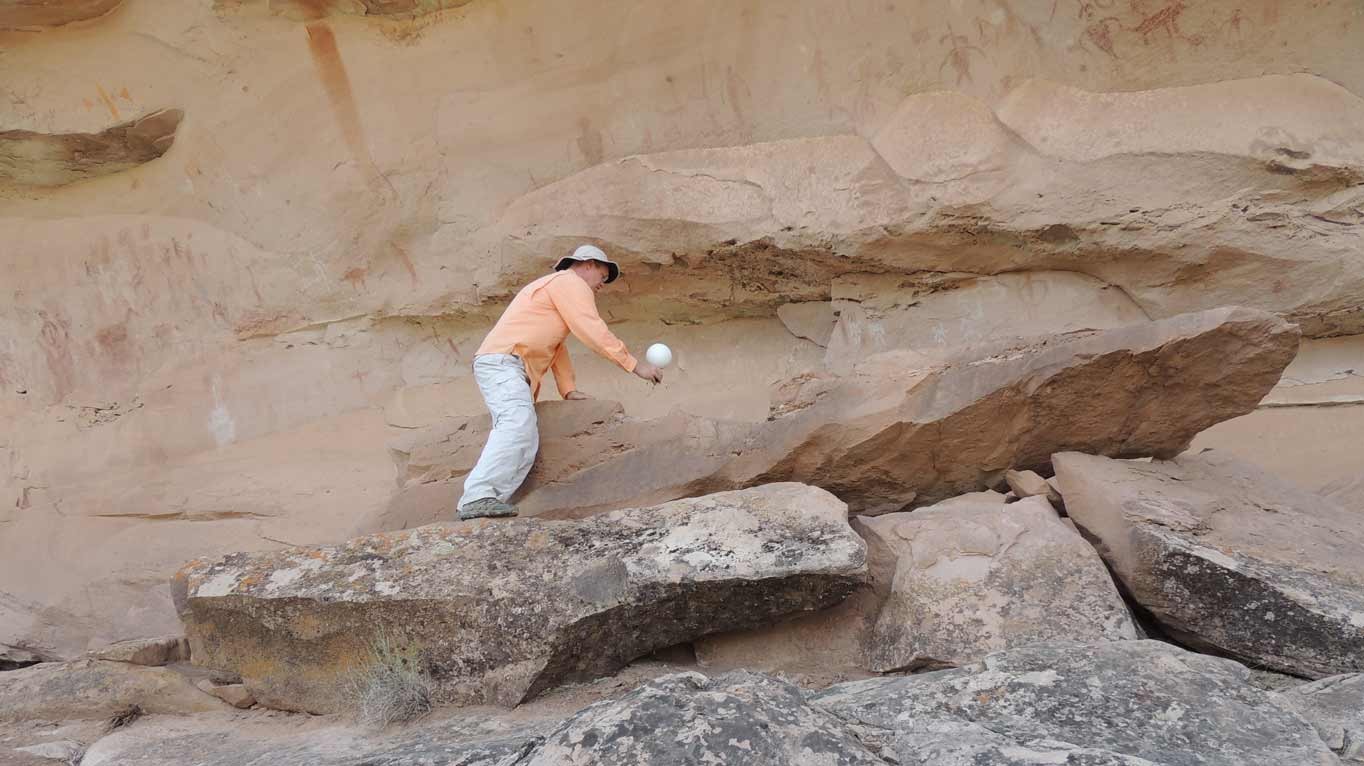
In the rugged mountains of Egypt’s southern Sinai Peninsula, archaeologists have uncovered a remarkable rock shelter that preserves evidence of human activity spanning nearly 10,000 years. Hidden within the remote Umm Arak Plateau, the site contains hundreds of engravings, drawings, and inscriptions created by generations of travelers, hunters, miners, merchants, and local communities who passed through this desert landscape over thousands of years.
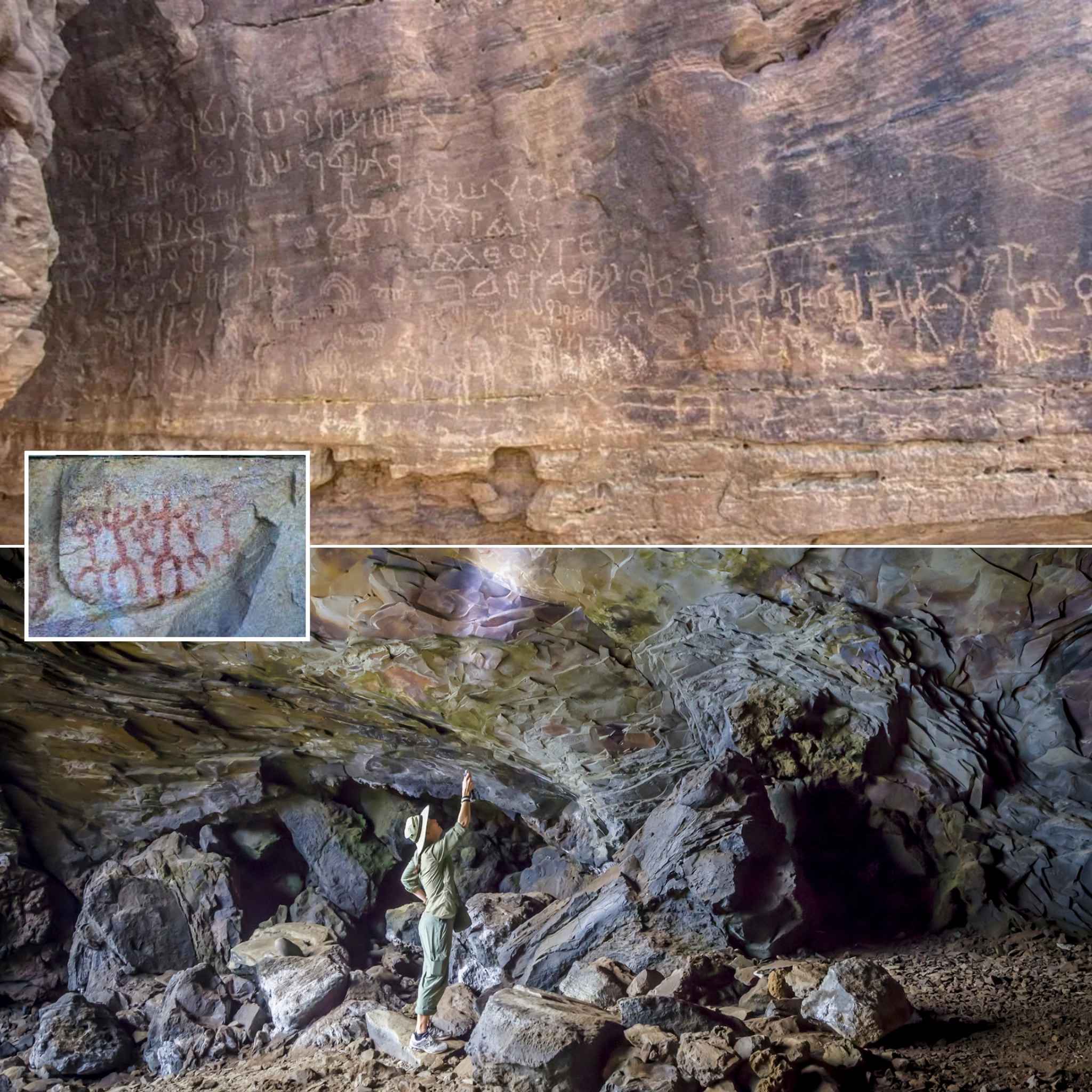
The discovery offers an extraordinary window into the long history of human occupation in Sinai, a region that has served as a crossroads between Africa and Asia since prehistoric times. The newly identified shelter contains some of the oldest rock art yet found in the area, alongside inscriptions and images dating to ancient Egyptian, Nabataean, Roman, and medieval periods.
Rather than representing a single moment in history, the site appears to have functioned as a gathering place repeatedly visited across countless generations. Each group left behind traces of its presence, gradually transforming the shelter into a visual archive of changing cultures, technologies, beliefs, and ways of life.
For archaeologists, discoveries of this kind are exceptionally valuable. They allow researchers to trace long-term patterns of human movement and adaptation in environments that are often difficult to study through traditional excavation alone.
The Sinai shelter reveals not only how people lived in the desert but also how they understood and interacted with the landscape around them.
The Discovery of the Umm Arak Rock Shelter
The shelter was identified during an archaeological survey conducted by specialists working in southern Sinai.
The research team received assistance from a local resident, Sheikh Rabie Barakat, whose knowledge of the region proved instrumental in locating the site. Such collaborations between archaeologists and local communities often play a crucial role in discovering previously undocumented cultural heritage locations.
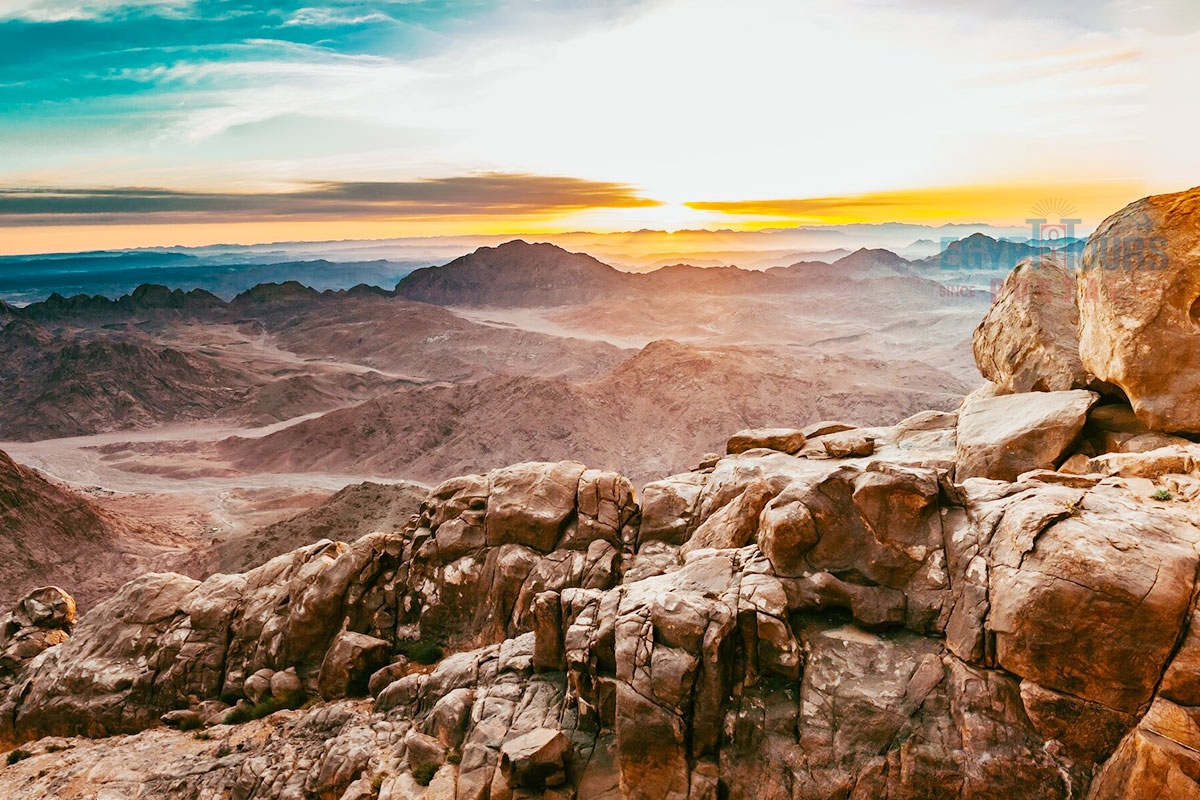
Situated on the Umm Arak Plateau, the shelter occupies a strategic position overlooking surrounding desert routes. The structure itself is impressive.
The rock overhang extends approximately 100 meters (330 feet) in length and reaches depths of around 3 meters (10 feet). The ceiling varies in height, rising to about 1.5 meters (5 feet) in some sections.
Despite its relatively modest dimensions, the shelter provided protection from harsh desert conditions and offered an ideal resting place for travelers moving through the region.
Over thousands of years, visitors repeatedly used the site, leaving behind an extraordinary collection of images and inscriptions.
The Earliest Artists of Sinai
Among the most significant aspects of the discovery is the age of the oldest rock art.
Based on stylistic analysis, archaeologists believe some engravings date between approximately 10,000 and 5,500 B.C., placing them thousands of years before the rise of pharaonic Egypt.
At that time, the Nile Valley civilization had not yet emerged.
The famous pyramids were still far in the future.
Writing had not been invented.
Yet people were already moving through Sinai and recording aspects of their lives on stone surfaces.
One of the most striking early images depicts a hunter carrying a bow. Nearby are figures interpreted as hunting dogs accompanying him on a hunt.
This scene offers a rare glimpse into the activities of prehistoric communities inhabiting or traveling through the region.
The presence of dogs is particularly important.
Dogs were among humanity’s earliest domesticated animals, and their depiction suggests organized hunting practices and close relationships between humans and animals.
These images help researchers understand how people adapted to changing environmental conditions after the end of the last Ice Age.
A Landscape of Changing Cultures
What makes the Sinai shelter especially remarkable is not merely the age of its oldest artwork but the enormous time span represented by the images.
Unlike many archaeological sites that belong to a single historical period, the shelter preserves evidence from multiple eras.
Later visitors added new designs alongside older ones, creating a layered record of human history.
Among the more recent depictions are scenes showing mounted riders carrying weapons.
The appearance of horses immediately signals a very different world from that of the prehistoric hunters.
Horseback riding transformed transportation, warfare, communication, and trade across the ancient Near East.
These images likely belong to historical periods when Sinai served as an important route connecting Egypt with neighboring regions.
The contrast between hunters with bows and mounted warriors highlights thousands of years of technological and cultural change recorded on a single rock face.
The Mystery of the Geometric Symbols
Not all the images depict people or animals.
Many consist of geometric forms whose meanings remain uncertain.
Researchers have identified:
- X-shaped designs
- Squares
- Ovals
- Crescent forms
- Interconnected patterns
- Complex abstract symbols
These geometric figures may have served various purposes.
Some could represent territorial markers.
Others might have religious or ceremonial significance.
Certain designs may even have functioned as forms of symbolic communication understood only by specific groups.
Because similar geometric motifs appear in rock art traditions throughout North Africa and the Near East, researchers hope comparative analysis may help uncover their meaning.
For now, many of the symbols remain an intriguing mystery.
Sinai: A Land of Resources and Routes
The location of the shelter provides important clues regarding why people repeatedly visited the site.
The Umm Arak Plateau lies near ancient copper and turquoise mining districts that were exploited for thousands of years.
Sinai’s mineral wealth made it one of the most strategically important regions in the ancient world.
Egyptian expeditions traveled into the peninsula as early as the Old Kingdom to obtain valuable resources.
Turquoise, in particular, held special significance.
Ancient Egyptians associated the blue-green stone with the goddess Hathor, who was often called the “Mistress of Turquoise.”
Mining settlements, roads, and religious sites developed throughout Sinai as a result of these activities.
Archaeologists believe the newly discovered shelter may have functioned as:
- A lookout point
- A resting place
- A gathering location
- A waypoint along travel routes
- A shelter for miners and traders
Its commanding position within the landscape would have made it valuable for observing movement across the surrounding terrain.
Evidence of Ancient Egyptian Presence
Although the earliest art predates ancient Egypt, later inscriptions suggest that people connected to Egyptian civilization visited the shelter.
For thousands of years, Egyptian expeditions crossed Sinai to reach mining regions and trade routes.
Written inscriptions found at the site may eventually provide valuable evidence concerning these journeys.
Egyptologists are currently studying the inscriptions to determine their dates and cultural affiliations.
Some may belong to Egyptian travelers.
Others could be associated with neighboring peoples who interacted with Egypt.
The mixture of artistic traditions demonstrates that Sinai was never isolated.
Instead, it functioned as a meeting point between diverse cultures.
Nabataeans, Traders, and Medieval Travelers
Some of the more recent imagery appears to date between approximately A.D. 500 and 1500.
Among these later carvings are representations of camels and inscriptions linked to Nabataean traditions.
The Nabataeans are best known as the builders of Petra in modern Jordan.
From roughly 400 B.C. to A.D. 200, they controlled extensive trade networks that connected Arabia, the Levant, and Egypt.
Their merchants transported luxury goods including incense, spices, textiles, and precious stones.
The discovery of Nabataean inscriptions in Sinai is therefore not surprising.
The peninsula occupied an important position within regional trade systems.
Centuries later, medieval travelers continued to move through the area, leaving their own marks on the shelter’s walls.
The site became a living historical record continually updated by successive generations.
Why the Discovery Matters
The newly discovered Sinai rock shelter demonstrates that human interaction with this landscape extends far deeper into the past than many people realize.
Rather than representing a single archaeological period, the site captures a continuous sequence of human activity stretching from the early Holocene to medieval times.
This makes it an exceptionally valuable source of information.
The shelter provides evidence for:
- Prehistoric hunting practices
- Early human movement through Sinai
- Ancient trade routes
- Mining activities
- Cultural interactions
- Religious and symbolic traditions
- Long-term use of desert landscapes
Each image and inscription contributes another piece to the complex story of human adaptation in one of the world’s most historically significant regions.
A Desert Archive Preserved in Stone
Unlike written documents, rock art can survive for thousands of years when protected by favorable environmental conditions.
The shelter at Umm Arak functioned as a natural archive, preserving the thoughts, activities, and identities of countless individuals who passed through the region.
Many questions remain unanswered.
Who created the earliest images?
What did the geometric symbols mean?
How did different communities interpret the site over time?
Future research may provide answers.
For now, the discovery stands as one of the most fascinating recent archaeological finds in Egypt. It reminds us that long before pharaohs ruled along the Nile, people were already exploring, hunting, traveling, and leaving their mark upon the deserts of Sinai.
Their messages remain visible today, etched into stone and preserved across ten millennia of history.