Fort Ross: When Russia Established a Colony in North America
Long before California became part of the United States, and decades before the famous Gold Rush transformed the American West, a small Russian settlement stood on a windswept stretch of the Pacific coast. Surrounded by rugged cliffs, dense forests, and the crashing waves of the Pacific Ocean, Fort Ross represented the southernmost outpost of the Russian Empire in North America.
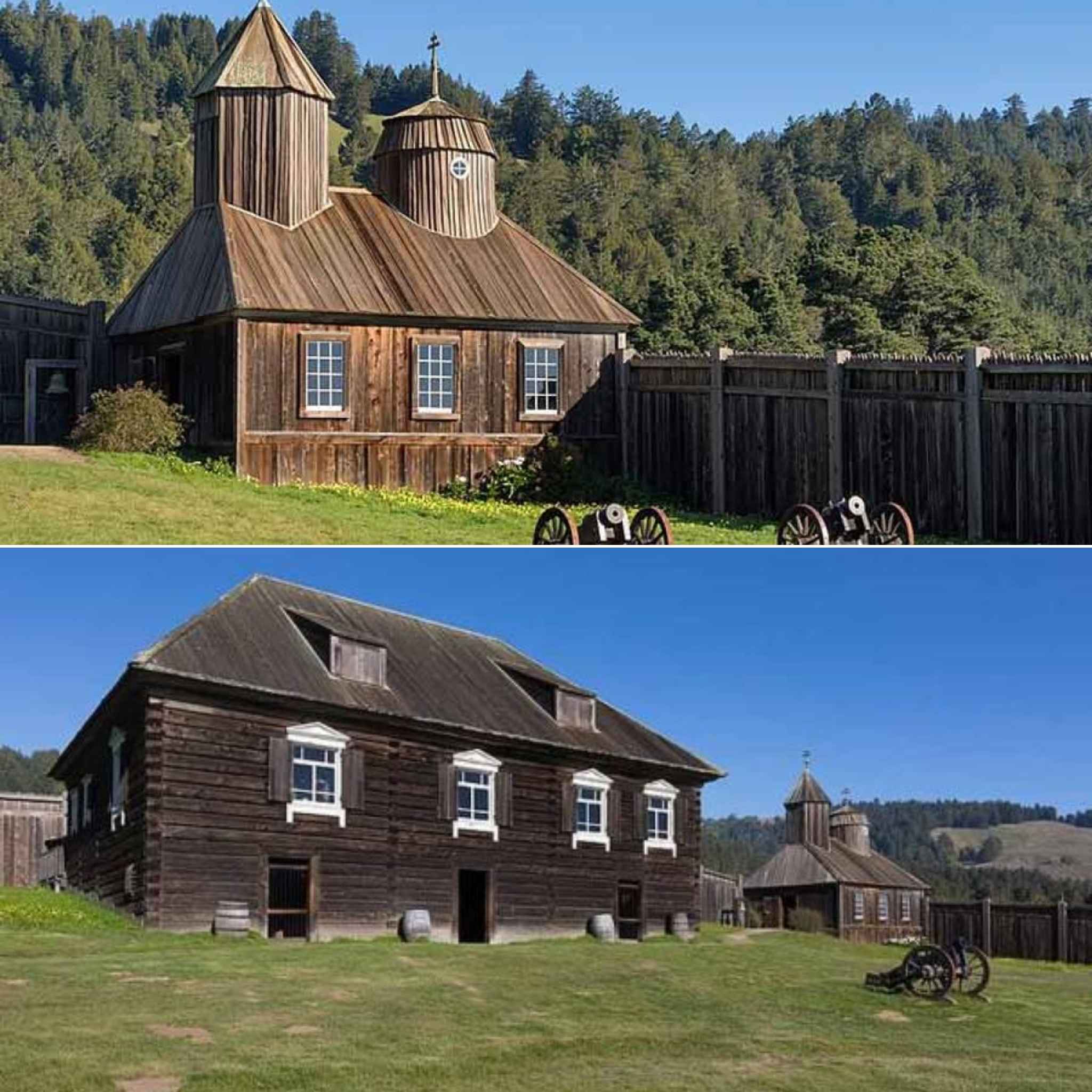
Today, many people associate European colonization of North America primarily with Spain, Britain, France, and later the United States. Yet for three decades during the early nineteenth century, Russia also maintained a foothold on the continent. At its peak, Fort Ross served as a trading center, an agricultural settlement, a scientific outpost, and a symbol of Russia’s ambitions in the Pacific world.
Although the Russian presence in California was relatively brief, the story of Fort Ross reveals a fascinating chapter in the history of global exploration, imperial competition, and cultural exchange. It is a story that connects Alaska, Siberia, California, Native American communities, and the broader struggle among empires for influence along the Pacific coast.
Today, preserved as a California State Historic Park, Fort Ross stands as a reminder of a little-known period when Russian settlers lived, worked, and traded on the edge of North America.
Russia’s Expansion Across the Pacific
The origins of Fort Ross can be traced to Russia’s dramatic eastward expansion across Siberia.
Beginning in the sixteenth century, Russian explorers, traders, and hunters pushed steadily eastward through the vast forests and tundra of northern Asia. By the eighteenth century, they had reached the Pacific Ocean.
From there, Russian explorers crossed the Bering Strait and entered Alaska.
What they discovered transformed the region’s economic importance.
The coastal waters of Alaska were rich in sea otters, whose pelts were among the most valuable luxury goods in the world. Sea otter fur was especially prized in China, where merchants paid enormous sums for high-quality pelts.
Recognizing the potential profits, the Russian government granted commercial monopolies to private enterprises operating in the region.
The most important of these was the Russian-American Company, founded in 1799.
The company was granted authority not only to trade but also to administer Russian colonies in North America.
In many respects, it functioned similarly to the British East India Company or the Hudson’s Bay Company.
Its officials governed settlements, organized expeditions, negotiated with Indigenous communities, and managed trade across the Pacific.
By the early nineteenth century, Russian settlements stretched across Alaska. Yet maintaining these colonies proved difficult.
The Search for a Southern Colony
Life in Russian Alaska was challenging.
The climate was harsh, agricultural production was limited, and supplying remote settlements required enormous logistical efforts.
At the same time, sea otter populations were beginning to decline because of intensive hunting.
Russian officials realized that they needed a more productive colony farther south.
Such a settlement could supply food to Alaska, support trade, and perhaps provide access to new economic opportunities.
Explorers were dispatched to survey the Pacific coast.
Their attention eventually turned toward California.
At the time, California was part of the Spanish Empire.
Although Spain claimed the territory, large portions of the northern coast remained sparsely settled.
Russian representatives negotiated cautiously with Spanish authorities while exploring possible sites for a settlement.
After several expeditions, they selected a location on the Sonoma Coast, north of present-day San Francisco.
The site offered fertile land, access to fresh water, protected anchorages, and abundant natural resources.
Most importantly, it lay within reach of Alaska while remaining far enough south to support agriculture.
In March 1812, Russian settlers arrived to begin construction.
Founding Fort Ross
The expedition that established the colony was led by Ivan Kuskov, a veteran employee of the Russian-American Company.
The initial group consisted of approximately twenty-five Russian craftsmen and laborers, accompanied by around eighty Aleut hunters from Alaska.
Together they began constructing what would become Fort Ross.
The settlement was originally called “Ross,” a shortened form intended to emphasize its connection to Russia.
The name “Fort Ross” became common later during the nineteenth century.
The builders followed architectural traditions familiar from Siberia and Alaska.
Massive wooden stockades surrounded the central compound.
Blockhouses occupied strategic corners of the fortification.
Within the walls stood administrative buildings, warehouses, workshops, barracks, and residences.
Cannons mounted along the defenses protected the settlement from potential attack.
A central well ensured access to water during emergencies.
The fort quickly became the administrative heart of the colony.

Life Inside the Russian Colony
Fort Ross was much more than a military outpost.
It functioned as a small, multicultural community.
Its population included Russians, Ukrainians, Aleuts, Alutiiq peoples from Alaska, Native Californians, and eventually settlers of mixed ancestry.
Daily life revolved around agriculture, trade, construction, and maintenance.
Inside the stockade lived company officials and skilled workers.
Outside the walls, a growing civilian settlement emerged.
Vegetable gardens, orchards, barns, and workshops spread across the surrounding landscape.
A cemetery was established nearby.
By the 1820s, many residents preferred living outside the fortifications altogether.
Relations with the local Kashaya Pomo people generally remained peaceful.
Unlike many colonial frontiers elsewhere in North America, Fort Ross was established through negotiation rather than conquest.
While interactions were not always equal, cooperation between Russian settlers and Indigenous communities played a crucial role in the colony’s survival.
The Kashaya contributed knowledge of local resources and landscapes, while Russian settlers introduced new technologies and agricultural practices.
This cultural exchange left a lasting influence on the region.
The Fur Trade Disappointment
The primary motivation for establishing Fort Ross was economic.
The Russian-American Company hoped to expand its participation in the lucrative sea otter fur trade.
Initially, the waters off California appeared promising.
However, reality soon proved disappointing.
Sea otters had already experienced significant hunting pressure from Spanish, American, British, and Russian traders.
Within only a few years of Fort Ross’s establishment, populations began to decline sharply.
By the 1820s, sea otters near the colony had become increasingly scarce.
The expected profits never materialized.
As a result, the company was forced to seek alternative sources of income.
Fortunately, settlers demonstrated considerable ingenuity.
Building California’s First Windmills
Agriculture became one of Fort Ross’s most important activities.
The Russians cultivated wheat, barley, vegetables, and fruit.
Although agricultural output never reached the levels hoped for by company officials, it gradually improved.
One of the colony’s most significant achievements was technological innovation.
In 1814, settlers constructed California’s first known wind-powered flour mill.
The structure represented a major advancement in regional agricultural processing.
Soon afterward, a second windmill was built.
Together, these mills could process substantial quantities of grain.
Historical accounts suggest one of the windmills was capable of grinding more than thirty bushels of grain per day.
Later, settlers added an animal-powered mill to supplement production.
These innovations helped establish Fort Ross as an important center of agricultural experimentation.

Industry Beyond Agriculture
While fur trading struggled, other industries flourished.
Fort Ross developed into a surprisingly diverse economic center.
Residents engaged in:
- Cattle ranching
- Sheep husbandry
- Blacksmithing
- Carpentry
- Tanning
- Brickmaking
- Ship repair
- Milling
The settlement produced tools, leather goods, building materials, and agricultural products.
These activities helped sustain the colony despite its commercial challenges.
Livestock raising proved particularly successful.
Large herds of cattle grazed across the surrounding grasslands.
Although the Russian-American Company never fully capitalized on this potential, ranching became one of the colony’s most productive sectors.
The settlement’s economic diversity demonstrated the adaptability of its residents in an often difficult environment.
A Center for Scientific Exploration
One of the most remarkable aspects of Fort Ross was its role in scientific research.
The colony attracted explorers, naturalists, geographers, and scholars interested in studying the Pacific coast.
Some researchers were sponsored directly by the Russian government.
Others received support from private patrons or the Russian-American Company.
These scholars documented nearly every aspect of the region.
Their studies covered:
- Geography
- Botany
- Zoology
- Geology
- Meteorology
- Entomology
- Ethnography
They recorded observations of local ecosystems, Indigenous cultures, wildlife populations, and weather patterns.
Many of their reports remain valuable historical resources today.
Long before California became widely known internationally, Russian scholars were producing some of the earliest scientific descriptions of the region.
In this sense, Fort Ross functioned not only as a colony but also as a center of knowledge.
The End of the Russian Dream
By the late 1830s, it had become increasingly clear that Fort Ross would never fulfill its original purpose.
Agricultural production remained below expectations.
The fur trade had collapsed.
Maintaining the colony was expensive.
At the same time, geopolitical circumstances were changing.
Mexico had gained independence from Spain in 1821 and now controlled California.
American settlers were arriving in growing numbers.
Competition for land and resources intensified.
The Russian-American Company concluded that the settlement was no longer economically viable.
In 1839, officials decided to abandon the colony.
They attempted to sell Fort Ross to various governments and private buyers.
Negotiations with British, French, and Mexican interests failed.
Eventually, a buyer emerged.
The Sale to John Sutter
In 1841, Fort Ross was sold to John Sutter, a Swiss-born entrepreneur who would later become famous for his connection to the California Gold Rush.
Sutter purchased the colony’s buildings, equipment, livestock, and other assets.
On January 1, 1842, the Russian-American Company’s flag was lowered for the final time.
The remaining Russian colonists departed for Sitka in Alaska.
After nearly thirty years, Russia’s experiment in California had come to an end.
The settlement subsequently operated as a ranch under a succession of private owners.
Many original structures deteriorated or disappeared.
Yet the memory of Fort Ross survived.
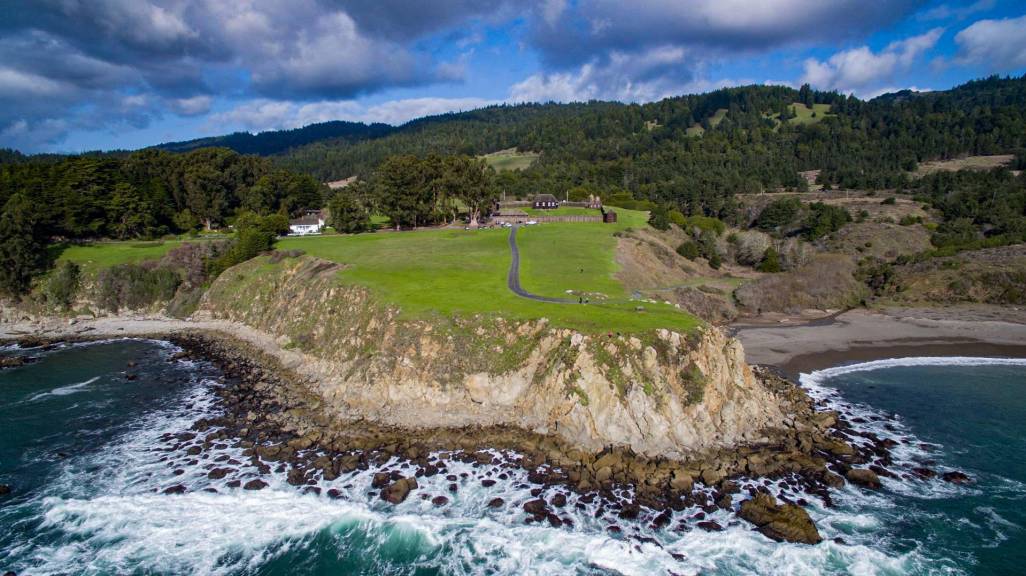
Preservation and Legacy
Recognizing the historical significance of the site, the State of California acquired Fort Ross in 1906.
The area was transformed into a State Historic Park.
Extensive preservation efforts reconstructed many of the original buildings using historical records and archaeological evidence.
Today visitors can explore:
- Reconstructed stockades
- The Russian chapel
- Residential buildings
- Defensive blockhouses
- Historic agricultural areas
The site serves as an educational center highlighting California’s multicultural colonial history.
Fort Ross is unique because it reflects interactions among Russians, Native Alaskans, Native Californians, Mexicans, Europeans, and Americans.
Its story demonstrates that North America’s colonial past was far more diverse than many people realize.
In 2009, financial difficulties threatened the park’s future, but support from cultural organizations and private donors helped preserve the site.
As a result, Fort Ross remains open to the public today.
A Forgotten Chapter of North American History
The story of Fort Ross challenges conventional narratives about North American colonization.
While Britain, France, Spain, and later the United States dominate most historical accounts, Russia also played a significant role in shaping parts of the continent.
For thirty years, a Russian colony flourished on California’s Pacific coast.
Its settlers built farms, windmills, workshops, and homes.
They traded, explored, conducted scientific research, and established relationships with Indigenous communities.
Although the colony ultimately failed as a commercial venture, its historical significance far exceeds its economic success.
Fort Ross remains a rare and tangible reminder of a time when the ambitions of the Russian Empire extended deep into North America.
Standing today above the crashing Pacific waves, the reconstructed fort offers visitors a glimpse into a forgotten world—one where Siberian traditions, Alaskan hunters, Native Californian communities, and Russian imperial ambitions briefly converged on the edge of a continent.