Cuneiform: The World’s First Writing System and the 2,000-Year Mystery of Deciphering It
Long before the alphabets of Greece and Rome, before medieval manuscripts and printed books, humanity made one of its greatest intellectual leaps in the fertile river valleys of Mesopotamia.
There, between the Tigris and Euphrates Rivers in what is now Iraq, ancient scribes developed a revolutionary technology that would forever change human civilization: writing.
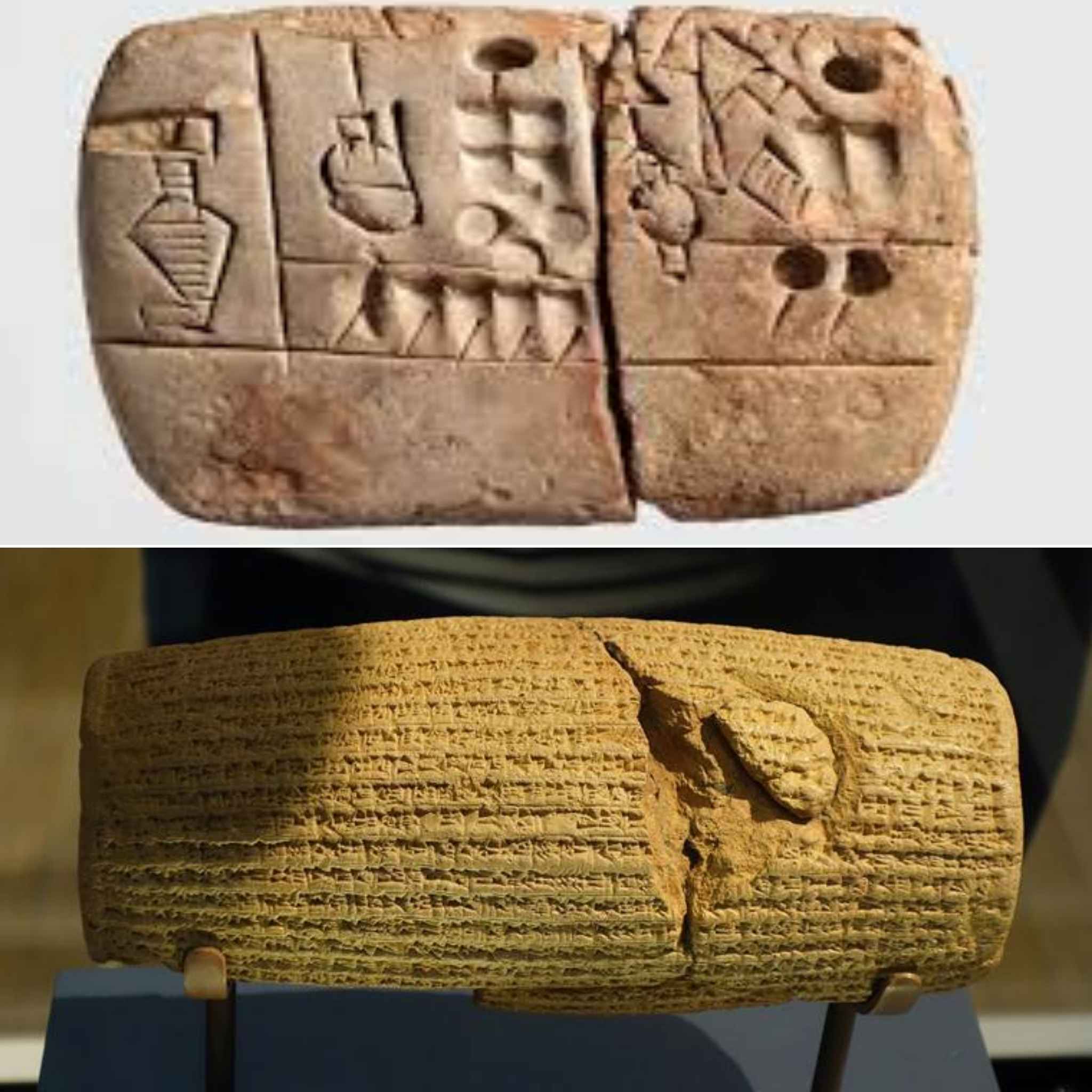
Known today as cuneiform, this system of wedge-shaped marks became the world’s first true writing system. It enabled humanity to record laws, preserve literature, document trade, track astronomical observations, and communicate across vast empires.
For more than three thousand years, cuneiform served as the primary written language of Mesopotamia and neighboring civilizations.
Then it disappeared.
By the early centuries AD, nobody could read it anymore.
The vast libraries of Sumer, Babylon, Assyria, and Persia fell silent. Thousands of clay tablets survived, but their messages became inaccessible.
For nearly two millennia, the strange wedge-shaped symbols remained one of history’s greatest unsolved puzzles.
The story of how cuneiform was created—and later rediscovered—is one of humanity’s most remarkable intellectual achievements.
The Birth of Writing in Ancient Mesopotamia
According to Assyriologist Dr. Irving Finkel of the British Museum, the earliest evidence for writing emerged in southern Mesopotamia between approximately 3200 and 3350 BC during the Late Uruk period.
Surprisingly, writing did not begin with literature, poetry, or religion.
It began with accounting.
The first known tablets recorded practical matters:
- Livestock inventories
- Grain supplies
- Beer production
- Labor obligations
- Tax collections
- Commercial transactions
As cities expanded and economies became more complex, administrators needed reliable methods to track resources.
Memory alone was no longer sufficient.
Writing emerged as a solution.
The earliest tablets used simple pictographs—drawings representing real objects.
A sheep might be represented by a sketch of a sheep.
A jar might be represented by a picture of a jar.
At first, these symbols functioned more like accounting tools than language.
Yet they contained the seeds of a revolution.
Why Clay Changed History
One of the reasons cuneiform survived is surprisingly simple: clay.
Unlike Egypt, which relied heavily on papyrus, Mesopotamia possessed enormous deposits of river clay.
This abundant natural resource became the foundation of written communication.
Scribes would gather wet clay from riverbanks and shape it into tablets.
Using a stylus made from reed, they pressed symbols into the soft surface.
The tablets were then dried in the sun or baked in kilns.
The result was astonishingly durable.
While papyrus decays easily, clay can survive for thousands of years.
Ironically, some of the best-preserved tablets were accidentally baked during ancient wars and city fires.
When palaces and libraries burned, the intense heat permanently hardened the clay tablets.
The destruction of cities often ensured the survival of their archives.
Today, archaeologists have recovered hundreds of thousands of cuneiform texts.
The British Museum alone houses approximately 130,000 tablets.
These archives represent one of humanity’s greatest surviving records of ancient life.

From Pictures to Language
Cuneiform did not appear fully formed.
It evolved gradually over centuries.
The earliest pictographs eventually became increasingly abstract.
Scribes discovered that simplified impressions were faster and more efficient than detailed drawings.
Using the corner of a reed stylus, they began creating wedge-shaped marks.
Over time, these wedges replaced traditional pictures.
The transformation was revolutionary.
Initially, symbols represented objects.
Eventually, they began representing sounds.
This shift allowed scribes to write not just things, but words, ideas, and language itself.
The development can be compared to moving from simple emojis to a complete alphabet.
Writing became capable of expressing:
- Names
- Verbs
- Abstract concepts
- Emotions
- Historical events
- Religious beliefs
Human thought itself could now be recorded.
For the first time in history, ideas could outlive the people who created them.
The Rise of the Professional Scribe
As writing became more sophisticated, a new profession emerged.
The scribe.
These individuals formed one of the world’s first educated elite classes.
Learning cuneiform was extraordinarily difficult.
The system eventually contained hundreds of signs.
Many symbols possessed multiple meanings and phonetic values.
Mastering the script required years of training.
Students attended special schools called edubbas, or “tablet houses.”
There, they spent countless hours copying texts.
Exercises included:
- Sign memorization
- Vocabulary lists
- Mathematical problems
- Legal formulas
- Literary passages
Some surviving tablets preserve student mistakes, corrections, and practice exercises.
These accidental remnants provide rare insights into ancient education.
Graduates often became administrators, priests, scholars, diplomats, or royal officials.
The rise of writing also gave rise to humanity’s first professional intellectual class.
Literature Older Than the Bible
Although cuneiform began as an accounting system, it eventually became a vehicle for some of humanity’s greatest literary achievements.
Among its masterpieces is the Epic of Gilgamesh, often considered the world’s oldest surviving literary epic.
The poem tells the story of Gilgamesh, king of Uruk, and his quest for immortality.
Its themes remain remarkably modern:
- Friendship
- Loss
- Mortality
- Power
- Human purpose
Mesopotamian scribes also recorded:
- Creation myths
- Flood narratives
- Medical texts
- Astronomical observations
- Mathematical treatises
- Legal codes
- Personal letters
Many stories later found in biblical traditions have earlier parallels within Mesopotamian literature.
The famous flood story is one notable example.
Dr. Irving Finkel’s research on Babylonian flood tablets has helped illuminate these ancient connections.
The cuneiform record demonstrates that complex literary traditions flourished thousands of years before many later civilizations emerged.

The Disappearance of Cuneiform
No writing system lasts forever.
Over time, cuneiform faced increasing competition from alphabetic scripts.
Alphabets required fewer symbols and were easier to learn.
Languages changed.
Empires rose and fell.
Gradually, cuneiform usage declined.
By the time of the Sassanian Empire in the third century AD, the script had largely disappeared.
The final known users died without passing their knowledge to future generations.
The result was extraordinary.
An entire writing system vanished.
Thousands of monuments remained covered with inscriptions nobody could read.
The voices of Sumer, Babylon, Assyria, and Persia were silenced.
For nearly 2,000 years, the script remained a mystery.
The Behistun Inscription: Ancient Mesopotamia’s Rosetta Stone
The breakthrough began in modern-day Iran.
High on a cliff at Behistun stood a monumental inscription commissioned by Persian King Darius I around 520 BC.
The text appeared in three languages:
- Old Persian
- Elamite
- Babylonian
Because all three versions conveyed the same message, the inscription offered a potential key to decipherment.
However, reaching it was extremely dangerous.
The inscription sat high above the ground on a sheer rock face.
One determined scholar changed everything.
Henry Rawlinson’s Achievement
British officer Henry Creswicke Rawlinson risked his life climbing the cliffs of Behistun.
Suspended on ropes, he painstakingly copied the inscriptions.
Rawlinson first deciphered Old Persian.
This achievement provided the foundation for unlocking the other languages.
His work expanded upon earlier efforts by German scholar Georg Friedrich Grotefend.
Together, their contributions opened the door to understanding cuneiform.
The Four Men Who Solved the Puzzle
Rawlinson was not alone.
Several brilliant scholars contributed to the decipherment process.
Edward Hincks
An Irish clergyman and linguistic genius, Edward Hincks never visited the ancient monuments himself.
Working from copies and publications, he discovered that cuneiform signs could possess multiple phonetic values.
This insight proved essential.
It revealed that cuneiform was not a simple alphabet but a far more complex writing system.
Jules Oppert
French scholar Jules Oppert demonstrated that cuneiform recorded multiple languages.
He also strongly argued for the existence of Sumerian as a distinct language.
His work helped transform decipherment into a coherent understanding of Mesopotamian history.
William Henry Fox Talbot
Best known as a pioneer of photography, Talbot also contributed to cuneiform studies.
Although he was not the primary decipherer, his linguistic observations helped validate the emerging system.
Together, these scholars solved one of history’s greatest intellectual mysteries.

The Famous 1857 Test
Even after major breakthroughs, skepticism remained.
How could anyone know the translations were correct?
In 1857, the Royal Asiatic Society organized a remarkable experiment.
Rawlinson, Hincks, Oppert, and Talbot each independently translated the same cuneiform inscription.
The results were compared.
Their translations matched closely.
The test demonstrated beyond reasonable doubt that cuneiform had been successfully deciphered.
After nearly two thousand years of silence, the ancient civilizations of Mesopotamia could finally speak again.
What the Tablets Revealed
The impact on archaeology was transformative.
Before decipherment, ancient Mesopotamia was known primarily through ruins.
After decipherment, historians gained direct access to ancient voices.
The tablets revealed:
- Business records
- Marriage contracts
- Lawsuits
- Medical diagnoses
- Family disputes
- Religious beliefs
- Diplomatic correspondence
Suddenly, ancient people became individuals rather than anonymous archaeological remains.
A merchant complaining about delayed shipments.
A husband writing to his wife.
A physician recording symptoms.
A king boasting of victory.
The ancient world came alive.
Modern Technology and Ancient Texts
Despite more than a century of study, cuneiform research remains far from complete.
Hundreds of thousands of tablets await translation.
Many are fragmented or damaged.
Today, researchers use:
- Artificial intelligence
- Machine learning
- Digital imaging
- 3D scanning
These technologies help reconstruct missing passages and identify previously unreadable texts.
Every year, scholars uncover new insights into ancient history.
Some discoveries fundamentally reshape understanding of early civilization.
The work of decipherment did not end in the nineteenth century.
In many ways, it has only just begun.
Humanity’s First Written Archive
Cuneiform represents far more than an ancient writing system.
It marks the moment when humanity learned to preserve knowledge outside the human mind.
From humble accounting records emerged literature, science, law, and history.
For over three thousand years, scribes recorded the thoughts, beliefs, achievements, and daily lives of countless individuals.
Then those voices disappeared.
For nearly two millennia, the tablets remained silent.
Through the determination of scholars and archaeologists, they speak once more.
Today, the clay archives of Sumer, Babylon, Assyria, and Persia remain among humanity’s greatest intellectual treasures.
They remind us that writing is not merely a tool.
It is the foundation of civilization itself.
And thanks to cuneiform, some of humanity’s oldest voices continue to be heard across five thousand years of history.