The Baltic Sea Anomaly: Natural Formation, Ancient Mystery, or Modern Myth?
Beneath the cold waters of the Baltic Sea lies one of the most debated underwater formations of the modern era.
Known as the Baltic Sea Anomaly, the strange circular object was first detected by sonar in 2011 during a seabed survey by the Swedish treasure-hunting group Ocean X. Almost immediately, the grainy sonar image captured global attention. Its shape seemed unusual, almost artificial. Some compared it to the Millennium Falcon from Star Wars. Others suggested it might be a crashed UFO, a secret military device, or a remnant of a lost civilization.
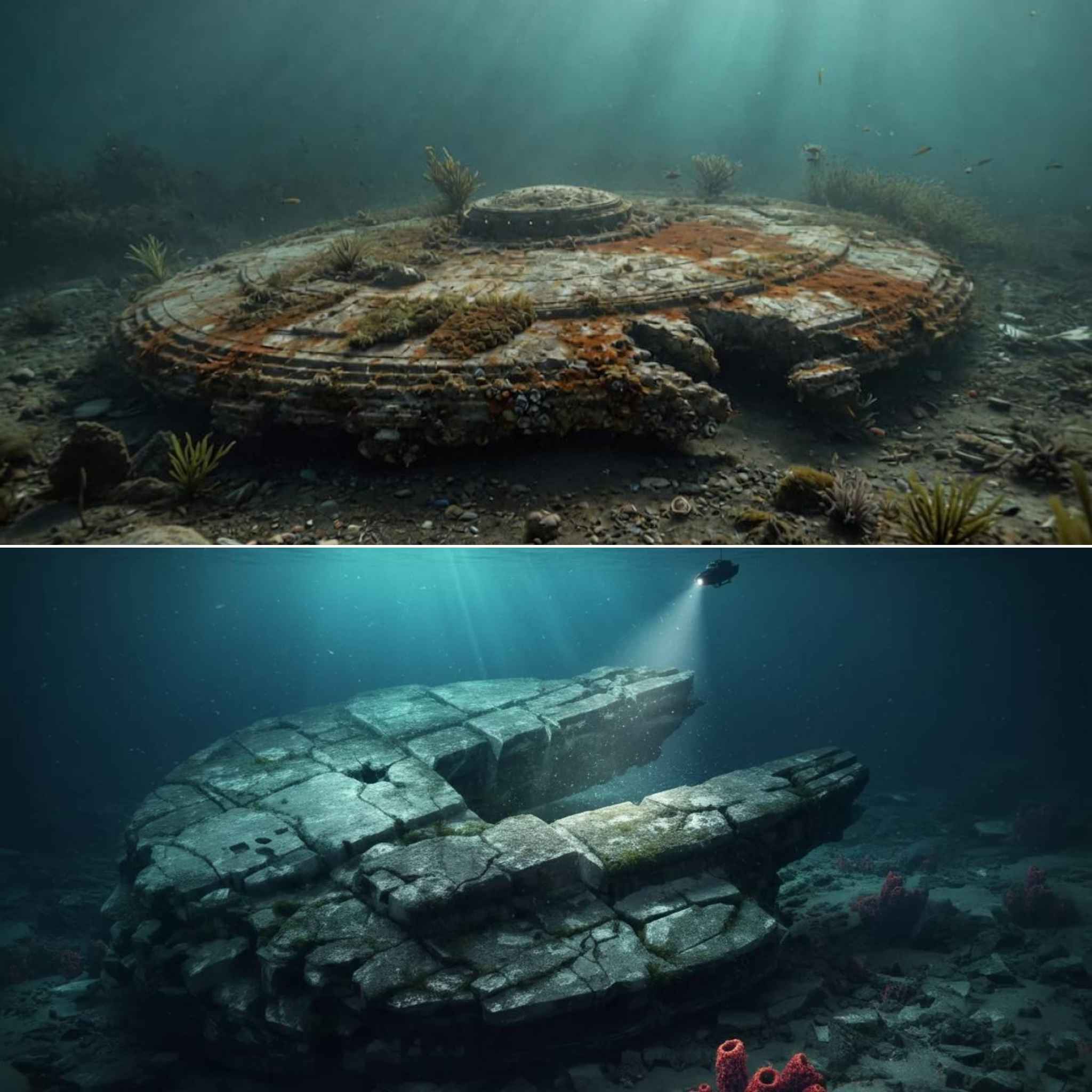
For years, the mystery spread across the internet.
The object appeared to have sharp edges, straight lines, and a strange track-like feature behind it. Divers who reached the site described poor visibility, difficult conditions, and even equipment malfunctions. The story quickly moved from underwater archaeology into the world of speculation.
Yet as marine geologists and researchers continued examining the Baltic seafloor, a more grounded explanation began to emerge.
The Baltic Sea Anomaly may not be alien technology or an ancient machine. Instead, it appears to be a striking natural formation shaped by ice, stone, and geological forces left behind after the last Ice Age.
Even so, the story remains fascinating—not because it proves extraterrestrial contact, but because it reveals how much of the ocean floor still remains mysterious.
The Discovery That Sparked a Global Debate
The Baltic Sea Anomaly was discovered in 2011 when Ocean X was scanning the seabed in search of shipwrecks and treasure.
At a depth of about 90 meters, or nearly 295 feet, sonar equipment detected a large circular formation resting on the seafloor. The object measured roughly 61 meters, or 200 feet, across.
The first images were blurry, but they showed enough to ignite curiosity.
The formation appeared unusually symmetrical. Some observers saw what looked like a central structure, straight lines, and a raised platform. A long mark behind it was interpreted by some as a possible drag trail, as though the object had crashed or slid across the seabed before stopping.
This was all the internet needed.
Within weeks, the anomaly was being described as a sunken spacecraft, a lost Nazi weapon, an ancient temple, or proof of a hidden civilization beneath the Baltic.
The mystery grew because the Baltic Sea itself is difficult to explore. Its waters are cold, dark, and often full of sediment. Visibility is extremely poor. Divers working at such depths face serious challenges, and sonar readings can be distorted by temperature layers, salinity changes, and uneven seabed surfaces.
Still, the unusual shape demanded explanation.
Strange Reports From the Dive Team
When divers from Ocean X eventually reached the site, they reported several unusual experiences.
They described the object as a hard, stone-like formation rather than a metallic craft. Some said the structure looked like a natural rock surface, while others continued to argue that its shape seemed too organized to be accidental.
The team also claimed that electronic equipment behaved strangely near the formation.
These reports fueled more speculation.
However, equipment issues during deep-water dives are not unusual. Cold temperatures, pressure, low visibility, poor signal transmission, and technical limitations can all interfere with underwater operations.
Divers also recovered stone samples from the site. These samples were later described as basalt, granite, and other rock types commonly associated with glacial activity.
That discovery shifted the debate.
If the anomaly was made of ordinary rock, then the most likely explanation was geological—not artificial.
A Landscape Shaped by Ice
To understand the Baltic Sea Anomaly, it is necessary to understand the history of the Baltic basin.
During the last Ice Age, enormous glaciers covered much of northern Europe. These glaciers acted like slow-moving bulldozers, grinding across the landscape, breaking apart bedrock, carrying stones, and reshaping entire regions.
When the ice began melting around 9,000 BC, it left behind huge amounts of rock and sediment.
These deposits included:
- Glacial erratics
- Moraines
- Boulder fields
- Scoured bedrock
- Sand ridges
- Unusual stone formations
A glacial erratic is a rock transported by ice and deposited far from its original source. Such rocks can appear strangely out of place, especially when found on a seabed dominated by sand or sediment.
The Baltic Sea floor is full of these Ice Age remnants.
Modern marine surveys have revealed a complex underwater landscape formed by glacial movement, flooding, erosion, and sedimentation.
In that context, the Baltic Sea Anomaly becomes less impossible.
It may simply be one of many unusual geological features shaped by ancient ice.
Why Sonar Can Be Misleading
Sonar is a powerful tool, but it does not always produce clear images.
Unlike photography, sonar creates pictures by sending sound waves through water and measuring how they bounce back from objects and surfaces.
The results can be distorted by:
- Angle of the scan
- Distance from the object
- Sediment cover
- Water temperature
- Salinity layers
- Equipment resolution
- Seafloor texture
A natural rock formation can appear artificial if scanned from a certain angle.
Straight shadows can look like walls.
Rounded boulders can appear like domes.
Parallel ridges can resemble tracks or roads.
This does not mean sonar is unreliable. It means sonar images must be interpreted carefully, especially when visibility is poor and physical inspection is limited.
In the case of the Baltic Sea Anomaly, early sonar images created a dramatic impression. Later geological analysis suggested that impression may have been misleading.
The Natural Explanation
Most geologists who have examined the available evidence believe the anomaly is most likely a natural rock formation.
The recovered samples point toward common geological materials rather than advanced technology. The Baltic Sea’s glacial history provides a reasonable explanation for how such a formation could have ended up on the seabed.
The object may be:
- A glacial deposit
- A cluster of large boulders
- A volcanic or basaltic rock formation carried by ice
- A moraine feature shaped by retreating glaciers
- A natural seabed structure distorted by sonar
None of these explanations is as dramatic as a crashed UFO.
But they fit the evidence far better.
Nature is capable of producing shapes that appear designed. Geological processes can create circles, straight edges, columns, ridges, and strangely symmetrical forms.
The Baltic Sea Anomaly may be a perfect example of how natural forces can create something that looks mysterious to human eyes.
Why the UFO Theory Became So Popular
The UFO theory spread because the first sonar images were visually powerful.
They showed just enough detail to invite imagination but not enough clarity to provide certainty.
The object looked strange.
The sea was deep and dark.
The location was difficult to investigate.
The diving team reported unusual equipment problems.
All of these ingredients created the perfect modern mystery.
People are naturally drawn to unexplained objects, especially when they appear in remote or inaccessible places. The ocean floor remains one of the least explored environments on Earth, so it is easy to imagine extraordinary possibilities hidden beneath the waves.
The Baltic Sea Anomaly became a blank canvas.
Some saw a spaceship.
Others saw a lost temple.
Others saw military technology.
Science, however, moved more slowly. It required samples, mapping, comparison, and geological context.
That slower process produced a less sensational but more reliable answer.
Real Ancient Structures Beneath the Baltic
Interestingly, the Baltic Sea really does contain ancient human-made structures.
In 2024, researchers announced the discovery of a massive submerged Stone Age wall in the western Baltic Sea. The structure stretches nearly 975 meters, or about 3,200 feet, and was likely built by hunter-gatherers around 11,000 years ago.
This wall was probably used as part of a hunting system to guide reindeer.
The discovery is extraordinary because it proves that parts of the modern Baltic seabed were once dry land inhabited by prehistoric people.
Before sea levels rose, ancient communities lived, hunted, traveled, and built structures across landscapes that are now underwater.
This genuine discovery changes how researchers view the Baltic basin.
It shows that the seafloor may preserve traces of lost Stone Age landscapes. It also reminds us that real archaeology can be just as fascinating as speculation.
The Baltic Sea Anomaly may not be artificial, but the region itself still holds genuine archaeological secrets.

A Mystery That Still Matters
Even if the Baltic Sea Anomaly is a natural formation, it still matters.
Its discovery drew worldwide attention to underwater exploration. It encouraged public interest in marine geology, sonar mapping, and submerged archaeology. It also highlighted how little most people know about the ancient landscapes hidden beneath modern seas.
The story also shows how quickly mystery can become myth.
A blurry image becomes a spaceship.
A rock formation becomes a lost civilization.
A technical malfunction becomes paranormal evidence.
Yet science does not destroy wonder. It often deepens it.
The idea that glaciers carried and shaped strange rock formations across an entire sea basin is remarkable in its own right. The fact that prehistoric humans once lived on landscapes now drowned beneath the Baltic is even more powerful.
The truth may not involve aliens, but it still connects us to deep time.
What Lies Beneath the Waves
The Baltic Sea Anomaly remains one of the most famous underwater mysteries of the 21st century.
Most evidence points toward a natural geological origin, likely connected to the glacial history of northern Europe. The object is probably not a UFO, not a secret weapon, and not a lost temple.
But its story is not meaningless.
It reminds us that the ocean floor is full of strange formations, forgotten landscapes, and genuine archaeological surprises.
As sonar mapping, underwater drones, and remotely operated vehicles continue to improve, more mysteries will emerge from the depths. Some will prove to be natural wonders. Others may turn out to be traces of ancient human activity.
The Baltic Sea Anomaly may have begun as a mystery about a possible sunken spaceship.
It may end as something more important: a lesson in how science, imagination, and the unknown meet beneath the surface of the sea.