Cleopatra’s Pearl: Roman Legend, Scientific Possibility, and the Politics of Luxury
Among the many stories told about Cleopatra VII, the last queen of Ptolemaic Egypt, few are as strange or extravagant as the tale of the pearl dissolved in vinegar.
According to the Roman writer Pliny the Elder, Cleopatra once made a wager with her lover Mark Antony that she could spend an almost unimaginable fortune on a single meal. To prove it, she removed one of the enormous pearl earrings she was wearing, dropped it into a goblet of vinegar, waited for it to dissolve, and drank the mixture.
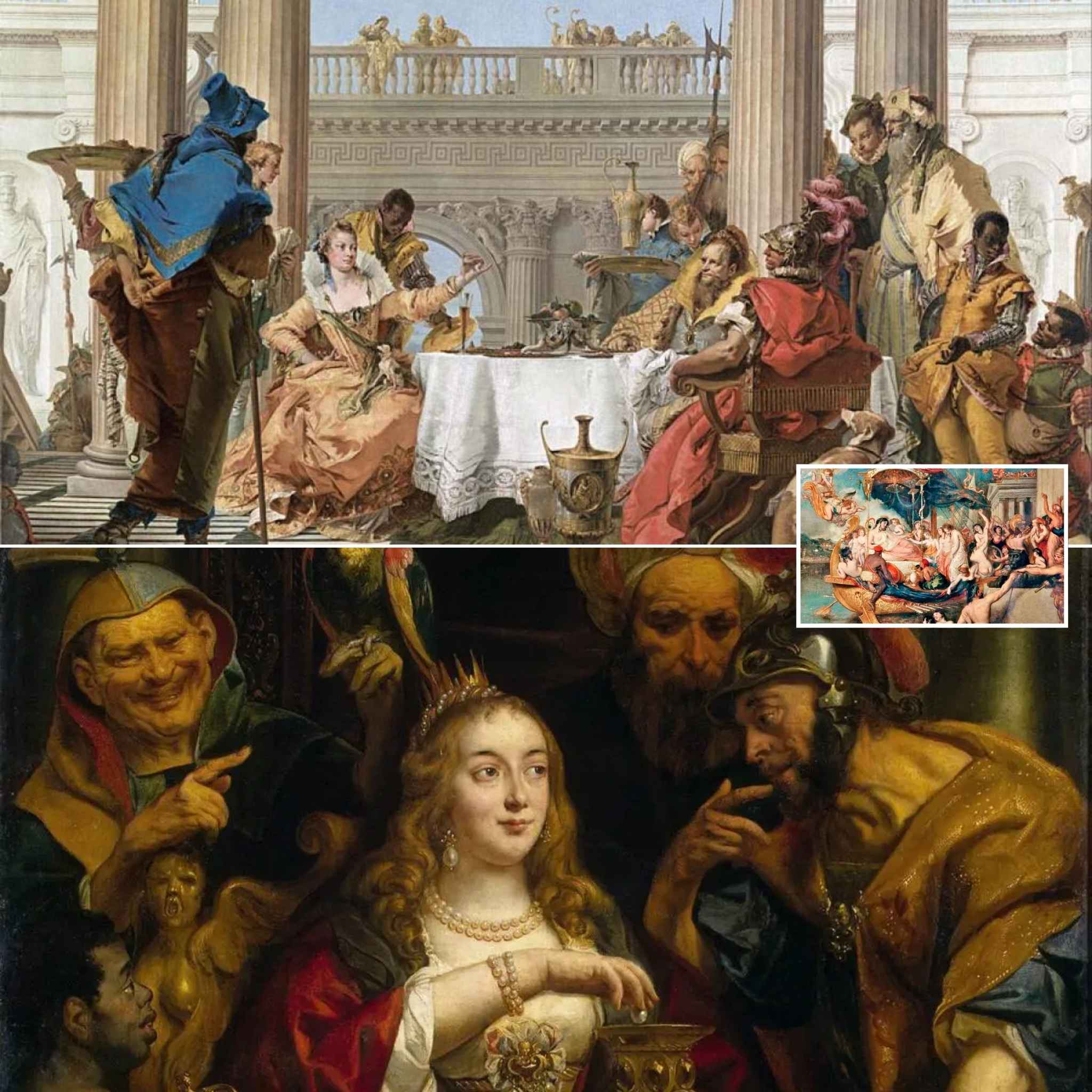
The act was meant to demonstrate wealth beyond measure.
It was not enough for Cleopatra to serve a luxurious banquet. She had to consume treasure itself.
For centuries, the story has fascinated historians, artists, chemists, and classicists. Painters turned the scene into a symbol of royal decadence. Writers used it to illustrate Cleopatra’s intelligence and theatrical flair. Scientists later asked a more practical question: could a pearl really dissolve in vinegar?
The answer is more complicated than the legend suggests.
Pliny’s Version of the Story
The story appears in Pliny the Elder’s Natural History, one of the most ambitious encyclopedic works of the Roman world.
Pliny wrote extensively about nature, minerals, animals, plants, medicine, and luxury goods. In Book IX, he devoted several chapters to pearls, which he considered among the most valuable treasures produced by the sea.
To Romans of Pliny’s time, pearls represented extreme wealth.
They came from distant waters, especially the Indian Ocean, the Persian Gulf, and regions near Arabia. Their value depended on size, whiteness, roundness, polish, and weight.
Pliny used pearls not only as natural objects but also as moral examples.
For him, excessive pearl-wearing revealed the corruption and extravagance of Roman elite society.
Cleopatra’s pearl story appears in this context.
It is not simply a romantic anecdote.
It is part of Pliny’s criticism of luxury.
The Bet Between Cleopatra and Antony
According to Pliny, Cleopatra owned two pearls of unmatched size and value. They had supposedly come to her through royal inheritance from eastern kings.
At the time, she was entertaining Mark Antony with extravagant banquets in Egypt.
Antony was already accustomed to luxury, but Cleopatra reportedly mocked the banquets as ordinary. She claimed she could spend ten million sesterces on a single meal.
Antony doubted her.
A wager was made.
The following day, Cleopatra served another magnificent banquet, but nothing about it seemed extraordinary enough to justify her claim.
When Antony asked how she could possibly spend such an amount, Cleopatra ordered a cup of vinegar to be brought before her.
She then removed one of her great pearl earrings and dropped it into the liquid.
Pliny says the vinegar dissolved the pearl.
Cleopatra drank it.
She was preparing to dissolve the second pearl when Lucius Munatius Plancus, who was present as judge of the wager, stopped her and declared Antony defeated.
The queen had won.
In Pliny’s account, the remaining pearl was later captured by Octavian after Cleopatra’s defeat and cut in half to decorate a statue of Venus in Rome.
A Story About Power, Not Just Wealth
The pearl story is often remembered as a tale of extravagance, but it also reflects political theater.
Cleopatra was not merely showing off.
She was demonstrating that Egypt possessed wealth equal to or greater than Rome’s greatest aristocrats.
To Antony, the act may have symbolized royal confidence.
To Roman moralists like Pliny, it symbolized dangerous eastern luxury.
This matters because Cleopatra’s reputation was shaped largely by her enemies.
Roman writers often portrayed her as seductive, arrogant, manipulative, and decadent. These descriptions were useful political propaganda after Octavian defeated Antony and Cleopatra in the civil war.
By depicting Cleopatra as a queen of excess, Roman authors helped justify Rome’s conquest of Egypt.
The pearl dissolved in vinegar became more than a dramatic image.
It became a moral lesson.
Could Vinegar Really Dissolve a Pearl?
The scientific question is surprisingly important.
If vinegar cannot dissolve a pearl, the story becomes impossible.
Pearls are composed mainly of calcium carbonate, the same basic compound found in limestone, chalk, and seashells.
Vinegar contains acetic acid.
When calcium carbonate reacts with acid, it can dissolve, releasing carbon dioxide gas and forming calcium acetate.
So chemically, the idea is possible.
A pearl can dissolve in vinegar.
However, the problem is time.
Modern experiments suggest that an intact pearl does not disappear instantly in ordinary vinegar. Depending on its size, thickness, and the strength of the acid, dissolution may take many hours or even more than a day.
In one modern experiment, a small pearl took roughly 24 to 36 hours to dissolve in a weak acetic acid solution.
That makes Pliny’s banquet scene difficult to accept literally.
Cleopatra could not likely have dropped a large pearl into room-temperature vinegar and immediately drunk it moments later.
Possible Explanations
Several explanations have been proposed.
Cleopatra may have used a very small pearl rather than the enormous jewel Pliny describes.
The vinegar may have been unusually strong.
The liquid may have been heated, speeding up the chemical reaction.
The pearl may have been crushed or powdered before being placed into the vinegar.
Any of these possibilities would make the event more scientifically plausible.
However, Pliny does not mention heating, grinding, or preparation.
His version depends on theatrical immediacy.
That suggests the story may have been exaggerated, simplified, or entirely legendary.
Pearl Drinking in the Ancient World
Cleopatra was not the only figure associated with drinking pearls.
Pliny also tells a story about Clodius, son of the famous actor Aesopus, who supposedly dissolved pearls and served them to guests simply to experience their taste.
Other Roman authors also associated pearl drinking with decadence.
In these stories, dissolving a pearl becomes a symbol of waste.
It represents the ultimate luxury: destroying something priceless for a moment of pleasure.
Pearl powder also appeared in ancient medical traditions.
In India and China, powdered pearl was sometimes consumed for beauty, vitality, or medicinal purposes.
These practices were very different from Cleopatra’s wager, but they show that the idea of ingesting pearls was not entirely foreign to the ancient world.
Why Pliny May Have Told the Story
Pliny was not a neutral reporter of Cleopatra’s life.
He wrote as a Roman moralist.
His purpose was often to criticize greed, luxury, and foreign extravagance.
Cleopatra made the perfect example.
She was wealthy.
She was Egyptian.
She had been Rome’s enemy.
She was associated with Antony, whose alliance with her had helped lead to civil war.
By telling the pearl story, Pliny could condemn both Cleopatra’s excess and Antony’s weakness.
The tale allowed him to contrast old Roman simplicity with imperial luxury.
Whether the event happened exactly as described mattered less than the moral message it delivered.
Fact, Fiction, or Political Legend?
So did Cleopatra really dissolve a pearl in vinegar?
The most careful answer is: possibly, but probably not exactly as Pliny described.
The chemistry is real.
Pearls can dissolve in vinegar.
But the timing in the story is unrealistic unless the pearl was crushed, small, heated, or exposed to a stronger acid.
The event may have been based on a real banquet trick later exaggerated by Roman writers.
It may also have been an urban legend attached to Cleopatra because she already symbolized wealth and eastern luxury in Roman imagination.
What survives is not just a record of chemistry or dining.
It is a story shaped by politics, propaganda, gender, empire, and moral judgment.
The Enduring Power of Cleopatra’s Pearl
The tale of Cleopatra’s pearl has lasted for nearly two thousand years because it is unforgettable.
It contains everything a legendary story needs:
A queen.
A wager.
A lover.
A priceless jewel.
A public act of defiance.
And a final image of luxury so extreme that treasure itself becomes a drink.
Whether fully factual or partly fictional, the story reveals how Romans imagined Cleopatra and how later generations continued to reinterpret her.
To Pliny, she represented dangerous extravagance.
To artists, she became a symbol of beauty, intelligence, and theatrical power.
To modern scholars, her pearl raises questions about science, propaganda, and the survival of historical memory.
In the end, Cleopatra’s pearl may tell us less about what happened at one banquet and more about why some stories refuse to disappear.
The pearl may have dissolved.
The legend never did.